飲食之美,美美與共
2018-08-14 19:51:12ByJenniferBragg
英語學習 2018年8期
By Jennifer Bragg
In 2010, I moved to Beijing to start a new job. I had never been to China before, so this was really an adventure. After all, I believe there is no better way to get to know the people, language and traditions of a country than to live there. I have traveled quite a bit in my adult life, so I know there is always a learning curve1 in getting to know another culture. However, no matter where I go in the world, there is always one common denominator2: food.
From the outset, I could see little differences between my own and Chinese food culture. I first experienced this when I had dinner with my Chinese colleagues at our company restaurant. They were delighted to see that not only could I eat with chopsticks, I used them with my left hand. I noticed that they didnt like touching food with their hands, whereas Americans love sandwiches and other foods that can only be eaten by hand. I also learned that Chinese people traditionally order and eat shared dishes. This is different from the U.S., where I was used to ordering my own food and eating it myself.
Over the months and years that I was in Beijing, I understood that food has a very strong association with family and community. Ive heard many stories of my friends who would go home for the Spring Festival and pushed by relatives to eat. Once, when a Chinese friend explained this phenomenon to me, I suggested,“Cant you just say no?” A look of shock from her was enough to tell me that, no, you cant say no. Saying no is an insult; eating the food says “I love you”.
American holidays are not that dissimilar to Spring Festival. We, too, go “home for the holidays” to eat, drink and be merry (while trying not to gain too much weight). Sometimes we have pushy family members who want us to eat all day and all night. But generally, we love to sit down to our meal, aunts and uncles, sisters and brothers, grandparents and grandchildren, and talk about the latest family news and current events. When it comes right down to it, we arent that different from China.
Reflecting on this, when I think of the countries I have visited—from Europe to Asia to North and South America—I know most cultures have similar traditions with food. Whether its a special occasion or a family meal that reveals specific customs, there are many wonderful examples. Here are a few of them:
The Four-Hour Meal, Italian Style
Italians are famous for their marathon3 family meals. Hours of cooking the most fresh and delicious ingredients often results in a long, drawnout eating experience at the dinner table.4 But the one place where food is really showcased is at an Italian wedding.
In traditional Italian ceremonies, there are nine—yes, nine!—courses5. Food is so important that every single course is carefully planned and scrutinized6. The beginning and end of the meal feature drinks known as the aperitivo, a coffee course, and the digestivo.7 In some cases, the aperitivo can be a small food appetizer8 instead of a drink. Between that and the last two drink courses are six other food courses, featuring bread, pasta9, vegetables, fish, meat, cheese and dessert. Now, you may be thinking, “that can get awfully expensive”. To help the couple cover the cost of the meal, the bride carries a silk purse that guests can put cash in, not unlike the hongbao tradition in China.
Indias “Hands-on” Food Experience
In India, meals are usually shared between friends and family, but specific foods and customs vary. One community in the north, for example, has a traditional feast that consists of 36 courses! While in another part of the country, it is customary for everyone to eat from the same platter called a thal.10
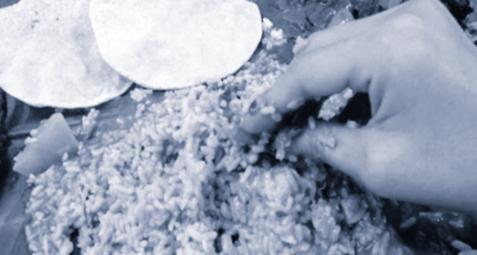
People in India typically use their hands to eat. Culturally, food is not just about having a meal with family and friends; its about stimulating the senses.11 This is inspired by the Ayurvedic12 tradition, which makes a direct link between the body and the food a person eats. Its said that the nerve endings in the fingertips, when they come into direct contact with food, stimulate the digestive system to make for a better eating experience.13
The role of “host” is also a key to Indian food customs. Even though a family or group of friends will sit around and enjoy a meal together, usually there is one person who is not taking part. Instead, they are making sure all the plates are abundant and that everyone walks away from the meal feeling satisfied.
Seafood Boils in the Southern U.S.
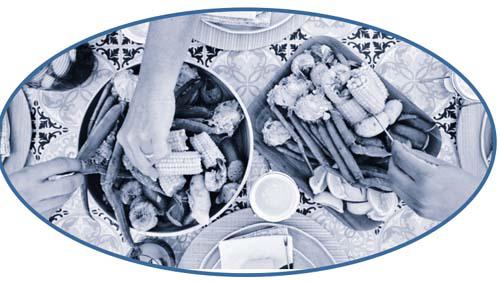
Going back to my home country, in the southeastern United States, there is a wonderful tradition known as the seafood boil. People gather around a large table and eat a delicious cornucopia14 of local food. It can be an annual event, a community fundraiser15, or a party among friends and family.
To make a seafood boil, shrimp, crab, lobster or crawfish are put into a large pot along with other ingredients like corn cobs, potatoes and sometimes sausage.16 They simmer for about an hour in a deliciously rich flavored broth, tended to by a “boil master” who makes sure all the ingredients are cooked in a well-timed way.17
Once all the food is cooked, it is removed from the liquid and spread out onto a big table that is covered with newspaper. This is usually done outdoors, where people sit and eat the food directly from the table for hours. Seafood boils are an old and beloved southern American tradition that has influences from different people in history who passed through from Africa, the Caribbean and Europe.18
***
The next time you travel outside your country, get to know the kind of food culture that exists at your destination. You never know: if you go to Italy, you may get invited to an Italian wedding, or if youre in Louisiana19, a friendly local may invite you to a seafood boil! Invitations like that mean one thing: at least for a short time, youre considered part of the“family”.
1. learning curve: 學習曲線,表示獲得熟練技巧的進步過程的圖線。
2. denominator: 共同的特征或性質(zhì)。
3. marathon: 馬拉松式的,持久的。
4. ingredient: 食材;drawn-out: 冗長乏味的,使人厭煩的。
5. course: 一道菜。
6. scrutinize: 仔細檢查。
7. aperitivo: 餐前酒;digestivo: 餐后酒。
8. appetizer: 開胃菜。
9. pasta: 意大利面。
10. customary: 習慣性的;platter: 橢圓形的大淺盤。
11. 就文化層面來說,飲食文化不僅僅是和親朋好友一起吃飯,更是對于感官的刺激。
12. Ayurvedic: 阿育吠陀醫(yī)學的,是一種結(jié)合食物、草藥和呼吸運動治療疾病的印度傳統(tǒng)醫(yī)學。
13. 據(jù)說,當指尖的神經(jīng)末梢與食物直接接觸時,消化系統(tǒng)會受到刺激,從而讓人獲得更愉悅的飲食體驗。
14. cornucopia: 大量,豐盛(的好東西)。
15. fundraiser: 為政治組織或慈善機構(gòu)舉辦的籌款社交活動。
16. shrimp: 小蝦;lobster: 龍蝦;crawfish: 小龍蝦;corn cob: 玉米棒。
17. 它們在一鍋美味、口感濃郁的湯里燉了大約一個小時,有一位“火鍋廚神”照看著這鍋海鮮火鍋,他會確保所有食材都烹飪得恰到好處。simmer: 用文火慢煮,煨,燉;broth: 加入蔬菜的肉湯、魚湯。
18. 海鮮鍋這一南美傳統(tǒng)飲食歷史悠久,備受人們喜愛,歷史上來自非洲、加勒比海地區(qū)和歐洲的人都對它的形成造成了影響。
19. Louisiana: 路易斯安那州,美國的一個州,位于墨西哥灣沿岸。