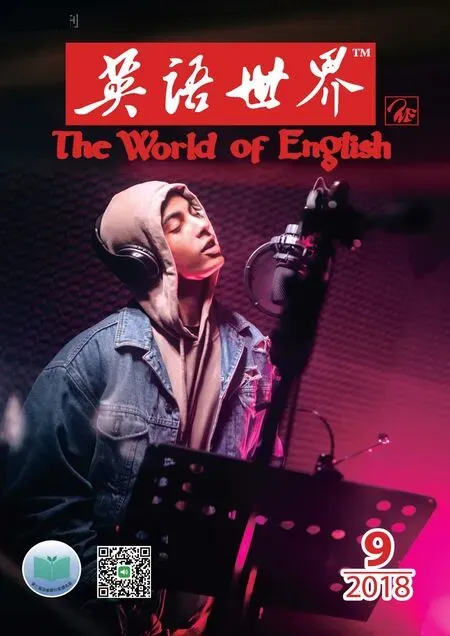
Hip-hop as Therapy:The Healing Qualities of Rap
2018-11-28 20:45:56唐娜克萊爾切斯曼周厚娟
英語世界 2018年9期
關(guān)鍵詞:音樂
文/唐娜-克萊爾·切斯曼 譯/周厚娟
So many of our favorite artists have expressed that making music is their form of therapy. And as fans, we often listen to music as a means of coping with our own struggles.
[2] Think of Isaiah Rashad1來自田納西州的嘻哈歌手和專輯制作人。《太陽的長篇演說》為其首張錄音室專輯,2016年一發(fā)行就在美國公告牌排行榜前200中排第17位,首周銷量1.9萬張。’s The Sun’s Tirade, an album that Rashad had to fight through addiction and depression to deliver to his fans. Throughout the project, he dealt leveling2level摧毀。blows,rapping about potentially hanging himself and the stagnancy of his depression.Writing those lyrics helped Rashad through the situation and gave listeners the comfort to know they were not alone.
太多深受我們喜愛的音樂人都曾表示做音樂于他們而言是一種心理治療。作為粉絲,我們也時常將聽音樂當(dāng)作一種應(yīng)對困難的方式。
[2]以賽亞·拉沙德經(jīng)歷了跟毒癮和抑郁癥的抗?fàn)帲谱鞒觥短柕拈L篇演說》這張專輯,呈現(xiàn)給粉絲。制作專輯的過程中,他戰(zhàn)勝了種種挫折,歌詞描述他曾想上吊自殺以及陷入的抑郁困境。寫那些歌詞讓拉沙德挺了過來,也使歌迷們得到慰藉:他們得知原來自己并非個例。
[3] Rob Jackson, co-founder of the hip-hop focused therapy program Beats Rhymes and Life, points out that hiphop has a long history of healing: “The principles of hip-hop are rooted in giving voice to the oppressed and resisting oppressive systems, political advocacy,vibrant youth expression, and raising public conscious and awareness.The ability to tell one’s story from a strength-based perspective3指優(yōu)勢心理學(xué)(strengths-based psychology)的角度。蓋洛普公司前董事長、優(yōu)勢測評工具StrengthsFinder的主設(shè)計人、“優(yōu)勢心理學(xué)之父”唐納德·O.克利夫頓(Donald O.Clifton)認(rèn)為,每個人獨(dú)有的優(yōu)勢和能力(而非短板)將決定他們的成長故事、塑造他們的自我。, which allows youth to reframe the narrative that has been told to them or they often believe themselves, is critical to both healing and development.”
[4] Sometimes, that healing can have a physical impact on an artist. During an interview in 2016, Isaiah Rashad described music expression as working out: “After you’re done with it, you feel better? It’s like that. It’s like that with music and shit… I thought by therapy you meant some spill-the-beans-youfeel-better4spill the beans〈非正式〉無意或不慎揭露秘密信息。shit. Nah, it’s like a mental therapy, physical thing.”
[5] Jackson agrees that there is a major difference between traditional talk therapy and therapy through hip-hop:trust. Hip-hop therapy is able to access a patient’s trust in a more conscious way than traditional therapy.
[6] Music therapist and veteran educator Michele Schnur Ritholz explains that music is an innate part of the human experience, and at our core we feel a connection to various musical elements.
[3]嘻哈治療項目“節(jié)奏、韻律與生活”的聯(lián)合創(chuàng)始人羅布·杰克遜指出嘻哈樂有著悠久的治愈史:“嘻哈的信念根植于讓被壓迫者發(fā)聲和反抗壓迫體制、表達(dá)政治主張、青年充滿活力的表達(dá)以及喚起公眾意識。從優(yōu)勢心理學(xué)的角度講述一個讓青年人可以改寫他們一直以來聽說或經(jīng)常信以為真的故事,這種能力對于療愈和發(fā)展都至關(guān)重要。”
[4]有時,這種治療會對音樂人產(chǎn)生實(shí)質(zhì)影響。在2016年接受的一個采訪中,以賽亞·拉沙德把音樂表達(dá)比喻成鍛煉:“鍛煉完,你感覺更好吧?就是那種感覺。音樂和大便給你同樣的快感……我以前以為所謂心理治療,就是‘秘密一吐為快’的那種廢話。其實(shí)不是,音樂是一種有實(shí)質(zhì)影響的精神治療。”
[5]杰克遜認(rèn)同傳統(tǒng)的談話療法和嘻哈療法之間存在巨大的不同點(diǎn):信任。與傳統(tǒng)療法相比,嘻哈療法在意識上更容易讓患者產(chǎn)生信任感。
[6]音樂治療師、資深教育家米歇爾·施努爾·里托茲解釋說,音樂是人類與生俱來的一種體驗,在內(nèi)心深處我們感受得到跟各種音樂元素的聯(lián)系。
[7] Speaking directly to hip-hop,Jackson adds: “The foundation of hiphop is grounded in African drums, jazz,blues, R&B, reggae, funk, and soul, and therefore it embodies the pain, struggle,innovation, and triumphs that the listener is having a visceral5visceral(未經(jīng)過認(rèn)真思考而)出自內(nèi)心的,發(fā)自肺腑的。reaction to.”
[8] That reaction allows listeners to build a deeper connection to their music, which in turn gives them a sense of community similar to the group atmosphere that Jackson underscores within his own therapy program. Ritholz agrees, suggesting that the relationship we build with our music is unique and easy to become enrapt6enrapt狂喜的。in. Fans often crediting their favorite albums or artists for giving them the strength to push through their darkest times.
[9] Asked if there are specific ways fans can engage with music to turn a casual listening session into a healing experience, Ritholz suggested lyrical analysis, which is second nature7second nature第二天性;習(xí)性。to hiphop fans.
[7]論及嘻哈,杰克遜補(bǔ)充說道:“嘻哈根植于非洲鼓樂、爵士、布魯斯、節(jié)奏布魯斯、雷鬼、放克和靈樂,因此它也包含了聽眾從內(nèi)心深處產(chǎn)生共鳴的痛苦、掙扎、創(chuàng)新和成功。”
[8]此種情感共鳴使得聽眾能夠在自身和音樂之間建立更深刻的聯(lián)系,進(jìn)而賦予他們一種社群意識,類似于杰克遜在他自己的治療項目中強(qiáng)調(diào)的集體氛圍。里托茲同意這一觀點(diǎn),并暗示我們跟音樂之間建立的關(guān)系獨(dú)一無二,讓人容易心醉神迷。粉絲們經(jīng)常將給予他們力量挺過低迷時期的專輯或歌手視為最愛。
[9]當(dāng)被問及有沒有什么特別的方法能讓粉絲將普通的聽歌過程轉(zhuǎn)化為治療體驗,里托茲的建議是分析歌詞,這是嘻哈樂迷的第二天性。
[10] “Next time your favorite song is on, listen with intention!” Jackson says,explaining how listeners can simulate the effects of structured music therapy from home. “Make it part of your selfcare practice so it’s not just ‘I listen to music while I’m doing a mundane task,’ but ‘I listen to the music, on the couch, with a candle lit and meditate with it.’ Allow music to de fine moments of peace and happiness, so that every time you hear a particular song you are reminded of how good you feel or felt.”
[11] Understanding that rap music has the ability to be an especially effective form of music therapy, Jackson has developed a unique 16-week hip-hop therapy program of his own.
[12] “Beats Rhymes and Life is the first in the world to use the combination of a teaching artist, clinical socialworker, and peer mentor, to deliver therapeutic services,” he explains. “The youth participate in a two hour process day and a two hour lab day each week.”
[13] “The process day is designed to engage youth in a curriculum that inspires critical analysis and discussions that we turn into bars8bar〈音樂〉小節(jié),指音樂被切分為時長相等的片段,在五線譜上通過垂直線來表示。and lyrics,” Jackson continues. “The youth then record their bars during the lab day, which are then turned into songs that go on a final group album. At the end of the sixteen weeks, the youth perform their music for an audience comprised of people who are invested in the youth’s lives.”
[14] Ritholz explains the power of music making as a healing tool for depression: “With or without words,clients may be activated to play when usually passive, express feelings, and move toward other emotional states as they feel enlivened and comforted by the music.”
[10]“下次聽到你最愛的歌,仔細(xì)聽!”杰克遜說道,并解釋聽眾如何在家里體驗到系統(tǒng)音樂療法的效果。“讓聽音樂成為自我關(guān)懷練習(xí)的一部分,不僅僅是‘我邊做瑣事邊聽音樂’,而是‘我點(diǎn)上蠟燭,躺在沙發(fā)上邊聽音樂邊沉思’。讓音樂來定義那些平靜和歡愉的時刻,這樣每次你聽到一首歌,你就會想起你正在經(jīng)歷的或是曾經(jīng)經(jīng)歷過的美好。”
[11]杰克遜認(rèn)識到說唱音樂能夠成為一種尤其有效的音樂治療形式,便推出了他自己研發(fā)的為期16周的獨(dú)特嘻哈療程。
[12]“‘節(jié)奏、韻律和生活’是世界首個集音樂教育家、門診社工以及朋輩導(dǎo)師多重身份于一體、具有治療功能的項目。”他解釋道,“他們每周要參與一個兩小時療程日和一個兩小時實(shí)驗室日。”
[13]“療程日的設(shè)定是為了讓年輕人參與到能夠啟發(fā)批判性分析和討論的課程中,而那些分析和討論我們可以轉(zhuǎn)變成小段旋律和歌詞。”杰克遜繼續(xù)說道,“在實(shí)驗室日,這些年輕人可以錄制自己的歌曲片段,然后制作成完整的歌曲,最終集合成為一張唱片。第16周,他們向觀眾——那些他們生命中重要的人,演奏自己的音樂。”
[14]論及音樂制作作為抑郁癥的療愈手段所具有的力量,里托茲解釋道:“無論音樂有沒有歌詞,那些通常消極被動的患者可能被激發(fā)起來演奏,表達(dá)情感,當(dāng)他們感到音樂的鼓舞和慰藉時,便會向其他情緒狀態(tài)靠近。”
[15] Ritholz says that the process of writing music and creating a safe space for their thoughts allows patients to become more comfortable with themselves and their ideas. Jackson seconds9second附議;支持,贊成(提議)。her sentiments: “Youth are given the opportunity to externalize with words on paper the dif ficult emotions that they are processing internally. Writing bars allows the youth more opportunity to gain insight for themselves.”
[16] Group therapy allows clients to develop a sense of purpose and belonging. The group atmosphere could be likened to the support an artist may get from their fellow artists as well as their community of dedicated fans. Recall the opening voice mail on The Sun’s Tirade,where Dave Free reminds Rashad that he has a host of fans eager to hold him and his music up.
[17] Those same fans build a community for themselves when rooting for an artist. In turn, they create an outlet to discuss the music and their own struggles. Listening to your favorite album when you’re looking to get through a tough time becomes therapeutic in the same way as it was for the artist in the studio. ■
[15]里托茲表示,通過寫音樂,為自己的思想打造一個避風(fēng)港,患者更容易接受自己和自己的想法。杰克遜表示認(rèn)同她的觀點(diǎn):“年輕人有機(jī)會通過寫下文字來表達(dá)他們內(nèi)心正在經(jīng)歷的復(fù)雜感受。寫作音樂小曲給年輕人更多了解自己的機(jī)會。”
[16]小組治療讓患者能夠產(chǎn)生一種目的感和歸屬感。小組氛圍所給予患者的就好比一個音樂人從他的同行及其忠實(shí)粉絲群體那里得到的支持。試回想《太陽的長篇演說》中一開始的語音留言,在這條信息中,戴夫·弗里提醒拉沙德還有一大群粉絲支持他和他的音樂。
[17]同樣是那些粉絲,在支持一個歌手的同時建立了一個社群。他們反過來創(chuàng)造了一個可以討論音樂和自身困境的出口。苦于掙扎如何渡過艱難時期時,聽最喜歡的專輯所具有的療愈性跟歌手制作音樂別無二致。 □
猜你喜歡
瘋狂英語·新悅讀(2022年8期)2022-09-20 01:32:14
小天使·一年級語數(shù)英綜合(2020年3期)2020-12-16 02:56:12
文苑(2020年6期)2020-06-22 08:41:40
海峽姐妹(2019年6期)2019-06-26 00:52:50
電影(2018年8期)2018-09-21 08:00:00
藝術(shù)啟蒙(2018年7期)2018-08-23 09:14:16
兒童繪本(2017年24期)2018-01-07 15:51:37
華人時刊(2017年13期)2017-11-09 05:39:13
西部大開發(fā)(2017年8期)2017-06-26 03:16:14
東方藝術(shù)·大家(2016年6期)2016-09-05 07:30:56