A Drink for the Devil魔鬼的飲料
2019-09-10 07:22:44保羅·克里斯特爾姚海濤
英語世界 2019年3期
保羅·克里斯特爾 姚海濤
Coffee is the second-most traded commodity in the world, behind only petroleum, and has become a mainstay of the modern diet. Believed to have originated in Ethiopia, coffee was used in the Middle East in the 16th century to aid concentration. But did you know it also sparked a social revolution in Britain in the 17th century? Here are six facts about the history of coffee…
1. Coffee may have been discovered by ‘excited goats’
Legend has it that Kaldi, a lonely goat herder in ninth-century Ethiopia, discovered the energising and invigorating1 effects of coffee when he saw his goats getting excited after eating some berries from a tree. Kaldi told the abbot2 of the local monastery about this and the abbot came up with the idea of drying and boiling the berries to make a beverage. He threw the berries into the fire, whence the unmistakable aroma of what we now know as coffee drifted through the night air. The now roasted beans were raked from the embers3, ground up and dissolved in hot water: so was made the world’s first cup of coffee.
The abbot and his monks found that the beverage kept them awake for hours at a time—just the thing for men devoted to long hours of prayer. Word spread, and so did the hot drink, even as far afield4 as the Arabian peninsula.
2. It was brewed by a saint from Mocha
An alternative story has us believe that coffee was first discovered by sheik5 Abou’l Hasan Schadheli’s disciple Omar. While in exile from Mocha6 (Arabia Felix in present-day Yemen), Omar, who was famous for his ability to cure the sick through prayer, lived in a desert cave near Ousab. Somewhat hungry, Omar one day chewed some berries only to find them bitter. He roasted them but this only made them hard; finally he tried boiling them, resulting in a fragrant brown liquid which, in an instant, gave him unnatural and exceptional energy and allowed him to stay awake for days on end. His ‘miracle discovery’ was held in such great awe7 that he was allowed to return home to Mocha and elevated to the sainthood while coffee percolated8 throughout the Arab world.
By the 16th century, coffee was the beverage of choice9 in Persia, Egypt, Syria and Turkey, its reputation as the ‘wine of Araby’ boosted no end by the thousands of pilgrims visiting the holy city of Mecca each year from all over the Muslim world. Yemeni merchants took coffee home from Ethiopia and began to grow it for themselves. It was prized by Sufis in Yemen who used the drink to aid concentration and as a spiritual intoxicant. They also used it to keep themselves alert during their nighttime devotions.
From the Middle East the popularity of coffee soon spread through the Balkans, Italy and to the rest of Europe, east to Indonesia and then west to the Americas, largely through the Dutch.
3. Coffee forged a social revolution
Coffee was so powerful a force that it forged a social revolution. Coffee was drunk in the home as a domestic beverage but, more significantly, it was also drunk in the ubiquitous public coffee houses10—qahveh khaneh11—which sprang up12 in villages, towns and cities across the Middle East and east Africa. These coffee houses soon became all the rage and were the place to go to socialise. Coffee drinking and conversation were complemented by all manner of entertainment: musical performances, dancing, games of chess and, most crucially, gossiping, arguing and discussing the breaking news of the day (or night). These coffee houses soon became known as ‘schools of the wise’, the place you went to if you wanted to know what was going on in your world. The link between coffee and intellectual life had been established.
4. It was believed that coffee is ‘sinful’
Coffee, like alcohol, has a long history of prohibition, attracting fear and suspicion and religious disquiet and hypocrisy. Had the zealots (of all religions) got their way13 then there would not be very many coffee houses open today.
Coffee drinking was banned by jurists and scholars meeting in Mecca in 1511. The opposition was led by the Meccan governor Khair Beg, who was afraid that coffee would foster opposition to his rule by bringing men together and allowing them to discuss his failings. Thus was born coffee’s association with sedition14 and revolution. It was decreed sinful (haraam15), but the controversy over whether it was intoxicating or not raged on over the next 13 years until the ban was finally rescinded16 in 1524 by an order of the Ottoman Turkish Sultan17 Selim I, with Grand Mufti18 Mehmet Ebussu?d El-?madi issuing a fatwa19 allowing coffee to be drunk again. Beg was executed for his troubles by command of the Sultan himself, who further proclaimed coffee to be sacred. In Cairo there was a similar ban in 1532; coffee houses and coffee warehouses there were ransacked.
5. Coffee was known as ‘the devil’s cup’
It did not take long for coffee to travel the short distance to the European mainland where it was landed first in Venice on the back of the lucrative trade the city enjoyed with its Mediterranean neighbours. Initially, however, coffee met with the suspicion and religious prejudice it had suffered in the Middle East and Turkey. The word on the street20, filtering back from intrepid21 European travellers to the mysterious and mystical lands of the east, was of an equally mysterious, exotic and intoxicating liquor. To Catholics it was the ‘bitter invention of Satan’, carrying the whiff22 of Islam, and it seemed suspiciously like a substitute for wine as used in the Eucharist23; in any event, it was outlawed.
Such was the consternation that Pope Clement VIII had to intervene: he sampled coffee for himself and decreed that it was indeed a Christian as well as a Muslim drink. On tasting it he wittily declared: “This devil’s drink is so delicious… we should cheat the devil by baptising it!” From then on, coffee has been dubbed the devil’s drink, or the devil’s cup.
6. Coffee came to England in the mid-17th century
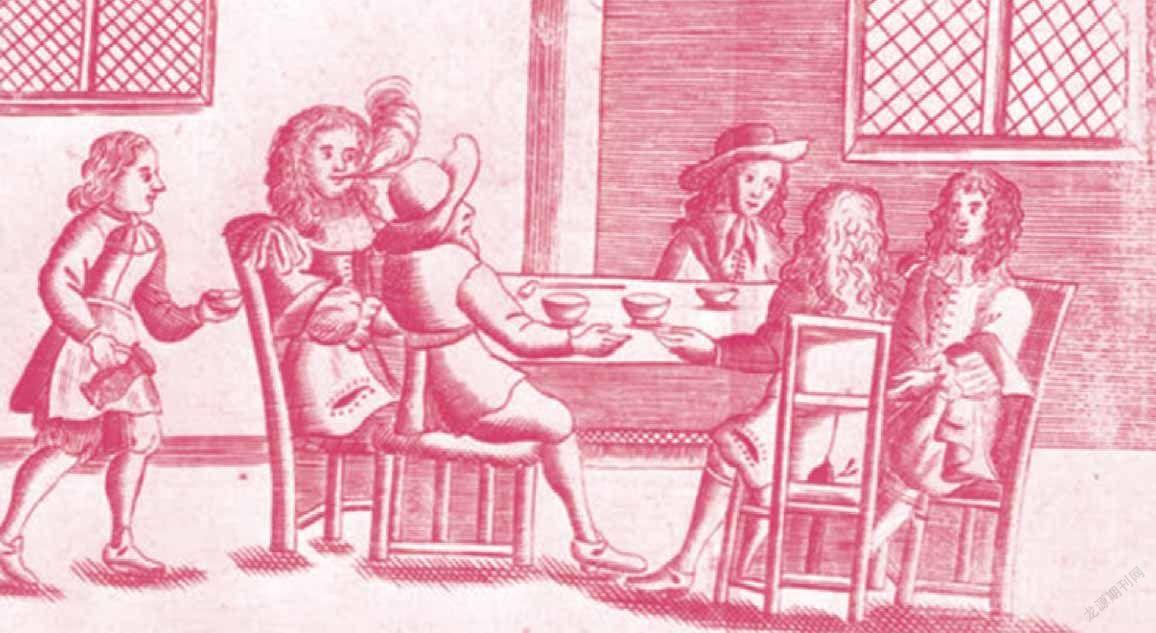
According to Samuel Pepys, England’s first coffee house was established in Oxford in 1650 at The Angel24 in the parish25 of St Peter-in-the-East, by a Jewish gentleman named Jacob, in the building now known as The Grand Cafe. London’s first coffee house opened in 1652 in St Michael’s Alley, near St Michael at Cornhill’s churchyard. It was run by Pasqua Rosée, a Greek man who in 1672 also set up a coffee stall in Paris. Pepys visited the London coffee house on 10 December 1660: “He [Col.26 Slingsby] and I in the evening to the Coffee House in Cornhill, the first time that ever I was there, and I found much pleasure in it, through the diversity of company and discourse.”
全球貿易量最大的商品是石油,其次便是咖啡,后者已成為現代飲食的一大支柱。據說,咖啡源自埃塞俄比亞;16世紀的中東人借其提升專注力。但是,你可知道,咖啡還曾在17世紀的英國引發一場社會革命?以下6點,乃是咖啡史紀實。
1. 或由“亢奮山羊”引導發現
傳說在公元9世紀,埃塞俄比亞有個叫卡爾迪的孤單牧羊人,他看到自家羊兒吃了樹上的漿果后亢奮不已,發現咖啡能夠使人活力倍增、精神煥發,便將此事告知當地修道院院長。院長想到把漿果烤干,煮成飲料。他將漿果投入火中,隨后一陣香氣飄出,沁透夜空,與當今咖啡的味道別無二致。烘烤罷,他從余燼中耙出豆子,磨碎后放入熱水溶解:世界上第一杯咖啡就此誕生。
院長和修道士們發現,這種飲料能讓自己連續幾小時不犯困——長時間專注祈禱者恰需此物。消息不脛而走,該熱飲也隨之傳播,甚至傳到遙遠的阿拉伯半島。
2. 穆哈某圣徒首制咖啡
還有個故事稱,咖啡最早由謝赫阿布·哈桑·查德赫利的追隨者奧馬爾發現。奧馬爾以祈禱醫病著稱,曾被逐出穆哈(在現今的也門),流亡期間棲身于烏薩布附近的荒漠洞窟。一天,他覺得有點兒餓,就嚼了些漿果,只覺味道苦澀。他把漿果烤了烤,結果變得硬邦邦的。最后,他試著將其煮沸,熬制出一種棕色液體,香氣十足,他喝后獲得了一種奇異的能量,使他連續幾天睡意全無。此項“神奇發現”令人敬畏無比,所以他獲準歸鄉,回到穆哈,并升為圣徒,而咖啡也在阿拉伯世界廣為流傳。
一直到16世紀,咖啡都是波斯、埃及、敘利亞和土耳其的首選飲品。圣城麥加每年有數千名穆斯林朝圣者,盛贊其為“阿拉伯葡萄酒”。也門商人從埃塞俄比亞把咖啡帶回去種植,供自己享用。也門的蘇菲派人士則用這種飲料提升專注力,并將其作為精神麻醉劑,對它大為贊賞。他們還在夜間祈禱時借助咖啡怡神醒腦。
很快,咖啡從中東傳出,風靡巴爾干地區,繼而進入意大利和歐洲其他地區,接著向東傳入印度尼西亞,而后又主要通過荷蘭人向西傳入美洲。
3.推動社會變革
咖啡威力無窮,推動了一場社會變革。咖啡不僅走進千家萬戶,成為家常飲品,更重要的是,它還催生了隨處可見的公共咖啡館。這些咖啡館出現在中東和東非各村鎮及城市,很快風靡一時,成為社交之所。人們邊飲咖啡邊聊天,還有各種娛樂助興,如音樂演出、舞蹈、國際象棋等,其中最關鍵的是,議論當天(或當晚)的重大事件,發表見解,交流看法。很快,這些咖啡館被稱作“智者學園”,若想了解時事,便要到此一游。咖啡與智識生活已然有了關聯。
4.曾被視作“邪惡之物”
咖啡和酒精一樣,曾長時間遭禁;引起恐懼與懷疑,也令宗教界不安并顯露出虛偽的一面。如果當時宗教(此處指各路宗教)狂熱分子得逞,如今就不會有這么多咖啡館營業。
1511年,法學家與學者在麥加會面,將咖啡列為禁品。這些反對者的領頭人是麥加市市長海爾·貝格,他生恐咖啡會引得民眾聚議其過失,進而反對其統治。咖啡與煽動和革命的關聯由此產生。當局判定咖啡為邪惡之物。但是,在接下來的13年里,人們就咖啡是否致醉激辯不休。直到1524年,奧斯曼土耳其蘇丹塞利姆一世下旨解禁,大穆夫提穆罕默德·埃布蘇德·埃伊馬迪發布詔書,允許人們飲用咖啡,這場爭議才休止。因貝格滋生事端,蘇丹下令將其處決,進而將咖啡奉為圣物。1532年,開羅也有類似禁令;那里的咖啡館與咖啡貨棧均遭洗劫。
5.曾獲稱“魔鬼飲品”
不久,咖啡就傳到了鄰近的歐洲大陸。由于在威尼斯及其地中海鄰城進行貿易利潤豐厚,咖啡首先落足此地。然而,正如當年在中東和土耳其的境況,咖啡一開始也受到質疑,遭遇宗教偏見。從勇敢的歐洲旅者到神秘莫測的東方國度,坊間傳言散播各處,說咖啡如東方般神秘莫測,是一種致醉的異域烈酒。對天主教教徒來說,它是“撒旦釀的苦汁”,透著伊斯蘭教的氣息,而且與圣餐中的葡萄酒有混同之嫌;無論如何,法不能容。
咖啡引起如此恐慌,教皇克雷芒八世不得不進行干預。他親自品嘗咖啡,認定其既屬于伊斯蘭教,也歸于基督教。品嘗時,他巧妙地宣布:“魔鬼的飲料美味無比……我們應當為它施洗,欺騙魔鬼。”從那時起,咖啡就被稱為“魔鬼的飲料”,也叫“魔鬼飲品”。
6. 17世紀中葉傳入英格蘭
據塞繆爾·佩皮斯記載,英格蘭首家咖啡館由猶太紳士雅各布于1650年創建于牛津,位于城東圣彼得教區天使旅店,如今該棟建筑名為“大咖啡館”。倫敦首家咖啡館則建于1652年,位于圣米迦勒巷,附近是康希爾街上的圣米迦勒教堂墓園。其創辦者為希臘人,名叫帕斯夸·羅賽,他還于1672年在巴黎擺了咖啡攤。1660年12月10日,佩皮斯到倫敦造訪這間咖啡館,他寫道:“晚上,我和斯林斯比上校去康希爾街的咖啡館,那是我第一次來這個地方。這里的人形形色色,無所不談,我感到其樂無窮!”? ? ? ? ? ? ? ? ?□
(譯者為“《英語世界》杯”翻譯大賽獲獎選手,單位:南京航空航天大學)