
Five Innovations That Have Advanced Women’s Rights改善女性權利的五大發明
2020-04-10 11:05:45覃軍譯
英語世界 2020年3期
覃軍譯
From the internet to the bicycle, here are just a handful of innovations we take for granted today that have shaped the lives of women and girls worldwide.從互聯網到自行車,有一些而今看來習以為常的發明,卻影響了全球女性的生活。
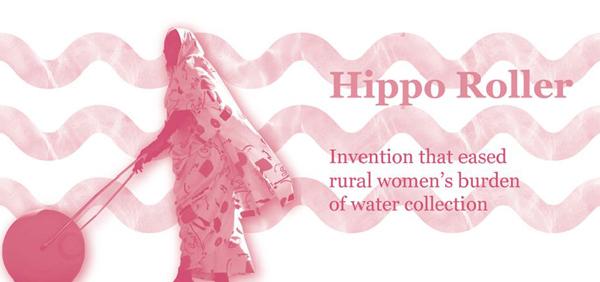
Hippo Roller
Invention that eased rural womens burden of water collection.
Access to clean water is a human necessity. You need it to drink, clean, cook, bathe and more. Yet, today 2.1 billion people—around 30 per cent of the worlds population—lack access to safe, readily available water at home. Unfortunately, for the millions of women and girls at the heart of the water crisis, especially in rural areas, the burden of fetching water falls disproportionately on them. This means an increased risk of violence in often treacherously1 long journeys to fetch water, and time taken away from other activities, such as income-generating work and school or even leisure and play—all of which prevents women and girls from living a full life. In an attempt to ease the strain and time involved to get water in tough rural conditions, two South Africans in the early 1990s invented the Aqua Roller, now commonly known as the Hippo Roller. A portable barrel-shaped drum container that rolls on the ground, the Hippo Roller can carry up to five times more water than a single bucket. To date, the invention has changed the lives of half a million people across more than 20 countries. While not a permanent solution to the water crisis, it along with other innovative solutions, such as the personal water filter LifeStraw, are noteworthy endeavors improving the lives of women and girls in rural communities.
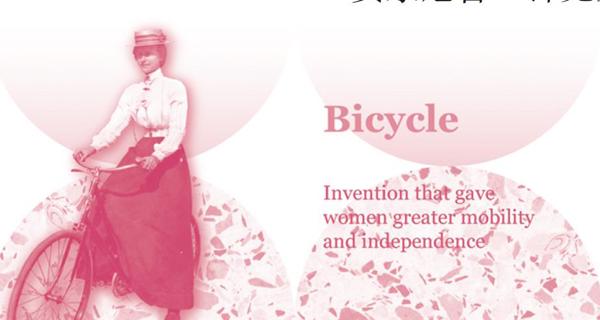
Bicycle
Invention that gave women greater mobility and independence.
A symbol of “free, untrammeled womanhood” as American womens rights activist Susan B. Anthony so eloquently put it, the bicycle gave women newfound freedom of movement, challenged stereotypes around womens physical strength and transformed dress codes. Coinciding with the first wave of feminism, the invention of the modern bicycle, as we know it today, by an English engineer in the 1880s came about as an alternative to the now impractical penny-farthing2 that consisted of a large front wheel and a much smaller rear wheel. While not necessarily invented for women in mind, the bicycle ironically gave women independence: In some regions of the world at the time, this meant women could move around freely without having to rely on chaperones, carriages or horseback. Of course, it did not come without backlash: Women were warned riding bicycles was “immoral” and doctors even went so far as to say that it could lead to a terrifying medical condition called bicycle face—a special risk to womens appearance and complexion. As wild myths circulated and the bicycle took off in popularity, women did not back down. Victorian women and reformists alike called for more rational clothing and baggier undergarments to ride bikes. And others, such as Annie Londonderry, a Latvian immigrant to the United States, challenged prevailing perceptions of femininity by becoming the first woman to ride around the world in a bicycle from 1894 to 1895. More than a century later, the race for equality still continues.
Internet
Invention that created an open space for women to connect and galvanize.
Similar to the advent of the printer, radio, television and phone, the internet has revolutionized how women and girls live their lives. Whether through websites, social media, instant messaging or email, it has opened up avenues for online activism, community-building, career opportunities and learning, increased awareness and engagement around womens rights issues, and enabled women to set up businesses, political campaigns and more. From MeToo3 to NiUnaMenos4 to TimesUp5, social media movements in particular have exposed gender inequalities and violence against women unlike ever before and put pressure on public and private officials6 to enact change. Like any technology, the internet has its dark side: Offline inequalities, including misogyny7, stalking, hate, harassment and trafficking, have permeated online. Misinformation on womens rights threatens to roll back rights. And, for 49 per cent of the worlds population without access to the internet, the digital gap leaves the poorest and most vulnerable in the dark and without the adequate skills and education needed to survive in todays rapidly evolving tech-enabled economy. Addressing this divide will be critical in the years to come.
Sanitary pad
Invention that improved womens health and participation in society.
What if you had to use wool, moss, animal skin, old rags, newspapers or a sanitary belt for your periods? If it seems outlandish8, it is—along with the more outlandish myths that women on their periods should be in solitary confinement9, are dirty, can make food rot or even get eaten by sharks while swimming. Yet, it was only more than a century ago that nurses in France created the first disposable sanitary pads, incidentally to control excessive bleeding among male soldiers. By the end of the 19th Century, the first commercially available disposable pads came out, but took several decades before they evolved to become somewhat more practical for women to use and acquire (if you could afford it). The breakthrough invention improved women and girls hygiene and health, school attendance, livelihoods and economic opportunities. Yet, today, in spite of some efforts, sanitary pads still remain out of reach for millions of women and girls living in poverty and are taxed in several countries around the globe, including as a “luxury” item. Access aside, periods still remain a taboo topic. Stigma10 and discrimination surrounding menstruation prevents women and girls in some countries from entering physical spaces, such as their home, school, work or place of worship. If only there was an invention that could wipe out discrimination against women…
Pants
Invention that broke stereotypes and helped imagine a gender-equal world.
From pink hats to pantsuits, womens clothes have the power to challenge stereotypes, transform notions of gender identity and symbolize resistance and power. And, well, sometimes it just boils down to11 practicality. Try riding a bike in a 15-pound Victorian dress. Pants would make sense, right? Well, not so much for sticklers12 reinforcing what a womens place should be. In fact, the evolution of pants is a fascinating look into how fashion, feminism and sexism are inextricably linked. Take, for example, the iconic French war heroine Joan of Arc who famously cross-dressed in mens armour, tunics and hoses. When burned at the stake as a heretic by the English in 1431, what was one of the most damaging charges against her? Wearing mens clothes. Fast forward centuries later, women faced backlash for wearing baggy pants in the 19th Century and arrest for wearing such garments into the turn of the 20th Century. Like much of history, reality dictates fashion and fashion pushes boundaries: World War I and II, for instance, drove women to wear pants as they took on traditionally male jobs. As the world of work changed for millions of women, pioneers such as French designer Coco Chanel rocked the fashion world by laying the foundations for the pantsuit, a two-piece garment that post-war women entering the workforce adopted and today is a power symbol. And, for the millions of women in poverty working the fields or factories today, wearing looser, more traditionally male clothes is not so much a fashion statement but a necessity to be mobile, earn a living and put food on the table.
河馬滾桶
減輕農村婦女取水負擔。
潔凈水源是人類生活的必需品。人們需要飲用純凈水,用它來清潔、做飯、洗澡等。然而,如今仍有21億人(約占世界人口的30%)家中缺少安全充足的生活用水。不幸的是,對深陷水資源危機中的數百萬婦女和女童來說,特別是農村地區的女性,取水的負擔過多地落在了她們身上。這就意味著,在往往漫長而危險的取水途中,發生暴力侵害的風險會增加,而參與上班賺錢、上學讀書、休閑娛樂等活動的時間則相對減少——這一切成了女性追求美滿生活的絆腳石。為了緩解偏僻農村取水的壓力,節省取水時間,兩名南非人于1990年代初發明了水輥(現通稱為“河馬滾桶”)。河馬滾桶是一種便攜式桶狀容器,可在地面上滾動,承載水量可達普通水桶的五倍。迄今為止,該項發明已經改變了20多個國家50萬人的生活。用河馬滾桶解決水資源危機雖不是長久之計,但它和個人濾水器“生命吸管”等其他發明都是值得關注的創新嘗試,可以改善農村女性的生活。
自行車
讓女性出行更便利,人格更獨立。
美國女權活動家蘇珊·B.安東尼曾一針見血地指出,自行車是“自由奔放的女性氣質”的象征,讓女性能夠自由出行,挑戰了人們對女性體力差的成見,改變了女性的著裝要求。現代自行車的出現恰逢女權主義浪潮第一次興起。如今眾所周知,一位英國工程師在1880年代發明了現代自行車,為了取代當時那種不實用的前輪大后輪小得多的自行車。雖然發明自行車最初未必是為了造福女性,但萬萬沒想到,這項發明卻讓女性更加獨立:在當時的某些地區,這意味著女性不必依靠伴侶、馬車或騎馬就可以自由出行。當然,女性騎車也遭到了強烈反對:婦女遭到警告說她們騎車是“道德敗壞的行為”,有醫生甚至宣稱騎車會讓女性患上可怕的“單車臉”,尤其損害女性的容貌和膚色。謠言甚囂塵上,自行車愈發流行,而女性沒有退縮。維多利亞時代的婦女和改革派都呼吁女性身穿更實用的衣服和寬松的內衣以方便騎車。還有一些人挑戰了當時人們對女性的普遍觀念,比如拉脫維亞裔美國人安妮·倫敦德里在1894到1895年騎車環游世界,成為完成此舉的首位女性。一個多世紀后的今天,爭取男女平等的斗爭仍在繼續。
互聯網
賦予女性一個開放的空間,相互交流,彼此激勵。
正如打印機、廣播、電視和電話一樣,互聯網的出現徹底改變了女性的生活方式。通過網站、社交媒體、即時消息和電子郵件,互聯網為婦女提供了新途徑,她們可以由此開展線上平權運動、建立社群、獲取工作和求學;互聯網也提高了人們對婦女維權問題的認識和參與度;同時,互聯網還使女性得以經商和從政等。從“MeToo反性騷擾運動”到“NiUnaMenos抗議殺害婦女事件”,再到“TimesUp反性騷擾運動”,特別是在社交媒體上開展的種種運動,前所未有地揭露了性別歧視以及對婦女施暴的行為,并向議員施壓,要求他們做出改變。同其他技術一樣,互聯網也有缺點:現實生活中的歧視現象,包括厭女、跟蹤、仇恨、騷擾、販賣人口等,已經在網上蔓延開來。有關婦女權利的虛假信息則有可能削減女性權利。而且,全球有49%的人口無法上網,這種信息鴻溝讓最貧窮、最脆弱的人深陷黑暗,缺乏足夠的技能和教育,無法在當今快速發展的科技驅動型經濟社會中生存下去。未來幾年,消除這一鴻溝將至關重要。
衛生巾
改善婦女健康狀況,提高婦女社會參與度。
如果月經期間不得不使用羊毛、苔蘚、動物皮、舊破布、報紙或衛生帶,你會是什么感受?這聽起來似乎很奇怪,確實是——還有一些更奇怪的,比如女性在經期應該被單獨監禁,身體骯臟,會導致食物腐爛,甚至游泳時會被鯊魚吃掉。其實,一次性衛生巾問世才一百多年,是法國護士在為男性士兵傷口止血時受到啟發而發明的。19世紀末,衛生巾作為商品首次進入市場,但數十年后,衛生巾才變得方便實用,購買便捷(當然是在買得起的情況下)。對女性而言,這項突破性發明改善了她們的衛生健康狀況,提高了就學率,改善了生活,提供了更多就業機會。然而,盡管人們付出了一些努力,數百萬生活在貧困中的女性如今還是用不上衛生巾,而在某些國家,衛生巾還被征稅,甚至被當作“奢侈品”。除了衛生巾的使用,月經仍然是一個禁忌話題。人們對月經的恥辱感和歧視使得一些國家的女性無法拋頭露面,比如在家里、學校里、工作地或禮拜場所。要是有一項發明能消除對婦女的歧視該多好……
褲子
打破對女性的刻板印象,幫助構想一個性別平等的世界。
從粉色帽子到長褲套裝,女性服裝的變化可以改變人們的成見,轉變性別認同觀念,象征抵抗和權力。當然,有時候人們考慮的只是服裝的實用性。讓你穿著15磅重的維多利亞式裙服騎車,你就知道褲子的好處了!不過,對于那些認為婦女不應該拋頭露面的頑固派來說,褲子的意義就沒那么明顯了。事實上,從褲子的演變中,我們可以看到時尚、女權主義和性別歧視之間是何等的密不可分。比如,法國著名的民族女英雄圣女貞德就曾穿著男式的盔甲、束腰外套和長統襪作戰。1431年被英國人作為異教徒燒死在火刑柱上時,她被控犯下的最嚴重的罪名是什么?其中之一就是身穿男裝。即使到了19世紀,女性仍會因為身著寬松的褲子而遭到強烈反對;20世紀初,她們甚至會因此而遭到逮捕。從歷史來看,現實決定時尚,時尚突破界限:比如,兩次世界大戰時,女性在從事傳統的男性工作時不得不身穿褲子。隨著數百萬女性工作環境的變化,法國設計師可可·香奈兒等先鋒奠定了衣褲套裝的基礎,轟動了時尚界。衣褲套裝是一種兩件套的服裝,備受戰后進入職場的女性的青睞,今天已成為一種權力象征。對于如今在農田勞作或在工廠上班的數百萬貧困婦女來說,身穿更寬松、更傳統的男性服裝則并非宣揚時尚,而是必須如此以便行動利落、賺錢糊口。□
(譯者單位:湖北民族大學)
