兒童獲得性重型再生障礙性貧血予不同劑量丙種球蛋白輔助免疫抑制治療的療效評(píng)價(jià)
2020-05-06 13:28:42王立峰
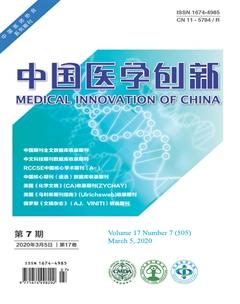
中國(guó)醫(yī)學(xué)創(chuàng)新
2020年7期
關(guān)鍵詞:兒童
王立峰

【摘要】 目的:對(duì)比分析不同劑量丙種球蛋白(intravenous immunoglobulin,IVIG)靜脈輔助免疫抑制治療兒童獲得性重型再生障礙性貧血(aplastic anemia,AA)的臨床療效。方法:回顧性分析2013年1月-2018年3月收治的獲得性重型AA 72例患兒臨床資料,接受IVIG輔助免疫抑制治療時(shí)按給予不同劑量IVIG進(jìn)行分組,其中35例患兒接受200~400 mg/(kg·d)的低劑量IVIG治療作為Ⅰ組,另37例患兒接受1 g/(kg·d)的高劑量IVIG治療作為Ⅱ組,隨訪時(shí)間截至2019年3月31日,對(duì)兩組的臨床療效、并發(fā)癥發(fā)生率等進(jìn)行統(tǒng)計(jì)比較。結(jié)果:Ⅰ、Ⅱ組的總有效率、總生存率比較,差異均無(wú)統(tǒng)計(jì)學(xué)意義[62.9%(22/35) vs 70.3%(26/37),字2=0.421,P>0.05]、[77.1%(27/35) vs 83.8%(31/37),字2=0.643,P>0.05]。免疫抑制治療3個(gè)月時(shí)Ⅱ組的有效率要高于Ⅰ組[48.6%(18/37) vs 20.0%(7/35)](字2=5.873,P=0.027);無(wú)效患兒首劑IVIG距離首劑ATG間隔時(shí)間(3.6±1.1)d,而有效患兒間隔時(shí)間為(8.3±0.9)d,兩者比較差異有統(tǒng)計(jì)學(xué)意義(t=9.817,P=0.008)。免疫抑制治療6個(gè)月內(nèi)Ⅰ、Ⅱ組的感染總發(fā)生率、感染相關(guān)病死率比較,差異均無(wú)統(tǒng)計(jì)學(xué)意義(P>0.05),但Ⅱ組嚴(yán)重感染發(fā)生率較Ⅰ組明顯降低[5.4%(2/37) vs 31.4%(11/35)],差異有統(tǒng)計(jì)學(xué)意義(字2=9.375,P=0.007)。結(jié)論:獲得性重型AA患兒以高劑量IVIG輔助免疫抑制治療與低劑量比較能增加早期的治療有效率,降低嚴(yán)重感染發(fā)生率,但對(duì)總有效率、總生存率、總感染率以及感染相關(guān)病死率未見(jiàn)明顯影響。
【關(guān)鍵詞】 再生障礙性貧血 免疫抑制治療 丙種球蛋白 兒童
[Abstract] Objective: To analyze the efficacy of different doses of intravenous immunoglobulin (IVIG) in the treatment of acquired severe aplastic anemia (AA) in children. Method: The clinical data of hospitalized 72 cases children with acquired severe AA who received adjuvant immunosuppressive therapy of IVIG from January 2013 to March 2018 were retrospectively analyzed. According to different doses of treatment, the children were divided into low dose group [groupⅠ, 35 cases, 200-400 mg/(kg·d)], high dose group [group Ⅱ, 37 cases, 1 g/(kg·d)]. Follow up deadline was March 31, 2019. The clinical efficacy of the two groups was statistically analyzed. Result: The total effective rate and total survival rate in groupⅠ and Ⅱwere not statistically significant? [62.9%(22/35) vs 70.3%(26/37), 字2=0.421, P>0.05] [77.1%(27/35) vs 83.8%(31/37), 字2=0.643, P>0.05]. The effective rate of anti thymocyte globulin (ATG) treatment in group Ⅱ was higher after 3 months than that of group Ⅰ[48.6%(18/37) vs 20.0%(7/35)] (字2=5.873, P=0.027). The interval time between the first dose of IVIG and the first dose of ATG in ineffective children was (3.6±1.1)d, while that in effective children was (8.3±0.9) d,there was significant difference between the two groups (t=9.817, P=0.008). The total incidence of infection, infection related fatality rate in group Ⅰ and Ⅱ after the use of ATG for 6 months were not significant (P>0.05), but the incidence of serious infection [5.4%(2/37) vs 31.4%(11/35)] in group Ⅱ was significantly lower than that of group A (字2=9.375, P=0.007). Conclusion: High dose of IVIG therapy can increase the early response rate in children with acquired severe AA, but it does not increase the long-term effectiveness, cure rate. In addition, it can reduce the severe infection rate, but cannot reduce the total infection rate and infection related mortality rate.[Key words] Aplastic anemia Immunosuppressive therapy Gamma globulin ChilFirst-authorsaddress: The Affiliated Hospital of Liaoning University of Traditional Chinese Medicine, Shenyang 110032, China
再生障礙性貧血(aplastic anemia,AA)是兒童時(shí)期較嚴(yán)重一類血液疾病,其免疫介導(dǎo)致病理論在國(guó)際上已得到統(tǒng)一,同時(shí)以此理論為基礎(chǔ)治療AA時(shí),聯(lián)合應(yīng)用免疫球蛋白(ATG)、環(huán)孢素A(cyclosporine A,CSA)的免疫抑制方案已取得明顯療效[1]。靜脈應(yīng)用丙種球蛋白(intravenous immunoglobulin,IVIG)有著明顯的免疫調(diào)節(jié)機(jī)制,臨床上常把高劑量IVIG作為免疫抑制劑用于AA的治療方案中[2]。近年來(lái)針對(duì)有……
登錄APP查看全文
猜你喜歡
少兒美術(shù)·書(shū)法版(2021年12期)2021-10-24 02:50:16
少兒美術(shù)·書(shū)法版(2021年9期)2021-10-20 06:35:28
少兒美術(shù)·書(shū)法版(2021年7期)2021-10-20 06:29:16
少兒美術(shù)·書(shū)法版(2021年11期)2021-10-20 06:23:28
少兒美術(shù)·書(shū)法版(2021年10期)2021-10-20 06:14:04
少兒美術(shù)·書(shū)法版(2021年8期)2021-10-20 06:08:10
少兒美術(shù)(2019年8期)2019-12-14 08:07:00
少兒美術(shù)(2019年3期)2019-12-14 08:02:56
雜文選刊(2016年7期)2016-08-02 08:39:56
記者觀察(2010年9期)2010-12-31 00:00:00