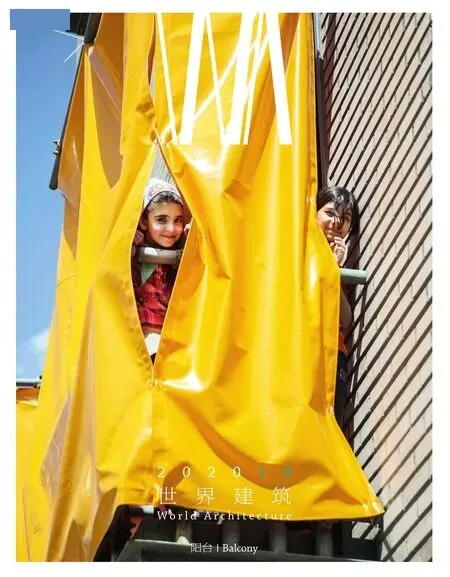
女孤收容所,漢瑟爾,伊朗
2020-10-22 07:14:42建筑設(shè)計(jì)ZAV建筑師事務(wù)所
世界建筑 2020年10期
建筑設(shè)計(jì):ZAV建筑師事務(wù)所
Architects: ZAV Architects
“不適宜”即“未完成”
為了應(yīng)對(duì)財(cái)政層面對(duì)項(xiàng)目的限制,我們采用了一種簡(jiǎn)樸、坦率的構(gòu)造。精簡(jiǎn)掉了所有“不適宜”的多余修飾和裝飾層。
“受壓制”即“無(wú)拘束”
對(duì)于女孤,在像漢瑟爾這樣由男性主導(dǎo)的宗教城市中,很難行使自主選擇生活方式的權(quán)利。基于對(duì)現(xiàn)狀的判斷,庇護(hù)所采用了內(nèi)向型的建構(gòu)來(lái)回應(yīng)對(duì)少女安保問(wèn)題的關(guān)注。我們利用陽(yáng)臺(tái)外側(cè)手動(dòng)操作的帷幔,將項(xiàng)目的立面轉(zhuǎn)變?yōu)橐粋€(gè)可以根據(jù)女孩的需求及意愿關(guān)閉、或面向城市開啟的媒介。女孩在學(xué)習(xí)如何操作這座建筑的同時(shí),也在生活中行使著自己有限的權(quán)利。
“過(guò)去”即“未來(lái)”
項(xiàng)目場(chǎng)地位于城市歷史肌理之中。該項(xiàng)目是設(shè)計(jì)團(tuán)隊(duì)向場(chǎng)地所有者提出的倡議。作為一種文化建設(shè),城市遺存具有促進(jìn)城市及其居民經(jīng)濟(jì)繁榮的潛力。因此,城市的過(guò)去成為了孤兒的未來(lái)。
“非住所”成為“住所”
我們將庇護(hù)所設(shè)計(jì)得像一間住宅,以尊重居住者最基本的、對(duì)隱私及歸屬感的需求。因此,庇護(hù)所為女孩們提供了私人用房及社交空間。
伊朗人有兩種生活:一種是在家里,他們可以隨心所欲。另一種是在外,他們必須表現(xiàn)得高度恪守禮儀。在伊朗,家是一個(gè)可以讓人感到安全和自由之處,是一個(gè)國(guó)家不予干涉之處。然而,這些孩子其實(shí)是生活在國(guó)家環(huán)境生活之中的。為確保她們的安全,政府采取了諸多謹(jǐn)慎措施,使這些容易受到傷害的孩子免遭誘拐和販運(yùn)的困擾,隨之而來(lái)的卻是大多數(shù)同齡女孩所不會(huì)面臨的束縛。這種安全隱患在某種程度上把她們排除在了公民生活之外。“政府不允許這些女孩隨意進(jìn)出外面的小鎮(zhèn),所以我們想,為什么要把外面的世界拒之門外?為何不把小鎮(zhèn)引入到她們的生活中?”戈杜西說(shuō)。政府官員堅(jiān)決反對(duì)修建這些陽(yáng)臺(tái)的想法,并竭力阻止。激烈的談判之后最終的結(jié)果是:我們會(huì)建造陽(yáng)臺(tái),但為了安撫官員,陽(yáng)臺(tái)將被蓋上“面紗”—— 一種可對(duì)其進(jìn)行調(diào)整、或隱藏或顯露陽(yáng)臺(tái)的滑動(dòng)帷幔。通過(guò)這種方式,陽(yáng)臺(tái)變成了一個(gè)介于交融與隔離之間獲得授權(quán)的臨界空間。
戈杜西坦言:“我十分確定女孩們最終會(huì)為了自己去爭(zhēng)取使用陽(yáng)臺(tái)的權(quán)利。”和其他同齡的孩子一樣,這些女孩也受到了社會(huì)因素的掣肘,比如結(jié)婚的壓力、符合社會(huì)審美的標(biāo)準(zhǔn)以及對(duì)宗教虔誠(chéng)的外在表現(xiàn),而這些陽(yáng)臺(tái)是其可以獨(dú)處的一隅。□(天妮 譯)
項(xiàng)目信息/Credits and Data
客戶/Client: The Late Ahmad Maleki, Parvin Maleki
初始建筑師/Original Architect: Mohamadreza Ghodousi,Parsa Ardam, Fati Rezaei
設(shè)計(jì)師/Designer: Seyed Hossein Hejrati, Mahshid Ghorbani
設(shè)計(jì)開發(fā)人員/Design Developer: Sara Jafari
項(xiàng)目協(xié)調(diào)員/Disciplines Coordinator: Golnaz Bahrami
機(jī)械工程師/Mechanical Engineer: Ali Ghasemzadeh
總基地面積/Total Site Area: 354 m2
基底面積/Ground Floor Area: 200 m2
總建筑面積(地下室、一層及上層)/Total Combined Floor Area (Basement, Ground floor and all upper floors):800 m2
預(yù)算/Total Initial Budget: 300,000 USD
造價(jià)/Total Actual Costs: 200,000 USD
設(shè)計(jì)及建造周期/Design and Construction Period: 2011-2013
攝影/Photos: Soroush Majidi, Tahmineh Monzavi, Aidin Gilandoost, Fati Rezaei

1 從集市街看建筑外景/Building view from the upper Bazar street
2 秋季西南向視野被遮擋/South-west view covered for autumn

3 建筑外景,陽(yáng)臺(tái)被遮擋/Building view: Balconies are covered
The "Undue" Is "Undone"
In response to the financial limitations of the project, an austere, and honest tectonic is adopted.All superfluous layers of finishing and ornamentation are considered as “undue”, and hence, are eliminated.
The "Oppressed" Is "Liberated"
It is hard to exercise one’s right in choosing one’s lifestyle as an orphaned girl in a male-dominated religious city such as Khansar. In a critique of the status quo, although the architecture of the shelter adopts an introverted typology in response to concerns of security and security of the girls, the fa?ade of the project transforms to a medium that allows the building to close down or open up to the city as the girls need or desire, capitalising on the hand-operated exterior curtains of the balconies.As the girls learn how to operate the building, they exercise their limited right over their practice of life.
The "Past" Is the "Future"
The site of the project is located within the historic fabric of city. The project was proposed to the owner of the site by the design team. Urban heritage, as a construct of culture, has the potential to initiate financial prosperity for the city and its inhabitants. As such, the past of the city becomes the future of its orphaned inhabitants.
The "Not-House" Becomes the "House"
The shelter is designed like a house to respect the basic human needs of the inhabitants of it; the need for privacy and sense of belonging. As such,the shelter accommodates private rooms as well as social spaces for the girls.
Iranians say that they have two lives: one inside the home, where they can do as they please, and one outside, where they have to assume a high degree of decorum. In Iran, the home is a place where you have security and freedom – it is a place where the state does not interfere. However, these children effectively live with the state. Excessive caution is taken to ensure their safety from kidnap and trafficking, which haunt vulnerable children such as these, and with that comes a restriction that most girls their age do not have. This vulnerability excludes them to some degree from civic life. "These girls are not allowed to go outside into the town as they please, so instead of shutting out the outside world, we thought why we don't bring the town inside to them?" Ghodousi says. State officials were staunchly against the idea of these balconies and fought to prevent them. The highly charged negotiations finally led to a compromise: the balconies would be built, but to appease the officials they would be covered in "hijabs" – sliding curtains,which could be adjusted to conceal or reveal.With this act, the balcony became an empowering threshold space between inclusion and exclusion.
"I never doubted that the girls would eventually claim the balcony for themselves,"Ghodousi confides. Like other children of their age, these girls are torqued by social forces like the pressure to get married, to live up to standards of beauty and to adopt outward displays of religiosity. The balcony is a place for them to have a moment for themselves.


11 空間場(chǎng)景–公共/Spatial Scenario – Public
12 空間場(chǎng)景–私密/Spatial Scenario – Private
13 坐在陽(yáng)光下的孩子/A child sitting in the sun


14 陽(yáng)臺(tái):建筑可調(diào)整的“面紗”/Balcony: An optional "Hijab" wearing for the building
15 在陽(yáng)臺(tái)上會(huì)談的孩子們/Children negotiating in the Balcony
16 入口庭院景觀/View from entrance yard
17 庭院景觀/View to the yard
評(píng)論
青鋒:真正令人震驚的可能不是陽(yáng)臺(tái),而是那層微妙的“面紗”。這讓人想起了徽州民居中供女眷窺視提婚者的小窗。在我們的日常生活中,很難想象陽(yáng)臺(tái)成為如此敏感的元素。它凸顯了陽(yáng)臺(tái)的半公共性。與之形成鮮明對(duì)比的是外墻上寥寥無(wú)幾的開窗,它們被深灰色的鐵門緊密地封閉起來(lái)。在這種條件下,黃色帷幔的褶皺與起伏變得極為重要,它們給予了孩子們更多的看向街道的機(jī)會(huì)。當(dāng)堅(jiān)實(shí)的墻體與帷幔的柔軟形成動(dòng)人的對(duì)比,我們?cè)谶@個(gè)陽(yáng)臺(tái)的設(shè)計(jì)上感受到了建筑學(xué)的溫度。
周漸佳:陽(yáng)臺(tái)作為一種媒介。伊朗女孤收容所中的陽(yáng)臺(tái)不由得令人想起一些經(jīng)典場(chǎng)景,諸如茱麗葉的陽(yáng)臺(tái),或者墨索里尼的陽(yáng)臺(tái)演講。在這些場(chǎng)景中,陽(yáng)臺(tái)變成了舞臺(tái),而舞臺(tái)上的表演遠(yuǎn)比舞臺(tái)本身重要。相比于評(píng)價(jià)女孤收容所陽(yáng)臺(tái)在建構(gòu)、材料上的成就,陽(yáng)臺(tái)代表的“在場(chǎng)”更值得關(guān)注。在這個(gè)案例中,“在場(chǎng)”的并非某個(gè)特定人物,手動(dòng)操作的帷幔起落成了對(duì)意愿最直接的表達(dá)。這些處于內(nèi)外交界位置的陽(yáng)臺(tái)也成為對(duì)這些女孩生存狀態(tài)的暗喻:獨(dú)立、狹小,處在交融與隔絕的臨界狀態(tài),卻無(wú)比渴望表達(dá)。在數(shù)個(gè)世紀(jì)后,這個(gè)陽(yáng)臺(tái)又回到了最初的功能——成為媒介,傳遞訊息。
Comments
QING Feng: The real shock may not be the balcony but the subtle "veil". It recalls the small window for women to peep at the suitors through in Huizhou-style dwellings. It is hard to imagine balconies being such a sensitive element in our daily life. It highlights the semi-public nature of the balcony. In contrast, the few windows on the outer walls are tightly covered by the dark-grey iron door. Under these conditions, the folds and undulations of the yellow draperies become extremely important, giving children more opportunity to look out on the street. When the firm walls and soft curtains form an appealing contrast, we feel the sense of architecture in the design of this balcony.(Translated by Dandan Wang)
ZHOU Jianjia: Balcony as a medium. The balcony in the Iranian habitat for orphan girls reminds of some classic scenes, such as Juliet's balcony or Mussolini's balcony speech. The balcony became a stage, and the performance put on the stage is far more important than the setting itself. The "presence" denoted by the balcony is worthy of attention. In this case, it is not a specific person who is "present", and the rise and fall of the manually operated curtain become the most direct expression of will. These balconies in the internal and external circles have also become metaphors for these girls' living conditions: independent, small, in a critical state of blending and isolation,but they are eager to express. After centuries, this balcony has returned to its original function – becoming a medium and transmitting messages.