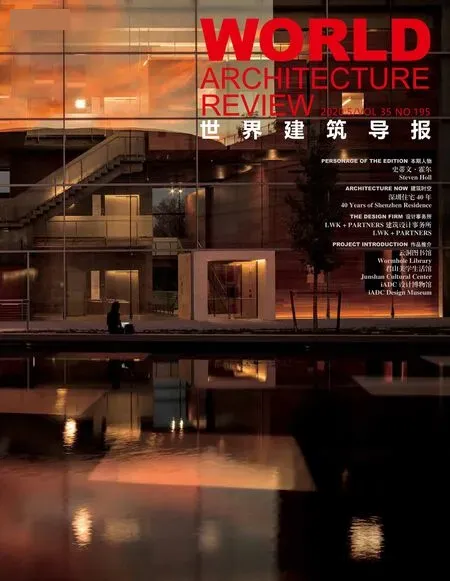
肯尼迪表演藝術中心擴建項目REACH美國新澤西州,普林斯頓
2020-11-07 08:59:10史蒂文·霍爾,ChrisMcvoy,GarrickAmbrose等
世界建筑導報 2020年5期
建設單位:肯尼迪表演藝術中心
設計單位:史蒂文·霍爾建筑師事務所
設計團隊:史蒂文·霍爾(主創設計), Chris McVoy(高級主管),Garrick Ambrose, Garrick Ambrose, Magdalena Naydekova, Bell Ying Yi Cai, Kimberley Chew,J.Leehong Kim, Martin Kropac, Elise Riley, Yun Shi,Dominik Sigg, Jongseo Lee , Alfonso Simelio
合作設計:BNIM建筑師事務所
結構工程:Silman
景觀設計:Edmund D Hollander Landscape Architects Design
照明設計:L’observatoire International
建筑面積:11 570 平方呎
室內建筑面積:72 000 平方呎
景觀面積:130 000 平方呎
時間: 2010年 - 2019年
Client: John F.Kennedy Center for the Performing Arts
Architect: Steven Holl Architects
Design Team: Steven Holl, Chris McVoy(partner in charge), Garrick Ambrose(design architects), Garrick Ambrose (project architect),Magdalena Naydekova (assistant project architect), Bell Ying Yi Cai,Kimberley Chew, J.Leehong Kim, Martin Kropac, Elise Riley,Yun Shi, Dominik Sigg, Jongseo Lee, Alfonso Simelio (project team)
Associate architects: BNIM Architects
Structural Engineer: Silman
Lighting Consultant: L’Observatoire International
Landscape Architect: Edmund D Hollander Landscape Architects Design
Building Area (Square Feet): 11,570sf
Building Area (Square Feet): 72,000SfInterior Space
Landscape Area (Square Feet): 130,000Sf
Year: 2012 - 2019
作為約翰·F·肯尼迪(John F.Kennedy)總統的“活紀念館”,肯尼迪表演藝術中心在華盛頓特區眾多偉大的總統紀念物中占據著重要地位。通過組織舉辦各類公共活動和對表演藝術活動的支持,肯尼迪藝術中心為公眾提供了一個可以跟各領域中富有創造力和想象力的藝術家和表演家零距離溝通互動的機會。表演中心這次的擴建項目名為 REACH,由斯蒂文·霍爾建筑事務所主持設計。在原有藝術中心的基礎上,項目主要增添了彩排空間和配套的教育空間,還有一系列方便靈活的室內外空間,以進一步鞏固肯尼迪藝術中心在藝術文化領域的領導地位。
同時,REACH 的設計還將構筑物與周邊景觀做了一定的延展融合,對肯尼迪中心蘊含的紀念意義進行了延伸拓展。擴建項目在室外景觀上對肯尼迪總統的一生做了一定的隱喻設計:由 35 棵銀杏樹組成的小樹林會在 11 月末飄落黃葉,象征其所就任的職位是美國的第 35 任總統;而景觀池甲板所運用的桃花心木材采用肯尼迪總統在第二次世界大戰時指揮的 PT109 號魚雷快艇中甲板木的材質和尺寸。
As a “living memorial” for President John F.Kennedy, the Kennedy Center for the Performing Arts takes an active position among the great presidential monuments in Washington, D.C.Through public events and stimulating art, the Kennedy Center offers a place where the community can engage and interact with artists across the full spectrum of the creative process.The REACH expansion, designed by Steven Holl Architects, adds much-needed rehearsal, education, and a range of flexible indoor and outdoor spaces to allow the Kennedy Center to continue to play a leadership role in providing artistic, cultural,and enrichment opportunities.
The design for The REACH merges architecture with the landscape to expand the dimensions of a living memorial.The landscape design includes a narrative reflection on the life of President Kennedy: a grove of 35 gingko trees, which will drop their golden autumn leaves in late November, acknowledges John F.Kennedy’s position as the 35th President of the United States; and a reflecting pool and mahogany landscape deck are built in the same dimensions and mahogany boards of Kennedy’s WWII boat, the PT109.

和愛德華·斯通(Edward Durell Stone)早先設計的肯尼迪藝術中心有所不同的是,REACH 擴建部分將三個構筑物與其周圍所屬的綠地景觀緊密地聯結在一起,旨在進一步強化建筑與周邊公共空間的聯系,并使其和一旁的華盛頓紀念碑、林肯紀念堂和波托馬克河岸形成良好的對景關系。三個新建的建筑,在綠地下方其實是彼此相連的。新增的 72,000 平方英尺(約 6,689平方米)的室內空間主要服務于各類工作室、彩排和表演空間以及專業的藝術學習空間。這種將擴建空間藏于公共綠地底下的設計手法,在為市民提供充足綠地空間的前提下,還為室內提供了良好的景觀視野。
這片開放的綠地景觀全天候為來訪者提供了各種尺度的公共空間。此外,建筑師還在草坪前方最大構筑物的北側立面上,用聯播投影的方法,將藝術中心內部的實時演出畫面,呈現給室外的公眾。這片高達 69,000 平方英尺(約 6,410平方米)的室內擴建空間,是目前華盛頓特區最大的地下景觀空間。這片景觀綠地會為藝術中心的各類演出和活動提供靈活多變的空間機會,并進一步促進市民的參與度和歸屬感。本次擴建為藝術中心未來幾年,于藝術文化和公共教育領域的領導地位打下堅實的基礎。
這三個由鈦白板形混凝土所圍合的建筑不光與室外的景觀綠地有著極強的呼應關系,還在造型上有所彎曲,以為室內引入充足的自然光照。建筑師在混凝土飾面的設計上,利用了 4 英寸(約 10 厘米)厚的榫槽花旗松板,搭配內襯的CNC 膠合板。這樣一來,當參觀者遠觀時,看到的是一個整體無縫的鈦白混凝土造型;而當其移步近觀時,則會看到適應人體尺度的飾面木板,以反應建筑師在設計過程中的所思所感。
In complementary/contrast to the monumental original Kennedy Center building by Edward Durell Stone, The REACH’s three pavilions are fused with the landscape.They shape outdoor spaces between them, and frame views to the Washington Monument,Lincoln Memorial and Potomac riverfront.The three pavilions are interconnected below green roofs to expand the Kennedy Center’s interior space with 72,000 sf of open studios, rehearsal and performance spaces, and dedicated arts learning spaces.Embedding much of the expansion under a public landscape offers maximum green space to the community and gives landscape views from the interior spaces.
The open landscape provides both large and intimate spaces to gather and visit at all times of the day.Simulcast projections of live performances from within the Kennedy Center will be projected onto the north wall of the largest pavilion in front of a broad lawn.The landscape serves as a green roof over the interior spaces below, the largest in Washington, D.C.at approximately 69,000 sf.The varied gardens will provide opportunities for casual performances and events and other flexible locations for enhanced engagement, further positioning the Center as a nexus of arts, learning, and culture in the years ahead.
The titanium white board-formed concrete pavilions engage with the landscape, gently curving to catch natural light for the interior.The concrete finish is made up of 4” tongue and groove Douglas fir boards that lined CNC plywood forms.From a distance the concrete appears monolithic and seamless but when examined up close has the scale of wooden boards that relate to the body and hand, while simultaneously showing an imprint of the building process.


雖然這三個新建的構筑物形態各異,似乎無法用特定的幾何關系去描述它們,但建筑師在其表面設計了一定的幾何關系,以建立三者間的聯系。具體來說,建筑師從三個構筑物的形態語言入手,利用了包括圓錐曲面和雙曲拋物面在內的幾何元素。相呼應的內凹曲線,將構筑物從視覺上串聯在一起,并在內部分散和傳播聲音。而在擴建中心彩排表演區的墻面設計上,建筑師運用了一種最新研發的紋狀混凝土肌理,以同步實現室內聲學設計與混凝土墻澆筑的建造需求。
同時,建筑師還利用干凈透明并帶有一定弧度的立面玻璃,為表演中心的室內提供充足的自然光照。此外,建筑師還對一部分玻璃進行了蝕刻處理,并在層間夾入了半透明的白色薄膜,旨在使其于白天將光線引入室內,而于晚間向外發光。建筑立面的巨大玻璃,使得參觀者的視線可以從室外一直延伸到室內深處,即從入口大堂穿過彩排活動區,直至另一頭的河畔景觀視野,旨在徹底激發室內的互動交流和活力營造。
隨著 REACH 擴建部分的落成,肯尼迪表演藝術中心當年在斯通設計中所設想的波托馬克河岸的室外聯結部分在 50 多年后最終得以實現。同時,項目還在林蔭道上方架設了一座新的人行橋,以將藝術中心、巖溪公園和喬治敦海濱公園串聯在一起。肯尼迪表演藝術中心此次的擴建部分,還進一步確定了其在21 世紀甚至未來一段時間內在表演藝術中心領域的領導地位。此外,其在紀念肯尼迪總統的同時,還會將他對藝術和美國文化的杰出貢獻一直延續下去。
While all different in form, resisting any defined geometric description, the three pavilions are connected through their ruled-surface geometry.This strategy creates a language of forms, from conical sections to hyperbolic paraboloids, a visual acoustics echoing across the pavilions, cupping space between them, and dispersing sound on the inside.Inside the building, a newly developed crinkled concrete texture lines the walls of rehearsal and performance spaces, integrating acoustical qualities directly within the structural cast-inplace concrete walls.
Natural light is given to all spaces via translucent, clear and curved glass.Through etching the glass, and sandwiching translucent white films between layers, luminous surfaces diffuse light deep into the interior, and glow outward at night.Windows are positioned to provide views through the full depth of the interior, from the entry lobby though rehearsal and event spaces to the river and landscape beyond, encouraging creative curiosity and dynamic interaction.
With The REACH, the Kennedy Center’s direct connection to the Potomac River is finally achieved, more than 50 years after it was lost in Stone’s initial design.A new pedestrian bridge, which appears to float over the park way, allows easy access to and from the Rock Creek Trail and the Georgetown waterfront.The newly expanded campus positions the Kennedy Center as a 21st century, future-oriented arts institution, and celebrates President Kennedy and his significant contribution to the arts and American culture.


猜你喜歡
現代裝飾(2022年4期)2022-08-31 01:39:46
現代裝飾(2021年6期)2021-12-31 05:27:54
現代裝飾(2021年5期)2021-12-02 02:18:46
小學科學(學生版)(2020年12期)2021-01-08 09:28:10
少年漫畫(藝術創想)(2020年12期)2020-06-09 05:50:08
戲曲研究(2019年3期)2019-05-21 03:23:22
讀者·校園版(2018年13期)2018-06-19 06:20:12
Coco薇(2016年2期)2016-03-22 16:58:59
讀者(2016年7期)2016-03-11 12:14:36
爆笑show(2014年10期)2014-12-18 22:27:48