
Live and Let Dye
2021-09-05 08:15:25王琳
漢語世界(The World of Chinese) 2021年4期
王琳
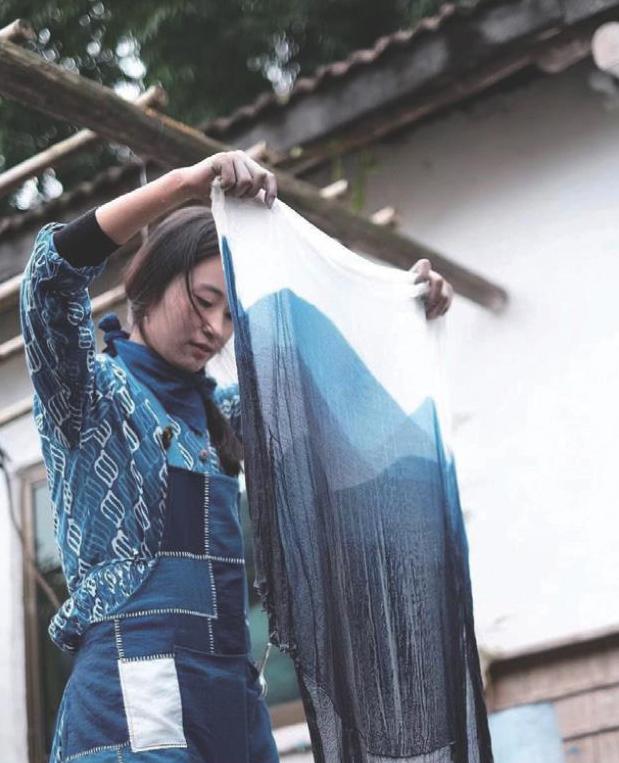
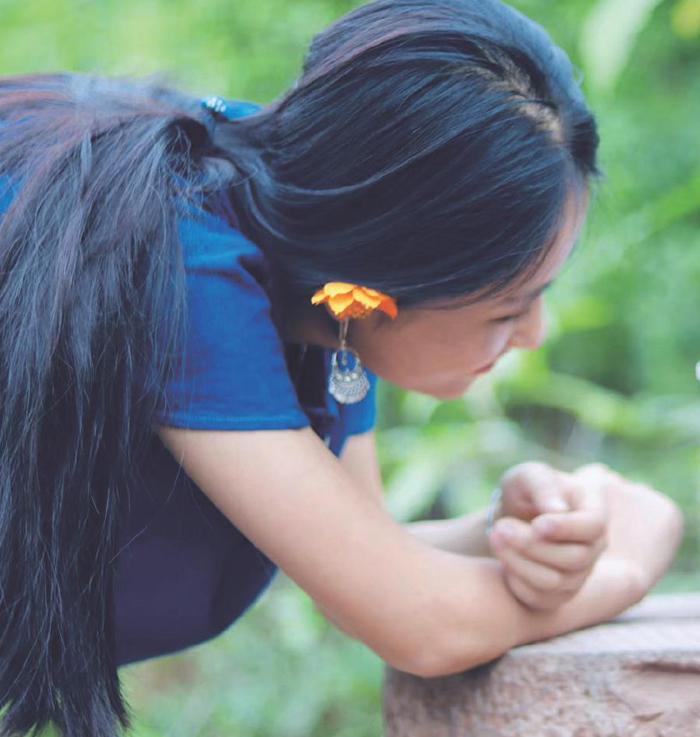
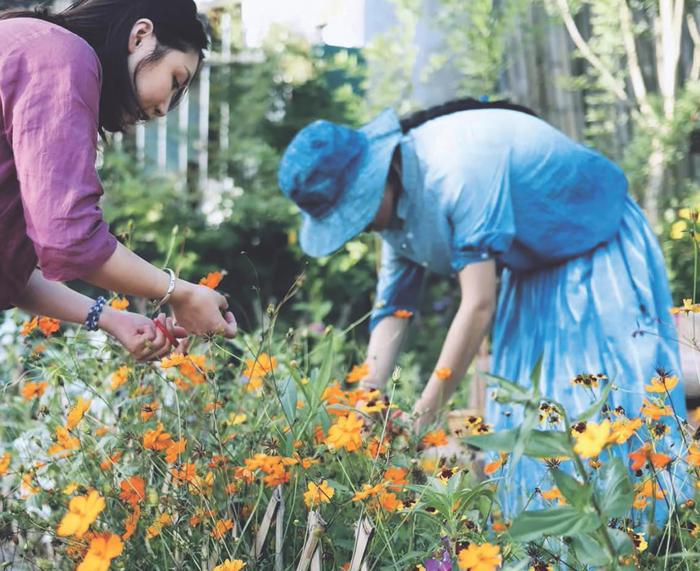
A workshop in the mountains of Sichuan continues an ancient and influential Chinese art.
草木果實皆可制成染料,在這間山中染坊,古法植物印染工藝正在悄悄生長.
Where others see the rugged mountains and forests of central Sichuan province, Liu Yan sees a rainbow. Persimmons, plum flower petals, pomegranate peels, and even tea—she can transform them all into colors and patterns on cloth.
The owner of an all-natural dyeing workshop called the Rustic Indigo Dyehouse in the bamboo forests surrounding Meishan, Sichuan, Liu divides her work into seasons. In spring, she lays out fresh plants and flowers on a clean cloth and hammers them gently in order to “print” the colors and shapes onto her material. Summer is the perfect time for dyeing with fermented persimmons and drying the fabric in the sun.
“We try to revive more traditional Chinese colors. So people realize that we have such beautiful colors from nature,” says Liu. Running a dyehouse in the mountains is also a new lifestyle for her. “I used to live like an alarm clock in the big city. I had to clock in and out,” she says. “But here, life becomes more real.”
Lius craft is over 5,000 years old. In the Neolithic period, Chinese discovered that plant roots, stems, skins, leaves, flowers, and fruits all have extracts that can tint cloth. Some fabrics dyed with medicinal herbs were even used to kill bacteria, repel insects, refresh the skin, and uplift the wearers mood.
Since the Shang (1600 – 1046 BCE) and Zhou (1046 – 256 BCE) dynasties, an official was appointed specifically to manage the dyeing process. The Chinese character for dyeing, 染, consists of the radicals for plant, water, and the number nine, hinting at the components and multivarious procedures for extracting colors from nature.
Ever since the Zhou dynasty, Chinese have cataloged blue, red, yellow, white, and black as the five “primary colors,” as well as the common plants needed to obtain these colors. Tiangong Kaiwu (《天工開物》), a Chinese encyclopedia of technology from the 17th century, shares detailed techniques to extract 26 colors from different plants. For instance, the Flos sophorae (槐花), a flower which gives a pretty yellow tint with a pleasant fragrance, can make a bright green. The artisan dyes the cloth with water soaked in the flower petals, then sets the color with green alum water. One can also make a tea-brown dye, surprisingly, by boiling lotus seed shells in water.
By the Qing dynasty (1616 – 1911), 704 color names appeared in the book Xue Yis Art of Embroidery (《雪宧繡譜》). Colors for the privileged classes ranged from brilliant vermillion to purple—even today, the idiom “bold red and purple (大紅大紫)” implies tremendous success. The luxurious yellow dye reserved for the emperor is extracted from the rare “emperors wood (Cudrania tricuspidat),” also known as zhemu (柘木) in Chinese, which gives a dazzling glow in the moonlight. Indigo dye made from “blue grass (藍草),” or Baphicacanthus cusia Brem, was used for the masses, since the dye is easily extractible and dirt does not show against the dark color.
Plant-dyed Chinese textiles spread to Western Asia and Europe thanks to the Silk Road, while also making their way to Japan where, in Kyoto, many artisans still practice plant-based dyeing.
Lius fingers are stained indigo from years spent working with blue grass. She goes on study trips every year to ethnic Miao and Dong villages in Guizhou province in Chinas southwest, which has a long history of cultivating the plant. “Every girl [there] learns how to dye with blue grass and make clothes. It is the way to tell if she has nimble hands,” Liu says.
To make indigo dye, Liu lets blue grasses gradually ferment in a huge vat until they form a sediment that looks like indigo clay. Whenever she needs to dye, she takes out some clay and mixes it with water in the vat. The trick is to add rice wine in the morning to “wake up” the bacteria. Since the liquor is acidic, plant ashes are added at the end of the process to balance the pH level. It takes seven to ten days to get the liquor ready for dyeing.
The special touch of rice wine may be inspired by the folk legends of Mei and Ge (梅葛二圣), Chinese dyeing gods. One evening, they got tipsy and spilled some wine into the vat. The vat was happy to “drink” the wine, making the colors brighter and more lasting.
From mid-July to mid-August, Liu gets busy with persimmon dyeing. She chooses unripe green persimmons, believing they have more “natural energy” than ripe ones. The dye is prepared the previous year, as green persimmons take over a year to ferment. “[Persimmon dye] is called ‘sun dye, as the sun paints a warm orange tint to the fabric and gives the soft fabric a hard leather texture,” Liu explains. “The more you use it [the cloth], the better quality the texture will be.”
Persimmon dyeing is a perfect demonstration of the surprising power of nature, creating a “living” fabric that changes with the sun, the wind, and the rain. Since persimmon-dyed fabrics are resistant to water and corrosion, they have been used in umbrellas, fans, and even architecture since the Tang dynasty (618 – 907). Today, Liu creates tea mats, bags, and even traditional toys with persimmon-dyed fabrics.
When autumn arrives, Liu dyes with tea and creates warm scarves. In winter, she sets up bonfires in the courtyard to cook dyes made with pomegranate skin or jasmine to separate the pigments. She also barbecues Sichuanese sausages at the same time. The gurgling of the boiling dye, coupled with the sizzling sausages, makes the night warm and full of activity.
When she is not busy at the dyehouse, Liu enjoys listening to raindrops falling on the tiles and skateboarding in her courtyard. But her favorite pastime is to take a scenic motorbike ride to the local reservoir with her husband and their cat, riding past rice paddies and orchards. They can spend a whole afternoon there, dreaming about the future of their dyehouse.
 漢語世界(The World of Chinese)2021年4期
- 漢語世界(The World of Chinese)的其它文章
- 光影
- You’ve got questions? she’s got answers
- 野
- Playing Chicken
- The Light Inside
- Singing the Changes