Central corneal cutting error with small incision lenticule extraction surgery in different refractive degrees of myopia
2022-05-05 13:20:42
國際眼科雜志 2022年5期
Abstract
KEYWORDS: small incision lenticule extraction; central corneal cutting error; refractive degree; myopia; cutting deviation ratio
INTRODUCTION
Femtosecond laser small incision lenticule extraction (SMILE) has been widely used in clinic in recent years[1]. Compared with femtosecond laser-assisted excimer laserinsitukeratomileusis (FS-LASIK), it avoids the complications related to corneal flap, theoretically preserves the integrity of corneal structure to the greatest extent, and improves the stability, thus reducing postoperative refractive regression and dryness[2-3]. However, it is still a great challenge for to implement personalized cutting for different patients, which will depend on the improvement of SMILE cutting accuracy and the accurate control of related influencing factors[4-8]. At the same time, accurate prediction of corneal cutting thickness before operation and residual stromal bed thickness after operation can greatly avoid the risk of ectasia, and accurate prediction of the actual corneal cutting a lot of patients with different degrees of myopia during operation is the guarantee to improve the safety and accuracy of operation[9-11]. Therefore, it is particularly important to study the corneal cutting error of patients after SMILE.
At present, many studies with the cutting accuracy of SMILE mostly focuses on the relationship between the cutting error and the preoperative refractive state[12-14]. While the laser instrument error is not considered to predict the cutting error in patients with different myopia degrees, it introduces inherent errors of various factors (cutting higher thickness leads to higher cutting errors)[15-17]. Therefore, to avoid the influence of different baseline values of predicted cutting thickness, the cutting deviation rate (the ratio of cutting error to predicted cutting thickness) was used in our research. In this study, the central corneal thickness (CCT) of SMILE patients in low, moderate and high myopia group was analyzed before operation and 1, 3mo after operation, and the corneal cutting accuracy and related influencing factors of patients were evaluated.
SUBJECTS AND METHODS
EthicalApprovalThis study was approved by Ethics Committee of the First Affiliated Hospital of Nanjing Medical University, and conformed to the tenets of the Declaration of Helsinki and the written informed consent was obtained from all participants.
PatientsIt was a retrospective observational cohort study. A total of 221 patients (432 eyes) who received SMILE in the First Affiliated Hospital of Nanjing Medical University from May to September in 2020 were collected, of which 5 patients only received SMILE in one eye. Inclusion criteria: 1) Age ≥ 18 years old; 2) -0.50 D ≥ myopia degree ≥ -10.00 D, astigmatism ≤ -3.00 D; 3) Thickness of the thinnest point of cornea ≥ 480 μm; 4) Best corrected visual acuity (BCVA) ≤ 0.1; 5) Stop wearing soft contact lenses for more than 1wk or hard contact lenses for more than 3wk; 6) The refractive power has been stable in recent 2a (the progress speed of myopia is ≤ 0.50 D every year). Exclusion criteria: 1) Keratoconus and suspected keratoconus; 2) Corneal dystrophy or corneal scar; 3) Eye diseases such as glaucoma and cataract, or history of eye surgery and eye injuries; 4) Systemic diseases; 5) Pregnancy or lactation.
ExaminationandMeasurementEach patient was examined by uncorrected visual acuity (UCVA), BCVA, intraocular pressure, optometry, slit-lamp microscope, tear film break-up time (BUT) and direct ophthalmoscope (after mydriasis) before surgery, 1, 3mo after SMILE. For each eye, parameters such as gender, age, date of surgery, CCT and spherical equivalent (SE) were calculated. In this study, Pentacam anterior segment analysis system based on Scheimpflug principle was used to measure patients CCT. Pentacam has strict quality control standards to ensure accurate and reliable inspection results, when Scheimpflug image area ≥ 90%, center positioning ≥ 90%, and Placido disk coverage area ≥ 80%, the inspection results can be accepted. Take three measurement results that meet the standards and collect the average values of CCT. In this study, Pentacam measurement before and after operation is performed by the same skilled operator, which can eliminate the influence of human operation factors on the accuracy of measurement results.
SurgeryProcedureVisuMax 3.0 system (Carl Zeiss Company, Germany) was adopted. The laser energy was 145 nJ, the thickness of corneal cap was set to 120 μm, and a 2 mm lateral incision was made at 120° direction. The cutting angle of lens edge and micro-incision edge was 90°, and the diameter of optical zone was 6.0-7.0 mm. All patients were operated by the same experienced surgeon.
PreoperativeandPostoperativeMedication0.5% Levofloxacin Eye Drops (Santen Company, Japan) was used 3d before operation, 4 times a day. From the first day after surgery, 0.1% fluorometholone eye drops (Santen Company, Japan) were used 4 times a day. After 1wk, they decreased once every week till 4wk. 0.3% sodium hyaluronate eye drops (Santen Company, Japan) were used for 4wk, 4 times a day, and could be continually used according to the dry eye degree of patients.

RESULTS
GeneralDataofPatientsinEachGroupbeforeOperationAll patients were operated smoothly, and no complications occurred during and after surgery. During follow-up time, all the three groups had no corneal edema or inflammation, and the intraocular pressure was normal. The average age of 221 patients in the three groups was 25.3±6.7 years, and the distribution was relatively concentrated. Some patients were in different refractive states, so the age of each group was not compared. According to the preoperative SE, we divided the subjects into 3 groups, namely the low myopic group (SE≤ -3.00 D), the moderate myopic group (SE from -3.01 to -6.00 D) and the high myopic group (SE above -6.00 D). There were 99 eyes (45 males and 54 females) in low myopia group, 203 eyes (92 males and 111 females) in moderate myopia group, and 130 eyes (59 males and 71 females) in high myopia group. Table 1 showed that comparison of different groups for gender, preoperative CCT, spherical power, astigmatism, equivalent spherical power and cutting diameter of optical zone.
PostoperativeRefractiveStatusofEachGroupOne month after operation, there was no significant difference in the spherical equivalent power among three groups (F=0.628,P=0.534). Three months after operation, there was a significant difference in the spherical equivalent power among three groups (F=23.97,P<0.01) (Table 2). But there was no significant difference in refractive status between the moderate and low myopia groups (H=0.316,P=0.574), while there were significant differences between the high myopia group and the low and moderate myopia group (χ2=38.265,P<0.01;χ2=31.186,P<0.01).
ComparisonofCentralCornealCuttingErrorsinEachGroupThe ΔCCT in low, moderate and high myopia groups were statistically significant, and the actual cutting thickness of central cornea in three groups is less than the predicted cutting thickness (Table 3). Meanwhile, the central corneal cutting errors at 3mo after operation were less than 1mo after operation and the differences were statistically significant among three groups (t=5.078,P<0.01;t=5.991,P<0.01;t=5.361,P<0.01, respectively). According to Kruskal-WallisHtest, at 3mo after surgery, the cutting error in high myopia group was larger than the low and moderate myopia group (χ2=225.74,P<0.01;χ2=62.55,P<0.01), and was larger in the moderate myopia group than the low myopia group (χ2=132.77,P<0.01). At 1mo after operation, the central corneal cutting errors showed the similar trend like 3mo after surgery (low myopiavsmoderate myopia:χ2=116.79,P<0.01; moderate myopiavshigh myopia:χ2=55.17,P<0.01; low myopiavshigh myopia:χ2=207.07,P<0.01).
ComparisonofCuttingDeviationRateinEachGroupThe cutting deviation rates of low, moderate and high myopia groups were statistically significant both at 1 and 3mo after surgery (Table 4). According to Kruskal-WallisHtest, there was significant difference in cutting deviation rate between low myopia group and moderate myopia group at 1mo after operation (χ2=25.84,P<0.01), same as high myopia (χ2=27.95,P<0.01). The cutting deviation rates of moderate group was significantly different from the high myopia group at 1mo after surgery (χ2=5.42,P=0.02). Three months after operation, there was significant difference in cutting deviation rate between low myopia group and moderate myopia group (χ2=40.22,P<0.01), same as high myopia (χ2=43.28,P<0.01). The cutting deviation rates of moderate group was significantly different from the high myopia group at 3mo after surgery (χ2=7.69,P=0.006).
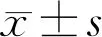
Table 1 General characteristics in different groups based on the magnitude of myopia

Table 2 The postoperative refractive diopter of different groups after SMILE D)

Table 3 Comparison of central corneal ablation error among different groups after SMILE
Table 4 Comparison of central corneal cutting deviation rate among different groups after SMILE
CorrelationAnalysisThree months after operation, the central corneal cutting error was positive correlated with preoperative equivalent spherical power (r=0.699,P<0.001), preoperative optical zone diameter (r=0.572,P<0.001) and 1mo postoperative corneal cutting error (r=0.553,P<0.001), weakly positive correlated with 3mo postoperative SE (r=0.199,P<0.01), and negatively correlated with preoperative corneal thickness (r=-0.219,P<0.001) (Figure 1). There was no statistical correlation between corneal cutting error and 1mo postoperative SE (r=-0.015,P>0.05). With corneal cutting error at 3mo after operation as a dependent variable, preoperative equivalent spherical power, optical zone diameter and preoperative CCT as independent variables, stepwise regression analysis was carried out. Finally, only preoperative refractive power and preoperative optical zone diameter entered the analysis, which showed that there was a linear regression relationship between them at 3mo after operation (r=0.699,P<0.001;r=0.572,P<0.001). The judgment coefficientR2=0.493, and the adjusted judgment coefficientR2=0.49. After fitting step by step, the “optimal” regression equation is as follows: Y=-30.164+1.656X1+3.478X2, while Y represents the cutting error 3mo after operation, X1 represents the preoperative refractive power, and X2 represents the optical zone diameter.

Figure 1 Correlation analysis between cutting error and corneal morphological parameters of patients.
DISCUSSION
SMILE has achieved good results in terms of safety, effectiveness and predictability. However, it is still an urgent problem for refractive surgeons to design surgical parameters and adjust value for patients with different refractive states. In our study we found that there were considerable cutting errors in low, moderate and high myopia after SMILE, and the cutting errors in high myopia group were higher than those in moderate and low myopia group at 1mo after operation and 3mo after operation, and the difference was statistically significant, which was similar to the results of Luftetal[14]research on the accuracy of SMILE, which believed that the cutting errors were closely related to the preoperative refractive state.
We speculated that the cutting error of SMILE surgery may come from the following aspects: 1) Different refractive states before surgery; 2) VisuMax femtosecond laser system error itself; 3) Changes of corneal epithelial compensatory hyperplasia after operation; 4) Error caused by CCT measurement. In our results, the central corneal cutting error was positively correlated with preoperative equivalent spherical power and optical diameter. As we all know that with other cutting parameters unchanged, the predicted cutting thickness increases with the increase of preoperative refractive power and optical diameter[18-19], the cutting error was also increased along with the preoperative refraction increase[5]. On the other hand, for patients with high myopia, the cutting error may be greater. Therefore, when designing the target refraction of the patient, it is necessary to consider the preoperative refractive state and appropriately increase the over correction, equivalent to increase the actual cutting thickness, as to obtain the best visual quality.
Another potential sources of the cutting error might be the different compression of the corneal stroma during the FS cutting process. The more compressed the stroma is, the deeper the actual cut will be when compression is released. The explanation is quite simple. The FS laser finds the depth to cut by optical focusing when the cornea is compressed by the patient interface. In addition, the superficial (none refractive) cut of the lenticule is made after the deeper (refractive cut) of the lenticule is cut. Then we have two “compression forces”, first, the aforementioned patient interface compressing the cornea; Second, the pressure created by the gas generated by the FS induced photo-disruption at the deep dissection plane of the lenticule. This makes that at least more factors may influence the FS accuracy (in cutting at the desired depth); One is the keratometry values (the steeper the cornea the higher the compression induced by a patient interface with a fixed radius of curvature), another is the depth at which the first cut is made. It makes sense that the deeper the first cut is, the lesser compression is transferred to the superficial stroma. The less the compression, the deeper the cut is (when the compression is released). Given the fact that the superficial cut was aimed to be at 120 μm in all cases, it makes sense that the thinner the central lenticule thickness is (what happens with smaller optical zones and with lower myopia correction) the thicker the cap thickness will be and vice versa. So, the effect of the compression of the superficial stroma by the same amount of gas but located at different corneal depths may explain the results of the current study.
In the research,we also found that the cutting error increases with the increase of predicted cutting thickness, which is probably related to the cutting efficiency of VisuMax femtosecond laser system itself. Our results qualitatively agree with the results reportedby Wuetal[20], who also reported thepredicted to measured CCT reduction was larger in high myopia group than low and moderate myopia groups. This also showed that the femtosecond laser system has reliable stability, and the cutting efficiency of different refractive diopters was constant. On the other hand, the central corneal cutting error has no correlation with other corneal parameters such as CCT before operation, but only with the refractive power before operation, which further indicates that the cutting error does not come from the cornea itself of patients with different refractive states. Therefore, in the clinical application of SMILE, refractive surgeons might need to set a relatively larger predicted cutting thickness to correct the target diopter for patients with high myopia, which needs further clinical research.
Previous study reported that corneal epithelium proliferated obviously after SMILE[21-23]. In our study, we found that 3mo postoperative cutting errors (absolute values) were higher than that at 1mo after surgery, which may be due to ΔCCT at 3mo after surgery was smaller than that at 1mo after surgery. Ganeshetal[24]also found that the increase of central corneal epithelial thickness is positively correlated with myopia correction degree. However, previous study[25]showed that A-CCT and P-CCT before and after SMILE were basically the same, with no significant difference. There was one factor could explain the finding that the ΔCCT is smaller (more negative values,i.e.thinner central lenticule thickness, smaller central corneal thickness) 3movs1mo postoperative. It is the inflammation and some edema within the cap and anterior residual stroma that might be present at the 1mo postoperation and disappears by the 3mo.
At present, the accepted gold standard for CCT measurement is A-scan ultrasound pachymetry, but the use of A-scan ultrasound pachymetry is limited by its easy to cause corneal infection, and high requirements for inspectors[26-27]. In our study, Pentacam system was used to select the results of three examinations that meet the requirements for consistency analysis, and it is found that there is high consistency. Some researches have shown that Pentacam anterior segment analysis system has good repeatability in CCT measurement of thin cornea before and after corneal refractive surgery, and has high correlation and consistency with A-scan ultrasound pachymetry, which can replace each other in clinic[28-30]. In addition, the A-CCT used for statistical analysis in this study is equal to the difference between preoperative CCT measurement and postoperative CCT measurement. In order to avoid the interference of instrument operation, the same operator uses the same instrument to measure the CCT three times and take the average values before and after surgery.
In conclusion, the cutting error of CCT after SMILE increases with the increase of myopia, and the cutting error was positively correlated with preoperative equivalent spherical power and preoperative optical zone diameter. The cutting deviation rate of each group has nothing to do with preoperative corneal thickness. It is suggested that the thicker the central lenticule is desired, the higher the cutting error. And the error in these eyes (with high myopia and/or higher optical zone) that the central lenticule thickness is smaller than expected (more negative ΔCCT value), which indicate that the SMILE surgery nomogram needs to be adjusted for different preoperative refractive status to account for potential refractive changes and the nomogram adjustment is safe and feasible for controlling appropriately over corrections.