雕塑工作室Sculpture Studio
2023-12-18 08:46:54
世界建筑導報 2023年5期
美國費耶特維爾Fayetteville,? USA
建筑設計: El Dorado, Modus建筑工作室
首席建筑師: Chris Baribeau, David Dowell
總承包商: Nabholz Construction
景觀建筑師 + 土木工程師: 生態設計集團
結構工程師: 工程咨詢有限公司
機電管道工程: Bernhard TME
可持續發展顧問: Entegrity 合伙人事務所
面積: 3 000 平方米
項目年份: 2017 年
攝影師:Timothy Hursley, Mike Sinclair
Architects: El Dorado, Modus Studio
Lead Architects: Chris Baribeau, David Dowell
General Contractor: Nabholz Construction
Landscape Architect + Civil Engineer: Ecological Design Group
Structural Engineering: Engineering Consultants Inc.
MEP Engineering: Bernhard TME
Sustainability Consultant: Entegrity Partners
Area: 33 000 ft?
Year: 2017
Photographs:Timothy Hursley, Mike Sinclair
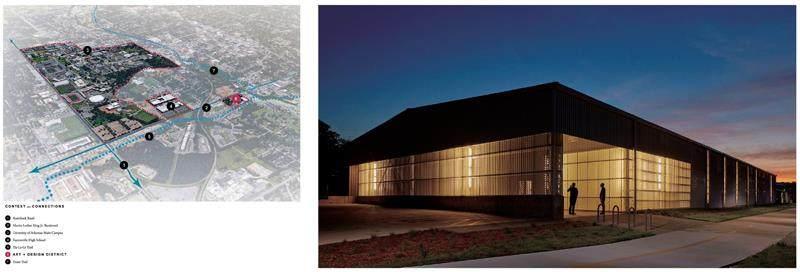
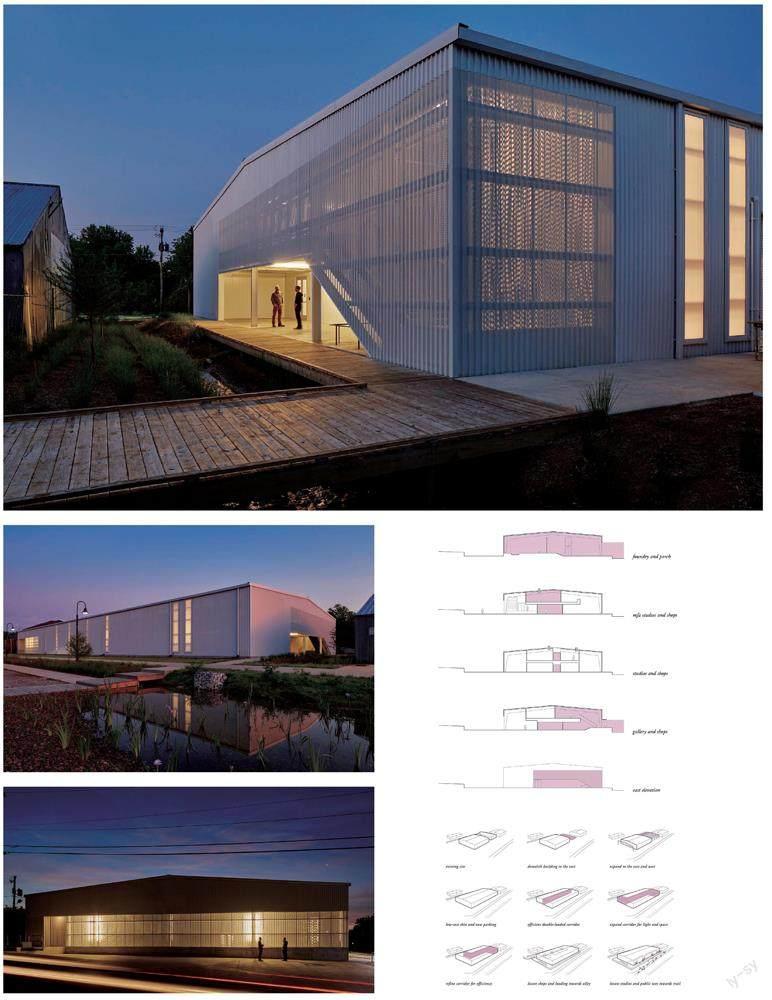
這座新建的雕塑工作室是為阿肯色大學藝術系在偏遠地區建造的第一座建筑,坐落在費耶特維爾的一個面積為3.8英畝的原工業區內。在modus建筑工作室和El Dorado事務所的合作設計中,原有的倉庫結構被改造和擴展成為了一個鮮明而又簡單的形式,為藝術系提供居住和技術功能設施。在原有的框架結構上通過引入第二層樓來提高效率。 為讓建筑的色調更加明亮,在設計上采用了自然光和高度復雜的空間為各種不同的媒介提供了多種素材,通過平面和剖面的簡單劃分使用將學生、教師、以及在工作室、畫廊和室外門廊之間等公共空間聯系在一起。
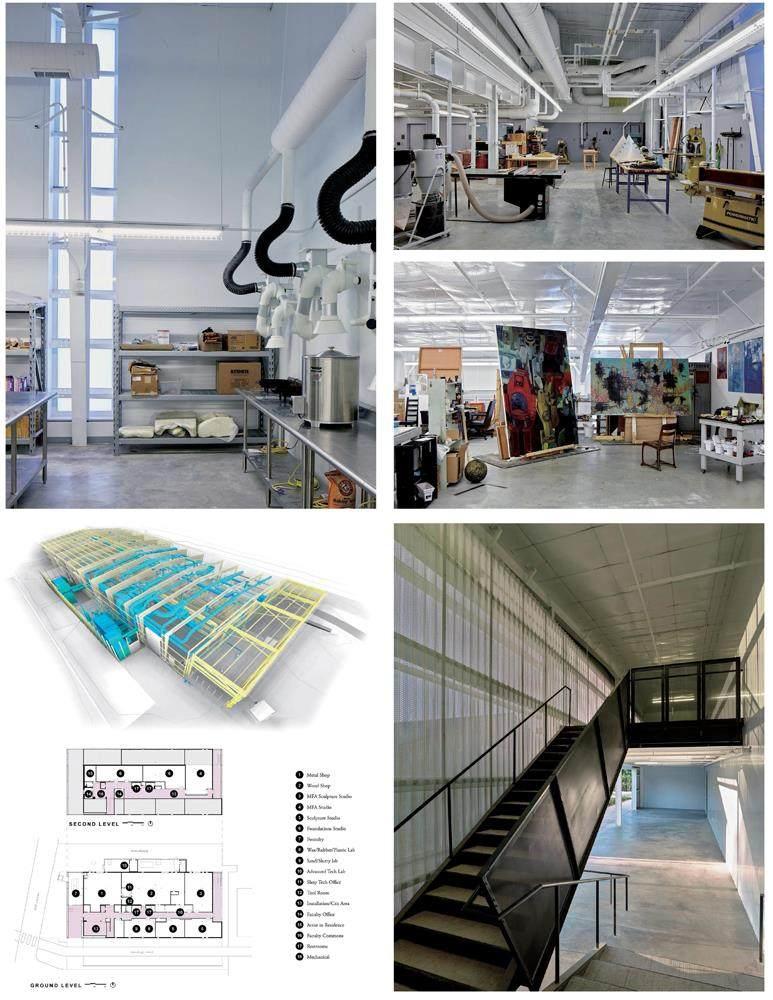
這個占地面積為3300平方米的建筑空間是開放的,工作室內的光線充足,寬敞的走廊提供了可以充分展示和評論的空間,墻壁樣式是為了滿足學生的工作需要而設計的。照明是高效和靈活的。環境被刻意地設計為中立,作為工作的背景。這個項目位于美國運輸安全管理局的運輸系統中,它是最近擴展的城市綠色網絡的一部分,連接阿肯色州西北部的社區。在這條道路上,我們有機會將藝術系和該地區的其他部門聯系起來,以非傳統的方式將更廣泛的費耶特維爾的社區聯系在一起。
作為新地區的創新型項目,其建筑和場地需要協同設計,并允許適當的材料處理,水文管理,克服城市棕色地帶的限制條件,同時成立了新興的藝術和設計團體。該項目是一個與大學之外的文化活動聯系在一起的機會,并讓學生和老師們有機會接觸到一套獨特的學習機會。在經過了精心選擇和改造過程之后,建成了一個超越卑微的建筑,為建成一個超越傳統校園的新學術區奠定了基調。
The new sculpture studio facility for the University of Arkansas Art Department is the first and defining building for a new remote district of campus appropriately located in a 3.8-acre raw industrial brownfield block in south Fayetteville. In a design partnership between modus studio and el dorado inc, an existing warehouse structure is transformed and expanded into a stark and simple form, yet housing complex and technical programming for the art department. The existing frame is made efficient by introducing a second floor within the volume. The bright palette, purposeful use of natural daylight, and highly sophisticated spaces for the crafting of various media are underscored by the simple use of plan and section to interconnect students, faculty, and the public between studios, galleries, and exterior porches.
The 33,000 square foot program houses open and well-lit studio space, generous corridors providing ample display and critique space, and walls designed to be durable in accommodation of presenting student work. The lighting is efficient and flexible. The environments are purposefully designed to be neutral, to serve as a backdrop to the work being done. The project resides along the Tsa La Gi trail, part of the recently expanded green network of the city, linking the communities of Northwest Arkansas. Being on the trail offers an opportunity to connect the Art Department, and eventually other departments in the District, with the broader Fayetteville community in non-traditional ways.
As the pioneering project in the new district, the building and site design work collaboratively to allow proper access for material manipulation, manage hydrology, overcome brownfield conditions, and celebrate the emerging art and design community. The project is a chance to connect with cultural activities going on outside of the university, exposing students and faculty to a unique set of learning opportunities. Through a process of select renovation and careful addition, the result is an architecture that transcends its humble origins, setting the tone for an ambitious new academic district beyond the traditional campus.
猜你喜歡
北方建筑(2021年6期)2021-12-31 03:03:54
文苑(2020年10期)2020-11-07 03:15:36
現代裝飾(2020年7期)2020-07-27 01:27:42
現代裝飾(2020年6期)2020-06-22 08:43:12
現代裝飾(2020年4期)2020-05-20 08:55:08
流行色(2020年1期)2020-04-28 11:16:38
藝術啟蒙(2018年7期)2018-08-23 09:14:18
海峽姐妹(2017年7期)2017-07-31 19:08:17
Coco薇(2017年5期)2017-06-05 08:53:16
福建農業科技(2016年10期)2016-03-07 09:46:49