阿多希學生宿舍Adohi Hall
2023-12-18 09:34:25
世界建筑導報 2023年5期
美國費耶特維爾Fayetteville,? USA
設計單位:Leers Weinzapfel 聯合公司, 麥基米切爾建筑師事務所,modus建筑工作室,OLIN
建筑類型:學生宿舍
建筑施工:納布霍爾茨建筑施工公司
材料供應:歐姆尼生態系統
建筑面積:18 769平方米
項目年份:2019年
攝影:Timothy Hursley
Architects: modus studio, Leers Weinzapfel Associates, Mackey Mitchell Architects, OLIN
Type: Student Hall
Construction: Nabholz Construction Corporation of Rogers
Manufacturers:? Omni Ecosystems
Area: 202 027 ft?
Year: 2019
Photographs:Timothy Hursley
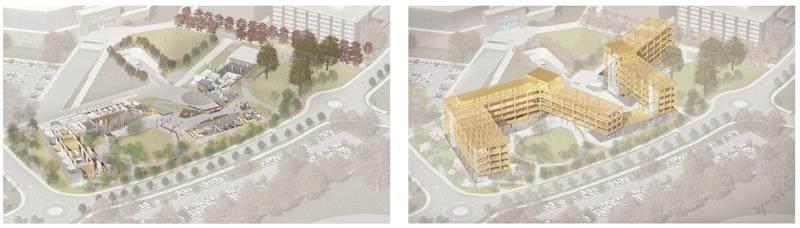
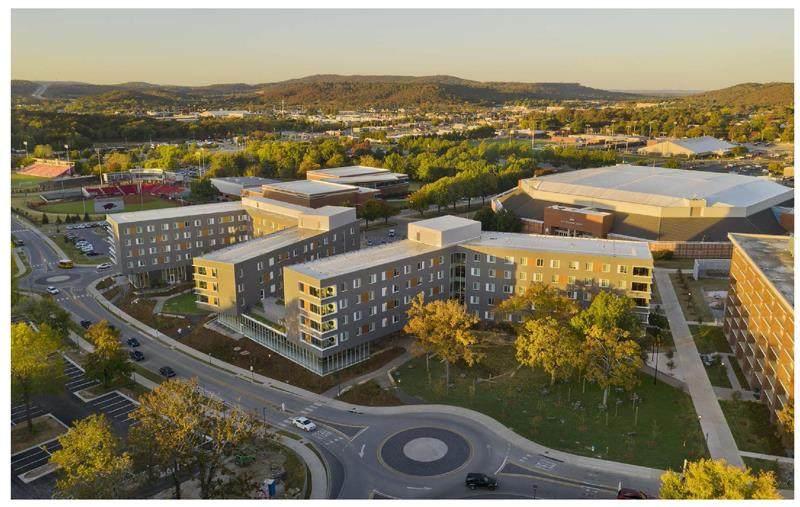
該建筑占據著費耶特維爾市克羅伊山腳下校園南端一片線形的、傾斜的場地,面積為16,187平方米。建筑北面被1960年代的宿舍樓占據,其東面是體育場大道,西面和南面分別是一個大型的競技場和相關的體育設施,整個建筑坐落于周圍植被環繞所形成的保護緩沖區中。它是全美范圍內第一個大型木構住宿大樓,以及居住學習相融合的設計。
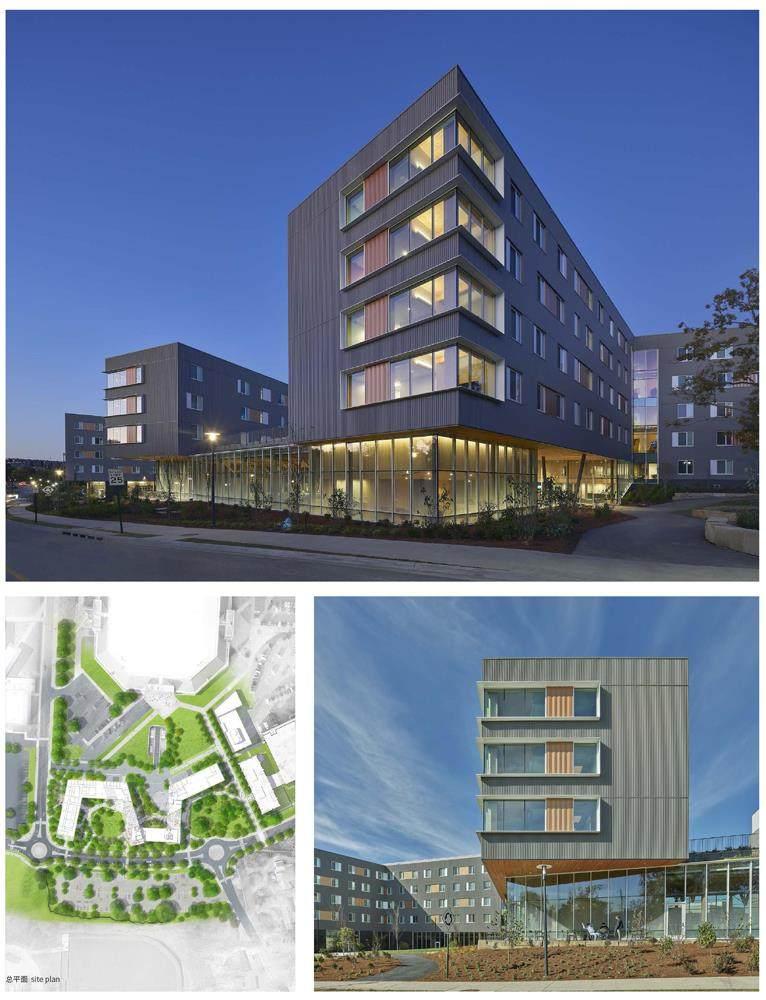
強調與自然共鳴貫穿整個項目。蜿蜒的學生宿舍有地面的通道相連,定義出三個獨特的庭院空間,這些空間充滿活力,為學生們在建筑、設計和藝術方面的合作提供了良好環境。建筑最北端的 “門廊” 是該建筑綜合體的主入口;中央通道的中間是主要的聚集空間,它包括了一個社區廚房、休息室、一個安靜的壁爐和屋頂露臺;下部的庭院包括了表演空間、音樂和錄音工作室和制作人使用的空間,這些空間功能加強了校園范圍內的藝術項目。
四層高的住宿樓層被安排在公共空間的上部。每一個主樓梯和電梯都通向一系列的雙層通高休息室和廚房空間,將高低樓層相連,并且帶動了社區內部的互動。每層樓都有半套配備有私人洗浴室的公寓,可以容納兩名學生,除此之外還有六至八間雙人間宿舍,帶有共用浴室和公共休息室。建筑末端的大型學習用房間有著寬敞的窗戶,這些窗戶沿著體育館大道創造出了一串 “燈籠”。
項目裸露的木制結構天花板所呈現的溫暖顏色在很多地方都得到了體現,像學生宿舍、學習用房、地面休息室和一層的公共空間,木制的柱子將材料的美感變得觸手可及。“艙室”也包含了木制天花板和橫跨整個休息室空間的桁架。建筑外部采用輕金屬制成的鋅色面板,同時該面板帶有銅色和白色調的紋理,在自然景觀上面創造出一條浮動的生活空間。
新項目通過與地形的融合創造出一系列室外空間,給學生和觀光客提供了絕佳的互相了解和參加聚會的機會。蜿蜒的小路錯綜復雜地穿梭于成熟的橡樹之間,為新的住戶提供超出所需的樹蔭,使他們得以享受溫暖時節的戶外生活。起伏的地貌,當地的砂巖就座區域,以及漂流的種植植物都讓人們想起歐扎克高原的地質和生態樣貌,同時為人們創造出舒適的居所。雨水滲透被謹慎地引入分級策略中,該策略可以截流鋪裝區域和建筑物下的雨水徑流。
阿多希(Adohi)這個名字源自于切諾基語,意思是 “樹林”。 它是為了贊頌那些在跟隨眼淚徒步(1837-1839)隊伍路過建筑所在的場地的人們。它同樣表明了木材和可持續發展林業在當地的重要性。
“在我們所有的作品中,我們追尋的都是地點、目的和方式的融合。所有這些因素在阿多希學生宿舍奇妙地融合在一起”,Leers Weinzapfel聯合公司負責人Andrea P.Leers如是說。“我們從當地獲取靈感,創造一個適合生活/學習的環境,該環境足以成為遠離校園中心的目的地,與此同時,我們開發的以木質結構為基礎的建造系統在環境、人類舒適性和可持續發展之間建立了聯系。”
“阿多希學生宿舍的落成象征著阿肯色州大學為其新一代的學生創建的一個創新型的、可持續發展的設計型校園”,費瓊斯建筑與設計學院院長兼教授彼得·麥基思(Peter MacKeith)如是說。“建筑在設計和建造中對創新型木材的大量使用以及對周邊景觀的敏感處理和阿多希學生宿舍的學生們的創造性是相互匹配的。阿多希學生宿舍不僅提高了每一個學生的身份和機遇,它同時也完成了阿肯色州大學的可持續發展目標和設計期望。
Occupying a linear, sloping, 4-acre site at the base of Fayettevilles McIlroy Hill on the southern end of campus, the project provides a new university gateway that marks the start of a larger living learning district. Bound on the north by 1960s residence halls, on the east by Stadium Drive, and on the west and south by a large arena and related athletic facilities, the hall is nestled within a generous protective buffer of trees and plantings. The pioneering project is the nations first large-scale mass timber residence hall and living learning setting. A bold demonstration of sustainability, the five-story hall also signifies potential economic development for the burgeoning timber industry in Arkansas.
An emphasis on nature resonates throughout the project. Connected by a ground-level passage, a serpentine band of student rooms define three distinctive courtyard spaces that create a dynamic environment for student collaboration and interactive learning in architecture, design, and the arts. The “front porch” in the northernmost building is the key entry point for the complex; the “cabin” at the ground-level, central passages midpoint is the main gathering space, comprising a community kitchen, lounges, a quiet hearth, and a rooftop terrace; and the “workshops” of the lower courtyard house a dynamic live/learn program of performance spaces, music and recording studios, and maker spaces that enhance the campuswide arts program.
Four-story residential floors are arranged above the communal spaces. The main stair and elevator for each open onto a series of double- height lounges and kitchen spaces, joining upper and lower floors and inviting community interaction. Each floor contains semi-suites for two students with private baths, and pods of six to eight double rooms with a shared bath and common room. Large study rooms with generous windows at the end of each wing create a series of “lanterns” along Stadium Drive.
The warmth of the projects exposed structural wood ceilings is apparent in student rooms, study rooms, floor lounges, and ground floor common spaces, and wood columns bring the beauty of the material within reach for all. The “cabin” also includes a wood ceiling and trusses that span the full width of its lounge spaces. Exteriors feature a light metal jacket of zinc-toned panels with accents of textured copper-tone and white that creates a floating band of living space above the natural landscape below.
Integrated into the topography of its site, the new housing complex features a cascading series of outdoor spaces that provide students and visitors with a variety of opportunities to engage and gather. Sinuous pathways are intricately woven through existing stands of mature oak trees, providing much needed shade for the new residents to enjoy warmer months outdoors. Undulating landforms, local sandstone seating areas, and drifts of native planting recall the geological and ecological vernacular of the Ozark Plateau while simultaneously creating comfortable places for people. Stormwater infiltration is carefully integrated into the grading strategy, which captures runoff from both paved areas and buildings.
The name Adohi (“a-doe-hee”) is a Cherokee word meaning “woods.” It honors tribe members who passed near the halls site while following the Trail of Tears (1837-1839). It also recognizes the enduring importance of wood and sustainable forestry to the region.
“In all our work, we look for the synergy between place, purpose, and means. These came together in an extraordinary way at Adohi Hall,” says Andrea P. Leers, FAIA, Principal, Leers Weinzapfel Associates. “We drew inspiration from the regional context of the Ozarks, creating a living/learning environment powerful enough to be a destination remote from the center of campus, and the wood-based construction system we developed forges a bond between setting, human comfort, and sustainability.”
"The completion of Adohi Hall signals the University of Arkansas commitment to an innovative, sustainably designed campus for its next generation of students and facilities,” says Peter MacKeith, Dean and Professor of Architecture, Fay Jones School of Architecture and Design. “The recognition of the creative abilities of Adohis students is matched by the employment of innovative mass timber design and construction techniques and the sensitive treatment of the immediate landscape. Adohi advances each individual students identity and opportunities as it also addresses U of A sustainability goals and design ambitions.”
猜你喜歡
北方建筑(2021年6期)2021-12-31 03:03:54
文苑(2020年10期)2020-11-07 03:15:36
現代裝飾(2020年6期)2020-06-22 08:43:12
藝術啟蒙(2018年7期)2018-08-23 09:14:18
海峽姐妹(2017年7期)2017-07-31 19:08:17
Coco薇(2017年5期)2017-06-05 08:53:16
琴童(2017年3期)2017-04-05 14:49:04
小天使·二年級語數英綜合(2017年3期)2017-04-01 17:17:48
少兒科學周刊·兒童版(2015年6期)2015-11-24 03:49:38
中學生天地(A版)(2015年5期)2015-06-01 02:46:03