Dogwoodtrot 住宅Dogwoodtrot House
2023-12-18 10:33:30
世界建筑導報 2023年5期
關鍵詞:橋梁
美國費耶特維爾Fayetteville,? USA
設計單位:modus建筑工作室
設計團隊:Chris Baribeau(主創建筑師),
Suzana Annable (項目主管),Michael Pope,
Philip Rusk, Assoc.
景觀設計:Stuart Fulbright
結構工程:Myers-Beatty工程公司
承建單位:Stronghold NWA
建筑面積:542平方米
項目年份:2016年
攝影:Aaron Kimberlin, Timothy Hursley
Architects: modus studio
Lead Architects: Chris Baribeau, AIA (principal architect); Suzana Annable,
AIA (project manager); Michael Pope, AIA; Philip Rusk, Assoc. AIA
Landscape Design: Stuart Fulbright
Structural Engineer: Myers-Beatty Engineering
Contractor: Stronghold NWA
Area: 5 834 ft?
Year: 2016
Photography: Aaron Kimberlin, Timothy Hursley
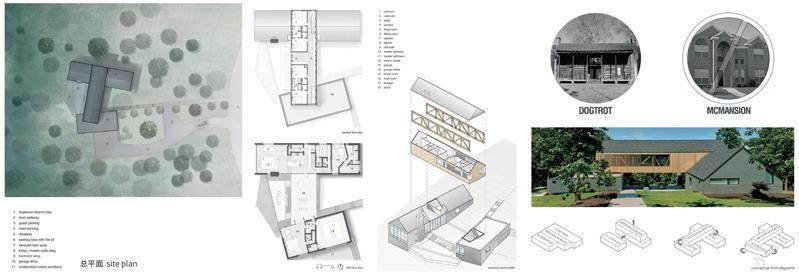
Dogwoodtrot住宅恰如其名,它將dogtrot(走廊)小屋的濃厚鄉土風格與林地山坡相互結合,為阿肯色州西北部費耶特維爾市Dogwood峽谷的郊區住宅創造出一種現代模式。該住宅未采用周圍環境中常見的麥氏豪宅類型,而是創造實用的、明確的、富有詩意的空間,同時為大家庭清晰地布置重要的內外部空間,以簡潔、溫暖、優雅的色調呈現。
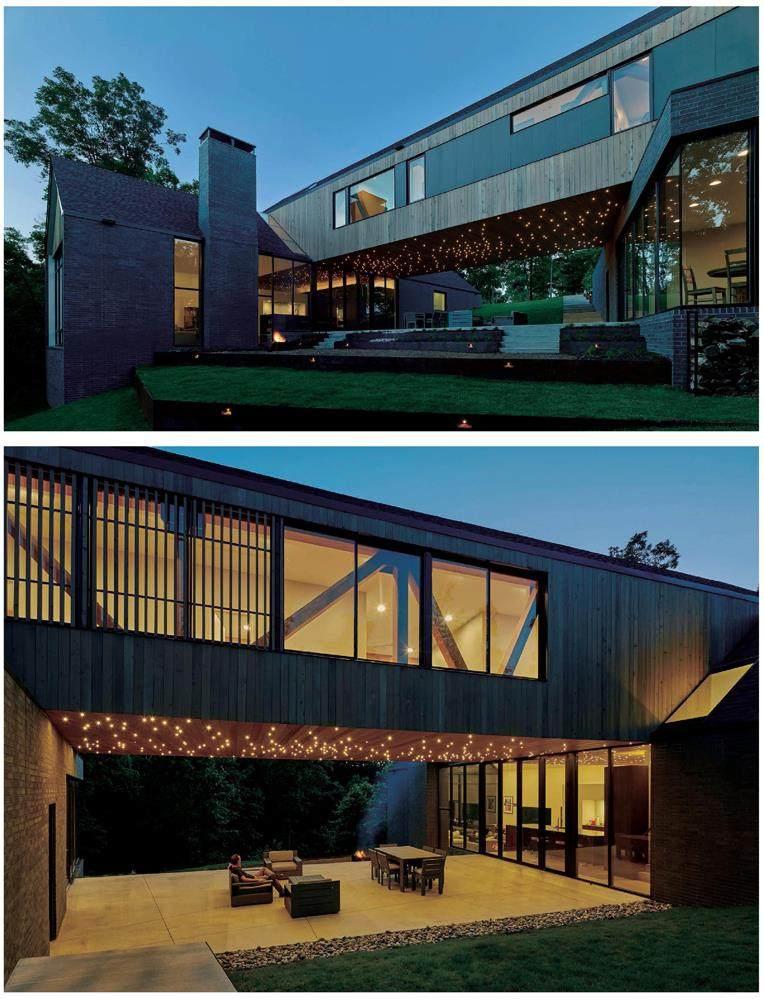
傾斜的場地上嵌入兩間磚與玻璃側房,一座覆蓋有垂直紅木的大木橋巧妙地橫跨其間。橋的下部由紅木包裹,形成一個有短暫照明和迎賓臺階的“星座”結構平臺,可引導盛行風,迎接回家,并將峽谷和山坡景色定格在遠處。項目經過精心設計,偶然的訪客與家人回家(白天或晚上)的日常體驗受到同等歡迎,與傳統麥氏豪宅類型過于正式且很少使用的前門和大廳形成鮮明對比。
住宅的南側房有車庫、儲藏室和游戲室,其朝向可減少正午太陽對室外橋梁平臺的照射。住宅的形式穩定且簡易,轉接極少,石材構建與自然環境中的類似。
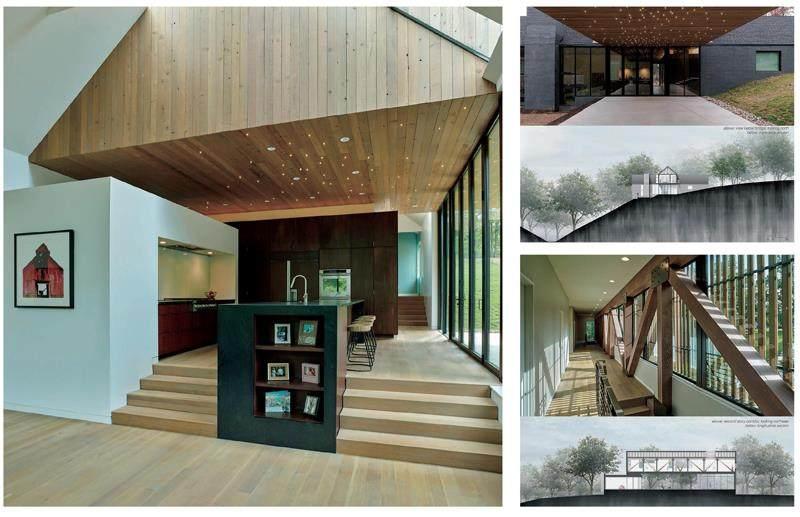
北側房是主要家庭空間,包括起居室、廚房、餐廳和主人套房,均坐落在木質環境中。寬敞的窗戶提供自然光和景色,窗內有家庭壁爐和嵌入式雕刻磚塊。廚房作為中央樓梯的著陸點,是家庭活動的中心,兒童側房、主側房、入口以及室內和室外起居空間均采用豐富的木質色調。大型折疊門將起居空間通向橋梁平臺和花園種植盆,為日常家庭生活和娛樂創造一個充滿活力的室內外空間。
作為兒童臥室和學習空間,橋梁側房與家庭北側房流暢聯通,廚房天花板以紅木相接,兩側天窗使橋梁完美地表達形式關系。此結構巧妙地坐落在南側頂部,類似于一個在峽谷中倒下的樹,與山坡上的石頭達到完美的平衡。橋梁上層的每個空間都有外露桁架,展現出引人注目的、富有表現力的細節。
Dogwoodtrot住宅是一套驚艷的現代住宅,在活力的林地山坡上渲染著材料和結構的表現力,住宅圍繞屋頂下的空間布局,借鑒了dogtrot(走廊)小屋的鄉土風格,而不是過度緊張的郊區環境。臥室橋梁凈跨30英尺,突出堅固的內外部連接關系,使住宅緊密連接。
The Dogwoodtrot House is aptly named as a synthesis of the strong vernacular typology of a dogtrot house and the woodland hillside site to create a modern model for a suburban home located within Dogwood Canyon in northwest Fayetteville, Arkansas. The home denies the common McMansion typology of the surrounding context and instead creates useful, purposeful, and poetic spaces that capture the dynamics of the site while clearly organizing important interior and exterior spaces for the large family rendered in a simple, warm, and elegant palette.
The heavily sloped site embraces two embedded wings of brick and glass with a playful mass timber bridge clad in vertical redwood spanning across. The redwood wraps the underbelly of the bridge and is the tableau for a constructed ‘constellation of ephemeral lighting that creates an inviting entry terrace to channel prevailing winds, receive one to the home, and frame views to the ravine and hillside beyond. The project is purposefully designed so the daily experience of arriving home (day or night) is an equally welcoming experience to that of the occasional visitor, a stark contrast to the overly-formal and rarely-used front door and foyer that defines the traditional and unfavorable McMansion typology.
The southern wing of the home contains the garage, storage, and game room and is oriented specifically to cut down on midday solar gain to the outdoor bridge terrace. It is stable and simple in form, with minimal articulation, a constructed stone akin to one that could be found on the given natural site.
The northern wing holds the primary family spaces of living, kitchen, dining and master suite all nestled into the wooded surroundings. Ample windows deliver natural light and frame views while the family hearth anchors the embedded and carved brick form to the site. The kitchen, the hub of family life, serves as the landing point for the central stair, where the childrens wing, master wing, entry, and interior and exterior living spaces converge in a rich palette of wood. Large accordion doors open the living space to the bridge terrace and garden planters to create a dynamic indoor/outdoor space for daily family life and entertaining.
Housing the childrens bedrooms and study spaces, the bridge wing formally slides into the northern family wing with a continuous redwood ceiling in the kitchen and a skylight on either side that allows the bridge to perfectly articulate its formal relationship. This playful structure gently sits on top of the southern wing, similar to a tree felled across a ravine striking a perfect balance on a hillside stone. The exposed trusses of the bridge are prevalent in every space of the upper level, providing striking expressive details.
The Dogwoodtrot House is a striking modern home rendering material and structural expressiveness on a dynamic woodland hillside, organized around a central covered space that hearkens to the vernacular dogtrot typology in lieu of the overwrought context of suburbia. Strong interior and exterior connections emphasized by a 30 clear span bridge of bedrooms defines the carefully articulated form of the home.
猜你喜歡
工程與建設(2019年4期)2019-10-10 01:45:56
湖南教育·A版(2019年4期)2019-05-10 03:31:44
小學生學習指導(低年級)(2019年4期)2019-04-22 03:28:24
中國公路(2017年11期)2017-07-31 17:56:30
中國公路(2017年10期)2017-07-21 14:02:37
山東工業技術(2016年15期)2016-12-01 05:31:04
焊接(2016年8期)2016-02-27 13:05:15
中國工程咨詢(2016年9期)2016-02-13 03:12:36
城市道橋與防洪(2013年7期)2013-03-11 15:17:41
城市道橋與防洪(2013年5期)2013-03-11 15:16:32