無靈主語句在高中英語應用文寫作中的應用
2024-10-08 00:00:00牟子龍
廣東教育·高中 2024年9期
相較于讀后續寫,應用文寫作更注重文章的交際性功能,在詞匯和語句方面更顯平實,描述性語言較少,也較少使用修辭。但在實際寫作中,特定無靈主語句在應用文寫作中仍是比較高級的表達。實際上,應用文是一個廣義概念,其文體包括通信(求助、告知、詢問、建議、申請、祝賀、投訴、邀請、感謝、推薦、致歉等)、通知(書面與口頭)、演講稿、歡迎/送辭、倡議書、新聞稿、宣傳稿、征稿等,以下將討論無靈主語句在不同應用文文體中的可能用途。
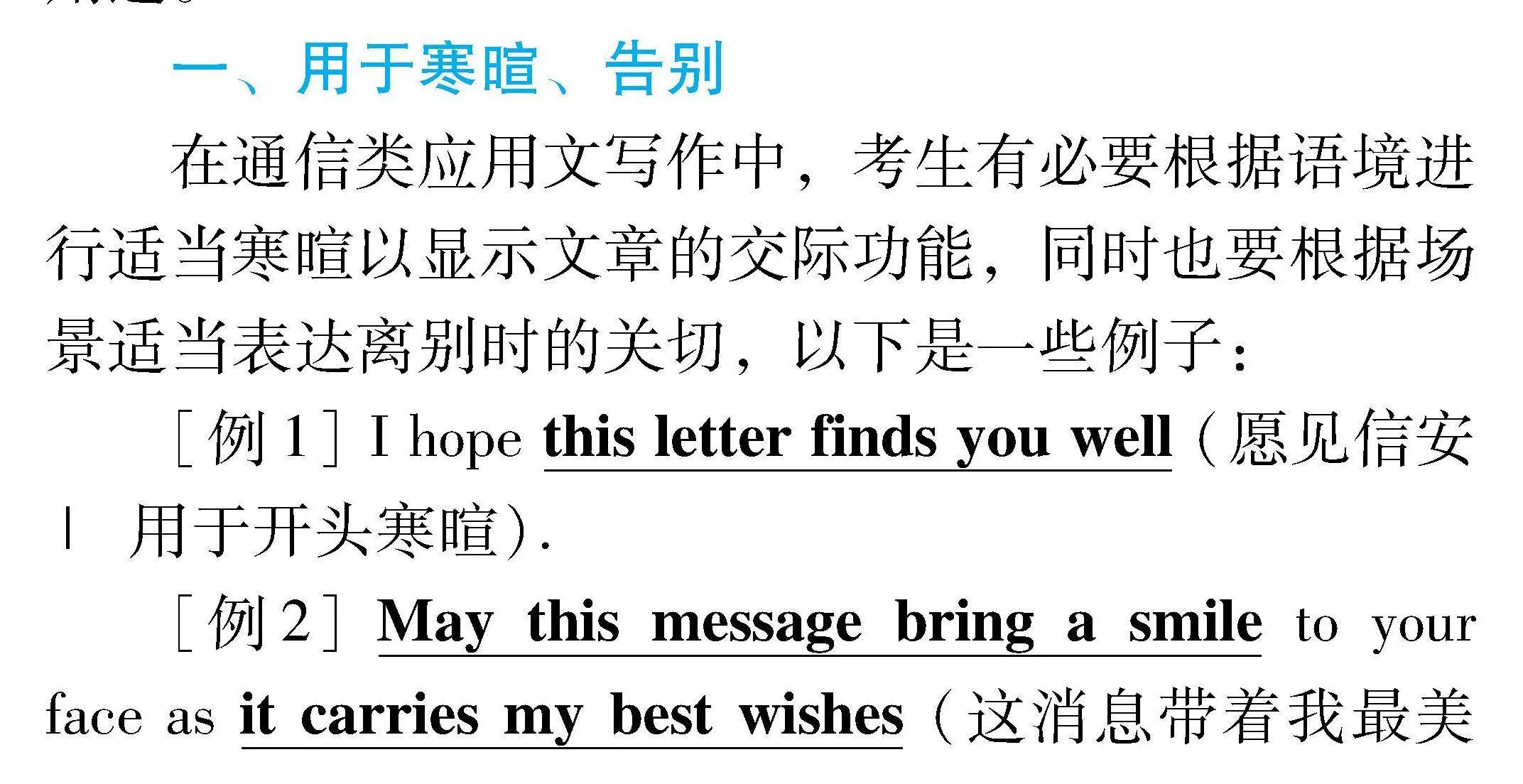
一、用于寒暄、告別
在通信類應用文寫作中,考生有必要根據語境進行適當寒暄以顯示文章的交際功能,同時也要根據場景適當表達離別時的關切,以下是一些例子:
[例1] I hope this letter finds you well (愿見信安| 用于開頭寒暄).
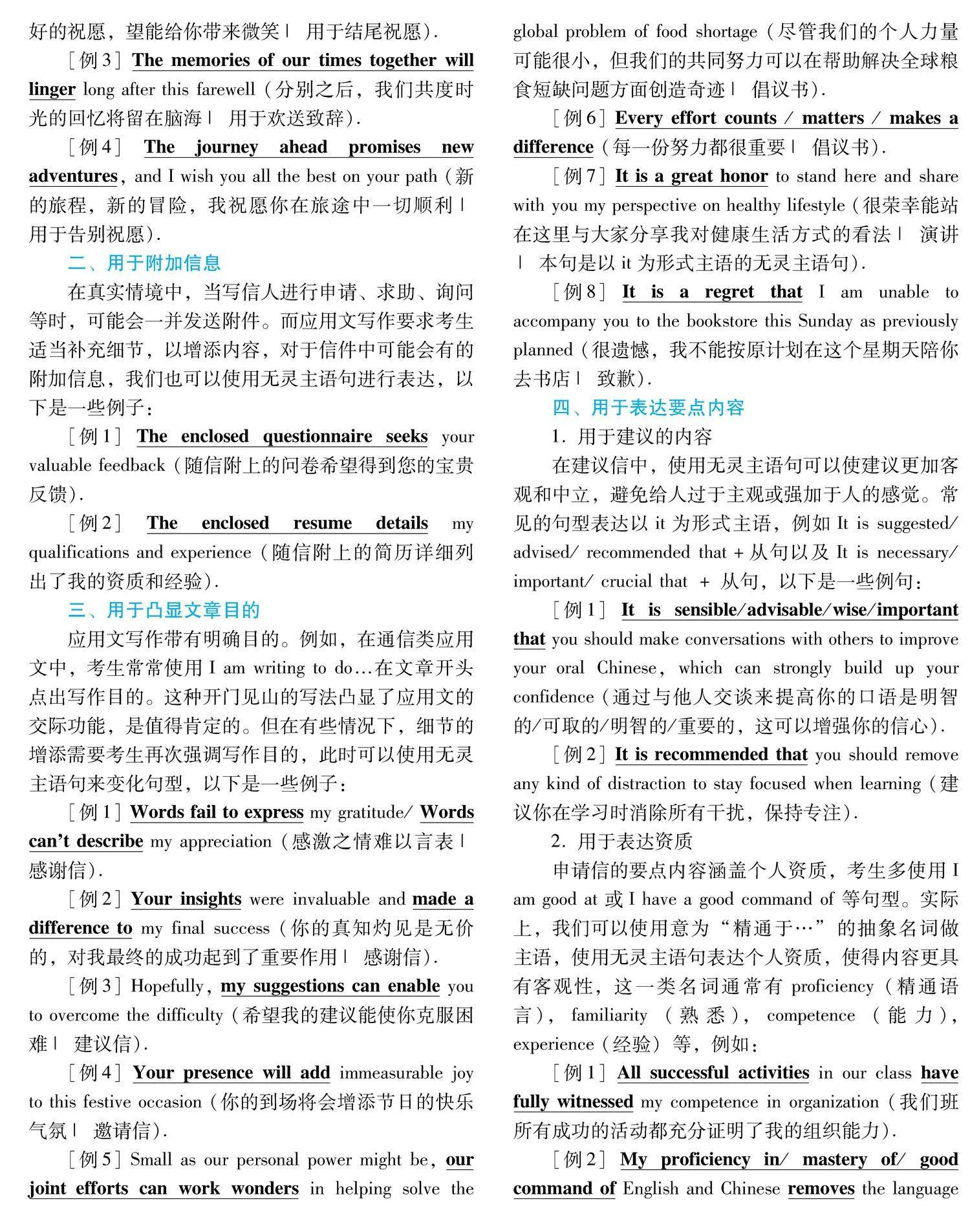
[例2] May this message bring a smile to your face as it carries my best wishes (這消息帶著我最美好的祝愿,望能給你帶來微笑| 用于結尾祝愿).
[例3] The memories of our times together will linger long after this farewell (分別之后,我們共度時光的回憶將留在腦海| 用于歡送致辭).
[例4] The journey ahead promises new adventures, and I wish you all the best on your path (新的旅程,新的冒險,我祝愿你在旅途中一切順利| 用于告別祝愿).
二、用于附加信息
在真實情境中,當寫信人進行申請、求助、詢問等時,可能會一并發送附件。而應用文寫作要求考生適當補充細節,以增添內容,對于信件中可能會有的附加信息,我們也可以使用無靈主語句進行表達,以下是一些例子:
[例1] The enclosed questionnaire seeks your valuable feedback (隨信附上的問卷希望得到您的寶貴反饋).
[例2] The enclosed resume details my qualifications and experience (隨信附上的簡歷詳細列出了我的資質和經驗).
三、用于凸顯文章目的
應用文寫作帶有明確目的。例如,在通信類應用文中,考生常常使用I am writing to do…在文章開頭點出寫作目的。這種開門見山的寫法凸顯了應用文的交際功能,是值得肯定的。但在有些情況下,細節的增添需要考生再次強調寫作目的,此時可以使用無靈主語句來變化句型,以下是一些例子:
[例1] Words fail to express my gratitude/ Words cant describe my appreciation (感激之情難以言表| 感謝信).
[例2] Your insights were invaluable and made a difference to my final success (你的真知灼見是無價的,對我最終的成功起到了重要作用| 感謝信).
[例3] Hopefully, my suggestions can enable you to overcome the difficulty (希望我的建議能使你克服困難| 建議信).
[例4] Your presence will add immeasurable joy to this festive occasion (你的到場將會增添節日的快樂氣氛| 邀請信).
[例5] Small as our personal power might be, our joint efforts can work wonders in helping solve the global problem of food shortage (盡管我們的個人力量可能很小,但我們的共同努力可以在幫助解決全球糧食短缺問題方面創造奇跡| 倡議書).
[例6] Every effort counts / matters / makes a difference (每一份努力都很重要| 倡議書).
[例7] It is a great honor to stand here and share with you my perspective on healthy lifestyle (很榮幸能站在這里與大家分享我對健康生活方式的看法| 演講| 本句是以it為形式主語的無靈主語句).
[例8] It is a regret that I am unable to accompany you to the bookstore this Sunday as previously planned (很遺憾,我不能按原計劃在這個星期天陪你去書店| 致歉).
四、用于表達要點內容
1. 用于建議的內容
在建議信中,使用無靈主語句可以使建議更加客觀和中立,避免給人過于主觀或強加于人的感覺。常見的句型表達以it為形式主語,例如It is suggested/ advised/ recommended that+從句以及It is necessary/ important/ crucial that + 從句,以下是一些例句:
[例1] It is sensible/advisable/wise/important that you should make conversations with others to improve your oral Chinese, which can strongly build up your confidence (通過與他人交談來提高你的口語是明智的/可取的/明智的/重要的,這可以增強你的信心).
[例2] It is recommended that you should remove any kind of distraction to stay focused when learning (建議你在學習時消除所有干擾,保持專注).
2. 用于表達資質
申請信的要點內容涵蓋個人資質,考生多使用I am good at 或I have a good command of 等句型。實際上,我們可以使用意為“精通于…”的抽象名詞做主語,使用無靈主語句表達個人資質,使得內容更具有客觀性,這一類名詞通常有proficiency (精通語言), familiarity (熟悉), competence (能力), experience (經驗)等,例如:
[例1] All successful activities in our class have fully witnessed my competence in organization (我們班所有成功的活動都充分證明了我的組織能力).
[例2] My proficiency in/ mastery of/ good command of English and Chinese removes the language barrier in my interactions with visitors (我對英語和漢語的熟練掌握消除了我與游客互動時的語言障礙).
[例3] The familiarity with Chinese painting culture enables me to present its beauty with vivid accounts (對中國繪畫文化的熟悉使我能夠用生動的敘述來呈現它的美).
3. 用于介紹活動及其意義
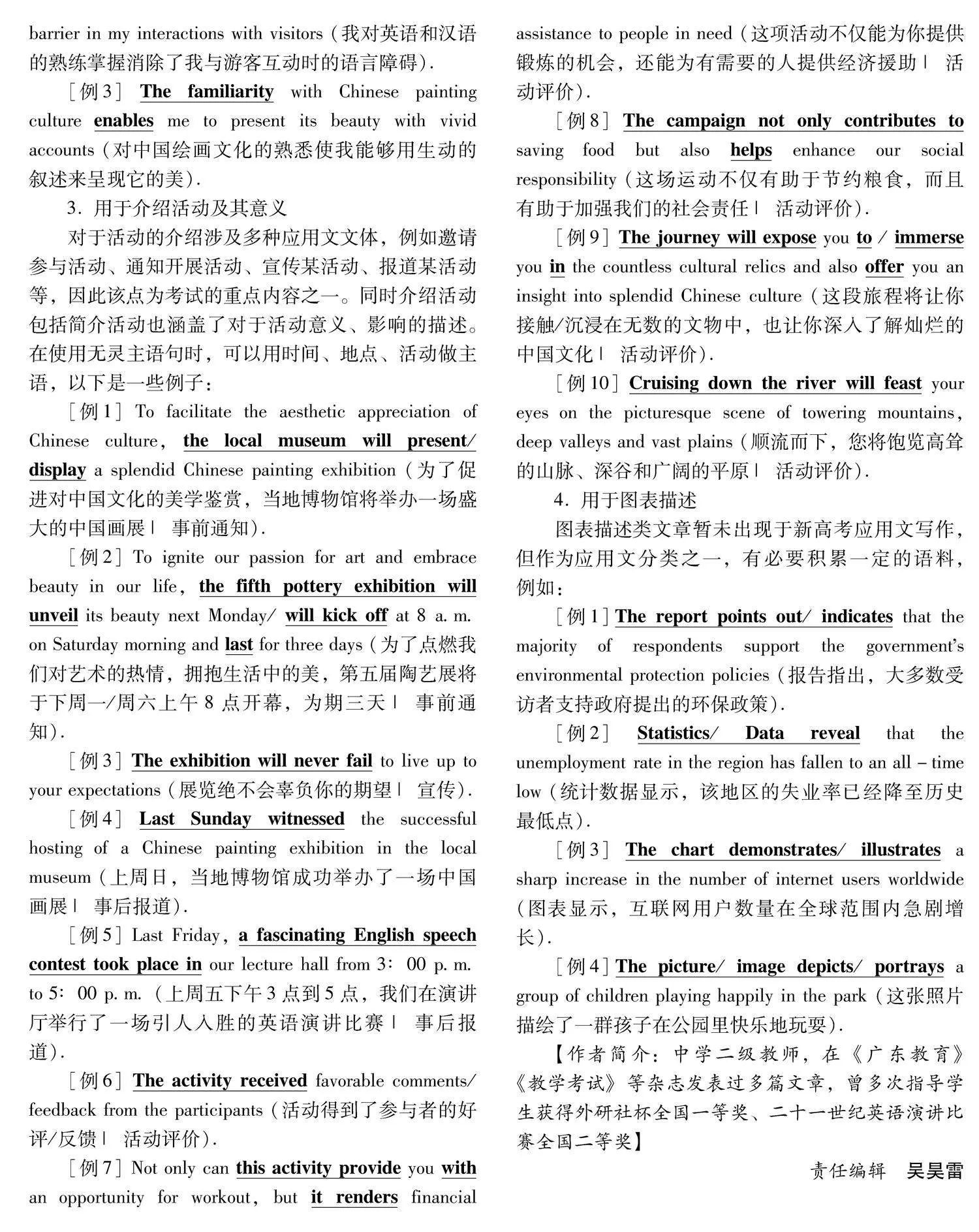
對于活動的介紹涉及多種應用文文體,例如邀請參與活動、通知開展活動、宣傳某活動、報道某活動等,因此該點為考試的重點內容之一。同時介紹活動包括簡介活動也涵蓋了對于活動意義、影響的描述。在使用無靈主語句時,可以用時間、地點、活動做主語,以下是一些例子:
[例1] To facilitate the aesthetic appreciation of Chinese culture, the local museum will present/ display a splendid Chinese painting exhibition (為了促進對中國文化的美學鑒賞,當地博物館將舉辦一場盛大的中國畫展| 事前通知).
[例2] To ignite our passion for art and embrace beauty in our life, the fifth pottery exhibition will unveil its beauty next Monday/ will kick off at 8 a.m. on Saturday morning and last for three days (為了點燃我們對藝術的熱情,擁抱生活中的美,第五屆陶藝展將于下周一/周六上午8點開幕,為期三天| 事前通知).
[例3] The exhibition will never fail to live up to your expectations (展覽絕不會辜負你的期望| 宣傳).
[例4] Last Sunday witnessed the successful hosting of a Chinese painting exhibition in the local museum (上周日,當地博物館成功舉辦了一場中國畫展| 事后報道).
[例5] Last Friday, a fascinating English speech contest took place in our lecture hall from 3∶00 p.m. to 5∶00 p.m. (上周五下午3點到5點,我們在演講廳舉行了一場引人入勝的英語演講比賽| 事后報道).
[例6] The activity received favorable comments/ feedback from the participants (活動得到了參與者的好評/反饋| 活動評價).
[例7] Not only can this activity provide you with an opportunity for workout, but it renders financial assistance to people in need (這項活動不僅能為你提供鍛煉的機會,還能為有需要的人提供經濟援助| 活動評價).
[例8] The campaign not only contributes to saving food but also helps enhance our social responsibility (這場運動不僅有助于節約糧食,而且有助于加強我們的社會責任| 活動評價).
[例9] The journey will expose you to / immerse you in the countless cultural relics and also offer you an insight into splendid Chinese culture (這段旅程將讓你接觸/沉浸在無數的文物中,也讓你深入了解燦爛的中國文化| 活動評價).
[例10] Cruising down the river will feast your eyes on the picturesque scene of towering mountains, deep valleys and vast plains (順流而下,您將飽覽高聳的山脈、深谷和廣闊的平原| 活動評價).
4. 用于圖表描述
圖表描述類文章暫未出現于新高考應用文寫作,但作為應用文分類之一,有必要積累一定的語料,例如:
[例1] The report points out/ indicates that the majority of respondents support the governments environmental protection policies (報告指出,大多數受訪者支持政府提出的環保政策).
[例2] Statistics/ Data reveal that the unemployment rate in the region has fallen to an all-time low (統計數據顯示,該地區的失業率已經降至歷史最低點).
[例3] The chart demonstrates/ illustrates a sharp increase in the number of internet users worldwide (圖表顯示,互聯網用戶數量在全球范圍內急劇增長).
[例4] The picture/ image depicts/ portrays a group of children playing happily in the park (這張照片描繪了一群孩子在公園里快樂地玩耍).
【作者簡介:中學二級教師,在《廣東教育》《教學考試》等雜志發表過多篇文章,曾多次指導學生獲得外研社杯全國一等獎、二十一世紀英語演講比賽全國二等獎】
責任編輯 吳昊雷