企業創新活動中外部知識搜索策略選擇研究
2024-10-21 00:00:00宋昱曉余江李博
科技進步與對策 2024年19期
收稿日期:2023-09-26 修回日期:2024-02-23
基金項目:國家自然科學基金重點項目(71834006,72334007);教育部哲學社會科學研究重大課題攻關項目(20JZD022)
作者簡介:宋昱曉(1991- ),女,山東沂水人,中國科學院大學中丹學院、奧爾堡大學材料與制造系博士研究生,研究方向為知識管理、新興技術與產業創新管理; 余江(1969- ),男,北京人,博士,中國科學院科技戰略咨詢研究院研究員、博士生導師,研究方向為新興技術與產業創新政策;李博(1996-),男,重慶人,中國科學院科技戰略咨詢研究院博士研究生,研究方向為科技政策與產業創新。本文通訊作者:余江。
摘 要:外部知識搜索屬于開放式創新范疇,當制造業企業難以滿足新產品生產所需時,將與供應商、客戶、高等院校、科研機構和競爭對手等外部知識源建立聯系,尋求外部合作,這些知識源對企業實現價值創造具有重要影響。通過識別與界定制造業企業外部知識搜索策略,構建企業創新活動(技術創新與流程創新)與外部知識獲取策略選擇關系框架,以中國制造業企業數據為樣本,進行實證研究。結果表明,制造業企業知識獲取策略可劃分為最小化搜索、沿供應鏈搜索、多途徑搜索、特定科學搜索、特定技術搜索和全面均衡搜索等6種;制造業企業知識搜索策略呈現多樣化特征,并在技術創新與流程創新活動中呈現出顯著差異性。
關鍵詞:外部知識搜索;制造業企業;新產品生產;企業創新活動;無序多分類Logistic回歸
DOI:10.6049/kjjbydc.2023090657
開放科學(資源服務)標識碼(OSID) 開放科學(資源服務)標識碼(OSID):
中圖分類號:F272.4
文獻標識碼:A
文章編號:1001-7348(2024)00-0109-09
0 引言
當今任何制造業企業都無法擁有新產品生產所需的全部知識,因而會選擇更加開放的方式進行協作[1, 2]。對于大型制造業企業而言,需要在維持自身核心競爭力的同時,與外界形成合力并獲取外部知識,以確保持續地從規模經濟和范圍經濟中受益。
通過梳理外部知識搜索與創新關系研究發現,外部知識搜索對制造業企業創新具有重大意義。雖然許多企業強調內部研發與創新[3],但是隨著技術快速迭代,開放式知識搜索成為不可或缺的部分[4, 5]。對制造業企業而言,無論是在技術密集度高的技術部門[1, 2],還是技術密集度低的其它部門,外部知識搜索均是企業創新活動的重要組成[6-8],搜索策略選擇也成為現代制造業企業面臨的核心議題。知識搜索策略選擇、搜索方向以及搜索深度,在很大程度上取決于企業創新活動中面臨的挑戰與機遇[9, 10]。這些機遇與挑戰不僅僅來自技術上,還涉及生產與經營方面,具體包括技術創新與流程創新[10, 11]。其中,技術創新強調擁有一定深度與廣度的知識,而流程創新更注重對現有知識的利用和整合。在兩種不同類型創新活動中企業外部知識搜索策略選bZhNdL03MUwMqO2UTzTbKmWbdLLiyeX2thIOGRoT5cs=擇與應用也呈現出差異性,然而有關創新活動如何影響制造業企業知識獲取策略選擇的研究尚不多見[11]。基于此,本文首先利用層次聚類法識別出制造業企業知識搜索策略,進而以知識搜索策略作為因變量,以企業創新活動作為自變量,建立無序多分類Logistic回歸模型,探究制造業企業創新活動與知識搜索策略選擇關系,為該領域研究提供新思路。
1 理論基礎與文獻回顧
封閉式創新觀的根本前提是企業依賴自身資源和能力進行技術開發以及相關創新活動,因此知識獲取以內部搜索為主[12]。隨著貿易全球化與技術快速更迭,企業間界限越來越模糊,創新范式也從封閉式走向開放式。相比傳統范式,開放式創新觀強調企業創新活動不再是獨立行為,而是知識的共同生產[13]。換而言之,企業需要在創新活動中進行跨組織合作,從外部獲取知識資源,包括技術知識與市場知識[14-17]。其中,技術知識主要來源于競爭對手,強調通過分析競爭對手產品獲得新啟發[18],屬于一種特定技術搜索方式,對于應對快速變化的市場環境尤為重要;市場知識主要來源于供應商和客戶,其有助于協調各方資源、獲得產品需求信息,同時,降低產品研發時間和成本,屬于一種沿供應鏈的搜索方式[19]。高等院校和科研機構既是技術知識的重要來源,也是市場知識的重要來源,這是因為高等院校和科研機構不僅掌握前沿科研成果,而且能為企業提供員工培訓等服務,對技術創新和流程創新均具有重要價值[8, 20]。
在制造業企業開展創新活動過程中,知識搜索策略發揮重要作用[21-23]。這是因為與不同類型伙伴合作時,會伴隨不同程度的知識擴散和協調需求(Perkmann and Walsh, 2009)。對外開放能為制造業企業帶來收益,同時,也存在著技術被竊取的風險(Chesbrough and Crowther, 2006)。如Cassiman & Veugelers (2006)研究指出,企業很關注自身關鍵性知識被非自愿地泄露給競爭對手等問題。因此,制造業企業在制定外部知識搜索策略時,不僅要考慮獲取所需知識資源,而且要兼顧開放性與自身知識獨占性的平衡。因此,在企業創新活動過程中,制造業企業為滿足特定知識需求,可能選擇單一從競爭對手、供應商或客戶處獲取外部知識,即單一的知識搜索策略[11];也可能為滿足多種需求,制定外部知識搜索組合策略,從多來源同時獲取外部知識資源,即多渠道或綜合性知識搜索策略[24],從而在外部知識搜索的開放性與知識基礎的獨占性之間實現平衡。由此可見,知識搜索策略呈現出多樣化特點,有助于企業擴大技術知識基礎和保持靈活性[25]。基于此,本文提出研究命題如下:
命題一:制造業企業知識搜索策略呈現出多樣化特征,不僅包含最小化搜索的內部搜索,以及沿供應鏈搜索、特定科學搜索或特定技術搜索的單一外部搜索,而且包含多渠道搜索或全面均衡搜索的綜合性外部搜索。
基于不同的技術知識或市場知識需求,制造業企業在不同創新活動中對外部知識來源的選擇也具有顯著差異。例如,在技術創新活動中制造業企業更傾向于與所有潛在合作伙伴建立廣泛的合作關系[11]。這種開放式策略有助于為從事產品研發和服務創新的企業提供更開闊的知識視野。因此,在技術創新活動中制造業企業傾向于開展具有一定深度與廣度的外部知識搜索。
與此相反,當進行流程創新時,制造業企業更多地關注操作模式優化與調整,更多地依賴供應鏈合作伙伴、客戶或者競爭對手的正式或非正式交互[10]。在優化管理流程、提供員工培訓的過程中,企業與高等院校、研究機構的密切合作成為關鍵[26]。因此,相比而言,流程創新更注重對現有知識資源的再利用和整合。Trigo & Vence [27]基于對不同創新范式的分類,強調知識搜索策略與創新類型緊密相關,其中,技術密集型企業在產品創新中更關注科技信息流,在流程或組織創新中更偏重與客戶的互動頻率,這反映出在不同創新活動中知識獲取策略的靈活應用。這些研究均表明,制造業企業在進行技術創新與流程創新過程中,其外部知識搜索策略的選擇具有明顯差異。基于上述分析,本文提出研究命題如下:
命題二:制造業企業的知識搜索策略在技術創新活動與流程創新活動中呈現出顯著差異,即在流程創新過程中傾向于選擇單一性外部知識搜索策略,在技術創新過程中更傾向于選擇綜合性外部知識搜索策略。
現有研究中針對制造業企業外部知識搜索策略與創新關系的分析仍然較少,尤其是制造業企業創新活動在多大程度上影響其外部知識搜索策略的問題仍然未得到有效回答。隨著研究的深入,學者們認識到識別創新類型的重要性,進而開展創新類型對外部知識搜索策略影響的理論研究。如Doloreux, Turkina &Van Assche [11]針對不同類型創新活動影響企業外部知識搜索策略的問題進行初步探索。在具體創新過程中,制造業企業不僅需要從外界獲取與技術生產活動直接相關的知識,而且需要獲取與管理、營銷等流程相關的知識,因此企業會選擇不同的外部知識搜索組合策略。本文通過構建制造業企業創新活動與外部知識搜索策略關系框架,基于中國制造業企業創新調查數據,利用層次聚類方法識別不同創新活動中的知識搜索策略,進而采用無序多分類Logistic回歸進行實證分析。研究旨在為我國制造業企業在不同創新活動過程中選擇合適的外部知識搜索策略,從而獲取持續競爭優勢提供啟示。
2 研究設計
2.1 數據來源與預處理
本文主要分析企業層面數據,基于數據可獲取性原則,選取2012年由世界銀行通過個人訪談構建的企業創新數據庫為樣本來源,其包含2011年12月至 2013年2月間在中國收集的涵蓋2 700家民營企業、 148家國有企業數據及相關附加信息。
表1 核心數據信息Table 1 Core data information
問題所屬類別問題選項及取值
A. CONTROL INFORMATIONA.4 Industry[a4a/a4b] Manufacturing: Section D Food:1; Tobacco:16; Textiles:17; Garments:18; Leather:19; Wood:20; Paper:21; Recorded media:22; Refined petroleum product:23; Chemicals:24; Plastics & rubber:25; Non metallic mineral products:26; Basic metals:27; Fabricated metal products:28; Machinery and equipment:29; Electronics (31 & 32):31;
Precision instruments=33; Transport machines (34&35):34; Furniture=36; Recycling:37
A.6 Size[a6a] Small >=5 and <=19:1; Medium >=20 and <=99:2; Large >=100:3
B. GENERAL INFORMATIONB.5 In what year did this establishment begin operations?Year establishment began operations:[b5]; Don't know (spontaneous):-9
D. SALES AND SUPPLIESD.3 In fiscal year 2011, what percentage of this establishment's sales were:Direct exports: [d3c]%; Don't know (spontaneous):-9
F. CAPACITYF.1 In fiscal year 2011, what was this establishment's output produced as a proportion of the maximum output possible if using all the resources available (capacity utilization)?Capacity utilization: [f1] %; Don't know (spontaneous):9
O. INNOVATION AND TECHNOLOGYCNO.14 Over the last three years, what type of innovation activities has this establishment engaged in?[CNo14a] Introduce new technology and equipment(s) for product or process improvements
Yes=1; No=2; Don't know=-9; NA=-7
[CNo14b] Introduce new quality control procedure in production or operations
Yes=1; No=2; Don't know=-9; NA=-7
[CNo14c] Introduce new managerial/administrative processes
Yes=1; No=2; Don't know=-9; NA=-7
[CNo14d] Provide technology training for staff
Yes=1; No=2; Don't know=-9; NA=-7
[CNo14e] Introduce new product or new service
Yes=1; No=2; Don't know=-9; NA=-7
[CNo14f] Add new features to existing products or services
Yes=1; No=2; Don't know=-9; NA=-7
[CNo14g] Take measures to reduce production cost
Yes=1; No=2; Don't know=-9; NA=-7
[CNo14h] Take actions to improve production flexibility
Yes=1; No=2; Don't know=-9; NA=-7
CNO.17A In what ways has this establishment introduced new products or services?[CNo17a] Developed or adapted in house
Yes=1; No=2; Don't know=-9; NA=-7
[CNo17b] Developed in cooperation with suppliers
Yes=1; No=2; Don't know=-9; NA=-7
[CNo17c] Developed in cooperation with client firms
Yes=1; No=2; Don't know=-9; NA=-7
[CNo17d] Introduced your own version of a product already supplied (by another firm)
Yes=1; No=2; Don't know=-9; NA=-7
[CNo17f] Implemented idea from an external source, e.g. consultants, universities and research institutions
Yes=1; No=2; Don't know=-9; NA=-7
此外,遵循以下原則,對數據進行篩選:第一,刪除非制造企業樣本數據;第二,刪除問卷調查中各數據項均為空白答案(NA)的數據樣本;第三,刪除問卷調查中各數據項回答均為否(No)的數據樣本。進行數據篩選后,共獲得1 293家公司樣本,用于初步分析和模型估計。其中,部分樣本存在缺失值的,由于缺失值多為定距型,故使用均值法進行插補。
2.2 變量設計與研究方法
利用合適的聚類方法識別與界定制造業企業知識搜索策略,對聚類結果進行賦值,將知識搜索策略設為因變量,將技術創新與流程創新作為自變量,將可能影響創新過程的企業特征設為控制變量。為了研究知識搜索策略與創新關系,選擇進行無序多分類Logistic回歸。
2.2.1 因變量:知識搜索策略
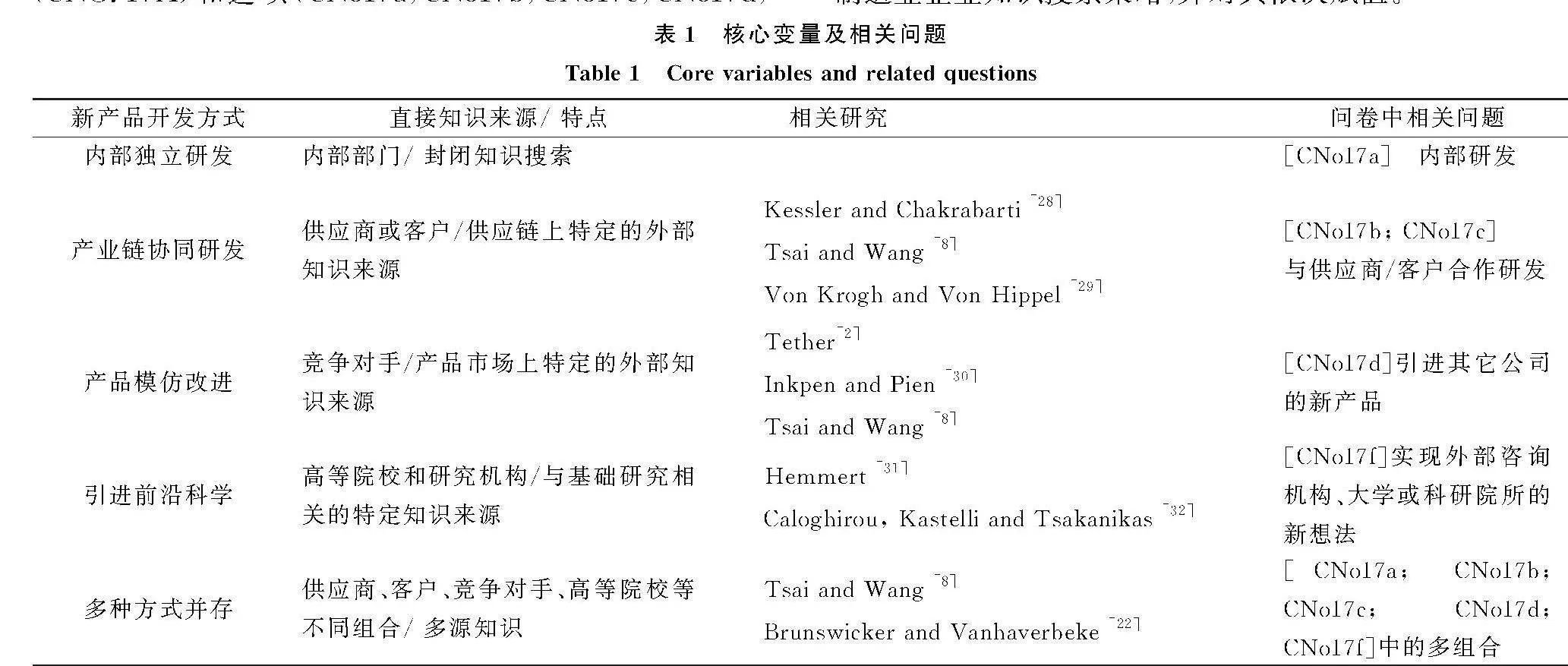
調查問卷中沒有與制造業企業外部知識來源直接相關的問題,但可以從與新產品開發方式相關的問題(CNO.17A)和選項(CNo17a,CNo17b,CNo17c,CNo17d,CNo17f)中識別出對應的外部知識來源。基于已有研究并結合調查數據,本文中新產品開發方式分為內部獨立研發、產業鏈協同研發、產品模仿改進、引進前沿科學以及各種組合方式,具體如表1所示。其對應的直接知識來源分別為供應商、客戶、競爭對手、高等院校和研究機構。在該數據項基礎上,選擇合適的聚類方法,進一步識別和界定制造業企業知識搜索策略,并對其依次賦值。
2.2.2 自變量:企業創新活動(技術創新與流程創新)
結合問卷數據,選取4種活動代表技術創新,包括引進新技術和設備、引進新產品、為現有產品增加新功能以及提高產品靈活性;4種活動代表流程創新,包括引進新管理/行政流程、為員工提供技術培訓、采取措施降低生產成本、引進新質量控制程序。將變量設置為虛擬變量,其中,1代表參與此類活動,0代表未參與。
2.2.3 控制變量:企業特征
考慮到企業創新活動與知識搜索策略會受到企業特征影響[33-35],故借鑒Medase& Abdul-Basit [36]的研究,將企業規模與企業年齡作為一般企業特征,納入控制變量。第一,采用員工總數測度企業規模[32,37],并將企業規模劃分為小型企業(5~19人)、中型企業(20~99人)、大型企業(100人及以上)。為了避免存在虛擬變量陷阱,將小型、中型和大型企業分別賦值為1,2,3,并設置兩個虛擬變量(1或0)。第二,企業年限為企業成立至調查年份的時間差,成立年限越長,表明創新資源越豐富,但隨著年限增長,企業創新動力也呈現出衰減態勢[38]。第三,選取直接出口額與資源利用率作為特定企業特征。研究表明,出口能力與公司績效具有相關性[39, 40],產能利用率也是影響制造業企業生產效率的重要因素[41-42]。
2.2.4 研究方法:層次聚類分析
為了將企業開放式知識搜索策略概念化,采用系統聚類法,即層次聚類法,將資源戰略相似的企業歸入同組,以有效識別聚類個數和潛在的聚類種子(Ketchen & Shook,1996 , Brunswicker&Vanhaverbeke,2015)。
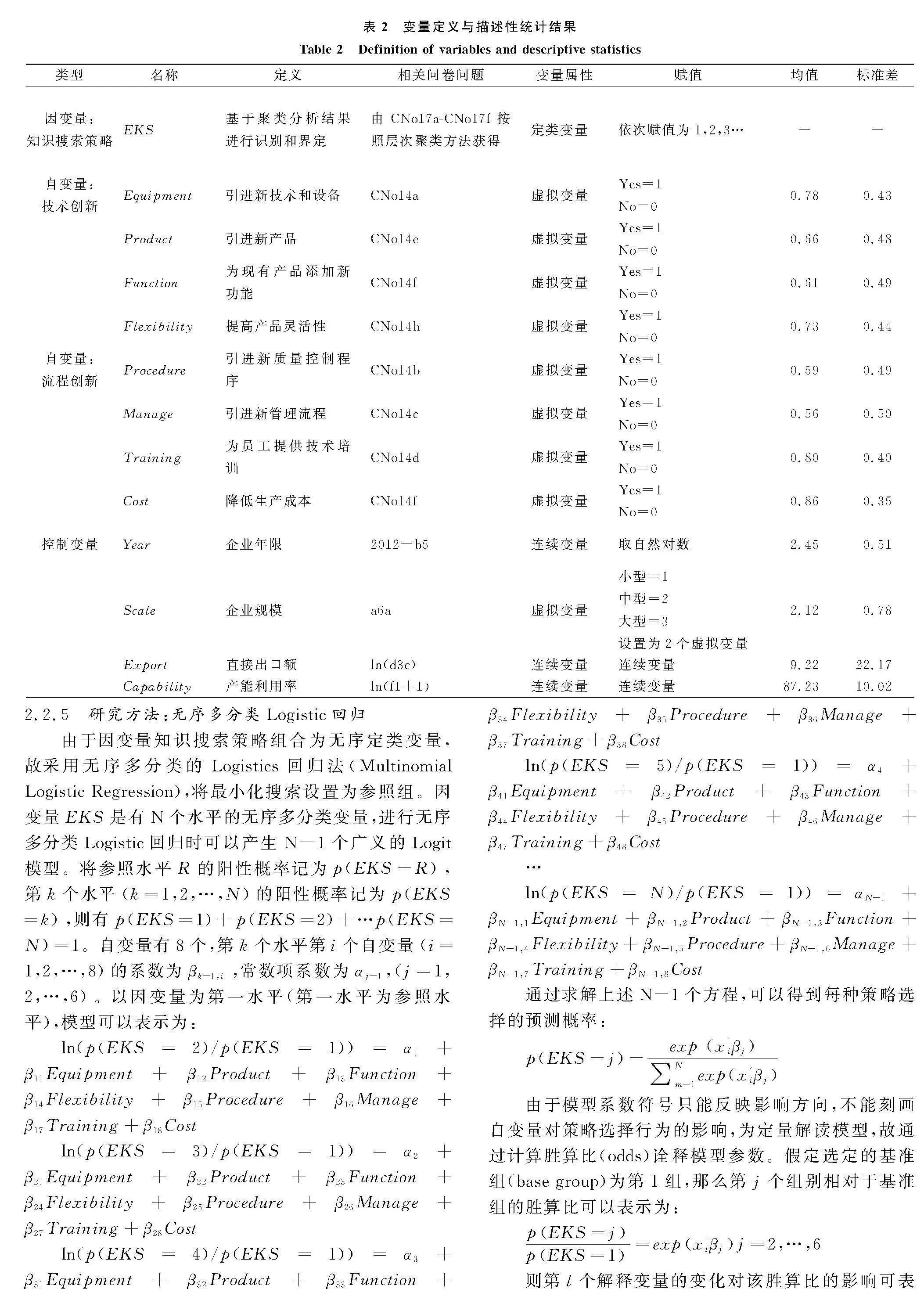
進行層次聚類前,先初步篩選出具有如下特點的數據并進行預處理:對于上述新產品開發方式(CNo17a, CN017b, CN017c, CN017d, CNo17f)均為否的企業,這類企業可能通過其它方式獲取知識,不屬于本文研究范疇;對于只通過自主研發方式(CNo17a)進行新產品開發的企業,其特點是考慮到研發過程與新技術的保密性,較少與外部進行知識互動,更多依賴內部知識流動,故將這種外部搜索策略定義為最小化搜索;對于4個變量(CN017b, CN017c, CN017d, CNo17f)的回答均為“是”的企業,這類企業更多地利用各種外部途徑進行搜索,體現出全面性、均衡性特點,故將這種外部搜索策略定義為全面均衡性搜索。然后,使用層次聚類分析法對制造業企業實際外部知識源進行聚類,將聚類結果作為聚類種子(個),基于該結果界定與識別制造業企業可能的其它知識搜索策略,將所有可能的外部知識搜索策略(個)依次進行命名和賦值,具體見表2。
2.2.5 研究方法:無序多分類Logistic回歸
由于因變量知識搜索策略組合為無序定類變量,故采用無序多分類的Logistics回歸法(Multinomial Logistic Regression),將最小化搜索設置為參照組。因變量EKS是有N個水平的無序多分類變量,進行無序多分類Logistic回歸時可以產生N-1個廣義的Logit模型。將參照水平R的陽性概率記為p(EKS=R),第k個水平(k=1,2,…,N)的陽性概率記為p(EKS=k),則有p(EKS=1)+p(EKS=2)+…p(EKS=N)=1。自變量有8個,第k個水平第i個自變量(i=1,2,…,8)的系數為βk-1,i,常數項系數為αj-1,(j=1,2,…,6) 。以因變量為第一水平(第一水平為參照水平),模型可以表示為:
ln(p(EKS=2)/p(EKS=1))=α1+β11Equipment+β12Product+β13Function+β14Flexibility+β15Procedure+β16Manage+β17Training+β18Cost
ln(p(EKS=3)/p(EKS=1))=α2+β21Equipment+β22Product+β23Function+β24Flexibility+β25Procedure+β26Manage+β27Training+β28Cost
ln(p(EKS=4)/p(EKS=1))=α3+β31Equipment+β32Product+β33Function+β34Flexibility+β35Procedure+β36Manage+β37Training+β38Cost
ln(p(EKS=5)/p(EKS=1))=α4+β41Equipment+β42Product+β43Function+β44Flexibility+β45Procedure+β46Manage+β47Training+β48Cost
…
ln(p(EKS=N)/p(EKS=1))=αN-1+βN-1,1Equipment+βN-1,2Product+βN-1,3Function+βN-1,4Flexibility+βN-1,5Procedure+βN-1,6Manage+βN-1,7Training+βN-1,8Cost
通過求解上述N-1個方程,可以得到每種策略選擇的預測概率:
p(EKS=j)=exp (x'iβj)∑Nm-1exp(x'iβj)
由于模型系數符號只能反映影響方向,不能刻畫自變量對策略選擇行為的影響,為定量解讀模型,故通過計算勝算比(odds)詮釋模型參數。假定選定的基準組(base group)為第1組,那么第j個組別相對于基準組的勝算比可以表示為:
pEKS=jpEKS=1=expx'iβjj=2,…,6
則第l個解釋變量的變化對該勝算比的影響可表示為:
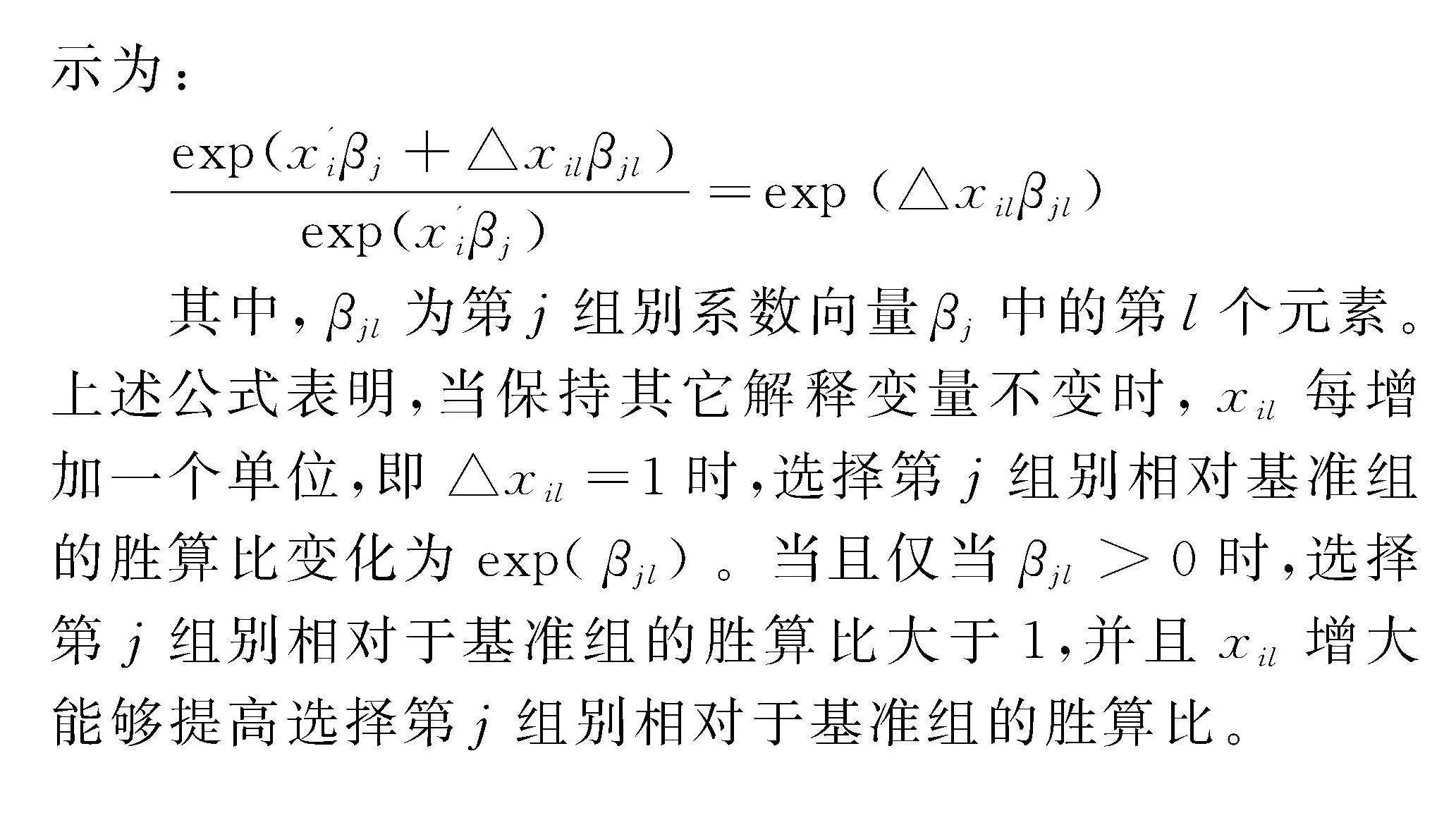
expx'iβj+△xilβjlexpx'iβj=exp (△xilβjl)
其中,βjl為第j組別系數向量βj中的第l個元素。上述公式表明,當保持其它解釋變量不變時,xil每增加一個單位,即△xil=1時,選擇第j組別相對基準組的勝算比變化為exp(βjl)。當且僅當βjl>0時,選擇第j組別相對于基準組的勝算比大于1,并且xil增大能夠提高選擇第j組別相對于基準組的勝算比。
3 數據分析與結果討論
3.1 層次聚類結果
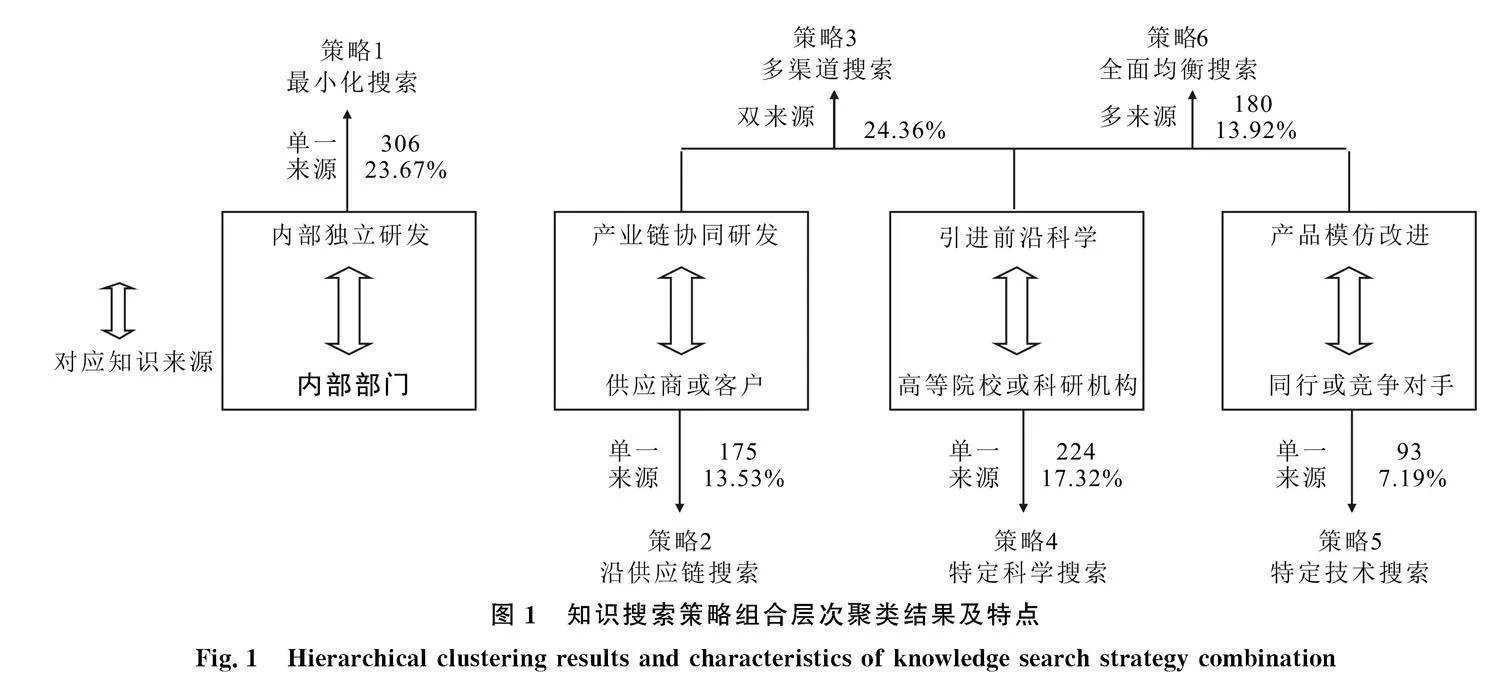
在界定最小化搜索與全面均衡性搜索后,需進一步基于多組二元數據進行系統聚類以劃分出其它知識搜索策略。借鑒Caliński& Harabasz [43]提出的指數法判斷最優分類數,最長聚類法對應的是算法,以近似檢驗計算出最優分類數為4,運用最長聚類法并基于多項二元數據進行聚類,得到4種聚類結果,代表企業的4種外部搜索策略。通過特征觀察和經驗判斷,其中的3種策略與Brunswicker & Vanhaverbeke [23]提出的策略相似,分別為沿供應鏈搜索、特定科學搜索和特定技術搜索,還有一種策略是企業選擇多種知識來源或知識搜索渠道,故將此策略命名為多渠道搜索。
綜合數據特征觀察和系統聚類結果,并借鑒已有研究,最終將企業知識搜索策略劃分為六類,即最小化搜索、沿供應鏈搜索、多渠道搜索、特定科學搜索、特定技術搜索和全面均衡搜索,具體如圖1所示。策略1:最小化搜索,企業以自主研發為主,很少與外部互動,主要依靠內部知識積累和部門間知識流動; 策略2:沿供應鏈搜索,企業以合作研發為主,主要與供應鏈上下游企業(供應商或客戶)進行合作研發;策略3:特定技術搜索,企業注重模仿競爭對手或同行企業,其不僅需要掌握一定技術,而且具有改進產品的技術能力;策略4:特定科學搜索,企業通過與高校、科研院所密切合作,引進先進理念,繼而進行新產品開發,其更加注重基礎研究;策略5:多渠道搜索,企業注重知識多樣性,傾向選擇兩種及以上渠道進行知識搜索;策略6:全面均衡搜索,企業充分利用各種渠道,通過多種方式進行廣泛知識搜索與創新平衡。由上可知,策略1(最小化搜索)的外部知識搜索強度與外部知識來源多樣性最低,因此策略2~6是本文關注的重點。
基于聚類結果,將界定出的6種企業知識搜索策略依次賦值。其中,數字僅用于區分類別,不具有比較意義,本文將其作為后續無序多分類Logistics回歸分析的因變量。
3.2 無序多分類Logistics回歸模型
3.2.1 模型檢驗
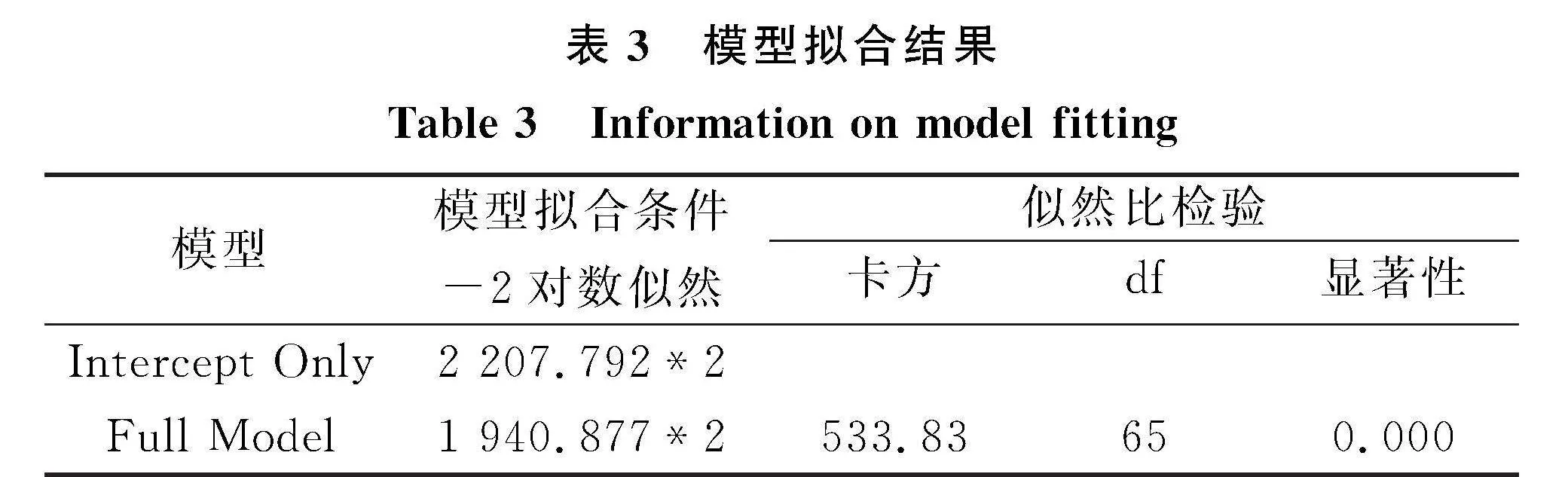
采用評估模型的擬合優度,擬合結果如表3所示。結果顯示,值為0.000<0.05,在5%的水平下顯著,表明至少有一個自變量的偏回歸系數不為0,拒絕自變量系數均為0的原假設。這說明自變量的納入是有統計學意義的,本文模型有效且具有較好的擬合效果。
3.2.2 回歸結果分析
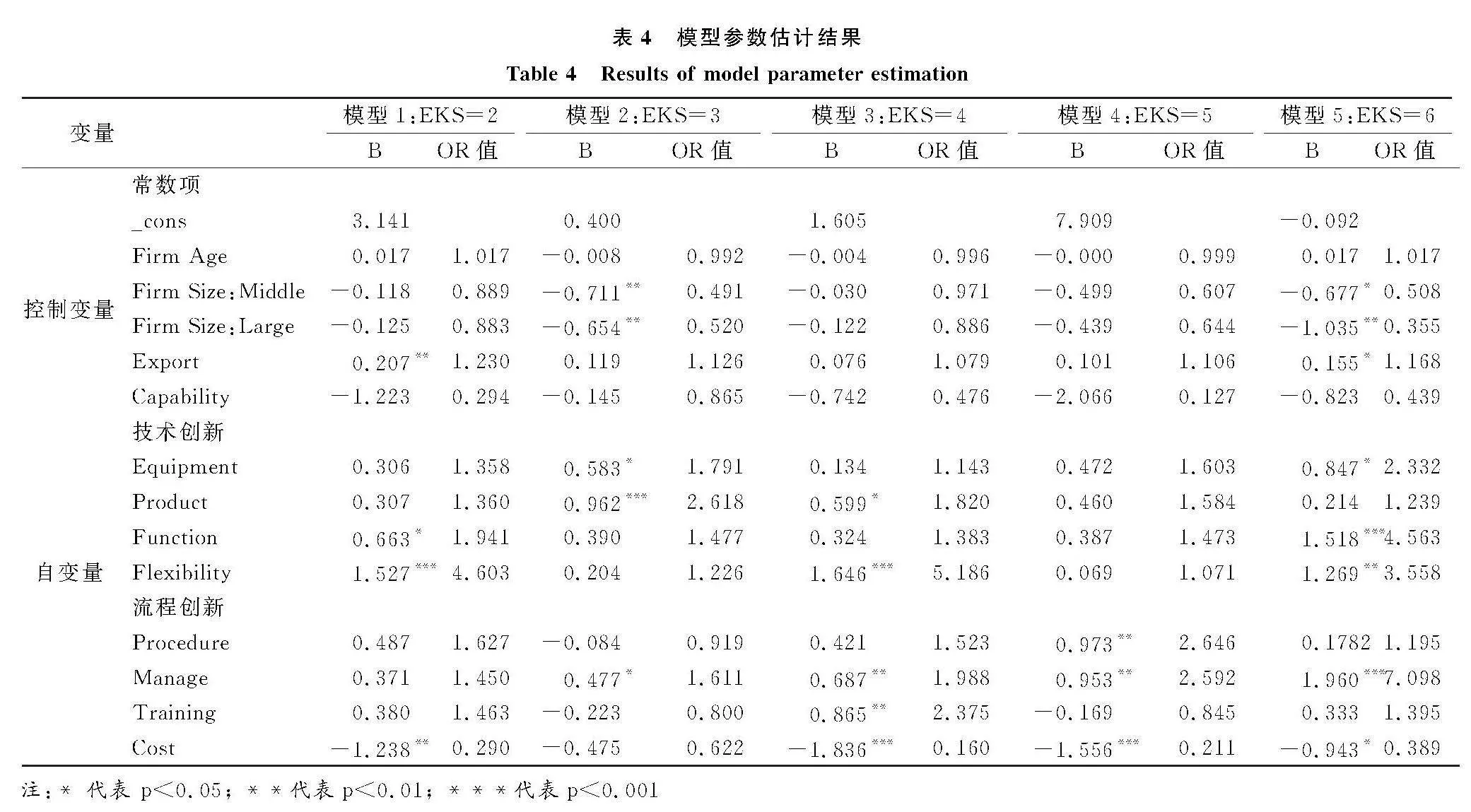
因變量知識搜索策略的取值為無序定類數據,因此選擇無序多分類Logistics回歸模型,以企業知識搜索策略組合為因變量、企業創新活動為自變量,對模型進行參數估計。以代表封閉知識搜索的最小化搜索為參照組,建立回歸模型1~5,分別表示沿供應鏈搜索、多途徑搜索、特定科學搜索、特定技術搜索和全面均衡搜索,回歸結果見表4。
技術創新方面,在給定5%的水平下且保持其它變量不變,第一,引進新技術和設備時,企業更傾向采取多渠道搜索和全面均衡搜索策略,其選擇概率是未開展此類創新活動企業數量的1.79倍與2.33倍。這是因為引進新技術和設備需要投入大量資金與人力,企業選擇較為開放的搜索策略,有助于獲取更多資源,補充內部資源不足,降低高投入帶來的風險。第二,引進新產品時,企業更傾向選擇特定科學搜索與多渠道搜索策略以獲取外部知識,其選擇概率是未開展此類創新活動企業數量的1.82倍和2.62倍。這是因為引進新產品時,企業需要與高等院校或科研機構進行正式或非正式交流以全面了解新產品功能、價格、市場定位、同類產品等信息。第三,為現有產品添加新功能時,企業更傾向采取沿供應鏈搜索和全面均衡搜索策略,其選擇概率是未開展此類創新活動企業數量1.94倍和4.56倍。這是因為為了適應新市場需求,企業需要在已有產品基礎上添加新功能,此時獲取客戶需求、背景和體驗等方面的粘性知識尤為重要,因此企業傾向于從正式伙伴處獲取外部知識,進而選擇較為開放的搜索策略。第四,為提高產品靈活性,企業更傾向于采取沿供應鏈搜索、特定科學搜索或全面均衡搜索策略,其選擇概率是未開展此類創新活動企業數量的4.6倍、5.19倍以及4.56倍。這是因為提高產品靈活性更多依賴于專家知識而不是技術,同時,需要敏銳感知客戶偏好,此時企業傾向于從正式或非正式伙伴處獲取外部知識,進而選擇較為開放的搜索策略。
流程創新方面,在給定5%的水平下且保持其它變量不變,第一,引進新質量控制程序時,相比于未開展此類創新活動的企業,采取特定技術搜索策略的企業數增長2.65倍。這是因為過程控制是確保和提升產品質量的核心,通過搜索外部技術資源可有效幫助企業保持品質,同時,為防止知識外溢,企業可能會收緊外部知識搜索渠道,選擇較為單一的搜索策略,傾向于從非正式伙伴關系中獲取知識。第二,引進新管理流程時,企業傾向選擇特定科學搜索、多渠道搜索或全面均衡搜索策略,其選擇概率分別是未開展此類創新活動企業數量的1.61倍、2.59倍和7.10倍。這是因為企業需協調各方資源,促進總體績效實現,故采取較為開放的外部知識搜索策略。第三,為員工提供技術培訓時,企業傾向采取特定科學搜索策略。這是因為高等院校在知識傳播、人才培養方面具有先天優勢,同時,為防止知識外溢,企業可能收緊搜索策略,故傾向于從單一來源獲取知識。第四,為降低生產成本,企業采取沿供應鏈搜索、特定科學搜索、特定技術搜索或全面均衡搜索的可能性較小,而是傾向于選擇最小化搜索策略。這是因為為縮減創新投入,企業會采取較為保守的外部知識搜索策略。
在控制變量中,企業規模對外部知識搜索策略的影響顯著。相比于小型制造業企業,大中型制造業企業選擇多渠道搜索或全面均衡搜索的可能性較小。此外,企業出口銷售額占比越大,則越傾向于采取沿供應鏈搜索或全面衡搜索的外部知識搜索策略。
4 結論與討論
4.1 研究結論
企業在創新活動中會選擇從供應商、客戶、高等院校與科研機構,以及競爭對手等單一或組合來源獲取外部知識,從而形成差異化的知識搜索策略或策略組合。本文利用層次聚類法和無序多分類Logistic模型,構建企業創新過程中的知識搜索策略選擇分析框架,以中國制造業企業創新調查數據為樣本,開展實證研究,并得到如下結論:
(1)基于層次聚類分析結果,外部知識搜索可劃分為6種知識搜索策略,即最小化搜索、沿供應鏈搜索、多途徑搜索、特定科學搜索、特定技術搜索和全面均衡搜索。因此,在創新過程中制造業企業知識搜索策略呈現出多樣化特征,既可能選擇專注于內部研發的最小化搜索策略,也可能選擇沿供應鏈搜索、特定科學搜索或特定技術搜索的單一外部知識搜索策略,還有可能選擇由多種外部知識搜索策略構成的多途徑搜索或全面均衡搜索的策略組合。因此,本文證明研究命題一存在。
(2)基于無序多分類Logistics的回歸分析結果可知,在流程創新活動中,制造業企業傾向于選擇最小化搜索或者單一的外部搜索方式,而在技術創新活動中,企業傾向于從外部搜索知識并采取更加多元化的搜索策略組合。例如為降低生產成本,相比沿供應鏈搜索、特定科學搜索、特定技術搜索或全面均衡搜索,企業更傾向于采取最小化搜索策略,此時企業的外部知識搜索行為較為保守。為引進新質量控制程序,企業更傾向于采取特定技術搜索的單一外部知識搜索策略,因為這種知識搜索策略有助于降低企業投入與成本,提高企業搜索成功率。當為員工提供技術培訓時,企業更傾向于采取特定科學搜索策略,這是因為高等院校在知識傳播和人才培養方面具有先天優勢,通過與高等院校的正式和非正式交流,企業可以高效獲取所需知識,同時,為了防止知識外溢,企業會收緊搜索范圍,從而傾向于從單一來源獲取知識。為提高產品靈活性,企業會傾向于采取沿供應鏈搜索、特定科學搜索或全面均衡搜索的策略組合,這是因為多元化的外部知識搜索策略組合雖然會增大企業投入,但同時也會提高企業知識搜索效率,從而有利于創新。在為現有產品添加新功能和提高產品靈活性時,企業會傾向于選擇沿供應鏈搜索與全面均衡搜索并存的搜索策略。這是因為企業可以基于傳統價值鏈的上下游搜索,從供應商或客戶處獲取知識。其中,供應商知識是指對公司發展至關重要的零部件知識,而獲取關于客戶需求、背景和體驗的粘性信息,有助于企業識別技術開發先機,及時洞察市場發展態勢,因此企業傾向于從各種渠道搜索外部知識。至此,本文證明研究命題二成立,即制造業企業的知識搜索策略在技術創新活動與流程創新活動中呈現出顯著差異性,在流程創新活動中傾向于選擇單一的外部知識搜索策略,而在技術創新活動中則傾向于選擇綜合性外部知識搜索策略。
4.2 實踐啟示
根據知識需求,針對性選擇單一或多元化知識搜索策略組合,同時,保持合理的知識搜索開放性。知識搜索保守型企業對外部資源的需求較低,但是過度保守的知識搜索策略可能加劇企業核心能力剛性,而過度開放的知識獲取策略也可能導致對外部組織的過度依賴,削弱企業研發能力,同時,導致核心知識外溢。
4.3 研究不足與展望
本研究提出制造業企業創新活動與知識搜索策略關系的相關命題,初步探討了不同創新過程中企業外部知識搜索策略選擇的差異性,彌補了企業外部知識搜索策略研究的不足,為該領域理論研究提供了新思路,具有一定理論貢獻與實踐價值,但是在數據來源、創新活動類型等方面仍然存在局限性。未來研究可以聚焦特定產業或服務業企業進行深入探索,以驗證模型的適用性與研究結果的科學性。
參考文獻:
[1] BAYONA C,GARCI A-MARCO T,HUERTA E. Firms' motivations for cooperative R&D: an empirical analysis of Spanish firms [J]. Research Policy, 2001, 30(8): 1289-1307.
[2] TETHER B S. Who co-operates for innovation, and why: an empirical analysis [J]. Research Policy, 2002, 31(6): 947-967.
[3] DAHLANDER L,GANN D M. How open is innovation [J]. Research Policy, 2010, 39(6): 699-709.
[4] LAURSEN K,SALTER A. Searching high and low: what types of firms use universities as a source of innovation [J]. Research Policy, 2004, 33(8): 1201-1215.
[5] SIDHU J S,VOLBERDA H W,COMMANDEUR H R. Exploring exploration orientation and its determinants: some empirical evidence [J]. Journal of Management Studies, 2004, 41(6): 913-932.
[6] CHESBROUGH H,CROWTHER A K. Beyond high tech: early adopters of open innovation in other industries [J]. R&D Management, 2006, 36(3): 229-236.
[7] GRIMPE C,SOFKA W. Search patterns and absorptive capacity: low-and high-technology sectors in European countries [J]. Research Policy, 2009, 38(3): 495-506.
[8] TSAI K-H,WANG J-C. External technology sourcing and innovation performance in LMT sectors: an analysis based on the Taiwanese technological innovation survey [J]. Research Policy, 2009, 38(3): 518-526.
[9] GANS J S,STERN S. The product market and the market for "ideas": commercialization strategies for technology entrepreneurs [J]. Research Policy, 2003, 32(2): 333-350.
[10] SHEARMUR R,DOLOREUX D. How open innovation processes vary between urban and remote environments: slow innovators, market-sourced information and frequency of interaction [J]. Entrepreneurship & Regional Development, 2016, 28(5-6): 337-357.
[11] DOLOREUX D,TURKINA E,VAN ASSCHE A. Innovation type and external knowledge search strategies in KIBS: evidence from Canada [J]. Service Business, 2019, 13(3): 509-530.
[12] ROSENKOPF L,NERKAR A. Beyond local search: boundary-spanning, exploration, and impact in the optical disk industry [J]. Strategic Management Journal, 2001, 22(4): 287-306.
[13] BETTENCOURT L A,OSTROM A L,BROWN S W, et al. Client co-production in knowledge-intensive business services [J]. California Management Review, 2002, 44(4): 100-128.
[14] SOFKA W,GRIMPE C. Specialized search and innovation performance-evidence across Europe [J]. R&D Management, 2010, 40(3): 310-323.
[15] DAVID A. Understanding the invention phase of management innovation: a design theory perspective [J]. European Management Review, 2019, 16(2): 383-398.
[16] 董媛媛,魏澤鵬. 跨界雙元搜索對雙元創新績效的影響——知識合作鏈與戰略柔性整合視角[J]. 科技進步與對策,2021,38(22):124-131.
[17] 叢貞,王瑤,范建紅. 企業創新能力提升的系統動力學分析——基于知識獲取視角 [J]. 系統科學學報, 2019, 27(4): 130-135.
[18] LAURSEN K,SALTER A J. The paradox of openness:appropriability, external search and collaboration [J]. Research Policy, 2014, 43(5): 867-878.
[19] PERKMANN M,WALSH K. The two faces of collaboration: impacts of university-industry relations on public research [J]. Industrial and Corporate Change, 2009, 18(6): 1033-1065.
[20] LIN B-W,WU C-H. How does knowledge depth moderate the performance of internal and external knowledge sourcing strategies [J]. Technovation, 2010, 30(11-12): 582-589.
[21] ROPER S,LOVE J H,BONNER K. Firms' knowledge search and local knowledge externalities in innovation performance [J]. Research Policy, 2017, 46(1): 43-56.
[22] BRUNSWICKER S,VANHAVERBEKE W. Open innovation in small and medium-sized enterprises (SMEs):external knowledge sourcing strategies and internal organizational facilitators [J]. Journal of Small Business Management, 2015, 53(4): 1241-1263.
[23] MINA A,BASCAVUSOGLU-MOREAU E,HUGHES A. Open service innovation and the firm's search for external knowledge [J]. Research Policy, 2014, 43(5): 853-866.
[24] RODRIGUEZ M,DOLOREUX D,SHEARMUR R. Variety in external knowledge sourcing and innovation novelty: evidence from the KIBS sector in Spain [J]. Technovation, 2017, 68: 35-43.
[25] 孟慶時,余江. 新一代信息技術產業的技術升級測度研究 [J]. 科學學研究, 2021, 39(8): 1407-1417.
[26] ASIKAINEN A,MANGIAROTTI G.Open innovation and growth in IT sector,service business[Z].Springer;Pan-Pacific Business Association,2017.
[27] TRIGO A,VENCE X. Scope and patterns of innovation cooperation in Spanish service enterprises [J]. Research Policy, 2012, 41(3): 602-613.
[28] KESSLER E H,CHAKRABARTI A K. Innovation speed: a conceptual model of context, antecedents, and outcomes [J]. Academy of Management Review, 1996, 21(4): 1143-1191.
[29] VON KROGH G,VON HIPPEL E. The promise of research on open source software [J]. Management Science, 2006, 52(7): 975-983.
[30] INKPEN A C,PIEN W. An examination of collaboration and knowledge transfer: China-Singapore Suzhou Industrial Park [J]. Journal of Management Studies, 2006, 43(4): 779-811.
[31] HEMMERT M. The influence of institutional factors on the technology acquisition performance of high-tech firms: survey results from Germany and Japan [J]. Research Policy, 2004, 33(6-7): 1019-1039.
[32] CALOGHIROU Y,KASTELLI I,TSAKANIKAS A. Internal capabilities and external knowledge sources: complements or substitutes for innovative performance [J]. Technovation, 2004, 24(1): 29-39.
[33] CASSIMAN B,VEUGELERS R. In search of complementarity in innovation strategy:internal R&D and external knowledge acquisition [J]. Management Science, 2006, 52(1): 68-82.
[34] CATOZZELLA A,VIVARELLI M. The catalysing role of in-house R&D in fostering complementarity among innovative inputs [J]. Industry and Innovation, 2014, 21(3): 179-196.
[35] SCHMIEDEBERG C. Complementarities of innovation activities:an empirical analysis of the German manufacturing sector [J]. Research Policy, 2008, 37(9): 1492-1503.
[36] MEDASE S K,ABDUL-BASIT S. External knowledge modes and firm-level innovation performance: empirical evidence from sub-Saharan Africa [J]. Journal of Innovation & Knowledge, 2020, 5(2): 81-95.
[37] SCHOENMAKERS W,DUYSTERS G. Learning in strategic technology alliances [J]. Technology Analysis & Strategic Management, 2006, 18(2): 245-264.
[38] 袁禮,許濤.融資模式會影響企業技術創新嗎——來自世界銀行中國企業調查數據的經驗證據[J].宏觀質量研究,2019,7(3):111-128.
[39] GANOTAKIS P,LOVE J H. R&D, product innovation, and exporting: evidence from UK new technology based firms [J]. Oxford Economic Papers, 2011, 63(2): 279-306.
[40] FILATOTCHEV I,LIU X,BUCK T, et al. The export orientation and export performance of high-technology SMEs in emerging markets: the effects of knowledge transfer by returnee entrepreneurs [J]. Journal of International Business Studies, 2009, 40(6): 1005-1021.
[41] MAZUMDAR D,MAZAHERI A. African manufacturing firm: an analysis based on firm surveys in seven countries in sub-Saharan Africa [M]. Routledge, London, GB, 2003.
[42] MUKWATE NGUI-MUCHAI D,MUCHAI MUNIU J. Firm efficiency differences and distribution in the Kenyan manufacturing sector [J]. African Development Review, 2012, 24(1): 52-66.
[43] CALINSKI T,HARABASZ J. A dendrite method for cluster analysis [J]. Communications in Statistics-Theory and Methods, 1974, 3(1): 1-27.
(責任編輯:胡俊健)
The Selection Tendency of External Knowledge Source Strategies in Innovation Activities:Evidence from Chinese Manufacturing Enterprises
Song Yuxiao1,2,3,4,Yu Jiang3,5,Li Bo3,5
(1. Sino-Danish College,University of Chinese Academy of Sciences, Beijing 100049, China; 2.Department of Materials and Production, Aalborg University, Aalborg 9220, Denmark;3.Institutes of Science and Development, Chines Academy of Sciences, Beijing 100190, China; 4. Sino-Danish Research and Education Center, Beijing 100049, China; 5. School of Public Policy and Management, University of Chinese Academy of Sciences, Beijing 100049, China)
Abstract:External knowledge search has become a key part of manufacturing enterprises' innovation activities, both in high-tech sectors that are more open to innovation and low and medium technology sectors with lower technology intensity. When manufacturing enterprises cannot rely solely on internal resources for innovation, they begin to search for and leverage knowledge from outside, integrate external knowledge with their knowledge base, and utilize knowledge inflow to accelerate internal innovation and then expand the market for external use of innovation. Therefore, the external knowledge search strategy of manufacturing enterprises represents an important non-pecuniary mode of inbound open innovation. When they meet difficulty in reaching the complexity required for new product production, they will seek to cooperate with the outside to obtain external knowledge resources and establish knowledge linkages with suppliers, customers, universities, research institutions and competitor to achieve economies of scale and scope, and then respond quickly to market changes.
Manufacturing enterprises' different motives to carry out external knowledge acquisition will lead to variability in the demand for the combination of external knowledge inputs, and the enterprises will choose an appropriate combination of search strategies that is consistent with needs. Existing studies pay less attention to the innovation activities of manufacturing enterprises that benefit most from knowledge search strategies, i.e., the propensity to choose open search strategies in their innovation activities. On the basis of a deep analysis of the existing literature, three propositions related to the relationship between innovation activities and knowledge search strategies are proposed from the perspectives of knowledge acquisition motivation, formal/informal cooperation relationships, and knowledge protection. In terms of research methodology, this paper uses the hierarchical clustering method and then establishes a multinomial logistic regression model to construct a theoretical research framework on the relationship between innovation activities and external knowledge search strategies, and conducts an empirical study based on the World Bank's innovation survey for Chinese manufacturing enterprises as the data source.
The results of the study show that knowledge search strategies can be classified into minimal search, search along the supply chain, multi-path search, science-specific search, technology-specific search, and overall balanced search. Manufacturing enterprises might focus on internal R&D or might be more open in their innovation activities, and firms might choose one single knowledge search strategy or a combination of multiple knowledge search strategies, which is consistent with Proposition 1. The results also confirm that manufacturing enterprises prefer formal knowledge sources in technological innovation activities, acquiring knowledge related to technology, market and product knowledge ("search along the supply chain"), while in process innovation activities, they tend to acquire knowledge from both formal and informal sources, such as frontier scientific knowledge ("science-specific search"). The tendency of manufacturing enterprises to choose "search along the supply chain" in a variety of technological innovation activities suggests that firms can search along the upstream or downstream of the traditional value chain. The suppliers usually have specialized knowledge related to components, while the customers can obtain sticky information about customer needs, background and experience, which is helpful to identify new market opportunities and trends. Manufacturing enterprises might tighten their open search behaviors and choose close search or a single knowledge search strategy in their innovation activities, which confirms proposition 3. The behavior of external knowledge search is sometimes more "open" and sometimes "very conservative". For example, when reducing production costs,manufacturing enterprises might be more conservative and adopt the minimal search strategy; while when providing technical training for employees, they are more likely to adopt the search strategy of science-specific search, and universities have the advantage in knowledge dissemination and talent training. In order to prevent knowledge spillover, manufacturing enterprises might tighten their search behaviors and tend to acquire knowledge from a single source. The openness of external knowledge search depends on the trade-off and consideration of knowledge demand and protection.
The results of the study corroborate the validity of the previous propositions and provide new ideas in this field by preliminarily exploring the issue of to what extent different natures and types of innovation activities affect the propensity to choose external knowledge search strategies. It provides an insight into the open knowledge search strategy of manufacturing enterprises in practice.
Key Words:External Knowledge Search; Manufacturing Enterprises; New Product Production;Corporate Innovation Activities; Multinomial Logistic Regression