密花香薷揮發油化學成分及其抗菌、抗病毒活性的研究
2012-11-23 16:24:34斯建勇賈曉光李曉瑾
天然產物研究與開發 2012年8期
劉 藝,斯建勇*,曹 麗,賈曉光,李曉瑾
1中國醫學科學院&北京協和醫學院藥用植物研究所,北京100193; 2新疆中藥民族藥研究所,烏魯木齊830002
密花香薷揮發油化學成分及其抗菌、抗病毒活性的研究
劉 藝1,斯建勇1*,曹 麗1,賈曉光2,李曉瑾2
1中國醫學科學院&北京協和醫學院藥用植物研究所,北京100193;2新疆中藥民族藥研究所,烏魯木齊830002
采用水蒸氣蒸餾法提取密花香薷揮發油,測得密花香薷揮發油的得率為0.12%。利用氣相色譜-質譜(GC-MS)聯用技術對密花香薷揮發油的化學成分進行了分析研究,鑒定了26種化合物,占揮發油總量的76.04%。體外抗菌試驗和抗病毒試驗的結果表明:密花香薷揮發油具有抗菌和抗病毒作用。
密花香薷;揮發油;抗細菌活性;抗真菌活性;抗病毒活性;GC-MS
Introduction
There are about 40 species of Elsholtzia Willd in the world.More than 50 compounds have been isolated from Elsholtzia species.The chemical constituents can be divided into essential oil,flavonoids,lignanoids,coumarins,steroids and fatty acids[1].There are about 100 chemical constituents of the essential oil analyzed by GC or GC-MS.From the former literature,we found that the main chemical constituents of the essential oil from the same Elsholtzia species are not the same.For example,Zhang et al.found that the main chemical constituents of the essential oil of Elsholtzia densa Benth are Germaerene D and D-Limonene[2],but Wang et al.found that 1,8-p-Menthadiene and Ocimene are the main chemical constituents of the essential oil of E.densa[3].
There are many bioactivities of Elsholtzia species,such as antibacterial,antiviral,analgesic and sedative activities[4,5].In folk medicine,the most common uses of Elsholtzia species are for the treatment of cold,fever,dysentery,digestion disorder,heat stroke and so on[1].In this paper,we describe the chemical composition,antimicrobial and antiviral activities of the essential oil of E.densa to providing evidences for further development of E.densa.
Materials and Methods
Plant material
The aerial parts of E.densa were collected from Xinjiang Province of China.A voucher specimen was deposited at the herbarium,Department of Chemistry,Institute of Medicinal Plant Development,Chinese Academic of Medical Science,Peking Union Medical College,China.
Extraction of the essential oil The essential oil of E.densa was obtained by using water distillation for 6 h.The resulted essential oil was stored in sealed glass vials at 4℃ prior to further analysis.The content of the essential oil of E.densa was 0.12%.
GC-MS analysis
Gas chromatography-mass spectrometry(GC-MS)analysis was performed on a Varian 450 gas chromatograph equipped with Varian 320-MS detector.The column used was a capillary column Varian VF-5 MS CP8944(30 m×0.25 mm i.d.,film thickness 0.25 μm).The instrument was operated under electron-impact(EI)mode at 70 eV.
Helium was the carrier gas with a flow rate of 1.0 mL/ min.The injected volume was 1 μL.The split ratio was 1∶20.The transfer line and injector temperature were both 250℃.The oven temperature program was as follows:60℃ initial temperature,hold for 1 min;increased at 5℃/min to 250℃,hold for 10 min;increased at 15℃/min to an interface temperature of 280℃.Identification of oil components was achieved based on their retention indices(determined with reference to a homologous series of normal alkanes),and by computerized matching of the acquired mass spectra with those stored in Wiley/NIST mass spectral library of the GC/MS data system.
Antimicrobial activity
Microorganisms
Gram-negative bacteria:Pseudomonas aeruginosa (ATCC10104)and Escherichia coli(ATCC2592);Grampositive bacteria:Staphylococcus aureus(ATCC25923); fungi:Candida albicans(ATCC10231).All of these microorganisms were obtained from the pharmacology laboratory of Institute of Medicinal Plant Development,Chinese Academic of Medical Science and Peking U-nion Medical College.
Antimicrobial activity assay
The antimicrobial activity of the essential oil against microorganisms was tested by a micro-well dilution method[6].Microorganisms were cultured overnight at 37℃ on[Nutrient broth(NB)for bacteria and Sabouraud dextrose broth(SDB)for fungi]and adjusted to a final density of(105CFU/mL for bacteria and 103CFU/mL for fungi),and used as an inoculum.The essential oil was first dissolved in DMSO and then diluted with broth.The initial concentration of DMSO never exceeded 2.5%.Two-fold serial dilutions were made in broth over a range to give final concentrations of 100 to 1.56 mg/mL for Gram-negative bacteria,80 to 1.25 μg/mL for Gram-positive bacteria and 80 to 0.78 mg/ mL for fungi.The 96-well plates were prepared by dispensing into each well 95 μL of(NB for bacteria and SDB for fungi)and 5 μL of the inoculum.100 μL of the essential oil initially prepared was added into the first wells.The last well containing 195 μL of(NB for bacteria and SDB for fungi)without the essential oil and 5 μL of the inoculum on each strip was used as negative control.The final volume in each well was 200 μL.The reference test compounds were(penicillin for bacteria and itraconazole for fungi).The solvent of essential oil was used as a negative control.The contents of the wells were mixed and the microplates were incubated at(37℃ for bacteria and 35℃ for fungi)for 24 h.The minimal inhibitory concentration(MIC)was defined as the lowest dilution at which no growth was detected.Each test was repeated thrice.
Antiviral activity
Viruses and cells
Influenza viruses(A/H3N2/Jifang/15/90 and B/Jifang/13/97)and Madin-Darby canine kidney(MDCK)cells were obtained from Institute of Medicinal Biotechnology,Chinese Academic of Medical Science and Peking Union Medical College.The virus was propagated in chorio-allantoic cavities of 10-day old embryonated hen eggs at 35℃ for 3 days.The infected allantoic fluids were clarified by centrifugation at 1000×for 20 min and stored as virus stock solution in small portions at-80℃.
Antiviral activity assay
The inhibition ofvirus-induced cytopathic effect (CPE)was determined by visual(microscopic)examination of cells.The essential oil was dissolved in DMSO and added to Sabouraud medium in order to get a appropriate initial concentration.In general,eight concentrations of the essential oil,each varying by one-half log10 from the next,were evaluated in MDCK cells.MDCK cells were seeded onto a 96-well culture plate at a concentration of 10-5cells per well for influenza A virus and 10-3cells per well for influenza B virus.Then the culture plates were incubated at 37℃ in 5%CO2for 24 h.After 24 h,these cells were infected with influenza A and B viruses for 2 h.Then medium was removed and the 96-well plates were replaced with media containing serially diluted essential oil.The culture plates were incubated at 37℃ in 5%CO2for 36 h until appropriate CPE was achieved.Ribavirin was used as a positive control,and DMSO was used as a negative control.CPE inhibition data were expressed as the 50% effective (viral CPE-inhibitory) concentration (EC50),50%cytotoxicity(cell-inhibitory)concentration(CC50)and selectivity index(SI),determined as the CC50/EC50.
Results and Discussion
Chemical composition of the essential oil
Water-distilled essential oil from aerial parts of E.densa were analyzed by GC-MS and resulted in the identification of 26 compounds representing 76.04%of the oil(Table 1).The dominant compounds are as follows:α-bisabolol(14.97%),elemene(9.04%),βselinene(8.97%),(+)-γ-gurjunene(6.37%),αguaiene(5.92%),patchoulene(3.96%),α-ylangene(3.90%),bulnesol(3.6%),and caryophyllene (2.15%).The results are different from the former literature[2,3].The reason for the differences may be that the aerial parts of E.densa used in our study and other studies were collected from different places.
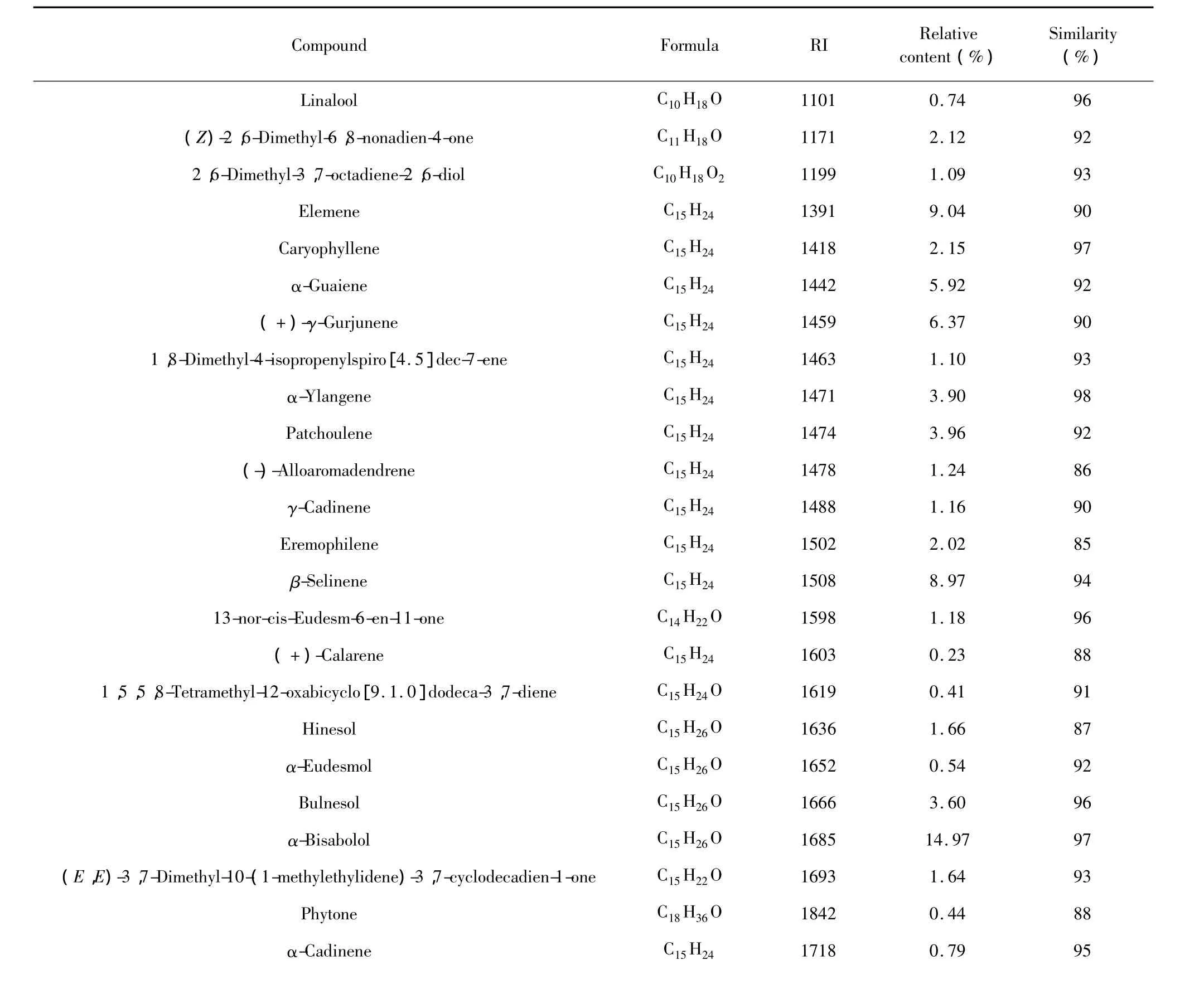
Table 1 Composition of the essential oil of E.densa

(E,Z)-3,7,11-Trimethyl-2,6,10-dodecatrien-1-ol C15H26O 1748 0.64 91 n-Hexadecanoic acid C16H32O2 1959 0.16 87 Total 76.04
Antimicrobial activity
The essential oil of E.densa was found to be inhibiting both Gram-positive bacteria(S.aureus)and Gramnegative bacteria(P.aeruginosa and E.coli).The essential oil exhibited slight activity against P.aeruginosa and E.coli,but strong activity against S.aureus(Table 2).The significant antimicrobial activity against S.aureus could indicate its potential as a good Antibacterial agent.It has frequently been reported that Gram(+) bacteria are more susceptible to essential oil than Gram (-)bacteria[7]and our results did show the selectivity towards Gram(+)bacteria.
The essential oil exhibited moderate activity against C.albicans.The minimum inhibitory concentration(MIC) values were determined by comparison with itraconazole (MIC=0.0503×10⁻³mg/mL)as a standard agent.The MIC of the essential oil against C.albicans is 2.5 mg/mL.The blind control(DMSO)did not inhibit any of the microorganisms tested.

Table 1 Antibacterial activity of the essential oil of Elsholtzia densa Benth
Antiviral activity
The essential oil of E.densa was investigated for its antiviral activity against two influenza viruses(A/H3N2/ Jifang/15/90 and B/Jifang/13/97).MDCK is sensitive to influenza virus[8].The results of anti-influenza virus efficacy in MDCK cells by CPE methods are listed in(Table 3).The essential oil exhibited slight activity against influenza A virus compared with the positive controls,ribavirin.However,the essential oil did not show any antiviral activity against influenza B virus (Table 3).

Table 1 The anti-influenza virus activity of complexes in MDCK cells
Conclusions
The results of the present study justify the traditional therapeutic use of E.densa.These results corroborate the importance of ethnobotanical surveys for screening plants as a potential source for bioactive compounds.The essential oil of E.densa may be applied clinically for bacteria and fungi infections,e.g.,Staphylococcus aureus and Candida albicans.Hence these could result in discovery of novel antimicrobial agents.
Further isolation and identification of the antimicrobial compounds in the essential oil are needed.Although from this study it is evident that the essential oil is showing promising antimicrobial activity,but the method of action of the essential oil is unknown.Theses observations may promote a further development of our research in this field.
Based on the test data,further chemical and pharmacological investigations may be recommended for E.densa.
Acknowledges
The authors are grateful to Dr.Yuele Pan,Institute of Medicinal Plant Development,Chinese Academic of Medical Science,Peking Union Medical College,Dr.Yuhuan Li,Institute of Medicinal Biotechnology,Chinese Academic of Medical Science and Peking Union Medical College,Dr.Yuan Liu,Analytical and Testing Center,Beijing Normal University.
1 Liu AL,Wang YT,Du GH,et al.Elsholtzia:review of traditional uses,chemistry and pharmacology.J Chin Phar Sci,2007,16:73-78.
2 Zhang J,Wang ZH,Yao J,et al.Studies on the essential oil from Elsholtzia densa.Acta Prat Sin,2005,14:112-116.
3 Wang J,Zhao LJ,Han JM,et al.Studies on the essential oil from Elsholtzia densa.Wild Plant Res,1996,2:35-36.
4 Gong MX.Research progress of Elsholtzia splendens on pharmacology.Beijing Med,1997,6:46-48.
5 Zhang Y.Advances in the study of Elsholtzia splendens.J Chin Med Mater,2002,25:146-147.
6 Suzan O,Sezai E.The chemical composition of essential oil and in vitro antibacterial activities of essential oil and methanol extract of Ziziphora persica Bunge.J Ethnopharmacol,2006,106:372-376.
7 Mann CM,Cox SD,Markham JL.The outer membrane of Pseudomonas aeruginosa NCTC 6749 contributes to its tolerance to the essential oil of Melaleuca alternifolia(tea tree oil).Lett Appl Microbiol,2000,30:294-297.
8 Margarita DG,Carmen R,Mariano E.Activation of the IFN-inducible enzyme Rnase L causes apoptosis of animal cells.Virology,1997,236:354-363.
March 14,2011;Accepted June 21,2011
This project is supported by the Xinjiang Natural Science Fund(No.200821181)
Chemical Composition,Antimicrobial and Antiviral Activities of the Essential Oil of Elsholtzia densa Benth.
LIU Yi1,SI Jian-yong1*,CAO Li1,JIA Xiao-guang2,LI Xiao-jin21Institute of Medicinal Plant Development,Chinese Academic of Medical Science,Peking Union Medical College,Beijing 100193,China;2Xinjiang Institute of Chinese Materia Medica and Ethnical Materia Wulumuqi 830002,China
The essential oil of Elsholtzia densa Benth has been obtained by using water distillation and analyzed by GCMS.The content of the essential oil of E.densa was 0.12%.Retention indices and mass spectral data were used to identify 26 oil components,represented 76.04%of the total essential oil.In the antimicrobial and antiviral activities assay,the essential oil exhibited antimicrobial and antiviral activities.
Elsholtzia densa Benth.;essential oil;antimicrobial activity;antiviral activity;GC-MS
1001-6880(2012)08-1070-05
*Corresponding author Tel:86-018911538068;E-mail:jysi@implad.ac.cn.
Q946.91;R284.2
A