
2012年版急性胰腺炎分類標準的臨床應用
2013-10-19 03:09:27吳青梁志海唐國都陳文靜方春蕓
中華胰腺病雜志 2013年4期
關鍵詞:功能
吳青 梁志海 唐國都 陳文靜 方春蕓
·論著·
2012年版急性胰腺炎分類標準的臨床應用
吳青 梁志海 唐國都 陳文靜 方春蕓
目的初步探討2012年版急性胰腺炎分類標準的臨床應用價值。方法回顧性分析2009年10月至2012年9月廣西醫科大學第一附屬醫院診斷為急性胰腺炎患者的臨床資料。根據 2012年版分類標準將患者分為輕癥急性胰腺炎(MAP)、中度重癥急性胰腺炎(MSAP)、重癥急性胰腺炎(SAP)3組。比較各組患者的好轉及治愈例數、住院天數、住院費用、ICU入住率及入住天數、SIRS發生率及持續天數、Ranson評分、APACHEⅡ評分、CTSI評分的差異有無統計學意義。結果166例患者中MAP 76例,MSAP 65例,SAP 25例;男性119例,女性47例;平均年齡(49±15)歲;平均入院前發病時間為(2.27±1.46)d。3組患者的好轉及治愈例數、住院天數、住院費用、入住ICU例數及天數、SIRS發生例數及持續天數、Ranson評分、APACHEⅡ評分、CTSI評分均隨著疾病嚴重程度的增加而升高(P值均<0.01),其中SAP組患者相應值分別為21例(84.0%)、(23.8±13.6)d、(53900±30260)元、12例(48.0%)及(5.76±13.8)d、24例(96.0%)及(5.00±2.40)d、 (3.76±1.30)分、(8.52±4.24)分、(5.44±3.48)分。166例患者中79例發生局部并發癥,其中急性胰周液體積聚34例,急性壞死物積聚45例。SAP組急性壞死物積聚發生率高于MSAP組(68.0% 比44.6%,P=0.047),而急性胰周液體積聚發生率低于MSAP組(16.0%比46.1%,P=0.016)。166例患者中42例發生器官功能衰竭,其中35例發生呼吸功能衰竭,2例發生腎功能衰竭,5例合并發生呼吸功能和腎功能衰竭。SAP組器官功能衰竭發生率為100%,MSAP組為26.2%,兩組差異有統計學意義(P<0.05)。結論2012年版急性胰腺炎分類標準簡便易行,能準確反映急性胰腺炎的嚴重程度,適于臨床應用。
急性胰腺炎; 疾病嚴重程度指數; 國際疾病分類法; 亞特蘭大
1992年亞特蘭大召開的國際會議上將急性胰腺炎(acute pancreatitis, AP)分為輕癥急性胰腺炎(mild acute pancreatitis, MAP)和重癥急性胰腺炎(severe acute pancreatitis,SAP)[1]。SAP是指出現器官衰竭和(或)局部并發癥。根據該分類標準,同為SAP患者的疾病過程、預后情況有很大差別。單器官功能衰竭及短暫性功能衰竭(持續時間<48 h)患者的ICU入住率及病死率要低于多器官功能衰竭及持續性器官功能衰竭(持續時間≥48 h)患者。2012年,美國亞特蘭大國際AP專題研討會對AP的臨床嚴重程度分類進行修訂[2],將AP分為MAP、中度重癥急性胰腺炎(moderately severe acute pancreatitis, MASP)和SAP三種類型,將出現短暫性功能衰竭和僅出現局部并發癥的AP患者歸為MSAP。本研究回顧性分析166例AP患者資料,旨在探討2012年版急性胰腺炎分類標準的臨床應用價值。
資料與方法
一、病例資料
收集廣西醫科大學第一附屬醫院2009年10月至2012年9月收治的AP患者的臨床資料。納入標準:(1)符合2004年中國AP診治指南診斷標準[3];(2)年齡≥18歲;(3)發病在1周以內入院的患者。排除標準:(1)胰腺創傷的患者;(2)合并妊娠的患者;(3)住院時間<48 h的患者;(4)住院期間未行增強CT掃描者;(5)慢性胰腺炎患者。
二、方法
記錄患者的性別、年齡、發病時間、增強CT掃描時間(分為1~3 d、4~7 d、8~10 d、>10 d)、住院天數、住院費用、入住ICU情況及治療效果。采用修訂版Marshall器官功能障礙評分系統評估有無器官功能衰竭,并記錄局部并發癥,包括急性胰周液體積聚(acute peripancreatic fluid collection, APFC)、急性壞死物積聚(acute necrotic collection, ANC)、胰腺假性囊腫(pancreatic pseudocyst)和包裹性壞死(walled-off necrosis, WON)。無器官功能衰竭及局部或全身并發癥者歸為MAP組;出現短暫性器官功能衰竭(≤48 h)和(或)伴有局部或全身并發癥者歸為MSAP組;出現持續性功能衰竭者(>48 h)歸為SAP組。每位患者入院后的前3 d進行APACHEⅡ評分,入院時及入院48 h進行Ranson評分。入院第1周內每天評估有無器官功能障礙、判斷有無全身炎癥反應綜合征(systemic inflammatory response syndrome,SIRS)及持續天數。根據1990年Balthazar CT嚴重指數評分系統對每位患者的胰腺增強CT進行CTSI評分。比較3組患者的好轉及治愈例數、住院天數、住院費用、ICU入住率及入住天數、Ranson評分、APACHEⅡ評分、CTSI評分、SIRS發生率及持續天數、器官功能衰竭和局部并發癥等的差異有無統計學意義。
三、統計學處理
結 果
一、患者的基本信息
本研究共納入166例AP患者,其中男性119例(72%),女性47例(28%),年齡18~90歲,平均(49±15)歲。男性平均發病年齡(47±1)歲,女性為(54±2)歲,女性發病年齡大于男性(P<0.01)。平均入院前發病時間為(2.27±1.46)d。
MAP 組76例(46%),MSAP組65例(39%),SAP組25例(15%)。3組的男女性別比分別為49/27、54/11、16/9,MSAP組的男性患者較MAP及SAP組多(χ2=6.83,P=0.03);平均年齡分別為(51±17)、(45±12)、(53±17)歲,MAP組和SAP組的平均年齡均較MSAP組大(χ2=4.16,P=0.017);發病時間分別為(2.11±1.26)、(2.40±1.54)、(2.15±1.34)d,各組間的差異無統計學意義(F=0.832,P=0.367);行增強CT的時間各組間的差異亦無統計學意義(F=2.62,P=0.855,表1)。

表1 3組患者在入院后不同時間行增強CT的例數
二、患者的好轉及治愈例數、住院天數、ICU入住率及入住天數、SIRS發生率及持續天數、Ranson評分、APACHEⅡ評分、CTSI評分
3組患者的好轉及治愈例數、住院天數、住院費用、ICU入住例數及天數、SIRS發生例數及持續天數、Ranson評分、APACHEⅡ評分、CTSI評分均為SAP組>MSAP組>MAP組(表2,表3)。SAP組患者APACHEⅡ評分及住院費用均顯著高于MSAP組和MAP組(P值均<0.01),MSAP組和MAP組間的差異則無統計學意義。各組APACHEⅡ評分均為第1天最高,第2、3天下降,其中MAP組及MSAP組第2、3天的APACHEⅡ評分均顯著低于第1天(P值均<0.05),但第2、3天間的差異無統計學意義,SAP組3天間APACHEⅡ評分差異無統計學意義(P>0.05)。
三、局部并發癥及器官功能衰竭的發生情況
166例患者中79例發生局部并發癥,其中APFC 34例,ANC 45例,無發生假性囊腫及WON病例。25例SAP中21例(84.0%)發生局部并發癥,其中APFC 4例(16.0%),ANC 17例(68.0%);65例MSAP中59例(90.8%)發生局部并發癥,其中APFC 30例(46.1%),ANC 29例(44.6%)。SAP組ANC發生率高于MSAP組(χ2=3.95,P=0.047),而APFC發生率低于MSAP組(χ2=5.76,P=0.016)。

表2 3組患者住院天數、入住ICU例數、SIRS發生例數等情況的比較
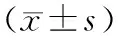
表3 3組患者Ranson評分、APACHEⅡ評分及CTSI評分的比較
166例患者中42例患者發生器官功能衰竭,其中35例發生呼吸功能衰竭,2例發生腎功能衰竭,5例合并發生呼吸功能衰竭和腎功能衰竭。SAP組呼吸功能衰竭及腎功能衰竭發生率分別為96%和24%,顯著高于MSAP組的24.6%和1.5%(χ2=34.43,P<0.001;χ2=9.76,P=0.002)。SAP組器官功能衰竭發生率為100%,MSAP組為26.2%,兩組差異有統計學意義(P<0.05)。SAP組出現器官功能衰竭患者的住院天數、住院費用、ICU入住率、SIRS發生率及持續天數、Ranson評分、APACHEⅡ評分均高于無器官功能衰竭患者(P值均<0.01)。MSAP組出現器官功能衰竭患者的住院天數、住院費用、SIRS發生率、Ranson評分、APACHEⅡ評分、CTSI評分與無器官功能衰竭患者的差別無統計學意義(P值均>0.05)。
討 論
AP病程分為兩個階段。第一階段為發病后的第1周[2-4],胰腺局部腺泡的炎癥反應逐漸發展,部分患者可誘發SIRS,進而發生器官功能衰竭[5];第二階段以局部并發癥為主要表現,可持續數周甚至數月不等。早期SIRS引發的多器官功能衰竭和后期胰腺局部并發癥的感染是AP患者的兩個病死高峰[6]。
呼吸、腎臟和心血管系統為AP時最常出現器官功能衰竭的三大系統[7]。1992年亞特蘭大會議對器官功能衰竭定義受諸多因素干擾:(1)呼吸系統中沒有將吸入氧濃度考慮在內;(2)判斷腎功能衰竭的標準未結合是否存在基礎腎臟疾病;(3)循環衰竭的標準未考慮動脈壓受補液和血管活性藥物、強心藥的影響。修訂版Marshall器官功能障礙評估系統包括呼吸、腎臟和心血管系統,相應系統評分達到2分可認為該系統存在功能衰竭。本研究通過Marshall系統評估的器官功能衰竭患者的住院天數及費用、SIRS發生率及持續天數、ICU入住率均高于無器官功能衰竭者,且隨著AP嚴重程度的升高,SIRS發生率及持續天數、Ranson評分、APACHEⅡ評分也隨之升高。可見Marshall系統能客觀反映AP的嚴重程度。
目前有多個預測AP嚴重程度的評分系統,如側重臨床指標的Ranson、APACHEⅡ、SIRS、Glasgow(Imrie)評分,日本急性胰腺炎嚴重程度評分(JSS評分),急性胰腺炎嚴重程度床旁指數(bedside index for severity in acute pancreatitis, BISAP)等,以及側重胰腺形態學評估的Balthazar CT分級、CTSI評分。Ranson、APACHEⅡ、SIRS、CTSI評分是常用的評估AP嚴重程度的評分系統,具有較高的敏感性和特異性。然而傳統的AP分類只有MAP和SAP兩種類型。本研究顯示,SIRS發生率及Ranson、APACHEⅡ、CTSI評分均隨著AP嚴重程度的增加而升高,這些評分系統同樣也適用于2012版的AP的分類。
在2012年分類標準中,局部并發癥的類型對嚴重程度并無決定性影響,無論其是壞死或滲出、感染性或無菌性,只要不出現持續性器官功能衰竭均可認為是MSAP。本研究結果顯示,MSAP組中出現短暫性器官功能衰竭(≤48 h)患者的住院天數、住院費用、Ranson、APACHEⅡ、CTSI評分和SIRS發生率與僅出現局部并發癥患者無明顯差別,表明新的分類標準符合患者的臨床表現。
根據2012年的AP分類標準,將伴有胰腺(胰周)滲出的MAP患者以及出現胰腺壞死或短暫性器官功能衰竭的SAP患者歸為MSAP,從而提高進入ICU的門檻,減少ICU相關并發癥及醫療費用。近年來也有學者根據有無持續性器官功能衰竭情況以及局部并發癥是否為感染性將AP分為輕、中、重和危重癥急性胰腺炎(critical acute pancreatitis)4種臨床類型[8]。局部并發癥并發感染及持續性器官功能衰竭者為危重癥AP,該類型有更高的介入治療率及手術率。但該分類方法對介入有較高要求,不適用于介入技術較差的國家和地區,不及2012年分類標準簡便、實用。
[1] Bradley EL 3rd. A clinically based classification system for acute pancreatitis. Summary of the International Symposium on Acute Pancreatitis, Atlanta, Ga, September 11 through 13, 1992. Arch Surg, 1993,128:586-590.
[2] Banks PA, Bollen TL, Dervenis C, et al. Classification of acute pancreatitis-2012: revision of the Atlanta classification and definitions by international consensus. Gut, 2013,62:102-111.
[3] 中華醫學會消化病學分會胰腺病學組.中國急性胰腺炎診治指南(草案).胰腺病學,2004,4:35-39.
[4] Zaheer A, Singh VK, Qureshi RO, et al. The revised Atlanta classification for acute pancreatitis: updates in imaging terminology and guidelines. Abdom Imaging, 2013,38:125-136.
[5] Singh VK, Wu BU, Bollen TL, et al. Early systemic inflammatory response syndrome is associated with severe acute pancreatitis. Clin Gastroenterol Hepatol, 2009,7:1247-1251.
[6] Blum T, Maisonneuve P, Lowenfels AB, et al. Fatal outcome in acute pancreatitis: its occurrence and early prediction. Pancreatology, 2001,1:237-241.
[7] Petrov MS, Vege SS, Windsor JA. Global survey of controversies in classifying the severity of acute pancreatitis. Eur J Gastroenterol Hepatol, 2012,24:715-721.
[8] Petrov MS, Windsor JA. Classification of the severity of acute pancreatitis: how many categories make sense? Am J Gastroenterol, 2010,105:74-76.
ClinicalapplicationoftheClassificationofacutepancreatitis-2012
WUQing,LIANGZhi-hai,TANGGuo-du,CHENWen-jing,FANGChun-yun.
DepartmentofGastroenterology,FirstAffiliatedHospital,GuangxiMedicalUniversity,Nanning530021,China
Correspondingauthor:TANGGuo-du,Email:tguodu02@yahoo.com.cn
ObjectiveTo investigate the clinical value of the Classification of acute pancreatitis-2012.MethodsMedical records and clinical data of patients with acute pancreatitis (AP) who were admitted to First Affiliated Hospital of Guangxi Medical University between October 2009 and September 2012 were retrospectively reviewed and analyzed. Patients were divided into mild acute pancreatitis (MAP), moderately severe acute pancreatitis (MSAP), and severe acute pancreatitis (SAP) groups according to the Classification of acute pancreatitis-2012. The number of improved and cured patients, length of hospital stay, hospitalization costs, rate of ICU admission, length of ICU stay, incidence of SIRS, and length of SIRS continue, Ranson scores, APACHEⅡ scores, computed tomographic severity index (CTSI) scores among the 3 groups were compared.ResultsOne hundred and sixty-six patients with AP (119 males and 47 females) were included, and 76 were MAP, 65 MSAP and 25 SAP. The average interval between AP onset and hospital admission was (2.27±1.46)d. The number of improved and cured patients, length of hospital stay, hospitalization costs, rate of ICU admission, length of ICU stay, incidence of SIRS, and length of SIRS continue, Ranson scores, APACHEⅡ scores, CTSI scores increased with the severity of AP. The corresponding values in SAP group were 21 cases (84.0%), (23.8±13.6)d, (53900±30260) Yuan, 48.0%(12/25) and (5.76±13.8)d, 96.0%(24/25) and (5.00±2.40)d, (3.76±1.30) score, (8.52±4.24) score, (5.44±3.48) score. Seventy-nine patients developed local complications, among them 34 was acute peripancreatic fluid collection, 45 was acute necrosis collection. The incidence of acute necrosis collection in SAP group was significantly higher than that in MSAP group (68.0%vs44.6%,P=0.047), but the incidence of acute peripancreatic fluid collection in SAP group was significantly lower than that in MSAP group (16.0%vs46.2%,P=0.016). Organ failure occurred in 42 patients, among them 35 cases were respiratory failure, 2 cases were renal failure, and 5 cases were respiratary and renal failure. The incidence of organ failure in SAP and MSAP group was 100% and 26.2%, the difference between the two groups was statistically significant (P<0.05).ConclusionsClassification of acute pancreatitis-2012 is a simple and convenient system, which can predict the severity of AP and appropriate for clinical application.
Acute pancreatitis; Severity of illness index; International classfication of diseases; Atlanta
2013-04-03)
(本文編輯:呂芳萍)
10.3760/cma.j.issn.1674-1935.2013.04.001
國家自然科學基金(81060043)
530021 南寧,廣西醫科大學第一附屬醫院消化內科
唐國都,Email:tguodu02@yahoo.com.cn
猜你喜歡
鐘表(2023年5期)2023-10-27 04:20:44
中華詩詞(2022年6期)2022-12-31 06:41:24
當代陜西(2021年21期)2022-01-19 02:00:26
中學生數理化(高中版.高考數學)(2020年1期)2020-02-20 13:23:44
經濟技術協作信息(2018年11期)2019-01-14 03:07:20
中國科技論壇(2017年7期)2017-07-25 08:49:53
制造技術與機床(2017年3期)2017-06-23 08:11:33
媽媽寶寶(2017年2期)2017-02-21 01:21:24
國際漢語學報(2016年1期)2017-01-20 08:21:20
中國中醫藥現代遠程教育(2014年22期)2014-03-01 04:32:55
