AS住宅,日惹,印度尼西亞
2014-02-20 05:41:18建筑設計安德拉馬丁建筑事務所
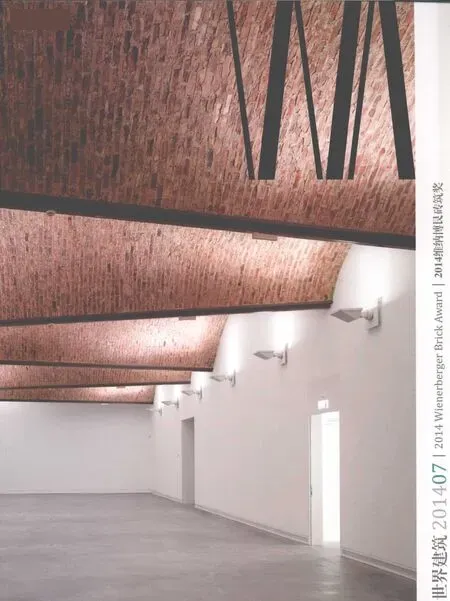
世界建筑 2014年7期
建筑設計:安德拉馬丁建筑事務所
AS住宅,日惹,印度尼西亞
建筑設計:安德拉馬丁建筑事務所

1 外景/Exterior view
這一別墅是由一位想要一個高雅的新住所的藝術家交由建筑師安德拉·馬丁設計的。他在居住功能之外還想要一些具有個人色彩的私人空間,以讓他在結束工作室一天的忙碌之后能得到休息。新建筑就毗鄰著幾年前剛建成的工作室。
但是住宅和工作室并不相連,而是完全獨立的。住宅的入口為了符合其私人庇護所般的特質而較為隱蔽。而工作室則與其相反,具有更多的公共功能,同時也作為讓訪客們與畫家見面溝通或是參觀其作品的空間使用。當藝術家決定在工作室邊上再建一棟住宅的時候,建筑師建議他將住宅建在較低處,以形成一種比忙碌的工作室更加安靜和放松的氛圍。
建筑由兩層構成。與地面相接的一層圍繞著暴露的混凝土墻,而上側的那層則被稱為“雄雞磚”的鏤空磚墻包圍著。通過磚墻隱約可見后面的花園平臺,也讓陽光透過天花高度的玻璃窗透入室內。建筑外側的磚體圍合機構如同混凝土墻體外側的黑色編織物般形成第二層立面。而帶有孔洞的磚砌式樣既能遮陽又能保持空氣流通。工作室中的人能透過墻看到外面的住宅,但同時也讓住宅保留了其隱私性。
磚體的建筑表皮懸空于地面,坐落在水平的鋼梁上。其上側有加強的鋼結構來增強磚塊間的聯系。在印度尼西亞,磚是很常見的建材。通常,磚塊都被藏在經過水泥灰漿粉刷的墻體內,但在灰漿后面,人們仍然能發現樣式和色彩都帶有地域性差異的天然紅磚。而此處的住宅因為需要表現具有現代感和精致感的外表,磚被涂成了黑色。建筑師原計劃使用燒制成黑色的磚,但由于材料沒有準時交付,最終決定將天然的紅磚漆黑來達到效果。(司馬蕾 譯)
項目信息/Credits and Data
客戶/Client: 私人/Private
建設周期/Construction Period: 2010 -2013
使用面積/Usable Floor Area: 475m2
建筑用途/Building's Purpose: 住宅/Housing
用磚類型/Brick Type: 粘土磚/Clay blocks
攝影/Photos: Wienerberger AG/Andra Matin
This villa is the product of a commission given to architect Andra Matin by an artist who desired a sophisticated new residence for himself. He wanted a domicile with private rooms with a personal touch, to which he could retire at the end of a long day at the studio. The house is located in the immediate vicinity of the studio, which was built a few years before.
The residence and the studio are not attached to one another; they have completely disparate characters. Thus, the openings in the house were kept modest in keeping with its private, refuge-like character. The studio, in contrast, has a more public function. It has long served as a place of communication for the visitors wanting to meet the painter or view his gallery. When the artist decided to build a residence next to his studio, the architect suggested that he build it on a lower level to achieve a quieter and more relaxed atmosphere than in the busy studio.
The house has two storeys. The one let into the ground features walls of exposed concrete, while the one above is surrounded by openwork brick walls -so-called "rooster bricks”. They hint at the garden terraces behind and let the daylight seep in via ceilingheight glass windows. The brick shield surrounds the building like dark wickerwork placed in front of the load-bearing concrete walls as a second facade. The eyelet pattern performs sun-protective functions and allows air to circulate. It offers an approximate view of the house from the studio while simultaneously according the family a greater degree of privacy.
The brickwork envelope is lifted off the ground, resting on a horizontal steel beam. Higher up, there are steel reinforcements as well, to enhance the connection between the individual bricks. In Indonesia, bricks constitute a commonly used building material. Granted, they are usually employed in cement-rendered walls, but behind the plaster one finds the naturally red bricks with slight regional variations in format and colour. As the house was to be given a modern and sophisticated look, the bricks were painted black. The original plan to use black-fired bricks had not delivered the desired results, so the decision was taken to treat the natural red bricks with black paint.

2 坡道/Rampway

3 庭院/Courtyard

4 內景/Interior view

5 概念示意/Concept diagram

6 首層平面/Floor 0 plan
評論
鮑威:如何控制設計飽和度,既體現建筑師的職業水平,也反映其設計敏感度。此案從平面的復雜構成到立面的豐富變化都讓人感受到設計武裝到了牙齒,處處可以感受到設計師的用心。作為讀者,我們需要多花些精力來解讀如此紛繁的建筑語匯,然而從每天使用建筑的居住者角度來看,這樣充滿變化細節的設計也許更加具備人性的關懷。
丁力揚:建筑師對磚墻處理拿捏得恰到好處。首先,通過鋼梁的承托,這片第二層“立面”所圍合而成的體量離地懸空,誠實地呼應了其并非傳統意義承重墻的身份。其次,既然磚在這里已經不受壓,起補強作用的鋼結構構件自然取代了起粘結作用的水泥砂漿,進而,這種磚與磚之間新的聯系方式產生了鏤空編織的包裹效果,滿足了業主所希望獲得的“內向型”純私人空間,同時在表皮內部創造了光和風的有趣流動。
Comments
BaO Wei: How saturated a design turns out to be is not only a matter of professional skills, but also of design sensibility. From its intensely charged plan to the explosion of exuberance on the building facade, one would be overwhelmed with what the architect has to offer. It might be challenging for a reader to figure out how every detail works, yet it attends to the use of building occupants who would be entertained by such design richness everyday.
DIng Liyang: The architects handle the brick envelope delicately and appropriately. First, the volume enclosed by this secondary "facade," which is resting on horizontal steel structure, is elevated midair on the street side. The treatment honestly echoes its role as a non-load bearing wall. As long as bricks do not take pressure from above, the mortar that acts as the cementation element has been replaced by the steel reinforcement that enhances the connection between individual bricks. As a result, the newly applied connection of bricks generates the effect of a hollowed out enveloping. This porous brick wall appearance not only caters to the needs of the client for introverted private space, it also generates an interesting flow of light and wind.
AS Residence, Yogyakarta, Indonesia, 2013
Architects: andramatin

7 庭院/Courtyard
猜你喜歡
北方建筑(2021年6期)2021-12-31 03:03:54
文苑(2020年10期)2020-11-07 03:15:36
現代裝飾(2020年7期)2020-07-27 01:27:42
現代裝飾(2020年6期)2020-06-22 08:43:12
現代裝飾(2020年4期)2020-05-20 08:55:08
流行色(2020年1期)2020-04-28 11:16:38
藝術啟蒙(2018年7期)2018-08-23 09:14:18
海峽姐妹(2017年7期)2017-07-31 19:08:17
Coco薇(2017年5期)2017-06-05 08:53:16
福建農業科技(2016年10期)2016-03-07 09:46:49