一堂基于情境和語篇的詞匯課案例分析
2014-04-18 20:55:02嚴潔蓉
中學課程輔導·教學研究 2014年8期
關鍵詞:情境
嚴潔蓉
摘要:本文就Module2 Unit4 Reading第二課時詞匯教學案例進行了分析,提出了實施有效詞匯教學,需基于教學情境和文章語篇開展教學。這樣才能使枯燥無味的詞匯教學變得生動、形象、具體;學生也才能真正愛上英語詞匯學習。
關鍵詞:情境;語篇;詞匯課;案例分析
中圖分類號:G632.0 文獻標識碼:A 文章編號:1992-7711(2014)03-0113
一、背景
盡管基于情境和語篇的詞匯教學已成為高中英語教師的共識,但是教師對語境的理解和運用還存在著問題:創設的語境與教學主題關聯性差,一堂課中的語境多而雜,缺乏主題語境;或是脫離語境復習零散的語言知識點,導致學生獲得的只是零碎的語言知識點。這不利于學生形成實際的語言運用能力,而且導致了語言輸出(寫作)受阻。
二、教學設計
設計思想:本課設計的理論基礎是立足新課標理念,提煉教材中的目標詞匯和句型,創設必要的并能充分利用的主題語境。同時,引導學生在語境中感知語言形式,熟悉其使用的語境條件,建立語言形式、意義和運用之間的關系,提高學生的語言運用能力。
三、教學實錄
Step1: Lead in
教師播放“可可西里”部分影片,影片中人物數藏羚羊被殺害后的頭顱的個數,引出課文內容:The antelopes in Tibet are in danger of disappearing. They are dying out.
Step2: Words and expressions
be in danger (of) : 處于危險之中
The Ibex is also in danger of disappearing because their habitat is threatened.
An little ibex will be if it plays with a wolf, which is .(in danger, dangerous)
教師通過對課文內容的回顧,復習了一些詞匯,并讓學生在不同的語篇和情境中使用。
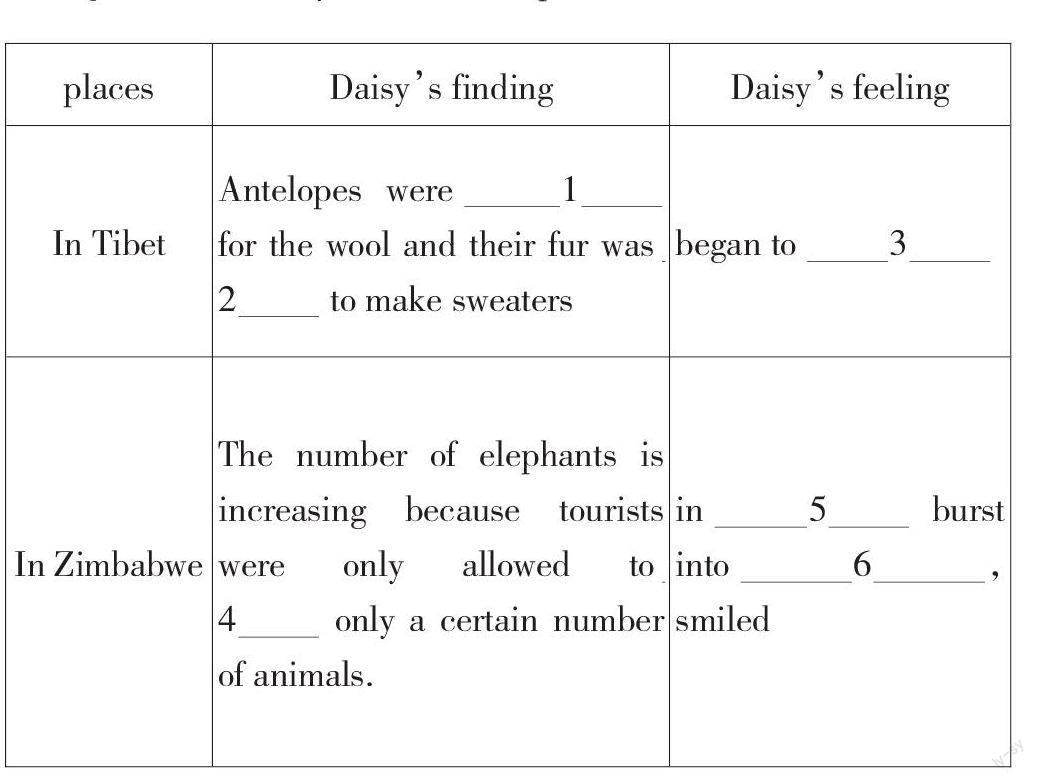
Q: How has Daisy learned to help wildlife?
1, 2 : be being dong
What are the differences:
a) We are being killed for the wool beneath our stomachs. Our fur is being used to make sweaters for people like you.
b) We are killed for the wool beneath our stomachs. Our fur is used to make sweaters for people like you.
What is implied(暗含) in the antelopes words?
Help! People are killing us all the time. We are dying out!
B. We thought that we could live in peace with human-beings. And now, we are so sad to see the killings.
C. Both A and B
習題操練
-I dont suppose /believe the police know who killed all the antelopes.
-Well, surprisingly they do. A man has been arrested(逮捕) and
now. (改編自江蘇 2006)
A. has been questioned C. is questioning
B. is being questioned D. has questioned
4. hunt
The hunting of Indian elephants(亞洲象) has become a serious problem since the 19th century.
They are being killed by the hunters because of their ivory.
n. hunting 獵殺行為
n. hunter 獵人
翻譯:
在中國,捕殺大象的行為是不允許的。
In china, the hunting of elephants are not allowed.
獵人們知道,任何捕殺大象的人將會被送入監獄。
Hunters know that anyone who wants to hunt and kill elephants will be put in prison.
affect
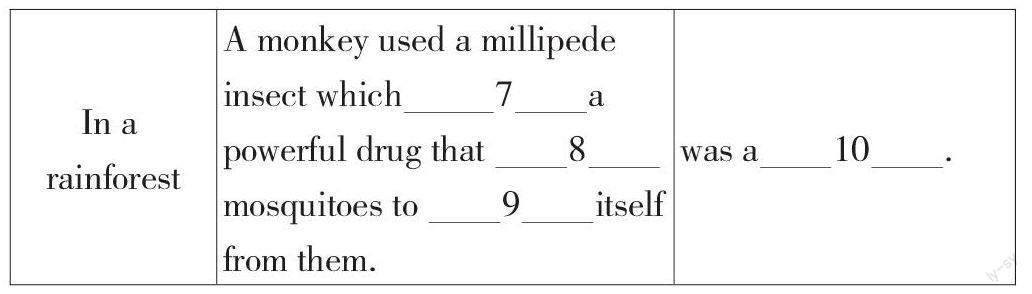
The drug affects mosquitoes.
The drug has an effect on mosquitoes.
affect effect
眾所周知,人類活動對熱帶雨林中的野生動物有影響。非法捕獵對此也有影響。這些影響使得那些野生動物處于滅絕的危險中。請保護熱帶雨林與野生動物免受影響!
, human activity the wild animals in the rain forest. Meanwhile, illegal also them. The made the animals . Please protect the rain forest and the animals from those .
(As is known to all, have an effect on / affect, hunting, has an effect on/affects, effects, in danger of dying out, effects)
10. We should appreciate the importance of the wildlife protection and pay much attention to it .
Appreciate vt.
-Its not easy to appreciate the painting.I will appreciate it if you explain it to me.
-Its about the forests in Sichuan. And it means we should protect the last forests in the world.
-Thank you so much. I really appreciate your help.
意識到,鑒賞,感謝
Step3: Make a dialogue
What have you learned to help the wildlife?
Words and expressions:
in danger of; die out; be being done; hunt (hunting, hunter); in relief (to ones relief); burst into/out; contain; affect; have an effect on; protect ... (from ...); appreciate; pay attention to (doing)
Example:
-What have you learned about the wildlife protection?
- I have learned that we should ... because ... What about you?
-As for me, I have learned that ... because ...
Step4: Homework
Write a passage to call on people to protect the wildlife.
四、案例分析
本堂課從課堂學生的反應與興趣,到詞匯運用的效果,以及教學各環節時間的控制,都應該算得上是一堂成功的課。分析原因,主要有以下幾方面令筆者較為滿意:
1. 教學設計新穎獨特。本堂課是一堂詞匯講授課,是英語教師較為頭痛的課。因為傳統至今,詞匯語法都被脫離上下文孤立對待,擺脫不了枯燥地機械操練的痕跡。學生不愛學卻又不得不學。如何在詞匯教學中培養學生的興趣是我們一直關注的問題。本課就嘗試將詞匯教學放入“保護野生動物”的情境中。學生一方面了解野生動物急需保護,同時還在學習如何用所學詞匯對這些問題進行描述。學生興趣濃厚,的確是一舉多得。
2. 教學過程線索清晰。教師在備課時特別考慮要讓整堂課顯得完滿。于是有了由讓學生回顧課文Daisy在飛毯之旅中學到的知識到你學到的知道, 從而實現了先學習詞匯, 再使用詞匯的過程。
3. 不脫離課本。在詞匯情境創設中,盡量以課本例句開始,讓學生在課文中尋找相關詞句,并朗讀。在教授語法的同時也培養了閱讀能力。
4. 詞匯間過渡巧妙。在備課過程中,如何能讓詞匯與詞匯間的過渡自然又巧妙,的確費了很大的功夫。最終選擇用情境創設作連接。課堂上所有詞匯短語的銜接都有不同情境為依托。真正作到了詞匯教學不離開語言本身。
5. 本堂課設計中遇到的中心問題是詞匯的選擇。有時為了讓一堂課能夠銜接完整,對于重點詞匯的取舍很難把握;其次在于課后對于詞匯掌握的檢驗只是停留在口頭上,書面檢查還是脫離不了傳統的默寫。因此,如何讓詞匯復習更符合語言教學交際功能是一個值得研究的問題。
(作者單位:浙江省溫州市第五十一中學 325000)
猜你喜歡
福建中學數學(2023年5期)2024-01-25 17:41:36
中學生數理化·中考版(2022年10期)2022-11-10 09:37:46
數學小靈通·3-4年級(2021年3期)2021-04-13 01:03:46
作文成功之路·小學版(2020年6期)2020-07-27 01:48:22
護士進修雜志(2017年7期)2017-04-25 03:15:14
護士進修雜志(2017年6期)2017-03-28 05:00:27
護士進修雜志(2017年2期)2017-02-16 08:11:14
護士進修雜志(2017年3期)2017-02-14 07:19:35
護士進修雜志(2016年10期)2017-01-12 08:48:46
小學生作文(中高年級適用)(2016年3期)2016-11-11 06:30:23