
當代羅馬城市更新——屠宰場改造案例
2016-04-11 09:22:18露西婭博爾多內瑪拉科蘇薇奧拉莫爾登蒂LuciaBordoneMaraCossuViolaMordenti黃華青TranslatedbyHUANGHuaqing
世界建筑 2016年3期
關鍵詞:建筑
露西婭·博爾多內,瑪拉·科蘇,薇奧拉·莫爾登蒂/Lucia Bordone,Mara Cossu,Viola Mordenti黃華青 譯/Translated by HUANG Huaqing
?
當代羅馬城市更新——屠宰場改造案例
Regeneration in Contemporary Rome:the Case of the Mattatoio
露西婭·博爾多內,瑪拉·科蘇,薇奧拉·莫爾登蒂/Lucia Bordone,Mara Cossu,Viola Mordenti
黃華青 譯/Translated by HUANG Huaqing
瑪拉·科蘇,地理學者,意大利國家研究委員會
薇奧拉·莫爾登蒂,建筑師,羅馬“探索土地·構想城市”協會
記憶與再生
欄目主持:米凱利·博尼諾,皮埃爾-阿蘭·克羅塞特
Memory and Regeneration
Column Editors :Michele Bonino,Pierre-Alain Croset
本專欄的第4篇文章所探討的是屠宰場改造項目,它是當代羅馬后工業更新進程中的重要項目之一。這座古老的屠宰場于1975年廢棄,今天這里容納了羅馬第三大學、羅馬當代藝術博物館以及“非正統經濟城”——一個為有機農場、公平貿易、民族金融和旅游業而創造的空間。我們接下來刊登的文章源自一項研究項目:在歷史城市景觀中建構有爭議的記憶空間。這項跨學科研究涉及北京、墨西哥城和羅馬,由洛桑聯邦理工學院牽頭,瑞士國際研究網絡資助。
The project featured in the fourth issue of the column–the Mattatoio–is one of the major projects of post-industrial regeneration within the contemporary city of Rome.An ancient slaughterhouse abandoned in 1975,today the building houses the School of Architecture of the University Roma Tre,the MACRO(Museum of Contemporary Art),and the City of Alternative Economy–a space dedicated to organic farming,fair trade,ethical finance and tourism.The paper we publish in the next pages originated within the research project "Mapping controversial memories in the historic urban landscape project:a multidisciplinary study of Beijing,Mexico City and Rome",led by the Ecole Polytechnique Fédérale de Lausanne and funded by the Swiss Network for International Studies.
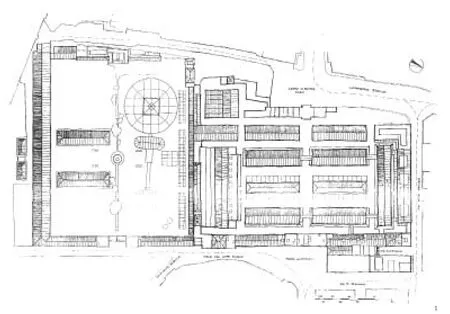
1 屠宰場總平面/Mattatoio:General map(圖片來源/Resource:Atlante di Roma(Atlas of Rome).La forma del centro storico in scala 1:1000 nel fotopiano e nella carta numerica,Marsilio Editori,Venice 1991.Quadri 252,253,264,265)
在羅馬城,城市更新項目,或者更廣泛地說是,歷史建筑的再利用,一直是極大的建筑挑戰。在歷史上的各個階段都是如此。比如,斗獸場這樣的城市標志性建筑,它的功能在歷史上改變多次,從一個舉辦斗獸表演的場所,變成了住宅或是教堂。從這個意義上來說,場所功能及意義的重塑一直以來就是這個城市的核心話題。在過去20年中,城市更新項目都發生在后工業場所,而城市中的古代和中世紀的考古遺存則大多被紀念碑化了。
在19世紀初,歐洲建造了很多屠宰場。由于人口增長和快速的城市擴張,動物屠宰成為了一項城市服務,從鄉村搬到了城市邊緣。然而在1970年左右,屠宰工作的地點日益轉移。這一次,這些建筑開始重獲關注——它們往往具有很高的建筑價值,但過去只有工人可以看到。在法國、意大利、西班牙和英國,屠宰場逐漸被翻新并賦予新的功能,成為了文化和學術活動的場所。可以簡單列舉幾個案例,例如伯納德·屈米設計的巴黎拉維萊特公園、安托萬·斯汀科和雷米·巴庇約設計的圖盧茲屠宰場、昂斯加·拉莫特設計的蘭道市立圖書館,還有拉斐爾·費爾南德斯-拉納達設計的馬德里屠宰場。
羅馬屠宰場由建筑師喬阿基諾·埃爾索科設計于19世紀末,于1888-1891年建于奧斯提安斯地區。這個地區在當時被選為城市工業發展的集中地。大約在一個世紀后的1975年,這座建筑終被廢棄。然而在1990年代,屠宰場成為了一項大范圍城市更新計劃的一部分,目標是在羅馬最主要的一片后工業地區創建一座“藝術城”。這項計劃被稱作“奧斯提安斯·馬爾科尼城市項目”,由羅馬市政府牽頭,包括多個地塊,匯集了很多公共或私立的參與者:如羅馬第三大學、羅馬當代藝術博物館、藝術學院,也包括其他的組織和城市服務機構。屠宰場作為一座巨大而重要的建筑,在規劃中占據了特殊的地位,成為2000年設計的“老屠宰場使用計劃”的一部分。改造的挑戰在于將這座建筑綜合體向城市開放,使它在功能和空間構成上都更適于參觀。經過幾個階段(股東會議、計劃報批、功能審核),統一性的計劃宣告失敗。然而改造已經開始,并在一些獨立項目上繼續推進,盡管整個過程有些斷斷續續。在這種情況下,羅馬第三大學在2000年成為第一個搬進來的機構。15年后,大多數相關機構都已經搬進新地址。
總而言之,盡管項目的執行非常零碎,但建筑改造在總體上還是造就了城市層面最為杰出的文化設施,面向各種當地活動和機構敞開(例如泰斯塔奇奧流行音樂學校和柯迪許文化中心)。然而,這一項更新計劃缺乏一個有效的公共管理機制,以及對于將各個單棟建筑連接起來的公共空間的嚴肅思考。確實,屠宰場在今天看來依然像是城市中的孤島:步行者會猶豫它是否可以進入,這座出色的歷史建筑中依然存在的圍墻、死胡同和籬柵也令人卻步,使它在城市中還未完全發揮自己的潛力。(特別鳴謝安德里亞·薩爾蒂的攝影作品,薩爾蒂持續致力于意大利待改造空間的視覺呈現項目。)
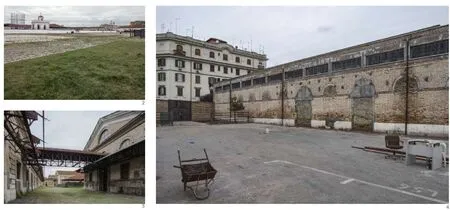
2 波亞里奧廣場和屠宰場的外景,羅馬/Roma:Foro Boario and Mattatoio,external view
3 在改造建筑物中間的屠宰場,羅馬/Roma:Mattatoio,in between renovated buildings
4 屠宰場廢棄建筑,羅馬/Roma:Mattatoio,abandoned buildings
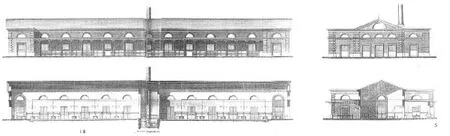
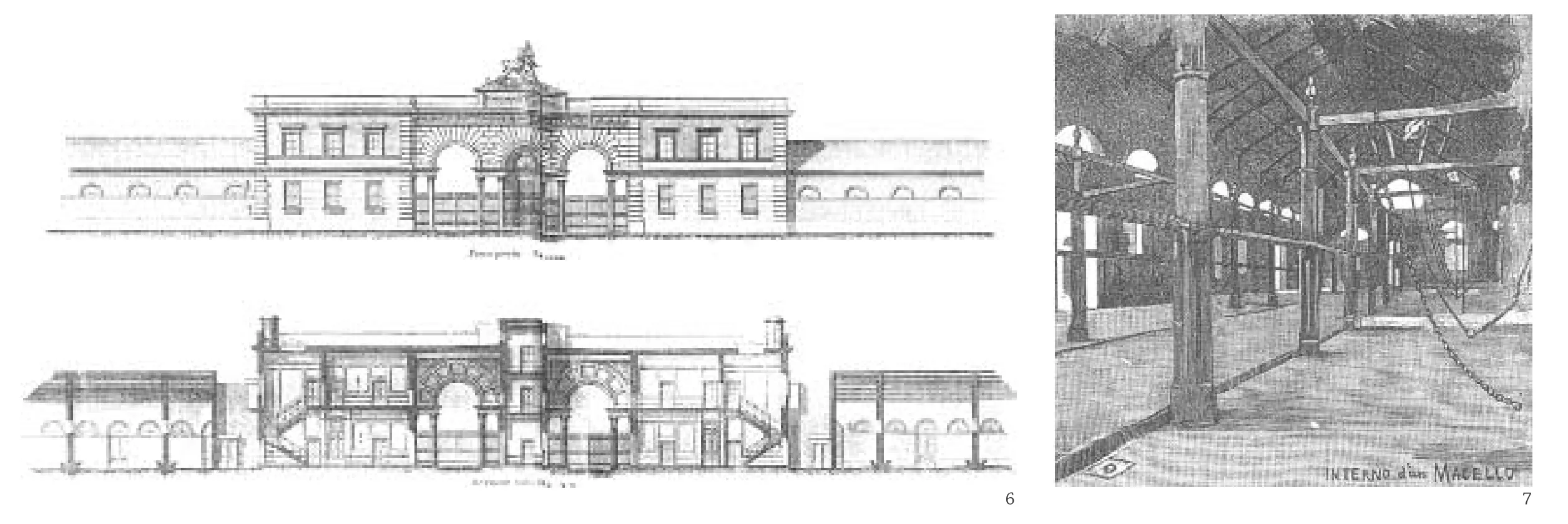
5 屠宰場圖紙原稿/Mattatoio:Pelanda dei Suini,original drawings
6 屠宰場主入口圖紙原稿/Mattatoio:Main entrance from Via Galvani,original drawings (5,6圖片來源/Photo Resource:Franco,G.,Il Mattatoio di Testaccio a Roma.Costruzioni e trasformazioni del complesso dismesso,Roma 1998)
7 屠宰場室內/Mattatoio:interior of the slaughterhouse(圖片來源/Photo Resource:L' illustrazione Italiana,anno XIX,nn.67,1892)
In the city of Rome,urban regeneration projects and,more generally,the reuse of historic buildings represent a constant challenge for architecture.It has been the case at all historical stages.One can think,for instance,of the emblematic monuments of the city,like the Coliseum,which has seen its functions redefined several times,turning from a place hosting circus games into a place of residence or worship.In this sense,the remaking of use and meaning has always been a central issue in the city.Over the past twenty years,regeneration processes have been developed in post-industrial sites,while the antique and medieval archaeological remains have often been monumentalized.
At the beginning of the 19th century,many slaughterhouses were built in Europe.Due to demographic growth and rapid urban development,slaughtering became a urban service and moved from the countryside to the periphery of urban areas.Around 1970 however,slaughter operations were progressively delocalized.At this time,these buildings – which were generally of high architectural value,but were only accessible to workers – started to be rediscovered.In France,Italy,Spain or Great Britain,slaughterhouses have been progressively renovated and host new functions,becoming places of cultural and academic production.It is worth mentioning just a few examples,such as la Villettein Paris,by Bernard Tschumi; les Abattoirs in Toulouse,by Antoine Stinco and RémiPapillault; the Stadtbibliothek Landau by AnsgarLamott or the Matadero of Madrid,by Rafael Fernández-Ra?ada.
The Mattatoio of Rome was designed at the end of the 19th century by the architect Gioacchino Ersoch.The complex was built between 1888 and 1891 in the area of Ostiense,erected at the time as the place where to concentrate the industrial development of the city.The building is eventually abandoned almost one century later,in 1975.In the 1990's however,the Mattatoio became part of a large urban regeneration strategy,aiming at creating a "City of the Arts"(Cittàdelle Arti)in whathas become the main post-industrial zone of the city.The strategy,called "Progetto Urbano Ostiense Marconi" and spearheaded by Rome Municipality,covered several sites and gathers many participators,both public and private:the University of Roma Tre; the MACRO; the Academy of Fine Arts,as well as other associations and urban services.As a vast and important structure,the Mattatoio is assigned specific planning tools,embedded in the Use Plan for the Ex-Mattatoio(Piano di Utilizzazioned ell'ExMattatoio)designed in 2000.The challenge was to open the complex of buildings to the city and to make it accessible in terms of functions and of physical configuration.After several stages(conference of the stakeholders,endorsement of the Plan,approval of the programme),the unitary strategy failed.Nevertheless,transformation began and moved forward through single interventions,following a somehow fragmented and discontinuous process.In this context,the University was the first public institution to move into the building in 2000.Fifteen years later,most involved institutions have entered their new locations.
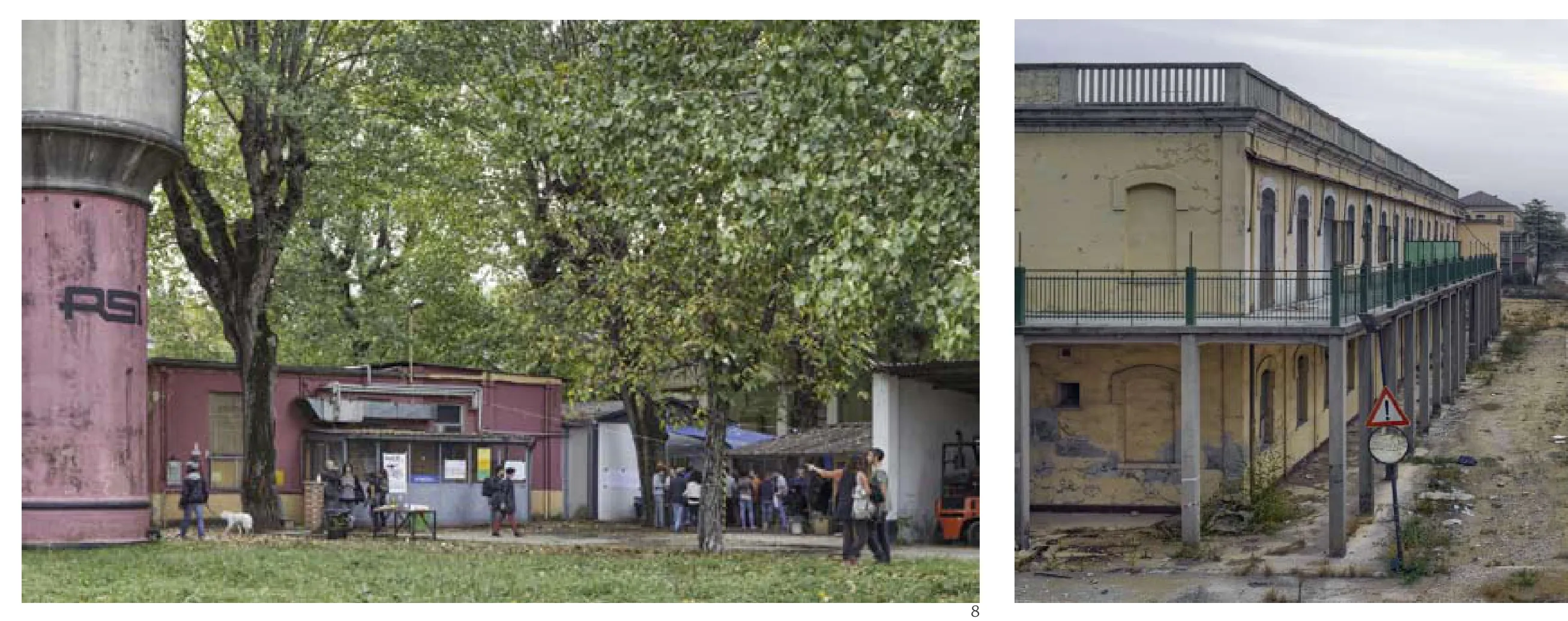
8 廢棄火車工廠的再利用,羅馬/Roma:Officine Oz,re-using abandoned train factory
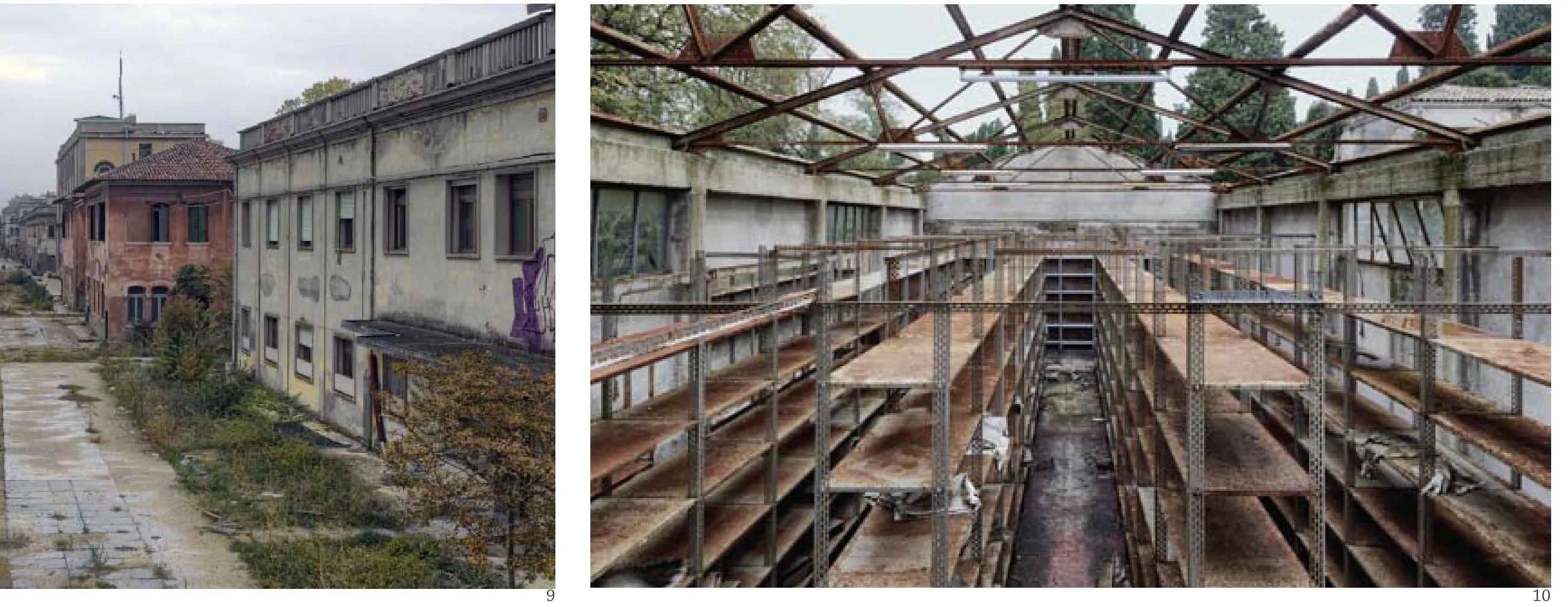
9 Ex Ospedale al Mare住宅外景,利多/Lido di Venezia:Ex Ospedale al Mare,external view
10 Ex Ospedale al Mare 住宅廢棄空間的內部,利多/Lido di Venezia:Ex Ospedale al Mare,inside an abandoned pavillion (2-4,8-10圖片版權/Fig.2-4,8-10?AndreaSarti)
In conclusion,despite a highly fragmented implementation,the intervention as a whole led to one of the most relevant cultural hubs at the urban level,maintaining an openness to different local experiences and associations(i.e.The Popular Music School of Testaccio and the Kurdish cultural centre).However,an effective public management of the renovation strategy and a serious reflection on the common space connecting the single buildings have been missing.Indeed,the Mattatoio still appears as an island in the middle of the city,where the pedestrians hesitate to enter and are oftentimes discouraged by walls,dead ends and fences that still cross this incredible piece of history and architecture,compromising the ability of the city to fully enhance its potential.(Special thanks to Andrea Sarti for his photography and contribution to this project.Andrea Sarti has been working on a broader project of on-going visual mapping about waiting spaces in Italy.)
收稿日期:2016-02-16
作者簡介:露西婭·博爾多內,社會人類學者,洛桑聯邦理工學院
猜你喜歡
北方建筑(2021年6期)2021-12-31 03:03:54
文苑(2020年10期)2020-11-07 03:15:36
現代裝飾(2020年6期)2020-06-22 08:43:12
現代裝飾(2020年4期)2020-05-20 08:55:08
攝影之友(影像視覺)(2019年2期)2019-03-05 08:27:16
藝術家(2017年3期)2018-01-26 08:54:49
文學自由談(2016年3期)2016-06-15 13:01:16
福建農業科技(2016年10期)2016-03-07 09:46:49
少兒科學周刊·兒童版(2015年6期)2015-11-24 03:49:38
中國工程咨詢(2015年4期)2015-02-14 03:49:56
