Teaching Writing
2016-06-16 08:36:24
瘋狂英語·新策略 2016年2期
?
Teaching Writing
This series of articles from the British Council aims to help you think about your teaching and bring new ideas and activities into your classroom. The series covers topics including homework,working with large classes and finding resources. Today we look at teaching writing.
Read these comments from teachers. Do you agree?
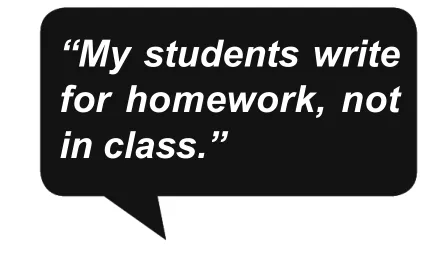
Kavi,Malaysia
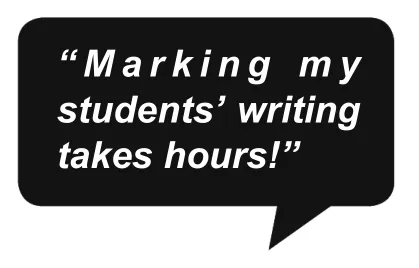
Aliya,Somalia
How can we help our students to write well? A typical writing lesson could look like this:
Preparation
■ What type of writing do we want our students to do? For example,a letter to a friend,a book review,a party invitation?
■ To introduce the topic we can ask students
? Have they received a letter (or email) recently?? What books they are reading?? Do they ever go to parties?
■ Tell students to think about what to include in the writing. For example a letter to friend might include news,questions,arranging a visit. A party invitation needs a time,a place…
■ In groups,students could make notes of what to include. One group writes their notes on the board. Can their classmates add anything? Keep these ideas on the board for later.
■ We can show the students a model of what we want them to produce (a letter,a book review etc). We can look at the kind of language used in the model—is it formal or informal? What useful words and expressions can students use from the model?
■ We can look at specific parts of the model. For example: Are there any paragraphs? How many? How
does the model text start and finish?
Writing
■ Students can use the ideas that were written on the board earlier to write a first draft. They can use the model to help them.
■ Students now exchange their first draft with a partner and check their partner’s writing. We can give
students specific areas to check,for example,that the correct information is included,that the writing is
organised into paragraphs. Students can also check each other’s spelling,grammar and punctuation.
■ The students can write a second draft in class or at home to give to the teacher.
Correction
■ We can use a correction code to show students where they have made mistakes,for example: Sp = spelling mistake,WW = wrong word,WO = wrong word order,T = wrong tense,Pr = wrong preposition,Pu = wrong punctuation,/ = missing word.
■ Then students can correct their own writing.
■ We can collect common errors and write them on the board for class correction.
We can focus on different areas or stages of writing in class such as collecting ideas,rewriting or correction. We can help students with the process of writing by giving lots of preparation before they produce a finished written piece.
What do you think?
Writing is something that has to be taught,even in your first language. You can’t just tell students to write an essay,they need preparation and more preparation before they write.
At the first stage of preparing to write an essay,I give learners the essay title and pieces of scrap paper. They have 3 minutes to work alone,writing one idea on each piece of paper,before comparing in groups. Each group can then present their 3 best ideas to the class. This means that everyone has many ideas to choose from before they start writing and nobody can say “I can’t think of anything to write.”
A classroom activity—parents never say...
We can give students short,fun activities to get them writing. This is a group writing activity that even lower elementary level students can enjoy.
■ Ask students what rules their parent set at home. Write some examples on the board,for example “Come home before 9 o’clock.” “Do your homework”.
■ Ask what parents never say,for example:
“Please don’t tidy your room,”
“Use the telephone a lot,”
“Stay up very late.”
■ In groups the students write eight sentences that parents never say.
■ Give a time limit of 10 minutes. Tell the students that there will be a vote on the best set of rules.
■ Each group sticks up the group’s rules on the board/wall.
■ The class read all the different sets of rules and vote on which is best (not their own).
■ If correction is needed,you can leave the posters up and have a group correction session.
Glossary
A first draft is a first try at writing something. A second draft will improve and correct the first draft.
Formal words and expressions are used in some types of writing.
For example we can end a job application letter “Yours sincerely,…”.
lnformal words and expressions are used in some types of writing. For example we can end a letter to a friend “Love from,…”.
A model is an example that students can use to help them with their own work.
Think about
■ If you have a textbook,look at the writing activities in the book. How can you adapt these to make them more relevant to your students?
■ Ask colleagues how they teach and correct writing.
Want to find more teaching tips? Visit www.teachingenglish.org.uk ? British Council 2011
Anil from India writes: