
面孔吸引力認(rèn)知偏好與動(dòng)機(jī)行為的性別差異研究
2016-11-26 06:34:15陸陽(yáng)趙佳徐震雷
中國(guó)性科學(xué)
2016年9期
陸陽(yáng)+趙佳+徐震雷

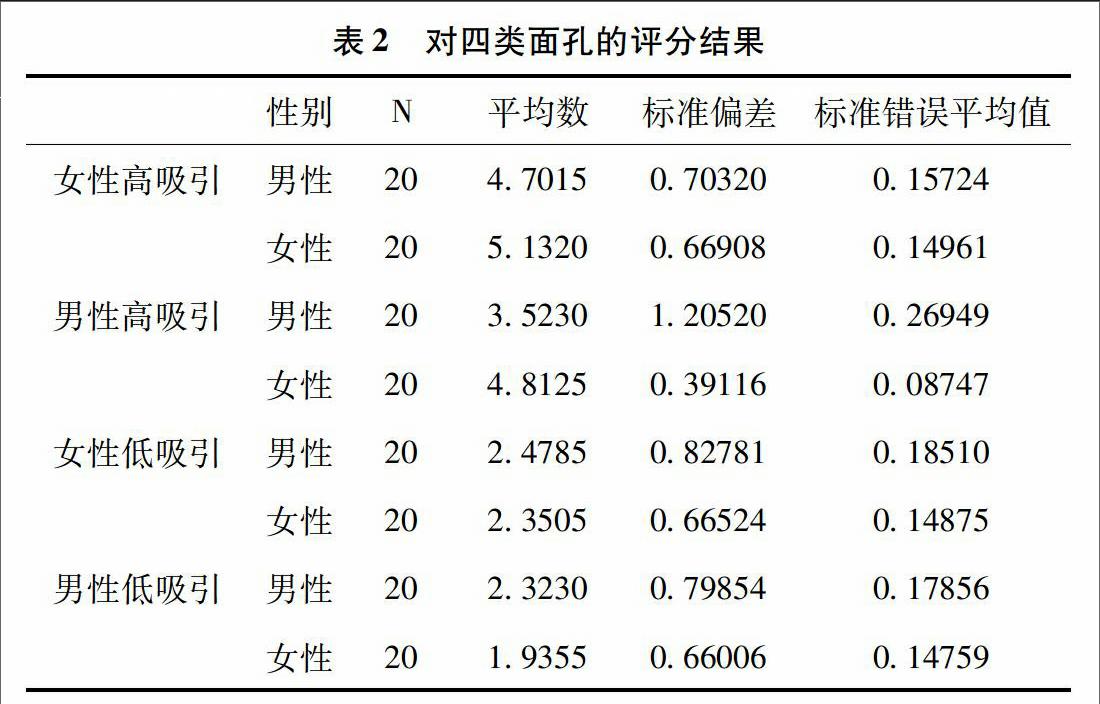
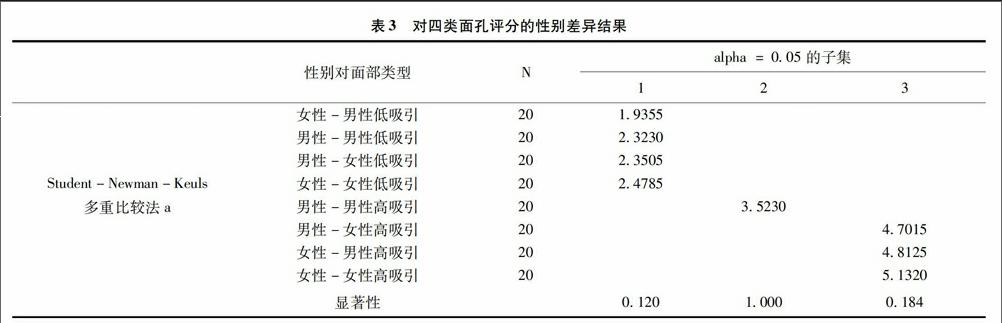
【摘要】目的:了解異性戀青年對(duì)面孔吸引力的認(rèn)知偏好與相應(yīng)的動(dòng)機(jī)行為,探索當(dāng)處理不同性別與吸引力的面孔時(shí),是否存在著性別差異。方法:40名男性與女性被試需要完成兩項(xiàng)任務(wù):(1)評(píng)分任務(wù),被試需要對(duì)所呈現(xiàn)的面孔,判斷其吸引力的高低并進(jìn)行評(píng)分;(2)按鍵任務(wù),被試需要觀看不同吸引力水平的面孔圖片,并可以通過(guò)按鍵改變觀看的時(shí)間。結(jié)果:男性和女性均對(duì)吸引力高的面孔評(píng)分更高且觀看時(shí)間更長(zhǎng)(P<0.05);面對(duì)吸引力高的面孔時(shí),男性對(duì)異性面孔評(píng)分顯著高于同性面孔(P<0.05),且對(duì)異性面孔觀看時(shí)間顯著高于對(duì)同性面孔(P<0.05),而女性則沒(méi)有顯示這樣的差異(P>0.05);男性與女性被試對(duì)吸引力高的異性面孔評(píng)分沒(méi)有顯著性差異(P >0.05),但在按鍵任務(wù)中,男性相比女性會(huì)付出更多的努力(通過(guò)按更多的鍵),以更長(zhǎng)時(shí)間的觀看吸引力高的異性面孔(P<0.05)。結(jié)論: 吸引力高的異性面孔對(duì)異性戀的男性具有某種動(dòng)機(jī)靶向作用,但對(duì)異性戀女性沒(méi)有這種作用。在處理不同性別與吸引力的面孔時(shí),在動(dòng)機(jī)水平上可能存在著性別差異。
【關(guān)鍵詞】 面孔吸引力;異性戀;性別;動(dòng)機(jī);喜愛;渴求
【Abstract】Objectives: To investigate the cognitive preference and motivational behavior of facial attractiveness in the heterosexual young people, and explore whether there is a sex difference when processing different gender and attractive faces. Methods: 40 male and female subjects were administered two tasks. (a) Rating task: all subjects need to rate the attractiveness of the faces presented on the screen. (b) Key-pressing task: the subjects can change the viewing time of the facial images via pressing certain key. Results: Overall, beautiful faces were rated higher and watched longer than average faces by all subjects (P<0.05). Beautiful heterosexual faces were significantly rated higher and watched longer than beautiful homosexual faces by male subjects (P<0.05), but not by female subjects (P>0.05). There was no significant difference between male and female subjects in the ratings of heterosexual facial attractiveness (P>0.05), but in the key-pressing task, men expended more effort (via pressing more keys) than women to extend the viewing time of the beautiful heterosexual faces (P<0.05). Conclusion: Beautiful heterosexual faces target for men in motivational level, but not for women, which means there may be a sex difference between men and women when processing different gender and attractiveness faces.
【Key words】Facial attractiveness; Heterosexual; Gender; Motivational; Liking; Wanting
【中圖分類號(hào)】R167【文獻(xiàn)標(biāo)志碼】A
1引言
人們可以從他人的外表,特別是面孔中迅速的形成好惡。越來(lái)越多的研究也聚焦于面孔對(duì)每個(gè)人之重要性上,其中被廣泛證實(shí)的結(jié)論就是面孔刻板效應(yīng)的存在[1],即“漂亮的人被認(rèn)為擁有更多優(yōu)秀的特質(zhì)” [2]。以往的研究者從面部吸引力與個(gè)體社會(huì)交往[3]、擇偶[4]、求職[5]、健康[6]的關(guān)系等方面進(jìn)行了探討, 發(fā)現(xiàn)面孔吸引力對(duì)個(gè)體的社會(huì)生活等多個(gè)方面都有著極其重要的影響。
Berridge和Robinson[7]整合了神經(jīng)生理學(xué)發(fā)現(xiàn)的大腦獎(jiǎng)賞系統(tǒng)與心理學(xué)動(dòng)機(jī)的概念。在他們的模型中,作者區(qū)分了對(duì)獎(jiǎng)賞的渴求與對(duì)情緒的體驗(yàn)。前者定義為對(duì)特定獎(jiǎng)賞的渴求程度,而后者的意思是對(duì)獎(jiǎng)賞愉悅或者痛苦的主觀體驗(yàn)。獎(jiǎng)賞……
登錄APP查看全文
