中國便利店的照明能耗預測模型與主觀評價
2017-06-27 07:46:32蔡宙燊張昕張宇濤
土木建筑與環境工程
2017年4期
關鍵詞:評價
蔡宙燊++張昕++張宇濤


摘要:
便利店銷售額在傳統零售業中增幅最高,照明在所調研樣本總室內能耗中占比為43%。基于全國257家便利店的數據,探討便利店的照明特征。采用多重線性回歸方法建立照明能耗預測模型,采用因子分析方法探討客觀參數與主觀評價的聯系。研究表明,對便利店,考慮照明節能時需同步關注其主觀評價的變化;進行照明設計時需因地制宜;照明能耗預測模型為ln y=0.479ln x1+0.248ln x2-0.217(y為照明功率密度,x1為單位面積照明造價,x2為典型貨架位置水平照度平均值);顧客對照明充足度的“敏感性”比照明均勻度高;提高照度平均值有助于提高主觀評價。
關鍵詞:
便利店;照明;能耗;預測模型;視覺滿意度
Abstract:
Sales volume on convenience stores increased the most, and lighting made up 43% of interior energy consumption. Based on sample investigation of 257 convenience stores in China, the survey data were collected, and lighting feature were exposed. Multiple linear regression was adopted to built the prediction model of lighting energy consumption, and factor analysis was adopted to explore the connection between subjective evaluation and objective variables. The results showed that: for convenience stores, subjective evaluation would be accounted when saving lighting energy; lighting design method would vary to fit different region; the prediction model of lighting energy consumption is lny=0.479lnx1+0.248lnx2-0.217;customers were more sensitive about illumination adequacy than uniformity and increasing the illumination improved subjective evaluation.
Keywords:
convenience stores; lighting; energy consumption; prediction model; visual satisfaction
便利店是一種用以滿足顧客應急性、便利性需求的零售業態[1]。2013年,便利店的15家主要代表企業銷售額增速為18.2%,在傳統零售業中增幅最高[2]。2013年末,中國便利店零售營業面積為131.4萬m2,從業人數7.4萬人,門店數量14 680個,商品銷售額311.3億元[3]。照明在零售建筑能耗中占比最高,在美國約為30.1%[4],英國約為34.0%[5],本研究調研樣本占比為43%。
學者們對于便利店照明的研究主要集中在節能方面。研究表明:對便利店,使用LED燈取代熒光燈,節能率超過50%[67];使用調光裝置的T8,能耗降低38.67%[8];使用EEMs和遠程高效制冷系統,能耗降低13%[9];使用RFID控制系統和發光二極管光源,能耗降低65.6%[10]。上述研究多關注照明能耗,對主觀評價的研究較少。
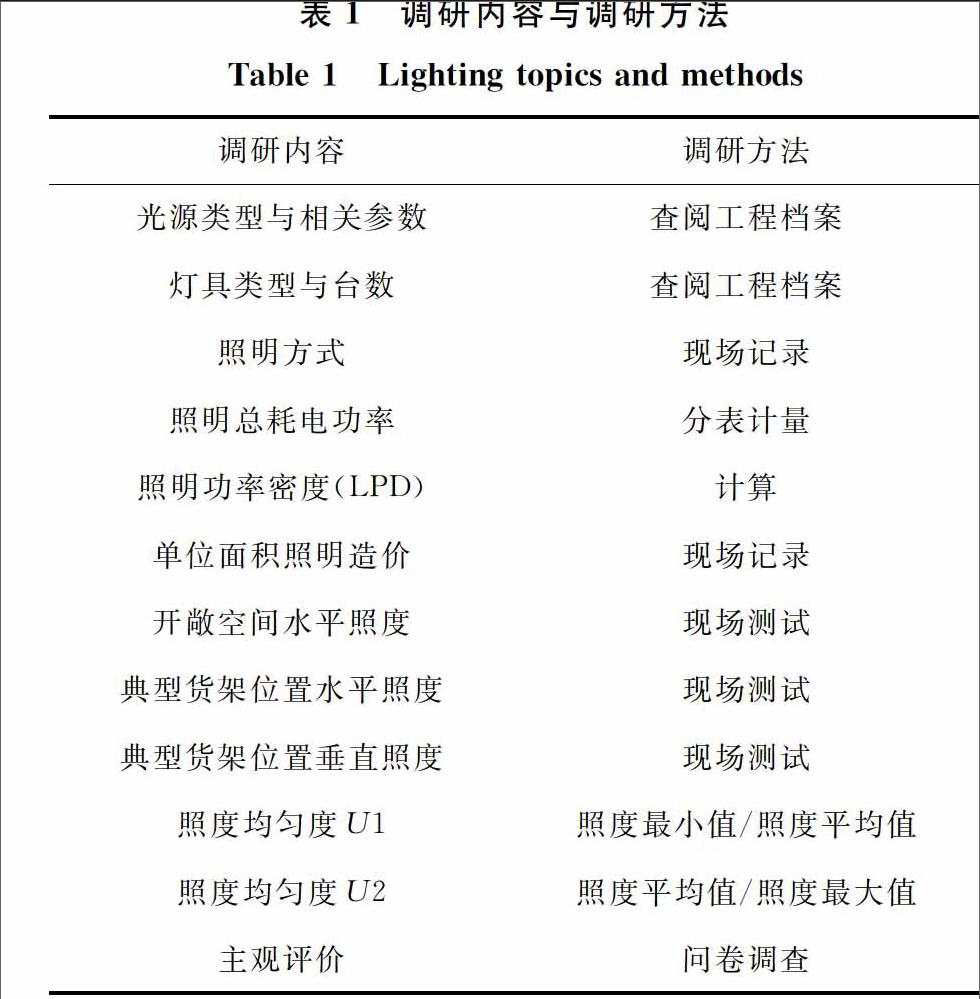
通過對中國257家便利店的實測數據和主觀評價的分析,總結中國便利店的照明特征,建立便利店照明的能耗預測模型,探討便利店照明的客觀參數與顧客的主觀評價之間的關系,以期為便利店的照明設計提供支撐。……
登錄APP查看全文
猜你喜歡
石油瀝青(2021年4期)2021-10-14 08:50:44
世界科學技術-中醫藥現代化(2021年10期)2021-03-02 05:52:06
現代檢驗醫學雜志(2016年3期)2016-11-15 01:59:56
中學語文(2015年21期)2015-03-01 03:52:11
中國教育技術裝備(2015年19期)2015-03-01 02:43:07
中國工程咨詢(2015年2期)2015-02-14 02:59:26
西南軍醫(2015年1期)2015-01-22 09:08:16
中國音樂教育(2014年9期)2014-05-20 10:26:24
治淮(2013年1期)2013-03-11 20:05:18
俄羅斯問題研究(2012年1期)2012-03-25 09:54:51