基于最高系統效率實現率的抽油機井系統效率水平的評價方法
2018-04-04 05:55:14刁海勝莊號羅玲燕謝敏陳偉師玉
價值工程 2018年10期
關鍵詞:評價方法
刁海勝 莊號 羅玲燕 謝敏 陳偉 師玉
摘要: 以波動方程為基礎建立抽油桿柱的縱向振動模型,并考慮抽油機的機械特性與抽油泵充滿程度的影響建立了抽油系統系統效率的仿真模型;在抽油系統系統效率仿真模型的基礎上綜合考慮設備承載能力、油井產能協調、產液量等約束條件,以系統效率最高為目標函數,建立抽油系統的優化模型,提出抽油系統最高系統效率的計算方法。將抽油機井系統的現場實測數據與抽油系統仿真數據進行對比驗證了文中所提仿真模型的精度;通過實測系統效率與最高系統效率的對比提出了最高系統效率實現率,并以此指標評價油井系統效率的提高潛力。
Abstract: The longitudinal vibration model of sucker rod string was established based on wave equation. And considering the influence of mechanical characteristics of pumping unit and the fullness degree of oil pump, the simulation model of system efficiency of pumping system was built. Based on the system efficiency simulation model of pumping system, taking into account the constraints of equipment carrying capacity, oil well productivity coordination and liquid production, the optimization model of pumping system is established based on the objective function of the highest efficiency of the system. Then the calculation method of the maximum system efficiency of the pumping system is proposed. The accuracy of the simulation model proposed in this paper was verified by comparing the field measured data of the pumping well system with the simulation data of the pumping system. Maximum system efficiency realization rate was presented by the comparison between the measured system efficiency and the maximum system efficiency, and the improving potential of the oil well system is evaluated by this rate.
關鍵詞: 抽油機井;系統效率極值;實現率;系統效率水平;評價方法
Key words: pumping well;maximum system efficiency;realization rate;system efficiency level;evaluation method
中圖分類號:TE355.5 文獻標識碼:A 文章編號:1006-4311(2018)10-0237-03
0 引言
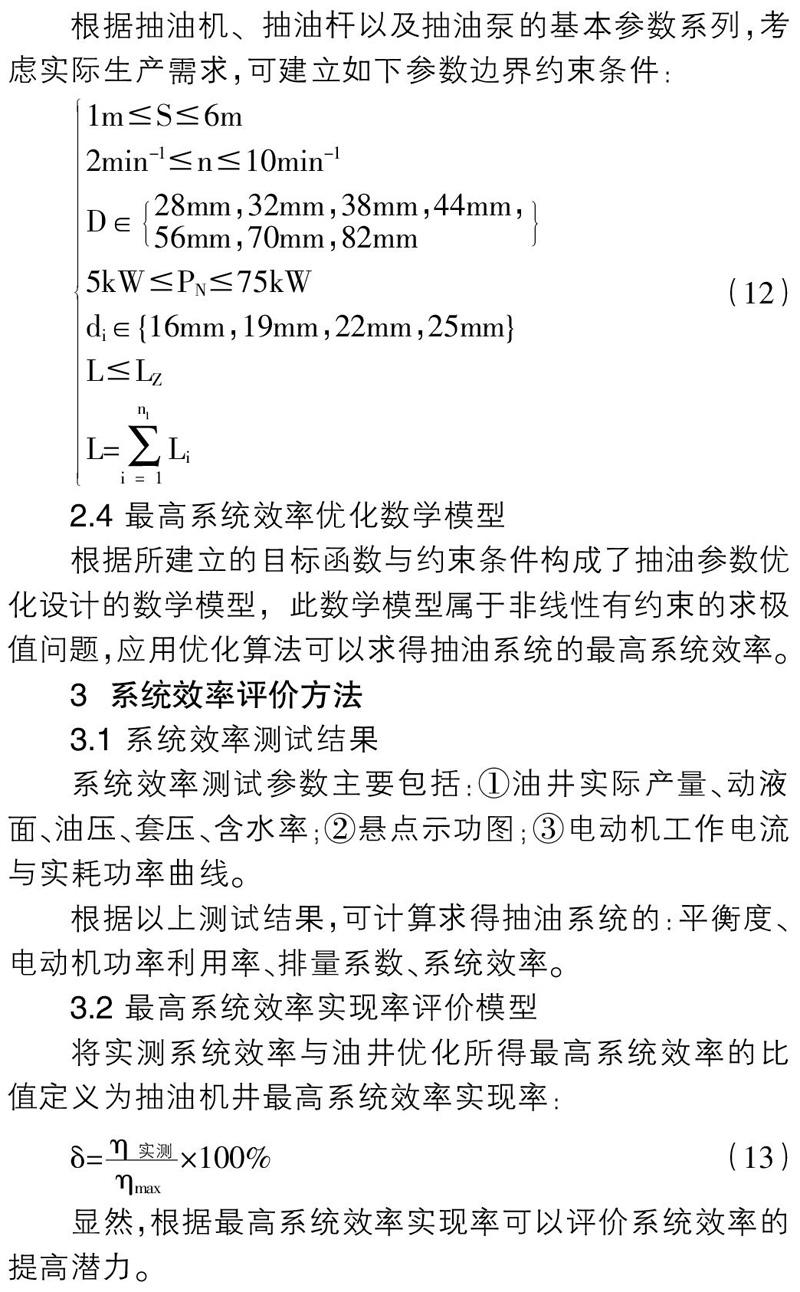
抽油機井采油是我國油田最主要的人工舉升方式。抽油機井數量多、能耗大,能耗費用已經成為影響抽油機井運行費用的主要因素。降低抽油機井能耗對于降低油田采油成本、提高油田開發效益具有重要的實際意義。目前,廣泛應用系統效率評價抽油機井能耗水平與節能潛力[1]。由于抽油機井系統效率不僅與油井運行參數及運行狀態有關,而且與油藏參數、抽油設備技術水平也有關[2]。因此,對于不同油田,由于油藏參數差別較大,用系統效率絕對水平的高低來評價系統效率水平是不科學的。即使相同油田區塊,由于不同油井之間的油井產能、井眼結構也存在較大差別,系統效率的絕對水平也無法科學評價該井的節能潛力。為此本文建立了基于最高系統效率實現率的抽油機井系統效率水平評價方法,即基于仿真優化方法求出該井最高系統效率,根據實測系統效率計算最高系統效率實現率,并由最高系統效率實現率的高低評價該井節能潛力。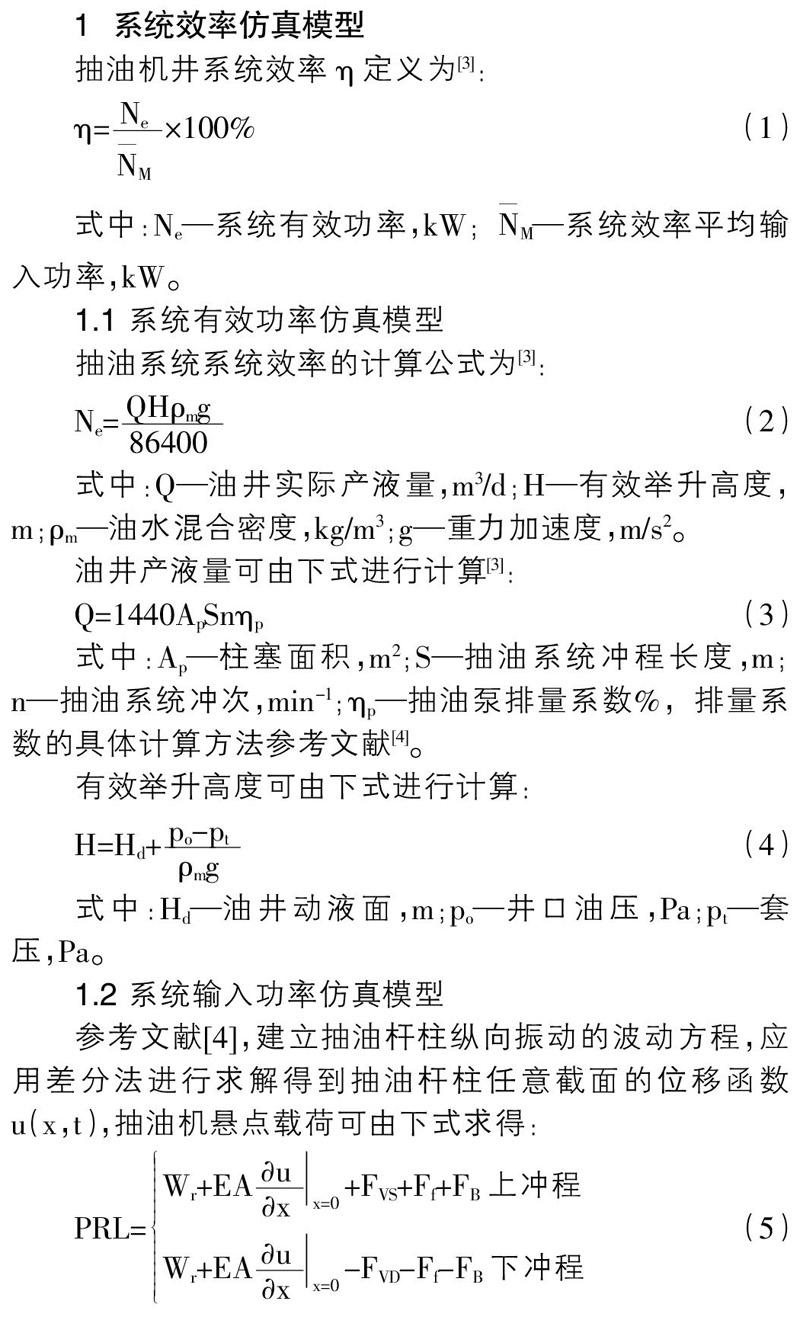

4 模型驗證與實際應用
表1對比列出這10口抽油機井懸點最大載荷、油井產液量、系統效率仿真結果與測試結果,系統效率的仿真誤差率均小于15%,說明該仿真模型具有較高的仿真精度。表2列出了這10口油井實測系統效率、最高系統效率以及最高系統效率實現率。對比表中結果可見,最高系統效率實現率的最大值為86.63%、最小值為52.71%,平均值為68.39%,顯然這10口抽油機井尚具有較大的節能潛力。
5 結論
①本文所建立的抽油系統系統效率仿真模型仿真精度較高,根據文中10組算例結果可知其仿真誤差率在5%以內。②從文中10組算例可知應用本文所給出的抽油系統系統效率優化模型可將其平均系統效率調高12.51個百分點,說明該仿真模型對抽油機井的生產參數進行優化可以降低油田生產所需能耗,提高抽油系統的效率。該仿真模型對指導生產具有較大意義。③由文中數據可知,本文所提出的最高系統效率實現率可以明確反應油井系統效率的提高潛力,實現率越低油井系統效率的提高潛力越高。因此在油田實際生產過程中可以將最高系統效率實現率作為油田管理的一個指標,以指導油井生產。
參考文獻:
[1]崔振華,余國安,安錦高,鄔亦炯著.有桿抽油系統[M].北京:石油工業出版社,1994:71-78,398-1451.
[2]姚春東.提高抽油機井系統效率的計算機仿真分析[J].石油學報,2005,26(4):106-114.
[3]SY/T 5793—93,中華人民共和國石油天然氣行業標準[S].北京:石油工業出版社,1994.
[4]董世民.抽油機井動態參數的計算機仿真與系統優化[M]. 北京:石油工業出版社,2003:87-93.
猜你喜歡
中國綠色畫報(2016年7期)2016-12-26 18:20:14
未來英才(2016年2期)2016-12-26 09:57:17
科技創新與應用(2016年34期)2016-12-23 19:06:08
中學課程輔導·教學研究(2016年14期)2016-12-23 17:02:58
商情(2016年43期)2016-12-23 14:31:42
計算機教育(2016年9期)2016-12-21 00:54:05
汽車科技(2016年6期)2016-12-19 20:28:28
成長·讀寫月刊(2016年11期)2016-12-14 18:29:14
都市家教·下半月(2016年10期)2016-11-30 22:20:37
企業導報(2016年11期)2016-06-16 15:58:19