綠色項目管理:時代所向
2018-09-10 14:20:59尉艷娟
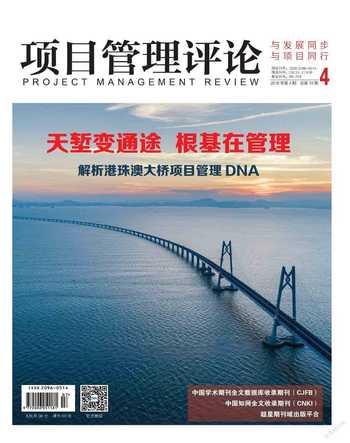
項目管理評論 2018年4期
尉艷娟
古人云:“竭澤而漁,非不得魚,明年無魚;焚林而畋,非不獲獸,明年無獸矣。”面對日益嚴峻的資源、污染問題,可持續發展已成為時代的主流和呼喚。靠高消耗和高污染來做項目與時代背道而馳。
項目是一種變革工具,社會的可持續發展需要通過綠色項目管理來實現。項目管理者需要將可持續性理念融入整個項目生命周期。
項目管理在發展,項目管理人的視角需不斷延伸,我們不應只關心項目管理四要素,還需考慮項目管理過程的生態、社會、經濟足跡。傳統的項目管理與綠色項目管理有何區別?如何才能讓可持續性的理念貫串項目管理的整個生命周期?如何對項目管理的可持續性進行評估?如何用可持續性的眼光看待項目風險和機會?可持續項目管理有何衡量標準?帶著這些疑問,我們采訪了綠色項目管理全球組織(GPM Global)的創始人喬爾·卡爾博尼(Joel Carboni)。
喬爾·卡爾博尼,博士學位,從業20余年,IPMA美國分會主席,綠色項目管理全球組織的創始人,PRiSM項目管理方法架構師,《綠色項目管理參考指南》(GPM Reference Guide)作者之一。
綠色項目管理全球組織是倡導可持續性項目管理的全球性組織,該組織設立了可持續性項目管理的標準(P5)、方法模型(PRiSM)、認證(三個級別)。PRiSM從建模的角度,通過利用現有的組織系統來確保項目實現水平和垂直收益,并將重點放在過程和產品的可持續性上,從而使項目更具戰略意義。
喬爾·卡爾博尼強調,綠色項目管理,就是不僅要關注項目的投入、產出、流程,更要關注項目管理對社會、環境、宏觀和微觀經濟的影響。
喬爾·卡爾博尼認為,要把可持續性融入項目中,首先要建立以收益為導向的思維模式,做好可持續性管理規劃。對于企業而言,可持續性管理的第一步是設立可持續性目標,然后把服務于這些目標的項目管理實踐融入項目治理中。
一項針對103個國家27個行業的1 000名CEO的調查顯示,93%的CEO認為可持續性對成功至關重要。在全球市場上,可持續性已被看成是“必需品”。正如喬爾·卡爾博尼所說,項目管理是一座橋,將項目與可持續發展這一宏偉目標連接在一起。我們有理由相信,綠色項目管理將成為時代主流。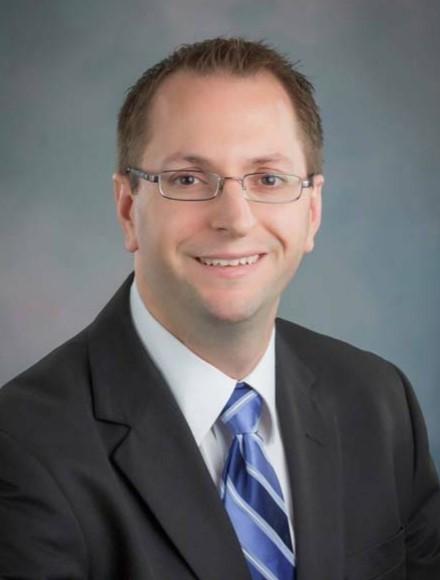
Interview
As founder of GPM (Green Project Management) Global, you are at the forefront of sustainability management. As an organization, what is GPM Globals focus? What is “Green Project Management” by definition?
Joel Carboni: The global focus on sustainable development, climate change, ethical behavior, social responsibility, and transparent supply chains has increased in recent years. So have the demands for sustainable business practices. As a supporter of the United Nations Global Compact, GPM views our role in fostering global citizenship, through advocacy for sustainable projects as our primary remit.
We are a global organization that advocates sustainability in the project profession. We help companies become more resilient, governments more efficient, and societies more robust, all while safeguarding our natural resources.
As a social enterprise, we focus on evolving the project profession through principled and value-based methods. From our multiple award-winning standards to our training, assessments, and certifications, our goal is to drive sustainable business and realize the 2030 sustainable development goals (SDGs).
The difference between green/sustainable project management and traditional project management is simply the adherence to a set of principles and looking at project and project management success as more than inputs, outputs, and processes but rather the impacts of what we are doing on society, the environment, and the economy both micro and macro. Globally, humanity is at a crossroads. Problems stemming from humans induced climate change, population increases, lack of potable water, and income & gender inequalities. It is imperative for all professions to self assess what impacts they are making to improve our plant and society for future generations. According to research by Accenture and the UN Global Compact, out of 1,000 global CEOs, from 27 industries across 103 countries, 93% regard sustainability as key to success.
Give us some details on Sustainability Assessment Model and GPM certification, please.
Joel Carboni: From a modeling perspective, our methodology PRiSM which is an acronym for PRojects integrating Sustainable Methods, uses an asset lifecycle approach with a focus on impacts, risks, value and benefits.
PRiSM is a principles-based, sustainable project management methodology. Its key difference from traditional approaches is that it incorporates a value-maximization model that focuses on the total asset lifecycle. PRiSM puts projects into a more strategic focus by leveraging existing organizational systems to ensure that benefits are realized horizontally and vertically, with the utmost attention focused on process and product sustainability.
PRiSM is based on our award winning P5 Standard for Sustainability in Project Management, and is effective in reducing project level risk, from an environmental, social and economic perspective while expanding the range of benefits to be gained. PRiSM extends beyond the typical project lifecyle with a five phased approach that incporporates pre-project planning, product/service adoption and integration as well as benefits realization.
We offer certification globally. Our program is three tiered and begins with the GPM-b (or basic) where a knowledge assessment on sustainability is conducted via exam. This is our most popular certification. From there, we focus on ability in our GPM-s(Specialist) and GPM-m (Master). The Specialist, which is a revamp of what we used to simply call the GPM requires evidence of the integration of sustainable methods with project delivery. This is conducted via case study submittal and in person interview. Our Master-level certification requires advanced experience, and the GPMs case study submittals as well as an academic paper.
We are often asked if our certifications should be sought out instead of a PMI or IPMA certification and while we do assess competence in project management, our certifications are specializations.
About P5 Standard for sustainability in project management, would you please offer us a brief introduction? What does P5 represent?
Joel Carboni: P5 stands for People, Planet, Prosperity, Process and Products. The P5 Standard is a tool that supports the alignment of portfolios, programs, and projects with organizational strategy for sustainability and focuses on the impacts of project processes and deliverables on the environment, society, the corporate bottom line, and the local economy.
Our P5 Standard for sustainability in project management, a free resource, provides guidance on sustainability to ensure benefits maximization and risk mitigation and ties in to the United Nations Sustainable Development Goals (SDGs), thus creating a bridge between all projects to a larger cause.
P5 is not a methodology for how to create the environment, however, it provides the principles or foundation for a methodology such GPMs PRiSM. The P5 Standard represents a structure, as it defines something. The simplest way to explain P5 is that it is made of bonds between the triple bottom line approach, project processes and the resulting products or services.
What kinds of portfolios, programs and projects can be defined as sustainable? Are there any principles to follow?
Joel Carboni: In order to be sustainable, portfolios, programs, and projects should adhere to the following six principles:
1) Commitment & Accountability: Recognize the essential rights of all to healthy, clean and safe environments, equal opportunity, fair remuneration, ethical procurement, and adherence to rule of law.
2) Ethics & Decision Making: Support organizational ethics, decision making with respect for universal principles through identification, mitigation, and the prevention of adverse short and long-term impacts on society and the environment.
3) Integrated & Transparent: Foster the interdependence of economic development, social integrity, and environmental protection in all aspects of governance, practice and reporting. 4) Principles & Values Based: Conserve and enhance our natural resource base by improving the ways in which we develop and use technologies and resources.
5) Social & Ecological Equity: Assess human vulnerability in ecologically sensitive areas and centres of population through demographic dynamics.
6) Economic Prosperity: Adhere to fiscal strategies, objectives, and targets that balance the needs of stakeholders, including immediate needs and those of future generations.
How can we incorporate sustainability into projects? If an enterprise is eager to start sustainable project management, whats your advice for them?
Joel Carboni: The key is to shift to a benefits-focused mindset and to do sustainability management planning. We were very prescriptive of how to do this in our new book Sustainable Project Management: The GPM Reference Guide, but the short of it is to look at risks and opportunities through a sustainable lens. For example, if the project calls for the development of a manufacturing facility, ensure that it makes use of renewable energy as part of the plan and also accounts for any contamination to air, soil, and water. Our P5 standard, which is free from our website, explains this in detail.
For an enterprise interested in initiating green project management, the first step is to determine what the sustainability goals are for the organization. Once they are in place, integrating management practices that contribute to the goals into project governance. As over 30% of the worlds GDP is directly related to project work, there are tremendous opportunities for organizations to benefit from doing so.
Would you please suggest a way to integrate more sustainable methods into our existing project management approaches?
Joel Carboni: Whether it is an Agile approach, Waterfall method or something else, all of them, in order to be effective, must be tailored to the organization. All projects have a business case and the objectives for sustainability the projects product should be included. We advocate the use of a sustainability management plan or SMP which ties organizational and project objectives for sustainability together and focuses on risk and opportunities that might otherwise go unnoticed.
How can we sell a sustainable project management approach to our customers?
Joel Carboni: Every Executive has sustainability on their radar. They know it is important and that the global market has shifted to see sustainability as a necessity. Their challenge is how to implement it. I wouldnt so much as“sell” it to customers but rather make them aware that there are sustainable project practices available that can increase benefits, reduce risks and ensure as sustainable production as possible. It essentially sells itself.
What are the challenges or barriers in promoting PM sustainability?
Joel Carboni: The barriers are predominantly two-fold. The first is that organizations do not place a high enough value on sustainability from a business process perspective. Due to this, management practices often lack sustainable methods. For example, in a project business case, KPIs for sustainability are rarely included.
The second is that project management has been fixated on time, cost, and scope as the foundational constraints and needs to expand to include risk, value, and benefits that are directly tied to social, environmental, and economic impacts.
Whats your observation about green project management in China?
Joel Carboni: We have had success in China and over the past year, over 40 trainers were certified in Beijing. It is well known that Chinese culture lends to thoughtful and long-term planning, often decades into the future. With China taking the global lead in renewable energy among other sustainability areas, there will be increased demands for project managers who understand how to incorporate sustainability into projects in order to meet some of the goals the country has set. We are ready and eager to support.
As a leading expert on this topic, what do you think of the future of sustainable project management?
Joel Carboni: As the global leader in this topic, we have seen rapid growth in the adoption of our P5 standard for sustainability in project management, which is a good indicator. In 2016, we surveyed over 50,000 individuals from over 100 countries who have downloaded the P5 and 93% of the respondents stated that it helped improve project success. This is a clear marker that sustainable project management is increasing in value and we believe that in the future,“mainstream” project management and sustainable project management will become one and the same.
猜你喜歡
品牌研究(2022年26期)2022-09-19 05:54:46
建材發展導向(2022年10期)2022-07-28 03:04:30
建材發展導向(2021年14期)2021-08-23 00:57:24
現代企業(2021年2期)2021-07-20 07:56:54
建材發展導向(2019年11期)2019-08-24 06:36:28
海峽姐妹(2019年3期)2019-06-18 10:37:10
足球周刊(2016年14期)2016-11-02 10:56:23
足球周刊(2016年15期)2016-11-02 10:55:36
足球周刊(2016年10期)2016-10-08 10:54:55
百科知識(2008年8期)2008-05-15 09:53:30