雅各布·布爾克哈特——發明了“文化”的思想家
2018-10-25 20:57:18ByJonathanJones
英語學習
2018年10期
By Jonathan Jones

The bicentenary of the birth of a Swiss historian might not seem the most glamorous of anniversaries. Unlike his contemporary Karl Marx, also born in 1818, Jacob Burckhardt never inspired any revolutions and doesnt get his face on T-shirts. Yet some of us are celebrating the 200th birthday of Jacob Burckhardt lavishly1.
Once upon a time, newspapers used to have arts sections. Today, theyve caught up—very belatedly—with Burckhardt. The use of the term culture to mean a broad and changing flow of forms from opera to video games may seem like an innovation of the postmodern age, but it actually goes back to Burckhardts 1860 book The Civilisation of the Renaissance in Italy2.
Burckhardt invented culture as we know it—not just the official “arts”, but any human activity that has symbolic meaning.
Newspapers and their websites are still behind Burckhardt on this. Looking for articles about fashion and food? Youll find them in “lifestyle”. Burckhardt saw these too as culture. Of course, so do we—it would just get hard to organise stuff if it was all classed in one big mix. But everyone knows today that clothes are significant cultural creations and that cooking is about meaning as much as flavour. The amazing thing is how clearly Burckhardt saw it in 1860.
The Civilisation of the Renaissance in Italy has not one single chapter dedicated to Renaissance art. It does have, however, a section called “Ridicule and Wit”. Burckhardt explores every nuance3 of how people expressed themselves in 15th-century Italy, from cruel jokes to street festivals. In one of his most astonishing insights he even explores how people listened—he shows how sitting through long speeches was a cultural rite4 in itself. Its a revelation that makes you think about music and performance in a totally new way. One day, someone will write the history of how we listen today, the cultural history of headphones and podcasts. And that historian will owe everything to Burckhardt.
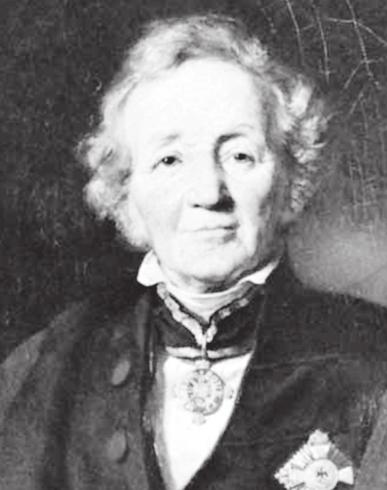
So who was this daring thinker His portrait on Switzerlands 1,000-franc note makes him look stern5 yet sensitive. Born in Basel to a wealthy family and educated in Berlin, where he was taught by the pioneering historian Leopold von Ranke6, he doesnt come across as much of a rebel. Yet Burckhardts work is an insidious7 attack on Germanic nationalism. Writing at a time when Prussia was leading the unification of Germany and pride in Teutonic northern virtues was growing,8 Burckhardt went out of his way to belittle north European achievements and show that Italy was the true source of European genius.
He thrills to the ruthless violence of Cesare Borgia, and of Ferrante, ruler of Naples,9 who according to Burckhardt used to make his guests dine alongside the preserved corpses of his torture victims. Its the kind of gory10 detail that makes his masterpiece a still-powerful read. It also widens his notion of culture still further. For Burckhardt, politics and war are cultural forms. He gets this idea from the Renaissance itself—one of his inspirations, Machiavelli11, wrote a book called The Art of War.
In 2018 we seem to be living in Burckhardts world—and it aint pretty. Not only is everything culture, but politics is a mad art form, ruled by symbolic forces that surge through social media. Are the new populist monsters of politics the descendants of the Renaissance despots who shocked and fascinated Burckhardt?12
This quiet scholars great book helps us understand our world just as much as the writings of Marx. More so, I fear, in this age when culture trumps13 reality.
在諸多重要的周年紀念日中,某位瑞士歷史學家的二百周年誕辰似乎并非最令人矚目。與他同時代的偉大的思想家卡爾·馬克思不同,盡管同樣出生于1818年,雅各布·布爾克哈特卻不曾引領任何革命的洪流,他的臉龐也從未成為印在T恤上的文化符號。但的確有些人,正在隆重地慶祝著雅各布·布爾克哈特誕辰二百周年。
過去的報紙通常有名為“人文藝術”的版塊。時至今日,盡管有些遲,它們終于追上了布爾克哈特的步伐。人們常使用“文化”這一術語來指代從歌劇到電子游戲這些貫穿不同時代、日新月異的文娛活動,這一似乎誕生于后現代時期的常用說法,其實源自布爾克哈特1860年的作品《文藝復興時期的意大利文化》。
布爾克哈特發明了我們所熟知的“文化”,這個詞匯的內涵不僅囊括了通常所謂的“人文藝術”,也包含了任何一種具有象征意義的人類活動。
在這方面,布爾克哈特無疑走在了所有報紙和網站的前面。想閱讀關于時尚與美食的文章?你會在名為“生活方式”的欄目中找到。而這些,同樣被布爾克哈特視為文化。當然,我們也一樣—— 若不將紛繁多樣的事物加以分類,整理起來將頗為麻煩。但如今,人人都認同服飾是重要的文化創造,而烹飪不僅關乎味道,更具有一定的文化內涵。不可思議的是,布爾克哈特早在1860年就清晰地認識到了這一點。
在《文藝復興時期的意大利文化》一書中,沒有一章是講述文藝復興的藝術的,而是在一個名為“嘲弄與風趣”的版塊中,布爾克哈特探究了在15世紀的意大利人表達自我的每一個細微差別,從刻薄的笑話到街頭慶祝活動。……
登錄APP查看全文
猜你喜歡
中國德育(2022年12期)2022-08-22 06:16:18
湖北教育·綜合資訊(2022年4期)2022-05-06 22:54:06
金橋(2022年2期)2022-03-02 05:42:50
金橋(2022年1期)2022-02-12 01:37:04
兒童繪本(2018年22期)2018-12-13 23:14:52
小天使·一年級語數英綜合(2018年9期)2018-10-16 06:30:16
讀者·校園版(2018年13期)2018-06-19 06:20:12
Coco薇(2016年2期)2016-03-22 16:58:59
讀者(2016年7期)2016-03-11 12:14:36
爆笑show(2014年10期)2014-12-18 22:27:48