
荷蘭建筑發展趨勢:表現功能主義
2018-12-18 11:25:56呂德布勞韋斯RuudBrouwers
世界建筑 2018年11期
呂德·布勞韋斯/Ruud Brouwers
戴安娜·貝福德 荷譯英/Translated from Dutch by Dianna Beaufort
徐知蘭 英譯中/Translated from English by XU Zhilan
1980年代,荷蘭新建建筑的規模發生了突變。大學的醫療中心、教育機構、政府部門、辦公大樓、甚至住宅樓——或住宅綜合體的建設規模突飛猛進,超過了歷史上的同類建筑。顯然,在此之前的所有項目都受制于經濟因素。人們產生了對空間的新渴望。在經歷了1970年的典型小規模城市開發之后,常常有更多復興住宅區活力的項目——而不是大規模的城市更新建設項目——再次成為時興的主流。這些項目和傳統的城市空間格格不入,所以通常建在郊區,也因此拉近了不同城市之間的距離。
誕生于1980年代建設規模增長期間的建筑,可以稱為“中庸的功能主義”——它們既難以用后現代主義巔峰時期的顯著特征來描述,也沒有與之相對應且顯而易見的新現代主義高潮。其中一例是由赫爾曼·赫茲伯格于1979年設計、1990年才建成的海牙社會部大樓(可容納2000名辦公人員)。這位建筑師把它的空間組織方式稱為“結構主義”。目前,該部門已搬遷至一處新址,大樓正在接受檢測評估。宏大的建筑結構讓它具有良好的適應性,為新的使用目的設置的不同功能和空間分隔都很容易實現。在參加這座建筑改造為建筑綜合體的項目過程中,總建筑師本人也充分說明了“結構主義”所具有的極大靈活性。
赫爾曼·赫茲伯格早已在烏得勒支城市中心完成了一項建筑結構改造的項目——他把自己因聲樂效果、中央舞臺和自然采光而廣受贊譽、聲名卓著的弗雷登堡音樂廳,通過巧思秒想的結構主義改造為一座規模遠超原狀的建筑物。這座現在命名為蒂沃利·弗雷登堡的音樂中心有一座類似城市廣場的門廳(即原先的主廳)和若干由不同建筑師設計的小廳。除古典音樂外,人們還能在此欣賞到流行音樂和爵士樂。
盡管在2008年全球金融危機發生之后,建設項目遭遇了暫時的停滯,荷蘭突然投入大規模開發建設的趨勢卻仍未停止,且事實上還在穩步增長。在此期間,為了引進國際高速列車的運營,已經建成幾座新的火車站,一些舊火車站也已徹底翻新。而在城市之間空曠的廣袤土地上則佇立起新的物流配送中心規模龐大的倉庫大樓,它們反映了近來網絡銷售的契機、自助購物與親自動手裝配產業的業績增長。
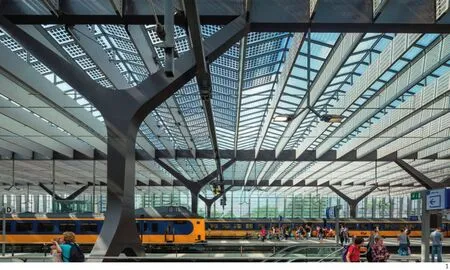
1 鋼柱,鹿特丹中央火車站,CS團隊設計(West 8, 本特姆–克勞威爾建筑事務所,MVSA邁耶·恩·凡·斯霍滕事務所/MVSA Meyer en van Schooten Architecten),2013/Steel columns, Rotterdam Central, Rotterdam, 2013, Team CS(West 8, Benthem Crouwel Architects, MVSA Meyer en van Schooten Architecten,圖片來源/Source: https://www.archdaily.com/447649/rotterdam-centraal-team-cs )
盡管雷姆·庫哈斯可能是荷蘭最著名的建筑師,但本特姆–克勞威爾建筑事務所的簡·本特姆通過他設計的公共建筑從建筑層面塑造了荷蘭——他在這方面的貢獻比庫哈斯更勝一籌。
In the 1980s there was an abrupt change in the scale of new buildings in the Netherlands. University medical centres, educational institutions, ministries,offices and even residential buildings – or residential complexes – were suddenly being built bigger,outsising the generation of buildings previously erected. Apparently, everything had been in a squeeze before. There was new hunger for space.After the small-scale urban development that typified the 1970s, usually more neighbourhood rejuvenation than urban regeneration, large-scale buildings became fashionable again. These didn't fit well with the traditional city, so they were often built on the outskirts, and as a consequence, cities grew ever closer together.
The architecture that emerged from the upscaling of the 1980s might be called middle-ofthe-road functionalism: non-descript with a few postmodernist peaks or, as a reaction to these,some distinctly neo-modernist heights. An example of this is the Hague's Ministry of Social Affairs(for 2000 office workers) by architect Herman Hertzberger, completed in 1990, after initial designs began in 1979. It was a configuration of spaces which the architect called a Structuralist building.Now that the ministry has moved to a new location,the building is being put to the test. The immense structure lends itself well to adaptation, in which different configurations and divisions for new uses can be achieved without too much trouble. The master builder himself is able to demonstrate that Structuralism encompasses great flexibility, for he is involved with the conversion into a residential complex.
In the city centre of Utrecht Herman Hertzberger has already achieved a re-structuring: he has woven his acclaimed concert hall Vredenburg – lauded for its acoustics, centrally-positioned stage and daylighting – into a much bigger building through artful Structuralism. Now called TivoliVredenburg, the music venue has an entrance hall (the original main hall) that feels like an urban square and several different halls, designed by different architects,where pop and jazz are now enjoyed in addition to classical music.
The plunge into large-scale development has not ceased, and in fact, has steadily grown, despite the temporary stagnation in building projects following the 2008 global financial crisis. In the meantime,several large new railway stations have been built or thoroughly renovated for international high-speed trains. And in the spaces left over between cities,new distribution centres have given rise to gigantic warehouses, a response to the increased online shopping opportunities and the self-service and DIY industries.
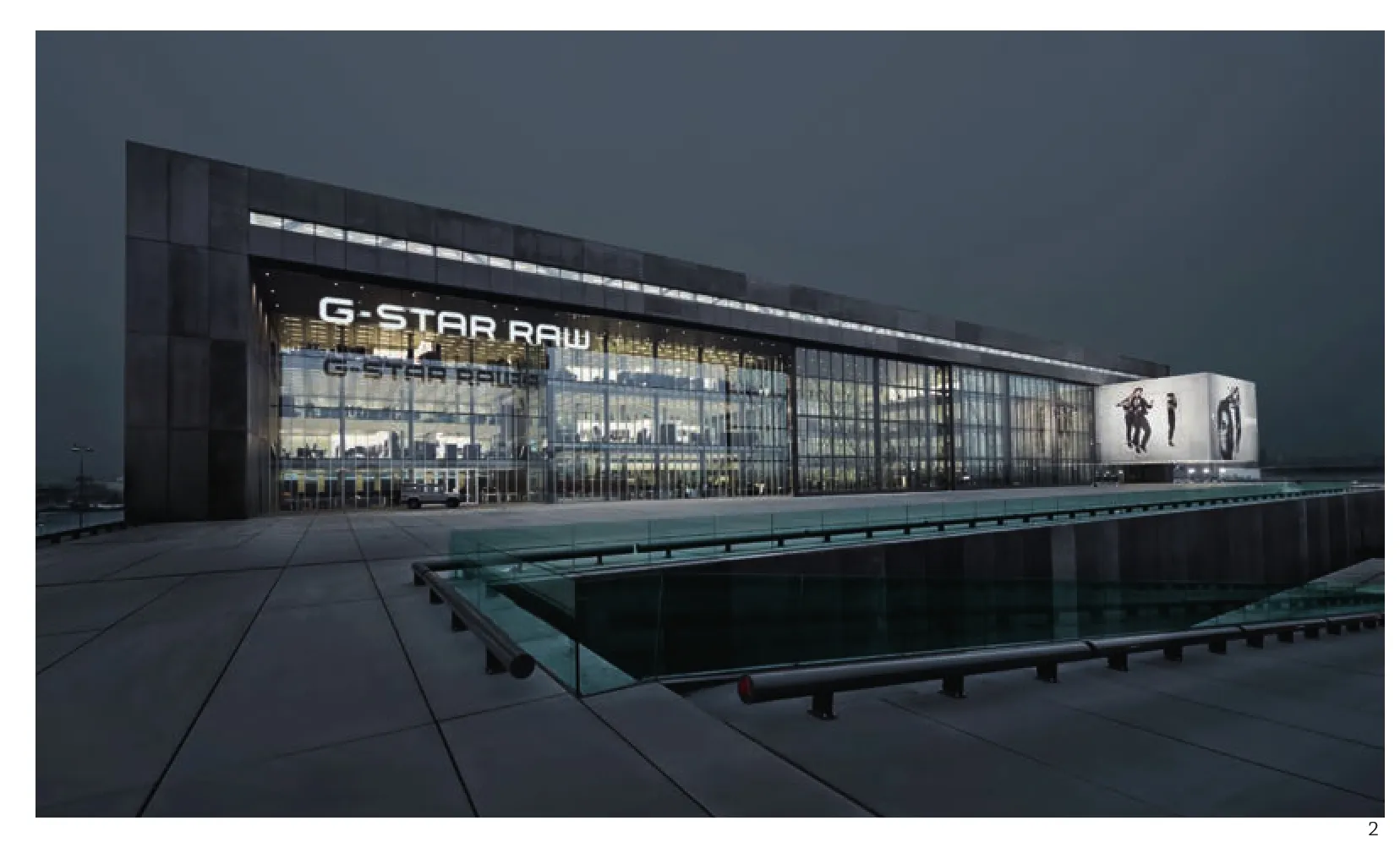
2 阿姆斯特丹G-Star Raw 總部大樓,OMA設計,2014/G-Star Raw HQ, Amsterdam, OMA, 2014 (圖片來源/Source:http://oma.eu/projects/g-star-raw-headquarters)
Rem Koolhaas might be the most famous architect of the Netherlands, but Jan Benthem of Benthem Crouwel Architects shapes the Netherlands architecturally – through his public buildings – more so than Koolhaas does. Benthem's oeuvre to date includes parts of Amsterdam's Schiphol Airport (most notably its train station),the central train stations of Rotterdam and The Hague, all the metro stations of the new North-South Line in Amsterdam, and the datacentre Equinix AM4 at Amsterdam's Science Park, a building that houses "the cloud" – without windows but with a superb skin. The cathedral space of Amsterdam Centraal's metro station and the strong and graceful steel columns of Rotterdam Centraal endorse the comfort and efficiency characterised by Dutch architecture.
Of course, OMA certainly isn't lagging behind Benthem in terms of productivity. The G-Star RAW Head Office in Amsterdam – big transparent boxes set in a frame – gives the Ringweg A9 an international flare, more than other buildings here.The OMA oeuvre continues to expand in Rotterdam itself. After the high-rises of De Rotterdam,came the Municipal Office Timmerhuis. This new complex, which includes a pedestrian throughway,a municipal service point, a city museum and apartments, introduces some breathing space to the concrete jungle of Rotterdam's city centre.In doing so, it also becomes representative of openness and transparency in the work of governing authorities. In another project, OMA's Ellen van Loon opened up the glass-encased office blocks of Jan Hoogstad's Ministry of Housing in The Hague, inviting in urban life and creating passageways through. A mere 20% of the original building was demolished and 99.7% of the materials were re-used for renovation.
本特姆–克勞威爾建筑事務所迄今為止的全部作品包括阿姆斯特丹史基浦機場的部分空間(其中火車站最引人注目)、鹿特丹和海牙的中央火車站、阿姆斯特丹新南北線上所有的地鐵站、以及阿姆斯特丹科學園區內Equinix數據公司的AM4數字中心——他們的“計算云”就裝在這座沒有窗戶、只有表皮的建筑里。阿姆斯特丹中央地鐵站的大教堂空間和鹿特丹中央地鐵站內部堅固而優雅的鋼柱則充分體現了荷蘭建筑舒適而高效的特點。
當然,OMA建筑事務所在生產力方面確實毫不遜于本特姆的建筑事務所。荷蘭頂尖牛仔服飾品牌G-Star RAW位于阿姆斯特丹的總部大樓采用了在方框體塊中設置若干體量龐大的透明方盒的形式——相比起同區域內的其他建筑,這座建筑讓A9環城公路閃耀著更多國際化的光芒。OMA建筑事務所在鹿特丹的建成作品還在不斷累積。繼“鹿特丹大廈”之后,他們又建成了鹿特丹地方政府大樓“提默胡斯”。這座新的建筑綜合體中包含一座人行天橋、一處市政服務設施、一座城市博物館及一些住宅公寓,為鹿特丹市中心擁擠的水泥森林引入了讓人得以喘息的空間。它也由此成為政府機構大樓開放與透明的代表。OMA建筑事務所的埃倫·范隆在另一個項目里把揚·霍格斯塔德設計的由玻璃幕墻圍合形成的海牙住房部辦公樓打開了一部分,在其中引入城市生活,并新建了可以穿越大樓的人行道。項目約有20%的舊建筑部分被拆除,其中99.7%的材料都在改造更新的過程中得到再利用。
在目前正使荷蘭面貌發生變化的建筑學轉變中,有很大一部分和改造更新與再開發項目相關。拆毀舊建筑有悖于可持續發展的原則。理性決策占據了所有這些建設和轉變過程的核心位置,但同樣顯而易見的是,1980年代乏味的功能主義現已讓位于細致精巧的設計。一座建筑只有通過令人怦然心動的形式表達其功能時,才可以被認為是真正的功能主義。
卡恩建筑事務所設計的新阿姆斯特丹法院就是一個恰如其分的例子。這座可容納近200名法官的大樓位于澤伊達斯地區,正處于建設過程中;這片新規劃建設的商務區正逐漸成為國際港,而建筑師蜂擁至此發表他們的建筑宣言。這座法院大樓以其不容質疑的建筑形式,表現和承載了憲政民主的運作要素。在營造出典型的友好公共空間的同時,它也是一座莊嚴的憲政機構。這座建筑表達了法學的公共屬性,也因此表現出它固有的權威性。
可以說,它充分體現出了表現功能主義的精髓。而卡恩建筑事務所在蒂爾堡大學新建的立方體建筑則為350名學生提供了學習空間,其中貫穿建筑結構的各種視線則把大樓的使用者和他們周邊的校園景觀環境聯系起來。在海牙新建的最高法院建筑中,建筑面向城市敞開,并同時保持了履行法律程序所必要的謹慎姿態。新擴建的阿姆斯特丹史基浦機場樞紐站計劃將于2020年建成;和許多其他的機場不同的是,在這里,無論出發還是到達的乘客都享有同樣寬敞的空間。機場大廳顯得非常親切友好,各類安檢程序都設置在舒適宜人的公共空間里,不僅綠蔭環繞、陽光明媚,還能欣賞到荷蘭開闊的天空。
這類功能主義的設計存在某種矛盾之處,因為它們舒適的空間和清晰的表達形式是通過對嚴格功能設計手法的超越才實現的。在面對設計挑戰的最初時刻,首先提出的問題是怎樣能豐富周邊環境和建筑使用者的日常體驗,并同時為從甲地點移動到乙地點的使用者提供唯一高效可靠的路線。毫不夸張地說,這是一種略帶詩意的功能主義。這種點到為止的詩意幾乎不能稱之為純粹的功能主義,卻確實緩沖和安撫了人們對日常功能的實際體驗。
同時結合實用性與愉悅感體驗的手法也是建筑師保羅·德勒伊特的專長,他不僅通過設計滿足使用者的需求,也滿足了長遠的可持續發展要求。可以這么說,可持續發展的建筑實踐是他的天賦所在。這也是其他建筑師經常邀請他參與項目的原因。他自己已經完成了許多令人印象深刻的作品,包括位于阿姆斯特丹、烏得勒支、阿納姆、海牙和布雷達的住宅樓和塔樓,其中一些已經建成,另一些則沒有。位于鹿特丹伊拉斯謨大學伍德斯坦校區的波拉克樓是一個能體現其設計哲學的典型案例。
由于委托任務也包含室內設計,德勒伊特因此建成了一座整體統一且高度可持續運營的建筑。這是一座同時為校園內部和外部世界分享知識而設計的開放結構大樓。演講廳設置在地下室,樓上是討論教室,個人自習室則在更高的樓層——空間自下而上從喧囂忙碌變得沉默靜謐。中庭有兩部螺旋樓梯銜接各處空間。整個玻璃立面上的垂直遮陽板根據風向和陽光直射角度進行設計,以保證室內空氣流通。建筑不需要機械通風,也不需要白天的人工照明。
然而,并不是每座新建筑或改造的建筑都令人賞心悅目。就像任何其他專業一樣,在荷蘭也有一些項目對技術掌握的不那么嫻熟,更不是所有的任務書都激動人心或充滿挑戰。但是在荷蘭,人們非常傾向于選擇有能力滿足各式各樣項目需求的建筑師。金融危機之后,緊隨其來的是小規模青年建筑師事務所的增長。在設計任務縮水之際,許多公司不得不裁減半數以上的員工。一些失業的建筑師——其中許多都是年輕人——抓緊獨立開業的稻草,成立了他們自己的事務所。和全球其他地區一樣,這些青年建筑師正生機勃勃、充滿活力地為建筑行業貢獻有生力量,并表現出風格多樣、百花齊放的態勢。
不得不說,這代年輕的先鋒建筑師幾乎不會投入任何時間或精力去拆除已建成的建筑項目。他們只是有意忽略這個問題,而直接聚焦于戰略重建的規則;他們同時也信心百倍地面對社會問題,并以此作為靈感的來源。在這一背景下,一群才華橫溢的青年建筑師完成了位于海牙西南部一處新社區——伊拉斯謨場試驗花園的一系列建筑項目。伊拉斯謨場的項目是基建基金地產開發公司(BPD)的一項宏大的“人居環境”規劃項目,旨在把可持續的生活方式推向新的高度。
當代的青年建筑師經常組成團隊共同參與項目,和樂隊頗有幾分相似。英格里德·范德海登、揚·萊賓克、里克·范圖薩特、以及赫特·奎克鮑姆和許多其他伙伴共同成立了公共建筑團隊,主要關注“建筑學的公共側面、市民文化及公共空間”。奎克鮑姆,作為一位哲學家和建筑師,曾獲得2017年度的杰出青年獎(ARC17)。這群建筑師和呂貝爾斯景觀設計和城市規劃事務所一起為伊拉斯謨場設計了完整的城市兼綠地景觀,該項目目前正在建設中,并被人們譽為“城市群落生態棲居地”。
據公共建筑團隊的建筑師們宣稱,這是“新形式的都市主義,在這里,景觀是都市,都市也是景觀”。安裝了蓄水池屋頂的建筑和沼生植物過濾裝置的景觀設施形成了封閉的水循環系統。種植立面和屋頂、以及寬敞的露臺和陽臺將室內外融為一體,陽光、空氣、供暖和制冷都得到了妥善的設計和安置。高度大于樹冠頂端的公寓還擁有冬季花園。項目運用了所有“近零能耗建筑”模板(NZEBs)、“零能源消費”(NOM)或能源平衡計量方式的設計原則。
工作在伊拉斯謨場另一個地段的工作坊建筑師事務所則由3位青年建筑師構成,他們分別是阿爾德·霍斯伯根、米拉德·帕萊什和伊瓦爾·范德茲萬。他們把自己的實踐描述為手工藝的實驗室。他們目前在建的項目是一個包含有108套公寓、101個車位和5處集體功能空間的住宅項目。建筑結構以各種方式彼此疊壓,并種有綠植,猶如層層疊退的臺地山坡。這個3人小組聘用了一個擁有來自不同專業人才的咨詢團隊,為其商業運營保駕護航。對環境和使用者都很慷慨大方,無論對歷史還是未來都一視同仁地予以尊重,以及建筑體塊在所有方向上層疊堆積——都是這個工作室建筑事務所建筑實踐的重要推動因素。從伊拉斯謨場的項目開始,他們就經常和OTO景觀設計事務所、福勒克斯景觀事務所和馬克羅·布魯克曼都市主義設計公司展開合作。
A large part of the architectural metamorphosis that is currently changing the Netherlands has to do with renovations and redevelopment. Demolition works against the principles of sustainability.Rational decision making is at the heart of all those buildings and conversions, but it's also clear that the dull functionalism of the 1980s has given way for some refinement. A building is only really considered functionalist when its architectural form expresses its functionality in an engaging way.
The new Amsterdam Courthouse by KAAN Architecten is an apt example of this. Soon to house 200 judges, the building is under construction in Zuidas, the new business district in the making where well-known architects are jockeying in a sea of architectural statements. Therfore this district is becoming an international hub. In eloquent architectural form, the Courthouse showcases and underpins the working elements of a constitutional democracy. It offers a typically inviting public space while also being a distinguished institution. The building expresses the public nature of jurisprudence and the subsequent authority inherent this.
It is fair to say that the masters of expressive functionalism are at work here. Consider their new building at Tilburg University, the Cube, with 350 student study spaces and sightlines through the structure connecting users with the surrounding landscape of the campus. And the new Supreme Court building in The Hague is presenting an open face to the city while also ensuring the discretion necessary for due processes. In the new outstretched terminal of Amsterdam Airport Schiphol,to be completed in 2020, passengers arriving and departing are treated in the equally expansive spaces, unlike many other airports. The halls are welcoming and security protocols are ensconced in pleasant public spaces with much greenery, daylight and views of the big Dutch skies.
There is a contradiction of sorts in this kind of functionalism, because the comfort and achieved articulacy is actually resulted by transcending a strictly functional approach. At the very beginning of a design challenge, the question is posed of how to add to the environment and to daily user experiences, while simultaneously creating a single,efficient and practical solution for moving users from A to B. Without any desire of exaggeration, it's a kind of functionalism that has a touch of poetry.This touch can hardly be called purely functionalist,but it does cushion and caress the practical experience of everyday use.
Combining practicality with pleasant experiences is also a specialty of architect Paul de Ruiter, serving through his designs not only end users, but also meeting the far-reaching demands of sustainability. Sustainable building practices are in his genes, so to speak. That's why other architects often invite him onto their projects. He has built an impressive oeuvre already on his own, including residential buildings and towers, whether completed or under construction, in Amsterdam, Utrecht,Arnhem, The Hague and Breda. The Polak Building on the Woudenstein Campus of Erasmus University in Rotterdam is exemplary for his design philosophy.
De Ruiter was able to design a totally integrated and super-sustainable building because the whole interior was included in the commission. It is an open structure built for the sharing of knowledge,both within the university and with the world beyond. The lecture halls are situated in the base,with group spaces above and individual study spaces above that – from the hustle and bustle below to silence above. Two spiral staircases in the atrium connect the areas. Vertical louvres on the entirely glazed facades, positioned according to the winds and angles of the sun, ensure air circulation.Mechanical ventilation is unnecessary, neither is artificial light during the day.
Not every new or innovative building a joy to behold. Like in any other profession, there are those with lesser skills, in the Netherlands as well. And not all briefs are equally inspiring or challenging.Nonetheless, the Netherlands has a strong selection of capable architects who are able to meet the needs of a diverse range of projects. On the heels of the financial crisis, the number of small, young architectural firms grew. When commissioned work evaporated, a lot of firms had to let more than half of their personnel go. Some jobless architects–many of them were young – took refuge in selfemployment, setting up their own independent practices. They now contribute to the field in invigorating ways, representing stylistic diversity as elsewhere in the world.
It must be said that the vanguard of this younger generation spend very little time and energy on taking down the establishment. They simply look past it and focus on the discipline of strategic acquisition, while also embracing social issues and using them as inspiration – with conviction. In this context a bevy of talented young architects have made their way into the various building projects of Proeftuin Erasmusveld, a new neighbourhood southwest of The Hague. Erasmusveld is an ambitious"environment for living" by Bouwfonds Property Development (BPD) that will raise sustainable living to new heights.
Young architects today often operate in groups,not unlike music bands. Ingrid van der Heijden, Jan Lebbink, Rick van Doeschate and Gert Kwekkeboom have joined forces with a number of colleagues to form Civic Public Architecture, with the strapline The Public Face of Architecture, Civic Culture and Public Spaces. Kwekkeboom, a philosopher as well as an architect, won the Young Talent Award 2017 (ARC17). This group, in collaboration with Lubbers Landscape Architects and Urban Planners,designed an integrated urban/green landscape for Erasmusveld which is now under construction and known as a "Stadsbiotoop" or urban biotope.
According to the architects of Civic, it is "a new form of urbanism in which the landscape acts as a city and the city as a landscape". Buildings with reservoir roofs and a landscape with helophyte filters close the water system. The green facades and roofs connect the interior with the outdoors, as do all the spacious patios and balconies, and the light, air, heat and cold are regulated. The apartments above the treetops have winter gardens. All of the tenets of the"Nearly zero-energy buildings" templates (NZEBs)and the "nul-op-de-metre"(NOM), or energy-neutral metre, were applied.
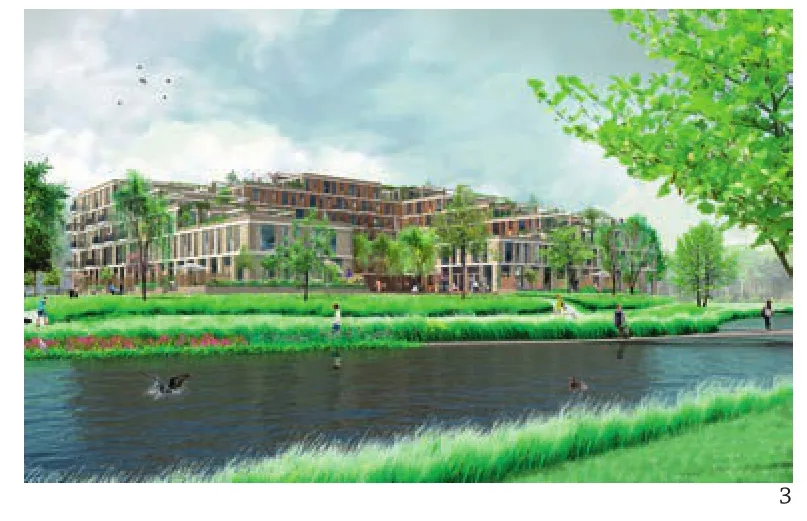
3 伊拉斯謨試驗花園項目,寶豐地產(BPD,施工中)/New co-existence in housing, Proeftuin Erasmusveld,Den Haag, Bouwfonds Property Development (BPD, under construction, 圖片來源/Source: https://www.hetkanwel.net/2017/03/04/proeftuin-erasmusveld/)
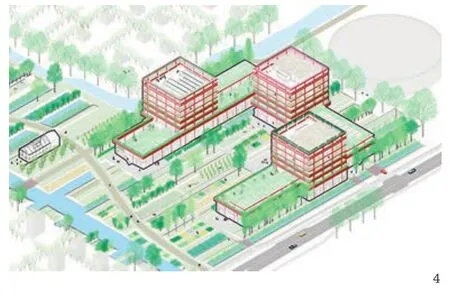
4 伊拉斯謨試驗花園項目,城市群落生態棲居地,公共建筑團隊設計(施工中)/New co-existence in housing, Stadsbiotoop Erasmusveld, Den Haag, Civic Architects (under construction)(圖片來源/Source: https://www.civicarchitects.eu/erasmusveld.html)
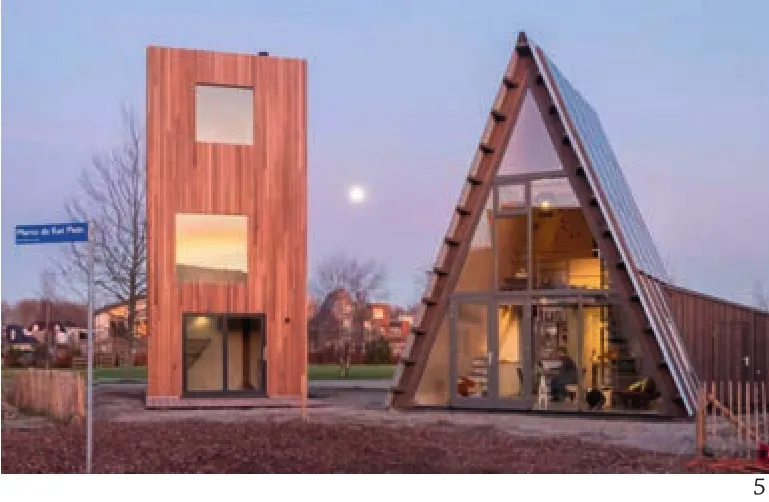
5 左:“修身之作”住宅,羅查-蒂伯爾建筑事務所設計,2017;右:達恩·巴克設計的“小甲”住宅,DaF建筑師事務所設計,2017/Left: Slim Fit, Almere, 2017, Rocha Tombal Architecten, Right: Tiny A, Almere, 2017, DaF-architecten(圖片來源/Source: https://www.dafarchitecten.nl/nl/daf-21/woningen/tiny-A.html)
荷蘭經常出現住宅短缺的問題,尤其是在西部地區的城市。人們不斷地遷徙到大城市,而其中的住宅存量規模卻不能與之匹配。獨居人口的數量也在增長。在一些地區,他們占到了總人口數量的1/3。而政府也把住宅問題放手交給市場解決。除了需求的增長之外,在一個各類信息觸手可得的數字時代,人們可以根據個人品味進行設計和裝飾,于是人們對獨特的建筑設計也產生了更多的興趣,其原因是顯而易見的。人們寧可住在大篷車里,也不愿向購買住房而增加的支出妥協。或者,他們也可以選擇住在微型房屋里。這一決定甚至可能和資金匱乏沒有任何關系,而只是受到意識形態驅動;當然,如果一座微型房屋能夠在能源使用方面(部分或全部)自給自足或能夠為健康的星球做出貢獻就更是如此。
距離阿姆斯特丹不遠處的阿爾梅勒是荷蘭最年輕的城市,建成時間僅有約40年,而現在擁有的人口數量已逾20萬。從建立伊始,它就是當地居民自己建設的城市;是他們創造了這座城市。這座城市由5個不同社區組成,其中有幾片區域的居民能自行決定想要什么樣的住宅形式,而不受任何強制條件約束。對經濟上可承擔的小型住宅的需求推動阿爾梅勒開展了一場公開的概念設計競賽。“自由生活”公司發出邀請,任何人都可以提交他們理想中的微型房屋的設計方案并在博覽會中進行展示,只要求總建筑面積不超過50m2。
他們從245份參賽作品中選出了25個獲獎作品,且迄今為止已有13個設計方案建成——這些活在一場永久展出的博覽會中的微型房屋數量頗為驚人,卻沒有任何一座是由“才華橫溢的青年建筑師”設計的。這些新生代的建筑師要么沒有參加競賽,要么沒有足夠的耐心或技術完成這樣一項如拼圖般精巧的設計方案。只有那些專心致志、經驗老道的建筑師才知道怎樣在嚴苛的限制條件下進行建筑設計。無處不在的建筑規范設定了必須滿足的標準——例如樓梯的坡度或天花板的高度。其中有兩座建成的設計作品獲得了許多獎項。由羅查-蒂伯爾建筑事務所設計的“修身之作”是一座修長的3層高住宅,能獨自矗立在田野中,或被置入在空間緊湊的市中心。其占地面積不到16.4m2。而由DaF建筑事務所達恩·巴克設計的“小甲”住宅則把荷蘭的人字形屋頂作為最便宜的住宅標準來使用。采用泡沫混凝土樓板就意味著不再需要基礎結構。
當然,荷蘭的建筑設計也存在一些“民族特征”,如傳統的住宅形式或審慎的功能主義,目前都已被囊括在各類建筑規范中。然而,如果我們要審視當前建筑界的趨勢,就必須充分理解這是一個處于國際形勢時有變化背景下的小國家。因此,必須考慮它和邊境國家的關系及其和歐盟的關系——荷蘭顯然是歐盟的主要創始成員之一。如果一座建筑需要用公共資金來支付,那么根據歐盟的規定,就必須公開建筑工程的設計委托過程。有幾家荷蘭公司非常擅長參加歐洲的設計競賽。位于比利時荷蘭語區佛蘭德斯的一些項目就對荷蘭建筑師分外有吸引力——兩地無論在語言、酬金還是地理位置方面都頗為相近。安特衛普距離鹿特丹只有不到1小時的車程。
荷蘭建筑師或建筑業的國際化轉型在高校也已表現得頗為明顯。例如,代爾夫特理工大學建筑學院有2/3的學生來自海外。其中近半數來自亞洲——主要是中國——而另一半則來自其他歐洲國家。每年有近200名建筑師從代爾夫特理工大學畢業并獲得碩士學位。
荷蘭建筑界的國際化特征來源于幾位在全球擁有重要影響力的荷蘭建筑師——MVRDV的維尼·馬斯,UNStudio的本·范貝克爾、Mecanoo事務所的弗朗辛·霍本,以及OMA建筑事務所的雷姆·庫哈斯。卡恩建筑師事務所的卡斯·卡恩和文森特·潘烏曾也以其跨國實踐發揮了作用,盡管其作品大多局限在歐洲和巴西。而許多著名的公司——尤其是大型企業——也從全球招募聘用人才。這些“熔爐”的產生,無獨有偶,都是因為許多荷蘭公司有一半甚至一半以上的業務都來自于海外地區。
毫無疑問,最具影響力的荷蘭建筑師正是雷姆·庫哈斯,他通過撰寫著作和設計那些直言不諱的新現代主義建筑項目獲得了其大師地位。盡管他的觀念主義確實激發了“超級荷蘭”的潮流,他本人卻對任何“荷蘭排名”都嗤之以鼻。他并不想像蝴蝶一樣被釘成標本,納入充滿同類物種的博物館藏品之中。
《新鹿特丹及阿姆斯特丹商報》的日報編輯貝爾納德·哈爾斯曼曾問庫哈斯:“您已經影響了許多荷蘭的青年建筑師,在跨世紀的時刻,他們的作品已作為‘超級荷蘭’全球聞名。您認為自己對荷蘭的建筑產生了怎樣的影響?”
他以斬釘截鐵的方式回答道:“我并沒有花時間考慮產生怎樣影響的事情。我的腦子里沒有建筑師的家族樹。‘超級荷蘭’是一個很好的品牌推廣策略,并且為許多荷蘭建筑師拓展了業務并帶來全球的關注。我對此沒有異議。但我從沒感覺到自己和‘超級荷蘭’有什么特殊的關系。我認為以國家作為區別品質或形式的分類標準荒謬可笑,尤其是在歐洲自身也正在轉型的時代。在意識形態上,我認為自己很歐洲。”
“超級荷蘭”的旋風——吹遍荷蘭平原的第二次現代主義風潮——就這樣平息了。無論是巴特·洛茨瑪定義的概念,還是此后的主導意識形態都沒有失去它們的重要意義;但對理論能力更強的建筑師而言,它已經在更實用主義的成果中得到了應用,變得不那么夸張。然而似乎維尼·馬斯和他的MVRDV事務所不在此列。他正在臺中(中國臺灣地區)和世界其他地區勇敢地推進他的概念論思想,尤其是在鹿特丹。他設計的拱廊市場被包裹在公寓大樓的內部,作為創業活力的范例深受贊譽。這個案例也許很恰當地營造出了“超級羅法”的形象。“羅法”是荷蘭人對鹿特丹的一種俗稱。更多的“超級羅法”能在目前在建的博伊曼斯·范伯寧恩美術館里找到——這是一個將會全部貼上鏡面玻璃的混凝土“碗”。所有目前存在于博物館公園的景象都會反射在立面上,所以那里仍將表現出一片綠蔭蒼翠的景象。
Working at another location in Erasmusveld are the group Workshop Architecten, consisting of three young architects – Ard Hoksbergen, Milad Pallesh and Ivar van der Zwan – who describe their practice as a laboratory for craftsmanship. Currently under construction is their residential project for 108 apartments with 101 parking places and 5 collective spaces. The structure is variably stepped and loaded with greenery, like a terraced hillside.The trio employ an advisory team including people from various disciplines to guide the business side of their endeavours. Generous to the environment and users, timeless with regard to the past and future, and layered in every aspect – these are the factors that drive Workshop Architecten. For the Erasmusveld project they worked together with OTO Landscape Architecture, Flux Landscape and Marco Broekman Urbanism.
There is a nearly constant housing shortage in the Netherlands, particularly in the cities of the west. People are migrating to the cities, though this isn't matched with sufficient numbers in homebuilding. The number of people living alone is also increasing. In some areas this counts for one third of the population. The government is leaving housing to the market. Add to this increasing desire, in a digital age with the access to all kinds of information, to design and furnish one's life to individual tastes, then it becomes clear why there is such greater interest in unique architectural solutions. People would rather live in a caravan than succumb to the rising expense of buying a house.Or they choose a tiny house. This may not even be due to a lack of money but be driven by ideology,certainly when a tiny house is (partly or wholly)self-sufficient in energy use and can contribute to a healthy planet.
Almere, not far from Amsterdam, is the youngest city in the Netherlands, established nearly 40 years ago and now home to a population of more than 200,000. From the beginning it has been a city built by the people living there; they make the city. At several locations in this city of five distinct neighbourhoods, residents were able to make their own choices on the kind of house they wanted, free of oppressive restrictions. The demand for small affordable homes motivated Almere to open a public competition. Bevrijd Wonen, or Free Living, invited anyone to submit designs for their ideal Tiny House with a maximum gross floor area of 50 square metres, to be presented in an Expo setting.
There were 25 winners chosen from the 245 entries, and so far 13 of those have been executed:Tiny Houses that live in a permanent Expo, none of which – remarkably enough – is by a "talented young architect". The new generation of architects didn't participate or doesn't have the patience or skills to provide a small puzzle-piece of a solution. It is the focused and experienced architects who know how to build to code within tight limitations. Building regulations everywhere stipulate standards to be met,like the slope of the stairs or the height of the ceiling.Two of the executed designs have won prizes. Slim Fit by Rocha Tombal Architecten is a slim 3-storeyed house that can stand in a field or be inserted into a compact city centre. Its footprint is no more than 16.4m2. Tiny A by Daan Bakker of DaF-architecten took the Dutch gabled roof as the cheapest standard for a house. The foam concrete floor plate means no further foundations are needed.
Of course there are some "national characteristics"in Dutch architectural design, like traditional housing forms or sober functionalism, now encoded in building regulations. Yet if we look at the state of current architecture, it must be understood that this is a small country in which international exchange is common. Relationships cross borders, aided by the European Union – the Netherlands notably being one of the founding members. If a building is going to be paid for with public funds, EU rules require the commission for architectural services to be put out to public tender. Several Dutch firms specialise in participating in European design competitions.Projects in Flanders, the Dutch-speaking region of Belgium, are particularly attractive to Dutch architects: for the language, the fees paid and, of course, the proximity. Antwerp is only an hour's drive from Rotterdam.
The international orientation of Dutch architects/architecture is already in evidence at the university. Two-thirds of students at the Faculty of Architecture of Delft University, for example,come from abroad. Half of these are from Asia –predominantly China – and the other half from various European countries. Some 200 architects graduate with a Master's degree from Delft University every year.
The international character of architecture in the Netherlands is also due to the fact that several Dutch architects play a role in the global arena:Winnie Maas with MVRDV, Ben van Berkel with UNStudio, Francine Houben with Mecanoo and Rem Koolhaas with OMA. Kees Kaan and Vincent Panhuysen of KAAN Architecten are also players,though their global practice is, as yet, limited to Europe and Brazil. The famous firms, and also the big ones, employ colleagues from all over the world.These melting pots don't happen, not coincidentally,because plenty of Dutch firms get half or more of their assignments from abroad.
Undoubtedly, the most influential Dutch architect is Rem Koolhaas, who has secured his position through books and buildings that bear witness to outspoken Neo-Modernism. While his conceptualism certainly fired up the Super Dutch trend, he balks at any placement in the "Dutch ranks". He doesn't want to be pinned like a butterfly into a museum collection full of the same species.
Bernard Hulsman, editor of the daily newspaperNRC Handelsblad, asked Koolhaas: "You have influenced a lot of young Dutch architects,their work became world famous as Super Dutch at the turn of the millennium. What's your take on your influence on Dutch architecture?". His reply,in no uncertain terms, was: "I don't spend any time thinking about influences. There's no family tree of architects in my head. Super Dutch was good branding and gave a lot of Dutch architects work and worldwide attention. I don't have a problem with that. But I've never felt particularly connected to Super Dutch. I think nationality as a quality or form of categorisation is absurd especially at a time when Europe is transforming itself into something new. Ideologically, I feel European."
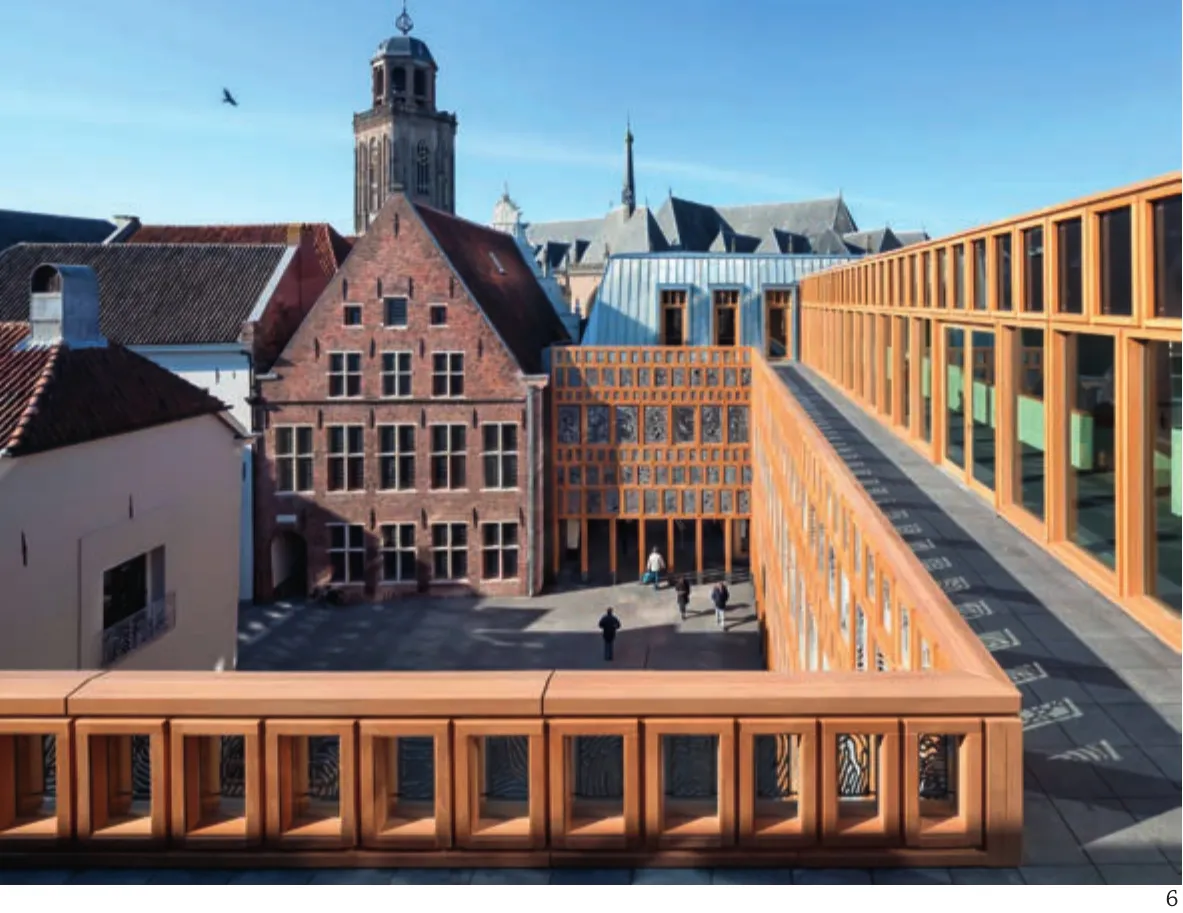
6 代芬特爾市政廳,諾特靈·里代克建筑師事務所設計,2016/Deventer City Hall, Deventer, 2016, Neuteings Riedijk Architecten(圖片來源/Source: https://www.neutelings-riedijk.com/cityhall-deventer)
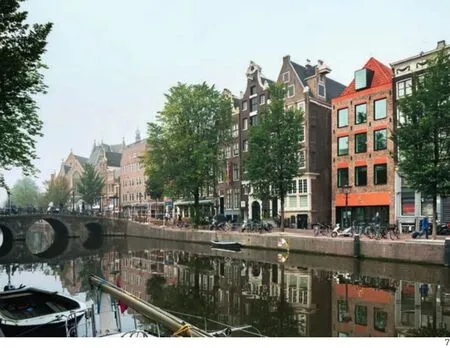
7 阿姆斯特丹翁斯運河博物館,菲利克斯·克勞斯-迪克·范·瓦格寧根建筑事務所設計,2015/Museum Ons' Lieve Heer op Solder, Amsterdam, Felix Claus Dick van Eageningen Architecten,2015(圖片來源/Source: http://www.clausvanwageningen.nl/en/museum-ons-lieve-heer-op-solder-amsterdam/1/)
似乎設計競賽和設計采購的文化緩和了“超級荷蘭”的銳氣。把一個概念推向極致的做法幾乎不可能中標,所以設計理念會傾向于更有節制的做法,或至少是更現實和更有助于實現建設目標、且能為環境所承受的設計手法。然而,這種出于獲得工作機會目的的商業化手段仍然和恭敬順從的做法截然不同,實際上,可以認為這是一種最有助于實現功能的理想方式——它以一種用呈現出的建筑自身講述其功能的方式來進行表現,建筑形式不是空洞的隱喻,而更像是令人心悅誠服、娓娓道來的過程。
在荷蘭,到處都是歷史建筑。常常整個歷史中心、城鎮或村落都被列為歷史遺跡,并有專門的保護條例予以保護。它產生了包括從修復建筑師到建筑考古學家等的一整個專業領域。這些專家總是在為各種項目提供咨詢,卻鮮見他們自己拿出什么令人耳目一新或前所未有的解決方案。激動人心的構思總是來自于不經常接觸建筑遺產的建筑師。如諾特靈-里代克建筑師事務所就是這樣。他們以建筑的表達方式久負盛名,建造了像鹿特丹航運學院這樣的建筑,它有潛望鏡一般的造型,面朝大海矗立;還有一座代芬特爾市政廳,其中容納了所有的必要設施,并以十分微妙的方式和歷史中心的“舊城區”融為一體。擴印在玻璃窗上的指紋圖案象征著本土社區在設計過程中的參與和共同認可。
克勞斯–范·瓦格寧根建筑事務所的菲利克斯·克勞斯則在阿姆斯特丹舊城的歷史核心區某條小巷的街角建造了一座新的運河建筑。它的地下室和另一座運河建筑相連通,也就是著名的17世紀秘密教會、現在的閣樓教堂博物館。這座新建筑實際上是這座博物館的擴建工程,根據其所處環境進行了特殊的設計——它有許多和歷史上的運河建筑相關的裝飾,卻仍表現為當代的建筑形式。這個建筑事務所也負責國家軍事博物館的設計;這座博物館位于蘇斯特貝赫,依偎在一處前空軍基地場地上低矮的沙丘之中。相比起阿姆斯特丹的歷史建筑,它看起來更像是芝加哥的會議中心。屋頂結構是跨度為250m×110m的鋼桁架結構,沿著四周懸挑伸展出墻面,其中一側懸挑深達45m。室內沒有立柱,開闊的空間容納了各種戰斗機,看起來好像一組進攻陣容。
最近建成的風格獨特的建筑還有更多,數不勝數。它們的獨特之處或在其范圍、創意和精巧程度,或在其可持續的設計、概念化的表現和設計深度,或甚至因為它們同時綜合了上述這些特點。阿納姆設計的劇院就是這樣的案例,阿納姆市音樂廳“樂之韻”是格爾德蘭交響樂團的常駐音樂廳,由范東恩-科舒奇建筑和規劃設計公司設計。舞臺后面的玻璃幕墻讓觀眾能夠一覽音樂公園的美景。幕墻能夠自由伸縮打開,讓公園也被拉進劇院,為圍觀的游客提供觀演空間。
最后,讓我以位于布雷達的兩個表現功能主義的案例作為結尾,因為這兩座建筑毗鄰而建,且都很值得探訪。羅布·霍茨曼斯設計的法院大樓預示著這片跨越鐵軌區域的嶄新未來。這座大樓對使用者非常友好,易于普通人理解,也是對法制的歌頌。為法院工作人員和當地居民設計的公園一直延伸到供法院使用的地面停車庫位置。而法院的訪客則可以把汽車停放在候車站旁邊的一座構筑物里,它由科恩·范·維爾森設計,跨越了鐵軌和當地的公交車站。這個建筑綜合體朝向市中心的一面由底層設置了公共便民設施的公寓樓構成,這也是鳥瞰公交車站的第二個側面——而這個車站是該地區游客到達的集散點。這座多功能的建筑綜合體從里到外形成了許多縱橫交錯的視線連接關系,各層都種有樹木作為點綴。彩色的釉面磚在磚墻內部形成了線條和平面圖案,表現得好像是一座歷史建筑,經歷了幾世紀之長的翻新和修復過程。□
The Super Dutch storm – a second Modernism that blasted over the flatlands of the Netherlands –has settled. Neither the concept, as defined by Bart Lootsma, nor the subsequent guiding ideology has lost their significance, but among the more conceptual architects it's being used for more pragmatic effect.It's less inflated. It appears that Winnie Maas with his firm MVRDV is an exception. He is marching valiantly forth with conceptualism, in Taichung (Taiwan)and other places around the world, but especially in Rotterdam. His Market Hall in an envelope of apartments has been praised as an exemplar of entrepreneurial drive. It might be appropriate in this case to coin this Super Roffa. Roffa is street slang for Rotterdam. More Super Roffa can be found in the Art Depot of the Boijmans Van Beuningen Museum currently under construction: a "bowl" of concrete to be fully clad in mirrored glass. All that remains of the Museum Park will now be mirrored, so that this spot will stay green.
It seems that the culture of competitions and procurement has softened some of the sharpness of Super Dutch. Pushing a concept to its extremities rarely wins the prize, so design ideas tend to be more restrained, or at least more practical, and more supportive of the purpose of the building and the environment that is to host it. However, such a business-like approach, grounded in the acquisition of jobs, is still miles away from deferential compliance and, in fact, can be seen to facilitate the goal of optimal functionality – optimal in the sense as presented in architecture that tells the story of its functionality, and there is no hollow rhetoric, but rather a persuasive narrative in its forms.
The Netherlands is full of historic buildings.More often than not entire city centres, towns and villages have been listed and fall under the protection of specific conservation rules. This has produced a whole field of expertise, from restoration architects to building archaeologists. These experts are always consulted on projects, but rarely do they come up with surprising or unexpected solutions.Exciting ideas tend to come from architects not usually associated with built heritage. Neutelings Riedijk Architects, for example. Well-known for their architecture parlante, they have produced buildings like the Shipping and Transportation College in Rotterdam, built in the shape of a periscope facing the sea, and a City Hall with all the necessary services, subtly integrated as an "urban quarter" in the historic heart of Deventer. Enlarged fingerprints on glass squares represent the local involvement and consensus in the design.
In the historic heart of old Amsterdam Felix Claus of Felix Claus Dick van Wageningen created a new canal house on the corner of an alleyway. It is connected underground to another canal house, the famous 17th-century clandestine church, known as the Museum Ons' Lieve Heer op Zolder. The new structure, in fact a museum extension, is specifically tailored to this environment: it has many of the trappings associated with old canal houses, but still manages to present itself in a contemporary way. The same architecten was responsible for the National Military Museum, nestled into low-lying dunes on a former air base in Soesterberg. This building looks more like a convention centre in Chicago than an old building in Amsterdam. The roof is a 250-by-110-metre structure of steel trusses, projecting over its four walls – with a cantilever on one side reaching 45 metres. The interior is free of columns and the open space houses fighter jets in what looks like an offensive formation.

8 布雷達法院,保羅·德勒伊特建筑事務所,塞維爾·皮奇&卡勒斯+布蘭茲設計,2018/Courthouse, Breda, Paul de Ruiter Architects, Sevil Peach & Karres + Brands, 2018(圖片來源/Source: https://www.hootsmans.com/#courthouse-breda/1)
Many more exceptional buildings have been built recently. They are exceptional because of their scope, originality, ingenuity, sustainability,conceptual or design depth, or even because they are a combination of these, such as the case for Arnhem's theatre, Musis Sacrum, home of the Orchestra of Gelderland, which were built by Van Dongen-Koschuch Architects and Planners. The glazed wall behind the stage offers the audience a splendid view onto Musis Park. This retractable wall can be opened so that the park, is drawn into the theatre as well, making space for spectators.
Finally, since they stand next to each other and are worth a visit, let me close with two last examples of expressive functionalism in Breda. The Courthouse by Rob Hootsmans heralds the new future of the area across the tracks. It is a userfriendly building, easily understood by the general public, and an ode to the rule of law. A park for courthouse workers and local residents stretches over an above-ground parking garage for courthouse use. Visitors to the Courthouse can park next to the train station in a structure built by Koen van Velsen that arches over the tracks and regional bus station.Apartments with ground-floor public amenities define the face of the complex towards the city centre and a second face overlooks the bus station –the point of arrival for regional travellers. The multifunctional complex has horizontal and vertical sightlines throughout, and trees furnish various storeys. Glazed tiles of different colours create lines and planes within the brickwork, as though it were a structure that has undergone centuries of renovations and restorations.□
猜你喜歡
北方建筑(2021年6期)2021-12-31 03:03:54
文苑(2020年10期)2020-11-07 03:15:36
現代裝飾(2020年7期)2020-07-27 01:27:42
現代裝飾(2020年6期)2020-06-22 08:43:12
現代裝飾(2020年4期)2020-05-20 08:55:08
流行色(2020年1期)2020-04-28 11:16:38
藝術啟蒙(2018年7期)2018-08-23 09:14:18
海峽姐妹(2017年7期)2017-07-31 19:08:17
Coco薇(2017年5期)2017-06-05 08:53:16
福建農業科技(2016年10期)2016-03-07 09:46:49
