平行觀察 [貳]
2019-02-13 23:05:14張利ZHANGLi
世界建筑 2019年3期
關鍵詞:建筑
張利/ZHANG Li
本期《世界建筑》是我們對熱帶(包括部分亞熱帶)亞洲當代建筑觀察的第二部分。這一次我們聚焦于“某些”國家:新加坡、馬來西亞、泰國、越南和印度尼西亞。
與第一部分以斯里蘭卡和印度為代表的研究相比,我們此次所面對的地帶與海運貿易的關系更加密切,也更受典型熱帶雨林氣候浸染。出于這些原因,這里的聚居空間原型本身就有著對通透和架空的訴求。這一類型學的基因經過長久的進化,形成了一種更具滲透性和混雜性的特質。
同時,這一地帶也對“去殖民化”持有更加輕松的態度,也接受一種更多樣化的身份認同方式。這在與周邊地區的對比下清晰可辨,是有其背后的地理/歷史原因的:馬來王國的多公國聯合傳統(近期呈現為由多州構成的聯邦君主政體);新加坡在英殖民后的數年內先入馬來再行獨立的建國道路;越南和泰國在歷史上與它們的北方強大鄰國的長久瓜葛使它們的殖民時期相形見絀;以及印度尼西亞國土所擁有的排名全球所有主權國家首位的島嶼總數。包容與多樣性,即使并非刻意,也是我們這個時代值得贊譽的特征。實際上,當亞歷山大·楚尼斯創造“批判的地域主義”一詞——后來被肯尼斯·弗蘭姆普頓所采用時,該詞的含義略有不同——時,他所關注的 “真正的亞洲”的代表,確實有相當一部分是來自這一地帶的。
作為獨立的城市國家經濟的成功典范,新加坡的影響力遠超其微小的國土面積所給人的認識。事實上,幾乎從建國以來,新加坡一直是城市發展的范本。社會住宅與建筑的氣候適應性很快就使這個國家在成立之初就跨越了建筑的紀念性與國際式的誤區。如果說資本的集中和熱錢的涌入導致了世界上其他地區屢見不鮮的擁塞不堪與城市惡化,新加坡似乎躲過了這一魔咒。通過規劃巧妙地控制密度,新加坡以其城市作為一個持續的發展項目,展現了值得用“健康”一詞來形容的連貫的發展進程。進入21世紀以后,這個“健康”的發展項目已經轉向對可持續性的更大關注。當然,其中難免會一些雜音,比如濱海灣的那些光怪陸離的物事,但不可否認的是,新加坡國立大學新設計與環境學院四教和綠洲露臺兩個案例所詮釋的主流新加坡方式,既引人注目,又令人向往。
馬來西亞的啟發性則來自于另一方面。文化、宗教和政治形態的豐富性和復雜性,不僅使吉隆坡這樣的城市成為亞洲最具多樣性的都市之一,也為馬來西亞建筑師提供了反思式設計干預的優渥基礎。其中有需要解讀的意義,有層次與深度。在馬來西亞的當代建筑中,經常看到一些乍看之下令人費解的空間處理方法,在深入閱讀體驗之后方能心領神會。從吉隆坡C住宅這樣的私人住宅,到莎阿南PKNS總部這樣的大型綜合體,這種多樣性和復雜性跨越了不同的建筑類型和尺度。
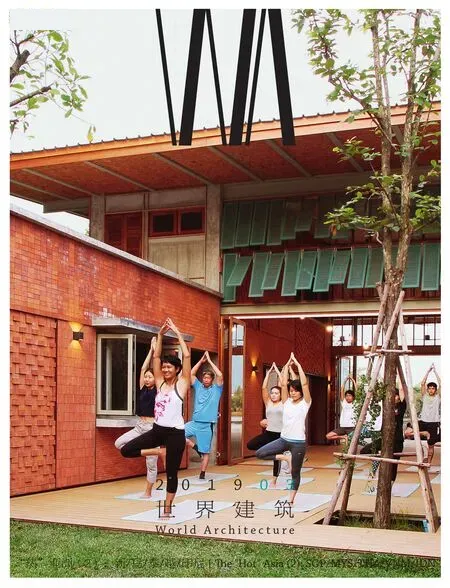
也許并非顯而易見,但當代泰國建筑的輕松與樂觀與其深厚的佛教文化脈絡有著毋庸置疑的內在聯系。在最近的很多國際展覽和競賽中,來自泰國的項目一次又一次給評委與觀眾留下深刻印象,不僅因為它們拼寫復雜和發音困難的名字,更因為它們簡單清晰且無可挑剔的概念。有時會是冷靜的沉思,就像在大城酒府中;有時則是具有富于創造性的自發秩序,就像在曼谷康芒斯商場中;有時則是純粹的嬉戲甚至令人忍俊不禁的幽默感,譬如在曼谷的薩拉阿麗雅瑜伽學校與住宅中。
這一地帶的另一現象是,在近期的越南和印度尼西亞涌現的一些最令人興奮的當代鄉土實驗,正在撼動已有的、關于亞洲當代建筑的論述。這些設計項目通常針對半城半鄉的環境,有著相對寬泛模糊的功能,給了年輕的越南和印度尼西亞實驗建筑師足夠的施展空間。它們通常以抽象的準柏拉圖式幾何形式開始,然后進行自我指涉、迭代的空間操作,最終通過本土材料和空間語匯來完成與場地的緊密結合。在像河南的S空間和廣南的橙青社區中心這樣的項目里,屋頂結構中的編織提供了魅力的來源;而在像萬隆的比馬圖書館和南雅加達的薩利哈拉藝術中心這樣的項目中,立方墻壁體積中的豐富質感則使建筑具有了一定的特色。
需要再次重申的是,我們相信對熱帶(包括部分亞熱帶)亞洲建筑的已經發生和正在發生的進展的平行觀察,是我們的一個重要靈感來源。這并不在于他們采取的什么解決方案,而在于他們是如何找到這些解決方案的。
特別感謝謝玉華女士和她的助手,她們的努力使本期專輯成為可能。□
This WA issue is the Part II of our investigation into the contemporary architecture of tropical (and some sub-tropical)Asia. This time, we focus on a "handful" of countries: Singapore,Malaysia, Thailand, Vietnam and Indonesia.
Comparing with Part I of this study, in which Sri Lanka and India were featured, here we are facing a regional strip that is more engaged in maritime trade and is more immersed in rainforest climates. With the intrinsic demand of settlement spaces that are more open and more lifted from the ground, a typological gene has long evolved which is more permeable, and more hybrid.
A lighter attitude to de-colonisation and a more diverse approach to identity can also be identified, not without geographical/historical reasons: the Malay tradition of the unity of kingdoms (and recently the federal monarchy consisting of multiple states); the founding path of Singapore which includes joining in and then independence from of Malaysia in a matter of years;the bigger-and-longer entanglement with their giant northern neighbour making the colonisation period of Vietnam and Thailand looking brief; and the sheer number of islands in Indonesia which tops the world's list of any sovereign states. Tolerance and diversity, even if not deliberate, are traits to be celebrated in our time nevertheless. Actually when Alexander Tzonis coined the term Critical Regionalism, which was later adopted by Kenneth Frampton with a slightly different connotation, he was eyeing this strip for some of the "truly Asian" representatives.
Being a success story of city-state economy, Singapore's influence is way bigger than anything its tiny footprint may suggest. In fact, almost ever since its foundation, Singapore has been a respectable modelon urban development. Social housing and climate adaptation soon overshadowed monumentality and internationalism in the country's formative years. If the concentration of capital and injection of hot money have caused urbanisms of congestion and deterioration everywhere-else around the world, Singapore seems to have been able to elude this spell. By cleverly addressing density through planning, Singapore, the city as a project, has a continuous evolution that can only be described as "healthy". After the turn of the 21st century, this "healthy"project has moved on to focus more on sustainability. There might be some distractions such as the posh and iconic stuff at the Marina Bay. But the overall Singaporean approach, as interpreted in NUS New Schoolof Design and Environment 4, and the Oasis Terraces, is both remarkable and desirable.
Malaysia inspires in another way. The richness and complexity of its cultural, religious and political formations not only make Kuala Lumpur one of the most diverse Asian capital cities, but also give Malay architects good grounds for reflexive interventions. There are meanings to be decoded. There are layers and depth. There are treatments of space that are confusing at first sight but telling at a closer look, and this happens across building types and scales, from private housing like the C-House in Kuala Lumpur, to cooperate structures such as the PKNS Headquarters in Shah Alam.
Perhaps not explicitly, but implicitly linked to its deep Buddhism root, is the easiness and optimism of contemporary Thai architecture. Time and again in recent exhibitions and competitions, projects from Thailand impress by complicated and unpronounceable names with simple and impeccable ideas.Sometime there is composed contemplation, like in the Wine Ayutthaya. Sometime there is creative spontaneity, like in the Commons Bangkok. Sometime there is sheer playfulness and sense of humour, like in the SalaAreeya Yoga School and Residence in Bangkok.
Carrying on some of the most exciting contemporary vernacular experiments, Vietnam and Indonesia have emerged to shake the existing discourse on Asian architecture. The semiurban, semi-rural setups, and the usually open programmes,give the young and experimental Vietnamese and Indonesian architects enough room to fl ex their muscles. A typical experiment of this type usually starts with an abstract, quasi-platonic geometry, moves on with self-referring, iterative operations, and eventually anchors itself to the site through vernacular material and spatial languages. The fabric in roof structure presents the most charm in projects like the S Space in Ho Nam and the Cam Thanh Community Centre in Quang Nam, while the texture in the cubic walls becomes the character giver in projects like the Bima Microlibrary in Bandung and the Salihara Art Compound in Jakarta Selatan.
Again, we believe looking in parallel at what has happened and is happening in the tropical (and sub-tropical) Asian countries is a great source of inspiration, not in WHAT they have in their solutions, but in HOW they come to find their solutions.
Our special thanks to Ms. Fay Cheah and her assistant, who make this issue possible. □
猜你喜歡
北方建筑(2021年6期)2021-12-31 03:03:54
文苑(2020年10期)2020-11-07 03:15:36
現代裝飾(2020年6期)2020-06-22 08:43:12
現代裝飾(2020年4期)2020-05-20 08:55:08
攝影之友(影像視覺)(2019年2期)2019-03-05 08:27:16
藝術家(2017年3期)2018-01-26 08:54:49
文學自由談(2016年3期)2016-06-15 13:01:16
福建農業科技(2016年10期)2016-03-07 09:46:49
少兒科學周刊·兒童版(2015年6期)2015-11-24 03:49:38
中國工程咨詢(2015年4期)2015-02-14 03:49:56