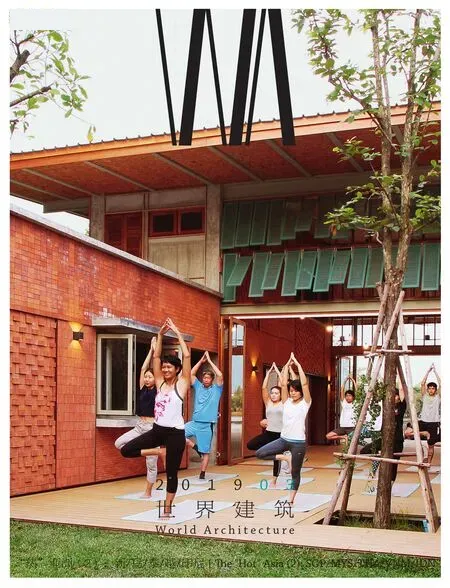
S空間,河南,越南
2019-04-19 07:43:00建筑設計P建筑事務所
世界建筑 2019年3期
建筑設計:H&P建筑事務所
Architect: H&P Architects

1 主入口/Main entrance
“S”:將巖石及棚架保留下來
該項目位于越南河南省東范鎮一個建設密度較高的新興城區,距離一個污染嚴重的大型工業園區不遠。項目為社區提供了一個定期關注文化和藝術活動的開放空間,其中人們在咖啡廳的小聚是一種極為日常的活動。
設計靈感來自于秀麗的金莊國家景區。該景區位于河南和寧平兩省之間,巖石的非法開采正逐漸將這里變成廢墟。從這個角度來看,其設計理念是借廢物利用(將棚架的鋼管再利用,并從金莊景區、貿易村落、建筑工地收集廢棄的巖石碎塊)來表達當地居民對昔日景觀的珍愛、懷舊和惋惜。
設計概念:兩座巖石山脈間的代河峽谷
所謂的“山”是徑自佇立著的片片石墻 (0.4m厚,3.4m高),Z字形錯落著,墻面隨機的留有門洞和開口,使人們可以從各個方向走入。建筑外部由水景和高低錯落的綠植環繞,調節了微氣候,打造了怡人景觀,并模糊室內外邊界,拉近人們與自然的距離。輕型屋頂好像一朵碩大的“云”漂浮在閣樓上,由直徑4.2cm、曾用于結構棚架的鋼管和曾用于屋頂、地板的竹竿共同構成了一個易拆除但又堅固的彈性結構,與下方厚重且錯落的巖石墻體形成了對比。透明PC屋頂蓋層上裝有灑水器與水霧噴灑裝置,用于在炎熱的夏季沖洗屋頂并保持下層空間的涼爽。
“云朵”和“山脈”呈現出一種既簡單又夢幻的景象,與此同時,卻又在使用者步入其上與步入其內時喚起一種奇特的感受:死氣沉沉的金屬森林和被嚴重污染的濃煙正將這座城市逐漸吞噬……
將項目命名為S空間 (S指將巖石及棚架保留下來),是希望此項目能有助于提高人們對越南當今未經計劃就進行的自然資源的開發保持警惕性,這種開發已經將許多具有歷史和文化價值的巖石變得無跡可尋,導致自然生態系統和人類生態系統嚴重失衡。從這個層面上說,該項目所傳達的信息是:“建筑對自然和社會文化環境負有責任”。
□(天妮 譯)

2.3 外景/Exterior views

4 內景/Interior view

5 內景/Interior view
項目信息/Credits and Data
地點/Location: 越南河南省杜天區東范鎮/Dong Van Town,Duy Tien District, Ha Nam Province, Vietnam
設計團隊/Design Team: Doan Thanh Ha, Tran Ngoc Phuong, Nguyen Hai Hue, Nguyen Duc Anh, Tran Van Duong, Trinh Thi Thanh Huyen
建造/Construction: Dong Phat company & Local workers
場地面積/Site Area: 720m2
建筑面積/Construction Area: 300m2
材料/Materials: 石材、棚架、竹材(植物型鋼材)/Stone,scaffolding, bamboo (vegetable steels)
竣工時間/Completion Time: 2018.07
攝影/Photos: Nguyen TienThanh
S: Save the Stone & Scaffolding
Not quite far from a large polluted industrial park, the project is located in a new emerging urban area with a high construction density in Dong Van town, Ha Nam province. This is an open space for the community with its focus on cultural and artistic aspects on a periodical basis, in which coffee space is a daily activity.
The design inspiration comes from the beauty of the national landscape of Kem Trong situated between the two provinces of Ha Nam and Ninh Binh where illegal rock mining is gradually turning this famous place into ruins. From this perspective,the design concept is to make use of waste (reusing scaffolding steel pipes, collecting rock debris from Kem Trong, discarded rocks from trade villages and construction sites) to express the treasure,nostalgia/regret of local people at the bygones of the landscape.
Idea for design: The gap between two rocky mountains created by Day River

6 入口局部/Part of the entrance

7 內景/Interior view
"Mountains" are made of stone walls (0.4m thick, 3.4m high) which stand alone, zigzag intermittently and connect randomly to one another through doors and openings to enable users'approach from various directions. The outer cover is the water surface; with green trees alternating in various positions on different facades to regulate microclimate, create scenery and blur the outerinner boundaries, bringing people closer to nature.Suspended above is a "big cloud" consisting of lightweight roofs and mezzanine floors created by the continuous transfer of steel pipes (d=4.2cm,previously used as construction scaffolding) together with bamboo sticks (roofing, flooring), allof which make a fragile but solid, elastic structure - in contrast to the thickness and tortuousness of the rock cave beneath. On top of the transparent polycarbonate roo fi ng are sprinkler & mist sprayer to wash the roof and keep coolon hot summer days.
"Clouds and Mountains" present primitive and dream-like images but at the same time evoke strange feelings for experience on and within: dead metal trees and heavy polluted smoke are gradually swallowing the town.
Named as S Space (S=Save the Stone & Scaffolding),the project helps raise alert at unplanned exploitation of natural resources in Vietnam today, which have wiped out many rocks with historical and cultural values, resulting in a serious imbalance between the natural ecosystem and the human one. In this sense,the message S Space conveys is: "architecture bears responsibility for the natural and social-cultural environment".□

8 軸測/Axonometric drawing

9 首層平面/Ground floor plan

10 屋頂/Roof
評論
宋曄皓:S空間更像是一個具有藝術屬性的裝置。從命名到概念的實現只有一個主題,那就是喚醒人們保護環境的意識。任何一個接觸到這座建筑的人都會直覺地感受到兩種不同的元素:厚重的石墻和輕盈的屋頂。這個恰恰是建筑師想要人們體會到的。隱喻則是墻體石材主要取自被破壞的山體廢墟,而看上去和竹子一樣的腳手架,同樣是一種工業文明的產物。從這一點看,建筑其實已經具有了藝術裝置的特征,所有的材料和工法,甚至建筑功能,都是為了隱喻而服務。
Comments
SONG Yehao: S Space is more like an artistic installation.From the naming to the realisation of concepts, the only theme to arouse people's awareness of environmental protection is manifest. Anyone who reaches the building will intuitively feel two different elements: thick stone walls and light roofs. This is exactly what architects want people to realise. The metaphor is that the wall stones are mainly drawn from the ruins of the destroyed mountains, and the scaffolding that looks like bamboo is also a product of industrial civilisation. From this point of view,architecture already has the characteristics of artistic installation.All materials and techniques, even architectural functions,contribute to the metaphor. (Translated by CHEN Yuxiao)

11 墻面由碎鋅片以及貿易村和建筑工地的廢棄石頭砌成/Wall segments made of Kem Trong debris and discarded stones from trade villages and contruction sites

12 閣樓內景/Interior view of the mezzanine
鐘冠球:該項目更像是一個景觀建筑,在現存城市建筑圍合的剩余用地中,創造一個開放空間。建筑如圖解一樣很清晰地分成“(較重的)基座+(較輕的)屋頂”:基座是以片墻的形式,構建出重疊的游覽體驗,穿堂風經過水面帶來降溫效應;用腳手架支撐起來的屋架結構能讓人在其中穿行,聚碳酸酯屋面及竹子吊頂給室內帶來合適的光線。建筑有意思的是屋頂做了噴淋噴霧器,能降溫和清洗屋面,另外墻體飾面用了當地深灰色的有特殊印記的巖石廢料。需要質疑的是腳手架屋面是工匠經驗的呈現還是經過嚴謹力學計算?能否抵抗當地臺風的襲擊?
ZHONG Guanqiu: This project seems more like landscape architecture. It created an open space on a remaining enclosure which is surrounded by existing urban buildings. The architecture, as depicted in the diagram, is clearly divided into "foundation support (heavier) + roof top (lighter)". Firstly, its foundation brings a sense of layers for visitors in the form of slice walls, while the air going across the water creates cooling effects. Secondly, scaffoldingsupported roof structure allows people passing through, and the polycarbonate roof covering and bamboo suspended ceilings provide the interior with appropriate light. Interestingly, sprayers have been installed on the roof, which can help to both lower the temperature and clean the roof covering.Furthermore, the wall-facing employed the local dark grey waste rocks with special impresses. The question arises of whether the scaffolding roof is a result of craftsmen's experience or based on precise mechanical calculations. Can it protect the building from typhoons in the local area? (Translated by WANG Dandan)
猜你喜歡
建材發展導向(2022年10期)2022-07-28 03:04:16
北方建筑(2021年6期)2021-12-31 03:03:54
建材發展導向(2021年20期)2021-11-20 05:43:16
建材發展導向(2021年6期)2021-06-09 05:57:02
小學生學習指導(當代教科研)(2021年6期)2021-05-23 13:24:48
文苑(2020年10期)2020-11-07 03:15:36
現代裝飾(2020年6期)2020-06-22 08:43:12
現代裝飾(2020年4期)2020-05-20 08:55:08
新課程研究(2016年2期)2016-12-01 05:53:17
西安建筑科技大學學報(自然科學版)(2016年5期)2016-11-10 02:39:20