Dilemma and Direction of the “Localization” and “Internationalization” of Ethnology and Anthropology in China
2019-07-19 05:55:45HaZhengli,LiuZhanyong
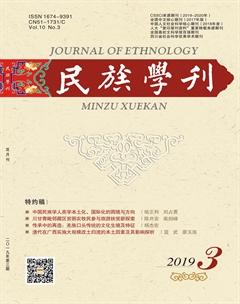
民族學刊 2019年3期
Ha Zhengli, Liu Zhanyong
Abstract:During the 1990s, the “localization” of ethnology ?and anthropology in China became a hot topic for scholars at home and abroad. In the process, although Chinese scholars did not use the concept of “localization”, in general, they all advocated studying and using Western theories and methods critically, and combining local materials to make theoretical innovations, and establish the discipline as China's own or as one with Chinese characteristics. This was done so as to make a contribution ?to the international anthropological community, and move Chinese anthropological research from the periphery to the center of the international academic community. This way of thinking appeared earlier in the 1930's when the discipline was being formed, and, appeared again in the 1980's when the discipline was being reconstructed, Foreign scholars harshly criticized the “localization” of anthropology in China. They felt that Chinese anthropology focused only on providing information, and training excellent students, but that the discipline lacked the concepts, theories, methods, viewpoints, i.e. topics of common concern that provided universal commonality. Nonetheless, ?foreign scholars admitted that anthropology in China had made certain achievements, and formed its own characteristics, and they were, in fact, full of expectations for the future development of anthropology in China. However, during the 1990s, on the basis of the discussions and ideas formed during the 1930s and 1980s, the marginalization of Chinese anthropology still remained unchanged, which can be seen from the arguments repeated by many domestic anthropologists at that time. Based on this, this article believes that even after ten years of reconstruction of the discipline, an academic foundation for the discussion of the localization of anthropology in China is still lacking. The discussion of the “localization” of anthropology should be based on the practical facts of China, and should be carried ?out with selfreflection on the construction of the discipline based upon the perspective of ontology, epistemology, methodology, and ethnographic texts.
The concept juxtaposed with of localization is internationalization. However, in the discussion of the localization of anthropology in China during the 1990s, the relationship between the two did not receive the attention of scholars, especially from the perspective of epistemology and methodology. To discuss the issue of the localization and internationalization of anthropology in China, two points must be clarified. Firstly, localization does not mean “Sinification”. The trend of “localized ” research that has appeared since the Second World War was not meant to construct a social science of a country's own, but to promote the common development of international scholarship. Secondly, internationalization is not “Westernization”. After the Second World War, with the deconstruction of the former Western social sciences tradition, the differentiations within the academic world, and the development of the localization trend in the third world, how to establish an international social science also became an issue that the Western academic community could not avoid. In addition, no matter whether in the West or in the East, anthropology develops its own form, undergoes different practical processes, and forms a regional academic tradition. Therefore, there is not a clear international standard in the pursuit of “internationalization”. As far as the internationalization of anthropology in China is concerned, it is neither a confrontation with localization, nor a convergence with or rejection of Western scholarship. Instead, it means to use Western theories and methods proficiently, begin from the local realities of China, and be based on the common norms of disciplines.
The localization and internationalization of anthropology in China is the product of cultural exchanges between the East and the West. Domestic scholars generally believe that in order to realize the localization and internationalization of anthropology in China, it is necessary to strengthen international academic and cultural exchanges. However, most views only emphasize the influence of external political and social environmental factors, and few people pay attention to the restrictions of the discipline itself, i.e. the lack of consensus on the subject of ontology. In many aspects, Claude Levi-Strauss provides a good interpretation of the ontology of anthropology, including it is the study of the diversity and changes of human culture; and the pursuit of balance and coordination of cultural unity and particularity; It has the characteristic of social “estrangement effect”; it pays attention to the problems of frontier faced by human beings; it does not restrict itself to the study of faraway, ?smallscale communities, ?but can also carry out research on the phenomenon of “the effect of estrangement” in the researchers'?own society. These arguments can promote our understanding of the attributes, characteristics and goals of anthropology, and can promote the localization and internationalization of anthropology in China by strengthening cultural exchanges between the East and the West - the common view shared by anthropologists at home and abroad, for example, Claude Levi-Strauss, Immanuel Wallerstein and Fei Xiaotong among many. Of course, this kind of communication and dialogue must be a real interaction, including both academic and cultural. In short, in order to realize the common development of localization and internationalization of anthropology in China, we must rely on true, full and equal cultural exchanges, and respect the norms of social science research. Only then can we realize the “Chinese era of anthropology”.
Key Words: Chinese anthropology; discipline construction; localization; internationalization
References:
Claude Levi-Strauss.jiegou renleixue (Structural Anthropology I). Zhang Zujian,transl. Beijing: zhoangguo renmin daxue chubanshe, 2006, p. 400.
Immanuel Wallerstein. kaifang shehui kexue—chongjian shehui kexue baogaoshu (Open the Social Sciences:Report of the Gulbankian Commission on the Restructuring of Social Sciences). Liu Feng, transl. Beijing:shenghuo xinzhi dushu sanlian shudian,1997,p. 85.
Stephen Feuchtwang. zhongguo renleixue: ziwo piping,qier yinjie tiaozhan (Chinese Anthropology: Self-criticism against the Challenge).In ?Journal of Guangxi University for Nationalities, 2002(1)
Peng Ke.bentuhua:zhongguo renleixue zhuiqiu xin de guanlian yu pingdeng celue ( Localization: The Strategies of Pursuing New Relevance and Equality of Chinese Anthropology). In Journal of Guangxi University for Nationalities, 1999(4)
Wang Mingming. shehui renleixue yu zhongguo yanjiu (Social Anthropology and Chinese Studies).Shanghai:sanlian shudian , 1997, p. 102
Wu Wenzao. shehuixue congkan zongxu (The General Preface of Sociology Series). In Lin Yaohua, liangshan yijia(The Yi in Liangshan), Shanghai:shangwu yinshuguan, 1947.