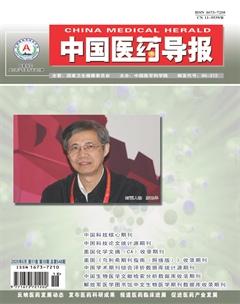
卒中相關睡眠障礙發(fā)病機制研究進展
2020-07-27 16:29:37王莉徐波顏丙春
中國醫(yī)藥導報
2020年18期
王莉 徐波 顏丙春
[摘要] 腦卒中是全球致殘和死亡的主要原因。我國是腦卒中負擔最重的國家之一,死亡率遠超北美。睡眠障礙是腦卒中后常見并發(fā)癥之一,據報道其發(fā)病率為76%~82%。卒中和睡眠互為因果,睡眠障礙(包括睡眠障礙性呼吸異常、運動障礙及睡眠異常)與并存的腦血管疾病密切相關,嚴重影響腦卒中后患者神經功能恢復及生活質量,甚至誘發(fā)或加重卒中的風險因素,導致卒中復發(fā)。對睡眠障礙的治療不僅可以改善睡眠相關癥狀,也可促進卒中的恢復,增加神經細胞之間的聯系,降低未來復發(fā)的風險。識別和解決睡眠障礙應是原發(fā)性和繼發(fā)性卒中預防的一部分。因此,探究卒中相關睡眠障礙的發(fā)病機制,能更好地針對其機制制訂相應預防和治療措施。本文就卒中相關睡眠障礙的發(fā)病機制進行綜述。
[關鍵詞] 腦卒中;睡眠障礙;發(fā)病機制;進展;綜述
[中圖分類號] R743? ? ? ? ? [文獻標識碼] A? ? ? ? ? [文章編號] 1673-7210(2020)06(c)-0045-04
[Abstract] Stroke is the leading cause of disability and death in the world. China is one of the countries with the largest burden of stroke, and the mortality rate is far higher than that in north America. Sleep disorders are one of the common complications after stroke, and the incidence are 76%-82%. Stroke and sleep are cause and effect since sleep disorders (including sleep-disordered breathing, dyskinesias, and sleep disorders) are closely related to co-morbid cerebrovascular diseases, which may seriously affect the recovery of neurological function and quality of life in patients after stroke, even induce or aggravate the risk factors of stroke leading to recurrence. The treatment of sleep disorders can not only improve sleep-related symptoms, but also promote the recovery of stroke, increase the connection between nerve cells, and reduce the risk of future relapses. Identifying and resolving sleep disorders should be part of primary and secondary stroke prevention. Therefore, investigating the pathogenesis of stroke-related sleep disorders can better develop corresponding prevention and treatment measures according their mechanisms. This article reviews the pathogenesis of stroke-related sleep disorders.
[Key words] Stroke; Sleep disorders; Pathogenesis; Progress; Review
卒中相關睡眠障礙指在卒中后首次出現或卒中前已有的睡眠障礙在卒中后持續(xù)存在或加重,并達到睡眠障礙診斷標準的一組臨床綜合征。包括兩種類型:卒中后睡眠障礙和卒中伴隨睡眠障礙(即既往睡眠障礙在卒中后持續(xù)存在或加重)[1]。卒中相關睡眠障礙的類型包括失眠、日間思睡、睡眠呼吸障礙(SDB)、阻塞性睡眠呼吸暫停、中樞性睡眠呼吸暫停或混合性睡眠呼吸暫停、快速眼動睡眠期行為障礙(RBD)、不寧腿綜合征(RLS)等,卒中后睡眠障礙不僅直接影響神經功能恢復,降低卒中患者生存質量,影響認知功能,同時睡眠障礙本身也會增加腦卒中發(fā)生率和復發(fā)率。……
登錄APP查看全文
猜你喜歡
現代儀器與醫(yī)療(2021年4期)2021-11-05 08:25:32
石油瀝青(2018年6期)2018-12-29 12:07:04
NBA特刊(2018年21期)2018-11-24 02:47:52
中國實用醫(yī)藥(2016年24期)2016-10-17 06:05:29
中國實用醫(yī)藥(2016年24期)2016-10-17 05:56:32
中國實用醫(yī)藥(2016年24期)2016-10-17 05:47:48
中國實用醫(yī)藥(2016年24期)2016-10-17 05:30:14
功能高分子學報(2016年1期)2016-04-26 01:39:05
疑難病雜志(2014年12期)2014-04-16 05:19:34
江蘇年鑒(2014年0期)2014-03-11 17:09:58