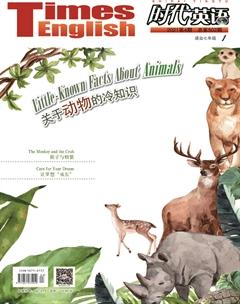
關于動物的冷知識
2021-03-26 09:19:33
時代英語·初中 2021年1期
關鍵詞:動作
1. Giant pandas dont have set sleeping areas. They just fall asleep wherever they are.
大熊貓沒有固定的睡覺地點。它們會在任意所處的位置睡著。
2. Mice can sense sadness in other mice. And it makes them sad too.
老鼠能察覺到其他老鼠的悲傷的情緒,這會讓它們也感到悲傷。
3. Birds that run into windows are often attacking their reflection.
鳥類撞上窗戶玻璃大多是因為攻擊自己的
影像。
4. Arctic foxes dont shiver until its -70°C.
北極狐在零下70攝氏度的環境中才會發抖。
5. Dik-diks mark their territory with their tears.
迪克小羚羊用眼淚來標記自己的領地。
6. Blue sharks bite each other to show romantic interests.
大青鯊用咬噬對方的方式示愛。
7. Bumblebees have trouble recovering from stress without sugar.
大黃蜂不吃糖很難緩解壓力。
8. Anything a duckling meets 10 minutes after its born becomes its parent.
小鴨子把出生10分鐘后看到的任何東西當作自己的父親或母親。
9. Chicken can be startled to death.
雞可能會被驚嚇致死。
10. Humans cant hear most sounds that elephants make.
大象發出的絕大多數聲音人類都聽不見。
11. Rhinos make a squeaking sound to call for their friends when theyre lost.
犀牛迷路時會發出尖銳刺耳的吱吱聲,以吸引其他同伴。
12. Lone marmots live longer.
獨居的土撥鼠壽命更長。
13. Baby whales gain 200 pounds a day.
幼鯨一天就能增重200磅。
14. Sheep can remember about 50 faces.
綿羊大約能記住50張臉。
15. Hedgehogs always have wet noses, and are always sniffing.
刺猬的鼻子總是濕的,所以它們總是抽鼻子。
Vocabulary
set adj. 確定的;固定的
sense v. 感覺到;察覺到
attack v.襲擊;攻擊(attacking是動詞的-ing形式,表動作正在進行)
shiver v. 顫抖,哆嗦
territory n. 領地,地盤
stress n. 精神壓力;心理負擔
startle v.使驚嚇;使受驚(startled是過去分詞形式)
lone adj. 單獨的;獨自的
gain v. 增加;增長
sniff v.抽鼻子(sniffing是動詞的-ing形式,表動作正在進行)
猜你喜歡
作文周刊·小學一年級版(2022年16期)2022-05-07 11:28:30
作文周刊·小學一年級版(2021年8期)2021-07-07 11:00:47
動漫界·幼教365(大班)(2021年4期)2021-05-23 21:33:16
小學生作文(低年級適用)(2018年3期)2018-04-17 00:58:35
少年博覽·小學低年級(2017年4期)2017-06-09 16:22:28
作文周刊·小學一年級版(2016年28期)2017-06-03 00:28:49
作文評點報·低幼版(2017年7期)2017-03-11 20:49:41
少兒科學周刊·少年版(2015年4期)2015-07-07 20:56:37
電影故事(2015年30期)2015-02-27 09:03:12
七彩語文·低年級(2014年10期)2015-01-14 14:46:27