Personal Statement
2014-04-29 00:44:03
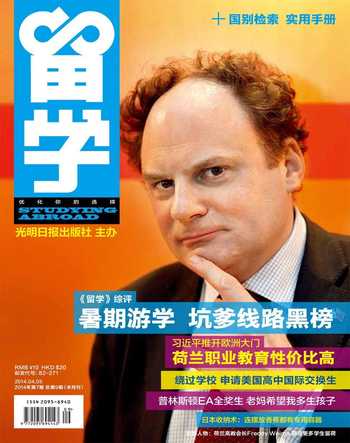
留學 2014年9期
該文書作者已收到美國南加州大學制片人專業的錄取通知
“Young man, you have a brilliant future in front of you at Beijing TV. Thousands of your peers only dream of directing their own show.” Every single word my supervisor said was absolutely true, but I handed in my resignation anyway.
My decision was not driven by a sudden impulse. Working at BTV simply would not lead to the realization of my career goal of producing thought-provoking feature films about important social issues. My best path is to pursue a Master of Fine Arts at The Peter Stark Producing Program at the University of Southern California and then jump directly into film producing.
My short-term goal after graduation is to work as a creative executive under Zhang Qiang, former Deputy Editor-in-Chief at BTV and a close friend. We have already discussed my joining China Film Group, the largest studio in China, where he is now Vice President. There I would use the finance and marketing skills learned at USC to introduce American movies to China and Chinese movies to the international market. My long-term career goal is to become an international film producer, making commercially-viable movies about social concerns, like my inspiration and mentor Chinese filmmaker Gu Chang wei.
From a young age, I have been passionate about world travel, following the path of grandfather, a geologist who trekked all over China in the 1950s and my father who sailed to the US for school in the 1980s. Drawn to breathtaking scenery throughout my journeys in the US, Australia, UK, Europe and Southeast Asia, I took photos of everything I experienced with my M6. The photo albums faithfully retell my life story.
My zeal for taking photos grew stronger after I enrolled at the Communication University of China in 2006 with a major in Television Photography, designed to cultivate cameramen through photography. As a freshman, I was filled with passion for my studies, hoping to document the record-pace development of China. I wished to create enduring tales about China, which would touch the soul of generations to come. From 2006 to 2007, I became involved in various internships in broadcasting, newspapers, magazines and news as well as artistic photography and gallery work to fully explore my interests in media. Through these experiences, I found my passion for expressing emotion through images.
The greatest moment of my photography career came when the 2008 China International Film Festival granted me a solo exhibition for my autobiographical portfolio. I was the only student who earned an opportunity to display his photography in the space reserved for professional artists. Working with my friend on a film about the exhibition (which later won Best Film at the Shanghai Collegiate Film Festival), I realized that the best way to resonate with my audience was to express my story through video—Photos are decisive moments, but videos tell the narrative over time. There are techniques and skills video can apply, like dialogue and pacing, that still pictures cannot.
From then on I navigated my career path to video making. In 2008, I interned at CNNs Beijing Bureau in television news. The six-month internship enabled me to work with a team of foreign professionals in news production. During the Beijing Olympic Games, I followed tennis matches as a member of the one of the most advanced broadcasting groups in the world, the Beijing Olympic Broadcasting Co. (BOB). At 20 years old, I had the opportunity to film live telecasts for tennis matches with Federer, Nadal and Djokovic with an audience of billions!
In 2009, my professor recommended me as an intern at Hong Kong-based Phoenix Televisions Beijing Bureau. This internship in documentary filmmaking at one of the most influential Chinese broadcasters, lasted for nine months and took me all over China. I remember for one of our assignments, we flew three hours from Beijing to Lanzhou, took a long-distance bus to Tian shui, hitchhiked to town, and walked in heavy rain to the house of Mr. Li, our interviewee. Formerly a popular businessman, his life was ruined after he was misdiagnosed with AIDS, which terrified his fellow villagers. He was isolated, his business failed, and his two sons were forced to drop out of school because of his bankruptcy. He told me he was waiting for death.
Our documentary finally told his story both to our audience and to the Local Health Department. He regained trust and understanding among the villagers even if his psychictrauma would never heal. Mr. Li was one among scores of my interviewees during my time there, all of whom were from disadvantaged groups in society. I filmed the Sensen Orphan Asylum in Chongqing, a forgotten Chinese WWII general in Guangdong who had fought the Japanese, a Taiwanese communist veteran who returned to mainland China only to be treated unjustly as a spy in Beijing... Though my filmmaking techniques were still improving, telling their stories was what was important to me.
At the end of 2009, like thousands of my peers, I applied to work at the prestigious Beijing TV. Winning out against 300 applicants for my position, I finally became a professional cameraman. In four years, I rose from Cameraman to Reporter to Correspondent and finally to Director of the Documentary series Dangan (Archive). Different from the guerrilla filmmaking Id done for Phoenix, these document aries required a 50-man crew and meticulously composed scripts. It usually took us a week just to capture the footage for one episode. To fully understand the historical events presented, I would spend a month researching historical materials and editing draft after draft of the script.
In 2011, I was making rapid advances in my career at BTV, but one meeting changed my trajectory. I met Gu Changwei, an Academy Award-nominated cinematographer (Farewell My Concubine, 1993) and film director, regarded as one of Chinas foremost cinematographers. Meeting through a friend, I was invited to discuss his film Love for Life at his house before it was released. I was shocked by the film because it was partially based on the experience of Mr. Li, the villager I interviewed who was misdiagnosed with AIDS. Love for Life was so powerful that it pushed me to direct my career back towards presenting social concerns about contemporary issues. I wish to produce and make films to arouse social reflection as Mr. Gu does.
I have been trained for a decade to be a cameraman and a documentary director, but never formally to be a film producer. The blind spot for me right now is capitalization and how to monetize artistically viable films in a global market. In comparison to the maturity of Americas film industry, China is just taking off—young but full of energy and promise. To study the American system where it originates, I have made up my mind to apply to the Peter Stark Producing Program.
I am most attracted by how the program is structured, balancing practical courses and internship opportunities, as well as building strong relationships between teachers and students. As an experienced filmmaker in China, I long for more of a background in business, so I am especially interested in the Graduate Film Business Seminar to learn entertainment law and business practices and Scheduling and Budgeting to master preparation of a feature shooting schedule and production budget. The faculty impresses me because they are all also industry professionals who foster a mentor relationship and share their unique expertise with students. The small class and approximate 1:4 faculty-student ratio provides a great environment to learn from their professional experiences. With more international students than any other US university, USC also satisfies my need to study in an international environment.
I truly admire the philosophy that people learn best by doing, which is what I always believed while studying at Communication University of China (CUC) and participating in internships. The program facilitates employment opportunities like summer internships at Hollywood studios or production companies after the first year and evening classes to enable further interning during the second. Before graduation, I will have already gained hands-on experience in the US entertainment industry. The cutting-edge facilities, resource and industry-standard education methods will help me connect school and work. On top of studying producing, there are opportunities to interact with students from majors like Animation or Screenwriting, as well as from the Annenberg School or the Marshall School of Business. The especially tight producing and film alumni network (part of 10,000 USC alumni) will connect me with industry players, an indispensable advantage for a young producer.
If accepted into the Stark Program, I will not only make the most of the above resources; I will try my best to bring my perspective and experiences to it. During my time at the Stark Program, I will reflect on the similarities and differences between the Chinese and Western film industries, bringing a Chinese point of view to the program. With my insight into Chinese society from my various internship experiences at CNN, the Beijing Olympics and Phoenix Television and my work experiences at Beijing Television for over three years, I can provide unique film and TV production insights. I will take advantage of the network I build to connect Starkies from all over the world with my schoolmates and colleagues from CUC and BTV to expand their business opportunities in China, the worlds 2nd largest film market. (本文由萬佳留學提供)
《留學》雜志明星顧問余一笑點評
研究生的PS一般都會涉及到幾點:學生的經歷,選擇所申請專業的動機,所申請學校如何與學生的長短期目標相一致。該篇PS與傳統的PS在文章結構上沒有太大差異,但卻在細節上做足了功夫。開頭至少體現了兩點重要內容:1. 從側面強調申請者有一份很好的工作;2. 引出留學目的以及將來的目標。
一般學生的未來目標簡單而泛泛,但這篇文章中,學生的長短期目標卻非常明確。提到張強和顧長衛也可以體現兩點:1. 學生對自己的未來有著明確的定位;2. 學生的人脈廣,這對于producing的申請者來說是個很好的優勢。之后簡單講述自己的興趣起源,并借足跡遍及諸多國家和地區的描述,側面突出學生的國際視野。
文章的主體部分,詳略得當,選取了幾個具有代表性的經歷詳細展開。從大學期間平面攝影所取得的成就,到符合邏輯地從平面轉向視頻制作,層層遞進地展現自己的專業能力,同時也包括學生的深度思考,尤其是Mr.Li的這個采訪經歷也與后面顧長衛的電影呼應。雖然學生與顧沒有太多的交集,但是一個獲得過奧斯卡提名的人愿意給他寫推薦信,可以給申請加分。談及與顧的接觸如何影響自己的career,在整篇PS中是個邏輯性比較強的亮點。
另外,很多PS的why school部分都寫得比較淺顯,但是該文明顯是對該學校及專業做了些功課,對學校的地理優勢、專業課程的設置等都很了解,也有Starkie這樣對學校來說很有親切感的詞,表現了學生比較強的申請意愿。
(點評人為萬佳留學美國留學金牌顧問)
《留學》雜志明星顧問Leah 張點評
首先,申請者詳盡地介紹了自己的學習經歷,記敘了過往的實習、工作經驗及具體內容,并總結了收獲與感悟。這些不僅可以表明申請者過硬的學術及實踐背景,還可以展現其較強的自我剖析能力。其次,當談及對未來的規劃時,他給自己制定了清晰的短期和長期目標,并闡明了具體理由。這說明他對自身未來的職業發展有著明確的規劃與設計,申請該校并不是盲從之舉。再次,在談及申請學校時,申請人展現出對所選學校和專業的深度了解,這表明其在申請前做了大量的案頭工作。總體而言,這是一份不錯的個人陳述,內容清晰地展現了申請者對自身的認知以及對學校的了解,并有著明確的學習目標和對未來的職業規劃。
這篇個人陳述另一個可貴之處在于它結構清晰、內容明確、段落銜接自然順暢。即:我的經歷是什么-我的夢想和職業規劃是什么-需要實現夢想的元素有哪些-有哪些元素是過往的經歷所不曾提供的-USC為什么剛好能提供給我在實現夢想道路上必須具備的技能-我能為USC帶來什么。這種遞進式的寫作方式不但使得文章結構緊湊,文字引人入勝,還可以明確表達出該學生選擇USC的原因和決心。
很多中國學生在撰寫個人陳述時用流水賬、意識流的文法介紹自己的學習經歷、興趣愛好等等,結果導致文章整體繁冗乏味,缺乏說服力。而本篇作者的聰明之處在于,他沒有一味地圍繞其所獲取的成就展開描述,而是憑借自身的收獲和體會,以感為媒,用平實的語言打動閱讀者,進而使他們“看到”一個積極進取、有著抱負與理想并甘為自己夢想付出汗水的年輕人,在書桌前落筆書寫個人陳述的畫面。這種“情感注入”式的寫作方法能有效彌補以純文字為溝通媒介的文書所帶來的局限性。
(點評人為AIP藝術留學外事總監)
《留學》雜志明星顧問王磊點評
文章一開始就用領導對自己的肯定,自己卻毅然辭職的描述,給招生官留下一個大大的問號,吸引其仔細讀下去。第二段,銜接上文,表述辭職非一時沖動,而是對未來的職業方向有清晰定位,說出自己的Study Motivation。第三段,將自己畢業后的短期目標和長遠目標進行了具體陳述,表達了清晰的Future Goal。第四段,從自小的興趣談起,講述了因深受祖父和父親的影響,用影像記錄多國旅行的事。
第五段,敘述進入中國傳媒大學后的專業學習和校園活動,表明相關Academic Background & Personal Ideas。
六到十一段,申請人描述了自己參加的非常有代表性的社會活動和實習的經歷(其中不乏名人、名機構),表現了申請人杰出的專業能力以及對于行業深刻的認知度,展示強大的Research Abilities & Internship Experiences。
第十二段,申請人筆鋒一轉,將自己的專業盲點一語道破,說明自己申請目標學校專業的關鍵性原因,不但很好地用呼應的方法解答了文章第一段中的相關疑問,也表現了申請者自身清晰的學習目標和行業判斷。
文章最后三段,陳述了自身對于目標院校學術課程的了解及自身的相關專業能力,并假定自身被錄取后所要努力的方向,表現了申請人學習的動力來源,讓招生官通篇讀完之后自然而然地形成一個“舍我其誰”的優秀申請者畫面,起到了畫龍點睛的作用。
(點評人為櫻知葉全球大學部VIP高端申請中心負責人)
猜你喜歡
意林(2021年11期)2021-09-10 07:22:44
作文大王·笑話大王(2021年4期)2021-04-26 19:00:35
電影(2018年9期)2018-11-14 06:57:21
作文世界(小學版)(2018年4期)2018-10-16 17:13:34
快樂作文·低年級(2016年12期)2017-01-03 20:52:44
留學生(2016年6期)2016-07-25 17:55:29
快樂作文·低年級(2016年6期)2016-06-24 18:58:40
小天使·一年級語數英綜合(2016年5期)2016-05-14 12:21:05
小朋友·聰明學堂(2014年7期)2015-01-15 12:07:06
故事作文·低年級(2009年10期)2009-10-20 04:28:46