你閱讀的方式
2018-04-16 15:32:12ByMichaelGrothaus
英語學習
2018年2期
By Michael Grothaus
Its no overstatement that digital mediums have taken over every aspect of our lives. We check what our friends are doing on the glowing screens in our hands, read books on dedicated e-readers, and communicate with customers and clients primarily through email. Yet for all the benefits digital mediums have provided us, there has been a growing body of evidence over the past several years that the brain prefers analog1 mediums.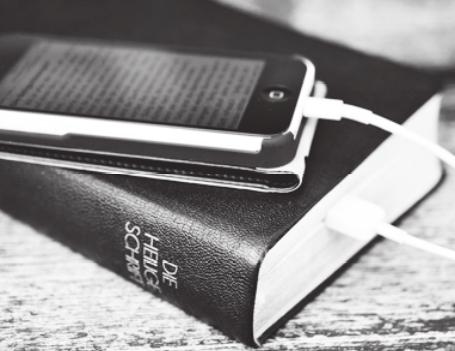
Studies have shown that taking notes by longhand2 will help you remember important meeting points better than tapping notes out on your laptop or smartphone. The reason for that could be that “writing stimulates an area of the brain called the RAS (reticular activating system), which filters and brings clarity to the fore the information were focusing on,”3 according to Maud Purcell, a psychotherapist and journaling expert. If thats the case, and the analog pen really is mightier than the phone, its no wonder some of my colleagues have ditched smartphones for paper planners.
But its not just recording our thoughts on an analog medium that appears to be better for us. Absorbing information from analog mediums now appear to be better for memory retention4, and thus, productivity. In a study conducted by Anne Mangen, PhD, a professor at the Reading Center at the University of Stavanger, Norway, the researcher gave participants the same 28-page mystery story to read either on an Amazon Kindle or in print format. After the participants read the story, they were asked a number of questions about the text.
“We found that those who had read the print pocketbook gave more correct responses to questions having to do with time, temporality, and chronology (e.g., when did something happen in the text? For how long did something last?) than those who had read on a Kindle,” Mangen says. “And when participants were asked to sort 14 events in the correct order, those who had read on paper were better at this than those who had read on the Kindle.”
While this event has yet to be fully investigated and understood by scientists, Mangen, who now chairs E-READ, a European research network of interdisciplinary5 scholars and scientists researching the effects and implications of digitization on reading, says one explanation for the benefit of reading analog books may come down to something called metacomprehension deficit. “Metacomprehension refers to how well we are ‘in touch with, literally speaking, our own comprehension while reading,” says Mangen. “For instance, how much time do you spend reading a text in order to understand it well enough to solve a task afterwards?”
One study revealed that people think they are better at comprehending information when they read it on a digital screen. This resulted in those readers reading the text much faster than those reading the text in paper format. Yet despite spending less time reading the text, the digital readers predicted they would perform better on a quiz about the text than the people who read the text on paper. Yet when the digital and paper groups were tested, the paper groups outperformed6 the digital groups on memory recall and comprehension of the text. They also were closer to their test result predictions than the digital group was.
You Dont Need to Print off Every Email You Get
Books are one thing, but does our brain absorb information better if we read from other physical mediums, like newspapers and magazines? Not necessarily.
“Length does indeed seem to be a central issue, and closely related to length are a number of other dimensions of a text, e.g., structure and layout. Is the content presented in such a way that it is required that you keep in mind several occurrences/text places at the same time?”says Mangen. In other words, she says, complexity and information density may play a role in the importance of the medium providing the text.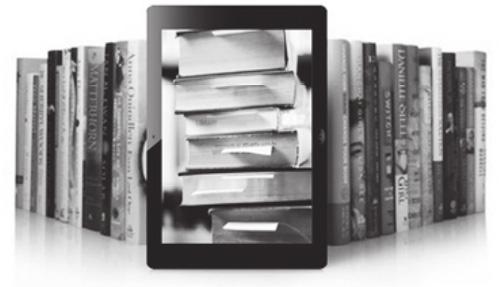
“It may be that for certain types of text or literary genres (for example, page turners7), medium does not matter much, whereas for other genres(cognitively and emotionally complex novels, for instance), medium may make a difference to comprehension or to the reading experience. But this remains to be tested empirically8.”
In other words, unless people are sending you novel-length emails (which they shouldnt be), you dont need to go rushing to the print button, as reading short snippets9 of information on a screen probably doesnt hinder memory retention or comprehension.
Print and Digital Can Coexist Peacefully
With all things regarding the brain and human cognition, Mangen also stresses that it wouldnt be correct to proclaim that information gleaned10 from print is always going to be just as good, if not better, for memory and comprehension than digital.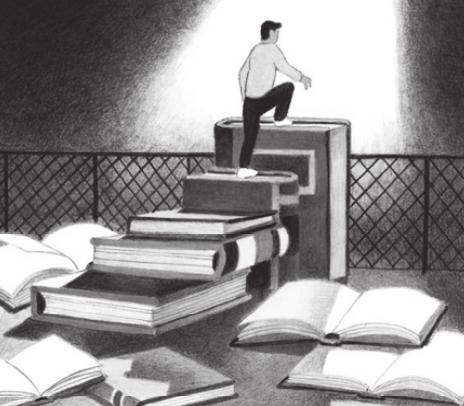
“It is not—and should not be—a question of either/or, but of using the most appropriate medium in a given situation, and for a given material/content and purpose of reading,” she says, and notes that a “good starting point is to keep in mind that all media/technologies (old as well as new) have distinct user interfaces, and that the user interface of paper in some circumstances and for some purposes may support key aspects of reading(retention of complex information) or of study (writing notes in the margins) better than digital devices do.”
But for other purposes of reading, for example, presentations with audiovisual material, Mangen concedes a digital device like a tablet is obviously far superior.11 “There is no one-format/medium-fits-all solution (not even with respect to emails), but it will depend on a number of factors pertaining12 to the content/text, the reader, the purpose of the reading, the situation, etc.,” she says.
Slow Down When You Read Digitally
If you cant bear to give up digital books, you arent out of luck. As the study cited above mentions, like other digital readers, you probably think you are absorbing the information better than you actually are, and thus move through the book faster.
A simple solution to this is to simply slow down and take more time reading the material, and you might absorb the information just as well as those who naturally take longer to read a paper book.
如果說數字媒體已經占據了我們生活的方方面面,這話絕對沒有言過其實。我們通過手中發光的屏幕來查看朋友們的一舉一動,在專門的電子閱讀器上閱讀書籍,而且主要通過電子郵件與顧客、客戶聯系。然而,盡管數字媒體為我們帶來了各種好處,但過去幾年來越來越多的證據表明大腦偏好實物媒體。
研究表明,相比在筆記本電腦或者智能手機上敲敲打打,手寫筆記可以幫助你更好地記住重要的會議要點。其原因可能是“寫作刺激了一個叫做RAS(網狀激活系統)的大腦區域,這一區域將我們正在關注的信息過濾,并使這些信息更加清晰可懂”,心理治療師、記錄專家莫德·珀塞爾解釋道。如果真是這樣的話,那么實物筆確實比手機更加強大,難怪我的一些同事把智能手機丟在了一邊,改用紙質計劃本。
然而,還不僅僅是將想法記錄在實物媒體上對我們而言似乎更好。從實物媒體吸收信息似乎更適合記憶的留存,從而有助于提高生產率。挪威斯塔萬格大學閱讀中心教授安妮·曼根博士進行了一項研究,研究人員讓參與者通過亞馬遜Kindle或是紙質書閱讀同一本28頁的偵探小說。參與者閱讀完畢后,他們會被問到一些關于文本的問題。
“我們發現紙質口袋書閱讀者在回答與發生時間、時間長短和前后順序相關的問題(例如,某事在文本中何時發生?持續了多長時間?)時,相比Kindle閱讀者正確率更高”,曼根稱。“當參與者被要求以正確的順序對14個事件進行排序時,紙質閱讀參與者要比Kindle閱讀參與者表現好。……
登錄APP查看全文
猜你喜歡
英語文摘(2020年5期)2020-09-21 09:26:30
制造技術與機床(2019年10期)2019-10-26 02:48:08
趣味(語文)(2018年8期)2018-11-15 08:53:00
電子制作(2018年18期)2018-11-14 01:48:06
中華手工(2017年2期)2017-06-06 23:00:31
小學教學參考(2015年20期)2016-01-15 08:44:38
中外會展(2014年4期)2014-11-27 07:46:46
小說月刊(2014年4期)2014-04-23 08:52:21
語文知識(2014年1期)2014-02-28 21:59:13
祝您健康(1987年3期)1987-12-30 09:52:32