
迷之自信打哪兒來?
2018-05-22 15:36:02ByKateFehlhaber
英語學習
2018年5期
By Kate Fehlhaber
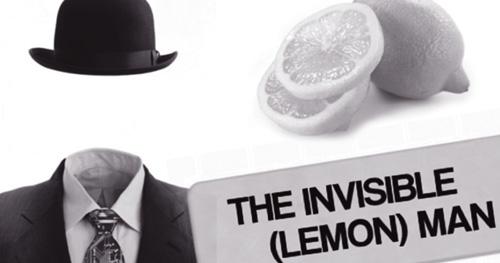
One day in 1995, a large, heavy middle-aged man robbed two Pittsburgh banks in broad daylight. He didnt wear a mask or any sort of disguise. And he smiled at surveillance cameras before walking out of each bank. Later that night, police arrested a surprised McArthur Wheeler. When they showed him the surveillance tapes, Wheeler stared in disbelief. “But I wore the juice,” he mumbled. Apparently, Wheeler thought that rubbing lemon juice on his skin would render him invisible to videotape cameras. After all, lemon juice is used as invisible ink so, as long as he didnt come near a heat source, he should have been completely invisible.
Police concluded that Wheeler was not crazy or on drugs—just incredibly mistaken.
The saga2 caught the eye of the psychologist David Dunning at Cornell University, who enlisted his graduate student, Justin Kruger, to see what was going on. They reasoned that, while almost everyone holds favourable views of their abilities in various social and intellectual domains, some people mistakenly assess their abilities as being much higher than they actually are. This“illusion of confidence” is now called the “DunningKruger effect”, and describes the cognitive bias to inflate self-assessment.
To investigate this phenomenon in the lab, Dunning and Kruger designed some clever experiments. In one study, they asked undergraduate students a series of questions about grammar, logic and jokes, and then asked each student to estimate his or her score overall, as well as their relative rank compared to the other students. Interestingly, students who scored the lowest in these cognitive tasks always overestimated how well they did—by a lot. Students who scored in the bottom quartile3 estimated that they had performed better than two-thirds of the other students!
This “illusion of confidence” extends beyond the classroom and permeates everyday life. In a follow-up study, Dunning and Kruger left the lab and went to a gun range, where they quizzed gun hobbyists about gun safety. Similar to their previous findings, those who answered the fewest questions correctly wildly overestimated their knowledge about firearms. Outside of factual knowledge, though, the Dunning-Kruger effect can also be observed in peoples self-assessment of a myriad4 of other personal abilities. If you watch any talent show on television today, you will see the shock on the faces of contestants who dont make it past auditions5 and are rejected by the judges. While it is almost comical to us, these people are genuinely unaware of how much they have been misled by their illusory superiority.
Sure, its typical for people to overestimate their abilities. One study found that 80 per cent of drivers rate themselves as above average—a statistical impossibility. And similar trends have been found when people rate their relative popularity and cognitive abilities. The problem is that when people are incompetent, not only do they reach wrong conclusions and make unfortunate choices but, also, they are robbed of the ability to realise their mistakes. Instead of being confused, perplexed or thoughtful about their erroneous ways, incompetent people insist that their ways are correct. As Charles Darwin wrote in The Descent of Man(1871): “Ignorance more frequently begets confidence than does knowledge.”6
Interestingly, really smart people also fail to accurately self-assess their abilities. As much as D- and F-grade students overestimate their abilities, A-grade students underestimate theirs. In their classic study, Dunning and Kruger found that high-performing students, whose cognitive scores were in the top quartile, underestimated their relative competence. These students presumed that if these cognitive tasks were easy for them, then they must be just as easy or even easier for everyone else. This so-called “imposter7 syndrome” can be likened to the inverse of the Dunning-Kruger effect, whereby high achievers fail to recognise their talents and think that others are equally competent. The difference is that competent people can and do adjust their self-assessment given appropriate feedback, while incompetent individuals cannot.
And therein lies the key to not ending up like the witless8 bank robber. Sometimes we try things that lead to favourable outcomes, but other times—like the lemon juice idea—our approaches are imperfect, irrational, inept or just plain stupid. The trick is to not be fooled by illusions of superiority and to learn to accurately reevaluate our competence. After all, as Confucius reportedly said, real knowledge is knowing the extent of ones ignorance.
1995年的一天,一名體格粗壯的中年男子在光天化日之下搶劫了兩間匹茲堡的銀行。他沒有戴口罩或是進行任何偽裝,而且在走出每間銀行之前,他還朝著監控攝像頭微笑了一下。當天晚上,警方逮捕了一個名叫麥克阿瑟·惠勒的嫌犯,被捕時他一臉驚訝。當警方向他展示監控錄像時,惠勒難以置信地瞪大了眼睛。“但是我涂了果汁呀,”他嘟噥道。顯然,惠勒認為在皮膚上擦了檸檬汁,攝像頭就拍不著他了。畢竟,檸檬汁被用作隱形墨水,因此只要他不靠近熱源,他應該是完全隱形的才對。
警方得出的結論是:惠勒腦子沒有問題也沒有嗑藥,只是徹底弄錯了。
這個傳奇般的故事引起了康奈爾大學心理學家戴維·鄧寧的注意,他和研究生賈斯汀·克魯格一同對這一現象進行研究。他們認為,雖然幾乎每個人都認為自己在社會和智力各個領域的能力表現不俗,但有些人明顯高估了自己的實際能力。這種“自信的幻覺”如今被稱作“鄧寧-克魯格效應”,指的是自我評估時高估自己的認知偏差。
為了在實驗室研究這一現象,鄧寧和克魯格設計了一些巧妙的實驗。在一項研究中,他們向本科生提了一系列關于語法、邏輯和笑話的問題,然后要求每個學生估計自己的總體成績,以及自己與其他學生的相對排名。有趣的是,那些在認知測試中得分最低的學生總是高估自己——而且高估了不止一點點。得分排在后四分之一的學生估計自己的成績比其他三分之二的學生還要好!……
登錄APP查看全文
猜你喜歡
發明與創新(2022年30期)2022-10-03 08:40:56
作文大王·笑話大王(2021年4期)2021-04-26 19:00:35
動漫星空(興趣百科)(2020年12期)2020-12-12 05:31:40
電影(2018年9期)2018-11-14 06:57:21
作文世界(小學版)(2018年4期)2018-10-16 17:13:34
人大建設(2018年6期)2018-08-16 07:23:10
文理導航·科普童話(2017年5期)2018-02-10 19:42:14
無人機(2017年10期)2017-07-06 03:04:36
快樂作文·低年級(2016年12期)2017-01-03 20:52:44
快樂作文·低年級(2016年6期)2016-06-24 18:58:40
