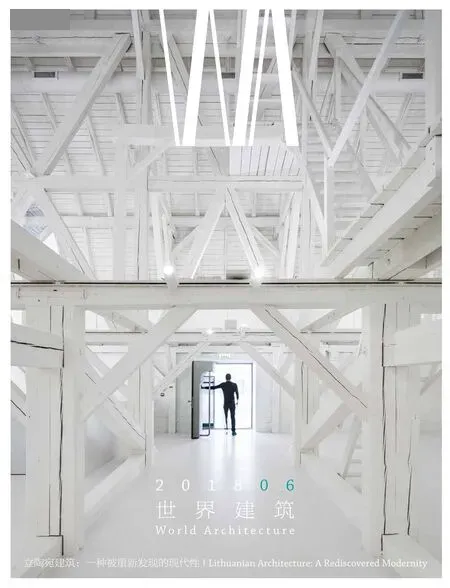
LAPAS和DOM出版社立陶宛建筑圖書集萃
2018-06-19 08:23:20尚晉TranslatedbySHANGJin
世界建筑 2018年6期
關鍵詞:建筑
尚晉 譯/Translated by SHANG Jin
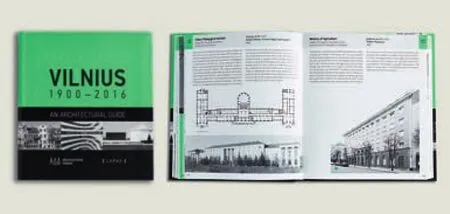
編輯/Editors: Marija Dr?mait?, Rūta Leitanait?, Julija Reklait?
撰文/Texts: Marija Dr?mait?, Rūta Leitanait?, Nijol? Luk?ionyt?, Karolis Ku?iauskas, Diana Kontrimait?,Algimantas Ma?iulis, Vaidas Petrulis, Julija Reklait?,Jurgita Rimkevi?ien?, Indr? Ruseckait?, Jūrat? Tutlyt?,Aida ?telbien?, Renata Vai?ekonyt?-Kepe?inskien?
攝影/Photos: Audrius Ambrasas, Raimondas Urbakavi?ius, Norbert Tukaj and others
出版/Publish: LAPAS, www.lapasbooks.lt, 2016
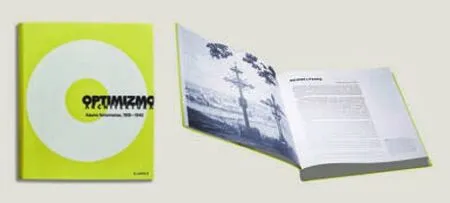
編輯/Editor: Marija Dr?mait?
撰文/Texts: Giedr? Jankevi?iūt?, Marija Dr?mait?,Vaidas Petrulis, Vilma Akmenyt?-Ruzgien?, Norbertas ?erniauskas, Paulius Tautvydas Laurinaitis, Vilt? Migonyt?-Petrulien?
出版/Publish: LAPAS, www.lapasbooks.lt, 2018英文版將于2018年6月出版/English edition available in June, 2018.
《維爾紐斯1900-2016建筑掠影》
20世紀及21世紀初的維爾紐斯建筑,涵蓋了從現代主義到高技派的各種風格,體現了該時期席卷這座城市的所有建筑潮流和政治變革。20世紀之初,雅致的中歐分離派風格依舊流行。隨后,建筑走向1920-1930年代兩次世界大戰期間簡約的現代主義,二戰后又強推備受爭議的蘇聯新古典主義。在1950年代中期“極權主義”建筑被正式廢止后,戰后現代主義興起,尤其體現在為城市不斷增長的人口而建的新居住區上。蘇聯時代末期,城市中心周圍涌現出大量現代主義晚期公共建筑。1990年恢復獨立后,經濟與社會都隨之一變,維爾紐斯經歷了又一波城市化浪潮。私人住宅再度興建,使城市幾近飽和。在內里斯河右岸,一個壯觀的鋼和玻璃的城市中心拔地而起。□
Vilnius 1900-2016. An Architectural Guide
Vilnius' architecture of the 20th and early 21st centuries ranges from the Modern Style to High-Tech, and reflects all the architectural trends and
《樂觀主義建筑:考納斯現象,1918-1940》
本書不只是一座城市及其建筑的故事。它講述的是希望與幻滅的永恒更迭,是創意工作與啟發人的創作樂觀主義,是概念與形式的轉移,是地方性與全球性,是藝術與自由、戰爭與壓迫。它講述的是變幻的形式與概念及其與當代的關系。本書出自為紀念立陶宛恢復獨立100周年舉辦的展覽“樂觀主義建筑:考納斯現象,1918-1940”。
考納斯的現代建筑體現出一戰之后新獨立(或恢復獨立)的歐洲各國首都出現的政治、社會、經濟和文化樂觀主義。當考納斯忽然在1919年成為立陶宛臨時首都后,這座城市隨之而來的變化無亞于一個奇跡。考納斯的面貌煥然一新:不到20年,它的居民就使這座城市變為一個現代、優美的歐洲式首都。建筑在這個變化中發揮了尤為重要的作用,這就是為何連1940年立陶宛淪陷都沒有奪去它的價值。第兩次世界大戰后的考納斯現代主義建筑遺產成了喪失國家地位的象征和遺產的紀念,同時也是面向西方的象征之窗和給立陶宛建筑師的特征典范。今天,這個遺產是考納斯特色的重要來源及其城市“場所精神”的表達。
這些內容在本書的編寫中是不可或缺的。編輯希望在本書中為考納斯兩次世界大戰期間向現代首都的轉變寫下濃墨重彩的一筆,并展現這座城市所面臨的重重挑戰和克服它們的種種努力。□
Architecture of Optimism: The Kaunas Phenomenon, 1918-1940
This book is more than just the story of one city and its architecture. It is about the perpetual birth and death of hope, about creative endeavour and inspiring productive optimism, about the migration of ideas and political shifts that swept across the city during this period. At the dawn of the 20th century, the elegant Central European Sezession style was still in vogue.Architecture later progressed to the stripped-down interwar Modernism of the 1920s and 1930s, and after the Second World War it ventured into the controversial Soviet-imposed Neoclassicism. After "totalitarian"architecture was officially discredited in the mid-1950s,postwar Modernism flourished, particularly in the new residential districts that were built to house the city's growing population. At the end of the Soviet period,Late Modernism saw a large number of public buildings appear around the city centre. With the reestablishment of independence in 1990, and with the consequent changes that took place in the economy and in society,Vilnius experienced yet another wave of urbanisation.Private houses were built again, filling the city to the limits, and a spectacular steel and glass city centre took shape on the right bank of the River Neris. □forms, about the local and the global, about art and freedom, war and oppression. It is about changing forms and ideas and their relationship with the present day. This book is part of an exhibition entitled The Architecture of Optimism: The Kaunas Phenomenon, 1918-1940 held to commemorate the one hundredth anniversary of the restoration of Lithuanian independence.
The modern architecture of Kaunas reflects the political, social, economic and cultural optimism that flourished in the capitals of newly declared/proclaimed (or re-established) European countries in the wake of World War I. After Kaunas suddenly became Lithuania's provisional capital in 1919, the city's subsequent transformation was nothing short of miraculous. Kaunas' identity changed radically: in less than twenty years, its residents transformed the city into a modern, elegant and European capital.Architecture played a particularly important role in that transformation, which is why its significance endured even after the loss of Lithuanian independence in 1940.During the years that followed World War II, the modernist architectural heritage of Interwar Kaunas became the embodiment of lost statehood and a memorial to its legacy,as well as a symbolic window to the West and an exemplary standard of quality for Lithuanian architects. Today, this legacy is an important source of Kaunas' identity and an expression of the city's genius loci.
These aspects were essential in the writing of this book. In it, editors hope to highlight the transformation of Interwar Kaunas into a modern capital city and illustrate the challenges confronting that city and the efforts to overcome them. □
《考納斯建筑掠影》
立陶宛建筑有兩個最重要的時期——維爾紐斯巴洛克建筑和兩次世界大戰之間的考納斯現代主義建筑。前者已有大量著作,而考納斯現代主義直到今天才開始得到應有的重視。立陶宛第一個獨立的共和國曇花一現,卻證明了即使一個年輕的國家也能孕育杰出的建筑。它們對蘇聯時期和當代立陶宛建筑師都產生了重大影響。考納斯從兩次世界大戰期間到蘇聯、再加上當代,一共243座特色鮮明的原創性建筑,都收錄在這部首次出版的《考納斯建筑掠影》中。書中以精美的照片和圖紙展現了考納斯建筑的歷史,并特別編寫了逝去建筑的章節——講述已被拆毀或廢棄的建筑的故事,而它們對考納斯的場所精神仍是舉足輕重的。《考納斯建筑掠影》的對象包括專業研究人員、大眾讀者和關心這座城市及其要素的每一個人。□
Kaunas Architectural Guide
There are two most distinguished periods of Lithuanian architecture – Vilnius Baroque architecture and Kaunas Modernism of the Interwar period. Plenty
《奧德留斯·安布拉薩斯建筑事務所作品集,1998-2014》
這本相冊是對立陶宛最著名的建筑工作室之一、奧德留斯·安布拉薩斯建筑事務所的一個回顧。該事務所成立于1998年,之后在建筑設計領域有杰出的表現。奧德留斯·安布拉薩斯在2017年以關注環境的建筑榮獲立陶宛國家獎。
2013年夏,在為考納斯建筑節準備奧德留斯·安布拉薩斯建筑事務所作品展時,大量草稿、圖紙和照片被收集起來,展示出多種多樣的項目及其深化過程。隨著時間的推移,設計的內容、時間、方式和緣由很容易被遺忘。所以一個想法應運而生,將這些材料作為建筑事務所作品集的基礎,并以此向參與項目創作過程的所有人致謝。□
Audrius Ambrasas Architects. Works 1998-2014
This album is a retrospective look at Audrius
《波羅的海現代主義:蘇聯立陶宛建筑和住宅》
這部插圖精美的專著討論了蘇聯立陶宛的戰后現代主義建筑——與其他波羅的海共和國的建筑一同被視為杰作。它們以更快的速度、更高的熱情改造了西方的文化模式,被稱為“蘇式西方”。盡管如此,通過辨別具體的建筑特征,將波羅的海地區的現代主義同蘇聯其他共和國的現代主義區分開來并非易事。分析蘇聯現代主義的特性顯然需要一種社會政治的方法。本書對蘇聯立陶宛建筑研究的基礎是官方規劃與地方社會實踐之間的關系,以及規劃實踐中廣泛的歷史行動者。□
Baltic Modernism: Architecture and Housing In Soviet Lithuania
This richly illustrated monograph discusses the postof books are written about the first one, whilst Kaunas modernism is beginning to receive the deserved attention only nowadays. Extremely short period of the first independent Republic of Lithuania showed that even a young state can emerge with exceptional architecture. These structures had a significant influence over the Soviet period, as well as on contemporary Lithuanian architects. 243 buildings – original and distinctive, from Interwar and Soviet Kaunas,together with architecture of today, can be found in Kaunas Architectural Guide, published for the first time. Here, illustrated with photos and drawings,their history is being told. The book also has a special forfeiture chapter – with stories of already demolished or abandoned buildings, which still remain very important to Kaunas' genius loci. Kaunas Architectural Guide is dedicated to professional researchers as well as to common readers, to everyone who cares about the city and its elements. □
Ambrasas Architects, one of the leading architecture studios in Lithuania. The studio was established in 1998 and since then has exceptionally performed in the field of architecture design. Audrius Ambrasas has been awarded with the Lithuanian National Prize in 2017 for environmentally sensitive architecture.
In the summer of 2013, while preparing for an exhibition about the work of the Audrius Ambrasas Architects for the Kaunas Architecture Festival, many sketches, drawings and photographs were assembled,showing various projects and their development. Over the course of time, it is easy to forget the what, when how and why. Therefore, the idea came up to make this material the basis of a book about the work of the studio, which would also serve as a mark of appreciation to all those who participated in the creation process of the projects. □
war modernist architecture in the Soviet Lithuania, which,together with other Baltic republics, has been seen as exceptional, appropriating Western cultural models much faster and with greater passion, and was labelled "the Soviet West". Nevertheless, the matter of identifying the specific architectural traits that distinguished modernism in the Baltic region from that of other Soviet republics is not a simple exercise, and the specifics of analysing Soviet modernism clearly require a socio-political approach. In this book, research of Soviet Lithuanian architecture relies on the relationship between the official planning discourse and local social practice, and the wide range of historical actors in planning practices. □
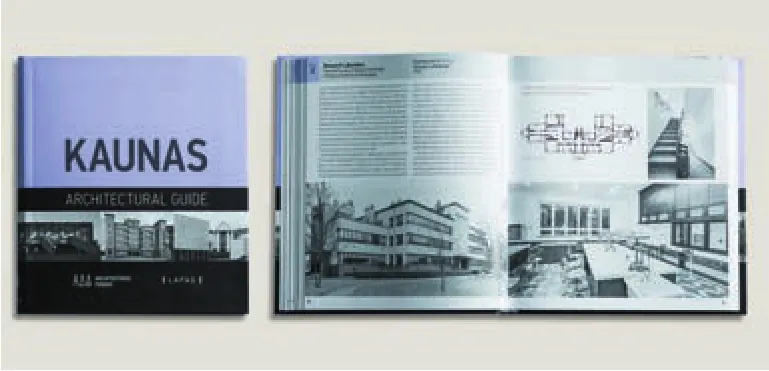
編輯/Editor: Julija Reklait?
撰文/Texts: Almantas Bru?as, Marija Dr?mait?, Giedr? Jankevi?iūt?, Jolita Kan?ien?, Rūta Leitanait?, Nijol? Luk?ionyt?, Vaidas Petrulis
攝影/Photos: Norbert Tukaj and others
出版/Publish: LAPAS, www.lapasbooks.lt, 2017
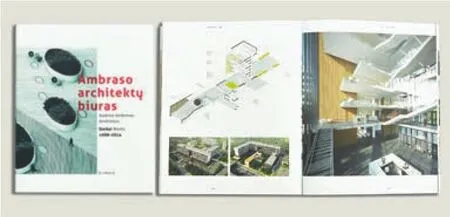
編輯/Editors: Audrius Ambrasas, Dovil? Krik??iūnait?撰文/Texts: Audrius Ambrasas, Audrys Karalius
攝影/Photos: Audrius Ambrasas and others
出版/Publish: LAPAS, www.lapasbooks.lt, 2014
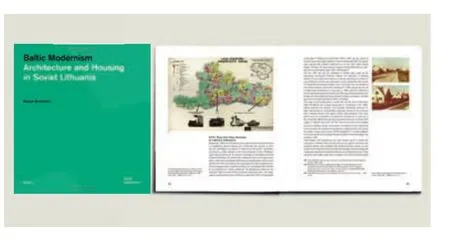
編輯/Editor: JMarija Dr?mait?
出版/Publish: DOM publishers, www.dom-publishers.com,2017
猜你喜歡
北方建筑(2021年6期)2021-12-31 03:03:54
文苑(2020年10期)2020-11-07 03:15:36
現代裝飾(2020年6期)2020-06-22 08:43:12
現代裝飾(2020年4期)2020-05-20 08:55:08
攝影之友(影像視覺)(2019年2期)2019-03-05 08:27:16
藝術家(2017年3期)2018-01-26 08:54:49
文學自由談(2016年3期)2016-06-15 13:01:16
福建農業科技(2016年10期)2016-03-07 09:46:49
少兒科學周刊·兒童版(2015年6期)2015-11-24 03:49:38
中國工程咨詢(2015年4期)2015-02-14 03:49:56