刊首語
2020-01-18 06:30:25李雄
中國園林 2020年1期
鄉村是人類文明的發源地,其獨特的景觀記錄了人類文明的演變過程。相較于城市,鄉村的自然生態受人類干擾強度較低,其保存完好的自然生態系統成為生物多樣性保護的重要基底。然而,在快速城鎮化的背景下,鄉村的生態、生活和生產空間不斷受到沖擊,自然原生的山川河流被污染,歷史悠久的民居祠堂被破壞,維持生存的農業生產空間被不斷蠶食。鄉村地域廣闊,直接影響著國土生態和人居環境的水平,為解決我國鄉村面臨的問題,十九大報告提出實施鄉村振興戰略“產業興旺、生態宜居、鄉風文明、治理有效、生活富裕”的總方針,實施鄉村振興戰略是建設美麗中國的關鍵舉措,鄉村是生態涵養的主體區,生態是鄉村最大的發展優勢。為此,政府印發《農村人居環境整治三年行動方案》《鄉村綠化美化工程實施方案》等系列政策文件,為鄉村生態保護研究和實踐提供了重要指引。
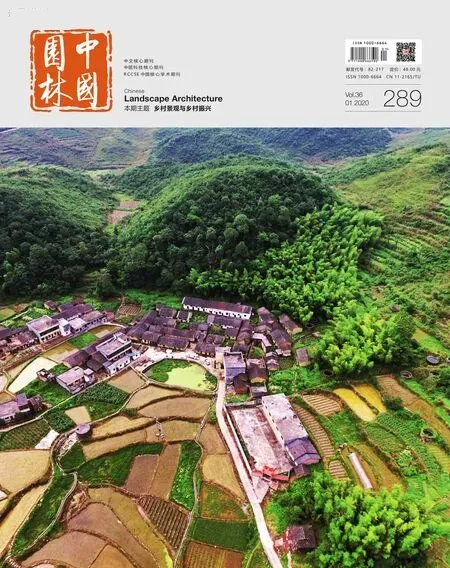
風景園林學作為引領綠色發展的重要支撐學科,在服務于鄉村生態環境建設和鄉村振興中應該發揮重要作用。我們應該認識到以下幾點:從空間布局來看,鄉村是國土空間規劃中具有戰略保障性和價值突出性的最重要組成部分;從構成要素來看,鄉村是山水林田湖草和人居環境所有自然與人工資源要素的集合;從內涵本質來看,鄉村是自然生態、聚落環境、綠色產業和地域文化等形成的多層次復合系統。鄉村振興、生態宜居是關鍵。因此,我們應該把鄉村振興放在美麗中國建設的核心位置。風景園林領域也應發揮其學科優勢、貢獻學科力量。為此,本期主題為“鄉村景觀與鄉村振興”,探索鄉村景觀研究體系,以期對中國鄉村振興和鄉村景觀的建設實踐提供指導。
本期主題文章回答了鄉村景觀和鄉村振興的3個核心問題:建設什么樣的鄉村景觀?如何建設鄉村景觀?誰來建設鄉村景觀?其中,《基于主導生態系統服務功能識別的北京市鄉村景觀提升策略研究》一文基于北京城市設施興趣點(POI)和土地利用類型的解譯數據,利用核密度分析及鄰域分析的研究方法,識別北京各個鄉村鄰域緩沖區內的主導生態系統服務功能(Ecosystem Services,ES),探索應該建設什么樣的鄉村景觀。另有4篇文章從不同尺度探討了如何建設鄉村景觀。宏觀層面上,《新時代鄉村綠化美化的美學途徑與科學導則》和《轉譯與輸出——生態智慧在鄉村建設中的應用》都是從宏觀上提出鄉村景觀建設的途徑和模式,前者認為應該傳承和發展中國鄉村傳統人居美學思想,結合鄉村的具體環境特點,構筑具有鄉村特色的景觀。后者在總結實踐工作的基礎上提出“向鄉村學習-在地設計-觸媒激活”的鄉村建設工作過程和模式。中觀層面上,《鄉村聚落景觀節約型設計策略探索》對鄉村的聚落景觀和建筑進行研究,提出以層級整合的空間結構、節制適度的營造方言和過程培育的綠植范式三方面實現鄉村聚落景觀的節約型設計。微觀層面上,《場景·人物·精神——文化景觀視角下香格里拉傳統村落保護研究》對香格里拉地區傳統村落小街子村的保護建設實踐進行總結,建構了“文化-空間-時間”的村落文化景觀多維分析框架。最后,《村民參與為主體的美麗鄉村環境建設——以湖北紅安縣柏林寺村為例》則以專業領域的實踐為例,強調了在共同締造的理念下,村民應該是鄉村景觀建設的重要主體之一。
中國有近70萬個行政村,在鄉村振興戰略背景下,風景園林學科面臨的機遇與挑戰并存。鄉村是風景園林參與國土空間規劃的重要領域,我們應該積極探索生命共同體統籌治理的新途徑,拓展中華優秀傳統文化傳承的新載體,構建中國美麗鄉村建設的新篇章。
The countryside is the birthplace of human civilization,and its unique landscape has recorded the evolution of human civilization.Compared with cities,the natural ecology of countryside is less affected by human interference,and its well-preserved natural ecosystems have become an important basis for biodiversity protection.However,in the context of rapid urbanization,the ecology,living and production spaces of the countryside are constantly being impacted,the natural mountains and rivers are polluted,the historic ancestral halls are destroyed,and the agricultural production space that sustains them is constantly being eaten away.Rural areas account for more than 94% of China's total land area,which directly affects the level of land ecology and human settlements.In order to solve the problems faced by China's rural areas,the 19thCPC National Congress proposed the implementation of rural revitalization strategies:the general policy of "prosperous industry,ecological livability,rural civilization,effective governance,and affluent life",and implementing the strategy of revitalizing the countryside is a key measure for building a beautiful China.The countryside is the main area of ecological conservation,and ecology is the biggest development advantage of the countryside.To this end,the government issued a series of policy documents such as theThree-year Action Plan for Rural Human Settlement Environment Improvement and Implementation Plan for Rural Greening and Beautification Projects,which provided important guidelines for the study and practice of rural ecological protection.
As an important supporting discipline leading green development,landscape architecture should play an important role in serving rural ecological environment construction and rural revitalization.We should recognize the following points:from the perspective of the spatial layout,the countryside is the most important part of strategic land security and of outstanding value in the national spatial planning;from the perspective of the constituent elements,the countryside is the collection of all natural and artificial resource elements of forests,lakes,grasses,and human settlements;from the essence of connotation,the countryside is a multi-level composite system formed by natural ecology,settlement environment,green industry,regional culture,and so on.Ecological livability is key in revitalizing the countryside.Therefore,we should put rural rejuvenation at the core of the construction of beautiful China.The field of landscape architecture should also give play to its disciplinary advantage and contribute with its disciplinary strength.To this end,the theme of the first issue of 2020 is "Rural Landscape and Rural Revitalization",exploring the rural landscape research system,with a view to guiding the practice of rural revitalization and rural landscape construction in China.
This theme articles answer three core questions about rural landscape and rural revitalization:what kind of rural landscape to build,how to build the rural landscape,and who to build the rural landscape.Among them,Research on the Promotion Strategy of Rural Landscape in Beijing Based on the Identification of Dominant Ecosystem Serviceis based on the interpretation data of Beijing's POIs and land use types,using the research methods of nuclear density analysis and neighborhood analysis to identify the leading ecosystem services (ES) in the buffer zone of each rural neighborhood in Beijing,and explore what kind of rural landscape should be built.Another four articles explore the issue of how to build rural landscapes from different scales:on the macro level,bothStudy on the Aesthetic Approach and Scientific Guideline of Rural Greening and Beautification in the New EraandDecodeandEncode – Ecological Wisdom in Rural Developmentput forward the approach and model of rural landscape construction from a macro perspective.The former believes that the traditional rural human settlements aesthetic thoughts of China should be inherited and developed,and the specific environmental characteristics of the countryside should be combined to build a landscape with rural characteristics.The latter puts forward the rural construction work process and model of "learning from the countryside,local design and catalyst activation" based on the summary of practical work.On the meso level,Exploration on the Economical Design Strategy of Rural Settlementresearches rural settlement landscapes and architectures,and proposes to achieve rural settlements in three aspects:the spatial structure of hierarchical integration,the economical and moderate construction dialects,and the planting paradigms of process cultivation.On the micro level,
Scenes,People,and Spirit – Study on the Protection of Traditional Villages in Shangri-La from the Perspective of Cultural Landscapesummarizes the protection and construction practices of Xiaojiezi Village,a traditional village in Shangri-La,and builds the "culturespace-time" village cultural landscape multidimensional analysis framework.Finally,Villagers' Participation in the Construction of Beautiful Rural Environment – Taking Bolin Temple Village in Hong'an County,Hubei as the Exampletakes the practice in the professional field as the example and underscores the idea of co-creation,and villagers should be one of the important subjects of rural landscape construction.
There are nearly 700,000 administrative villages in China.In the context of the rural revitalization strategy,the opportunities and challenges of the landscape architecture discipline coexist.The countryside is an important area for the participation of landscape architecture in territorial space planning.We should actively explore new ways for the overall management of the community of life,expand the new carrier of Chinese excellent traditional culture,and build a new chapter in the construction of China's beautiful countryside.
猜你喜歡
現代裝飾(2021年6期)2021-12-31 05:27:54
保健醫苑(2021年7期)2021-08-13 08:48:02
小學科學(學生版)(2020年12期)2021-01-08 09:28:10
少年漫畫(藝術創想)(2020年12期)2020-06-09 05:50:08
學生天地(2020年36期)2020-06-09 03:12:30
小學科學(學生版)(2020年5期)2020-05-25 07:11:32
中國外匯(2019年18期)2019-11-25 01:41:56
電子制作(2018年14期)2018-08-21 01:38:28
人大建設(2017年10期)2018-01-23 03:10:17
民生周刊(2017年19期)2017-10-25 10:29:03