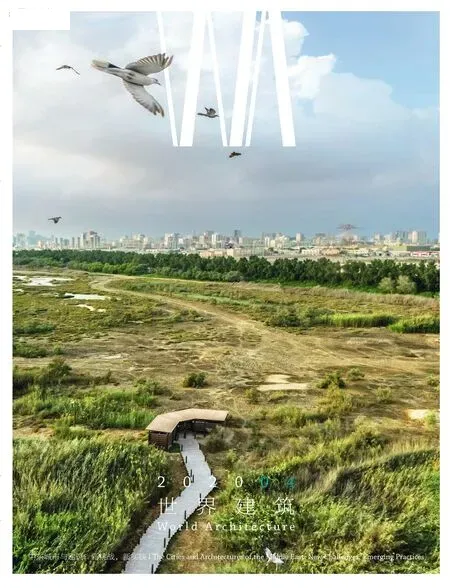
重思當代中東的城市景觀
2020-04-28 02:10:10穆罕默德加里普爾MohammadGharipour
世界建筑 2020年4期
關鍵詞:景觀
穆罕默德·加里普爾/Mohammad Gharipour
黃華青 譯/Translated by HUANG Huaqing
中東的城市景觀:文化與政治背景
中東地區的地理范疇東至阿富汗,西至埃及,北至土耳其,南至也門與阿曼。這個區域因其傳承兩千多年的古代園林而聞名。盡管對于伊斯蘭世界的園林傳統的研究頗多——從北非、西班牙直到印度次大陸,但針對現代城市景觀的研究仍應加強,以揭示其對當代中東歷史的革命性影響1)。
在20 世紀的中東城市存在一系列因素,推動了城市空間的公共休閑功能的拓展,包括:經濟現代化、工業化程度日益深化、農村進城移民的不斷增長、城市擴張對農村地區的侵蝕及其破壞性的環境影響、低成本住宅項目的建設。現代主義作為一場持續進行的運動,通過一系列城市公園和景觀項目設計,在現代的中東首都城市建立了充滿活力的社會關系和文化自覺。重建或新建的景觀項目象征著聲望——在石油繁榮期尤為如此[1]69。例如,經濟發展促使沙特阿拉伯政府在利雅得施行了一系列舉足輕重的規劃項目。這些項目的規劃者試圖通過1990 年代城市公園的創建,塑造文化身份、公共空間和國家慶典的概念。這些公園在根本上取代了景觀化的棕櫚園——那些棕櫚園曾在1970 年代的城市快速擴張中遭到侵占,讓位于為不斷增長的城市人口提供的住宅和公共設施。
20 世紀末,公共空間被稱頌為中東社會的民主、進步與開放性的象征。盡管不斷擴張的城市景觀標志著現代和發展,但其中的公共功能似乎也與某些政府的極權主義主張相悖——即使這些政府領導者依然對公共空間大加贊美,認為它是民眾發聲及國家民主的象征。所謂“民主空間”的概念,就是要讓能夠享受某一特定空間或場所的人數最大化——這一場所可以是經過設計的,也可以是天然存在的。公共空間被普遍作為社會及政治表征的場景,作為政治自主性及民主化的所在[2]10。在世俗化的年代,公共廣場及城市公園成為獨立抗議的主要舞臺——后來又成為它的紀念場。城市公共空間為社會互動、社區聚集、集會或政治行動創造了契機[2]15。這一關鍵功能也解釋了,為何如愛德華·蘇賈[3]13-30等城市地理學家將公共空間視為建筑師為空間正義作貢獻的機會——只需讓普羅大眾認識到公共空間的重要性[2]27。
盡管城市花園的概念似乎很吸引政客——至少在一開始是如此——但它在現實中的公共使用狀況卻時常成為政客們焦慮的來源……甚至更差。“阿拉伯之春”期間在突尼斯和埃及發生的占領公園和廣場的運動,便凸顯了城市景觀在這方面的潛在貢獻——為反對統治王朝、政府或獨裁者的政治集會、游行和抗議提供了便利。反過來,政府支持者同樣會利用這些公共空間作為陣地,以支持戰爭、沖突和政治霸權。2014 年在伊斯坦布爾格茲公園發生的抗議,最初只是民眾反對一項企圖拆除這一城市公園的規劃,后來便升級擴散為一場全國性的針對政府的抗議(圖1)。這些例子都凸顯了公共空間在當代中東社會的激進運動中扮演的作用。

1 格茲公園抗議,塔克西姆廣場,伊斯坦布爾,土耳其/Gezi Park Protests, Taksim Square, ?stanbul, Turkey (圖片提供/Courtesy of Alan Hilditch, 2013)

2 谷歌地球中的多哈沿海道路/Google Earth view of Doha Corniche(圖片提供/Courtesy of Anna Grichtig, 2015)

3 扎因代河河濱公園,伊斯法罕,伊朗/The urban park along the Zayanderud (river), Isfahan, Iran(圖片提供/Courtesy of Sahar Hosseini, 2018)
Urban Landscapes of the Middle East: Cultural and Political Context
As a region, the Middle East stretches eastto-west from Afghanistan to Egypt, and north-tosouth from Turkey to Yemen and Oman.The region is recognised for its historic gardens that have been shaped for over two millennia.While there are numerous studies of garden traditions in the Islamic world from North Africa and Spain to the Indian subcontinent, modern urban landscapes deserve to be studied further to clarify their revolutionary impact on the contemporary history of the Middle East1).
A number of stimuli spurred the expanded use of urban spaces for public recreation in the cities of the Middle East in the 20th Century:the implementation of economic modernisation,increased industrialisation, the growing migration of people from rural to urban areas, the encroachment of urban growth into rural areas and its damaging environmental consequences, and the construction of low-income housing projects.Modernism as an ongoing process has established vibrant social relations and cultural identities for modern capital cities through the design of urban parks and landscapes.Redesigned or new landscapes signified prestige, especially in the midst of the oil boom.[1]69For instance, economic development encouraged the government of Saudi Arabia to implement major planning projects in Riyadh.These planners attempted to formulate concepts of cultural identity,public space, and national ceremony through the creation of urban parks in the 1990s.These parks in essence replaced landscaped palm gardens that were eliminated through the rapid expansion of the city in the 1970s when planners struggled to provide residences and public buildings to accommodate the growing urban population.
In the late-20th century public spaces were celebrated as symbols of democracy, progress, and openness in Middle Eastern societies.Despite the spread of urban landscapes as signifiers of modernity and development, their public use seems to be contrary to the totalitarian mission of some governments - even though their leaders extol public space as a symbol of public voice and democracy.The idea of a democratic space seeks to maximise the number of people who can enjoy a certain space or place, whether it is designed or organic.Public space is universally utilised as the setting of social and political representation, as the locus of political mobilisation and of democratisation[2]10.In an age of secularisation, public squares and urban parks have become important arenas for staging independence protests - and later for commemorating them.Urban public spaces create opportunities for social interactions, community gatherings, meetings, or political actions[2]15.This essential function explains why urban geographers such as Ed.Soja[3]13-30consider public space as an opportunity for architects to contribute to spatial justice, simply by making the larger public aware of its significance[2]27.
Although the concept of the urban garden seems to attract politicians - at least initially - its actual public use often becomes a source of angst...or worse.The occupation of parks and squares in Tunis and Egypt during the "Arab Spring" highlights the potential contribution of urban landscapes to facilitate gatherings, political demonstrations, and protests against ruling monarchies, governments, or dictatorships.Conversely, government supporters have also utilised these public spaces as sites to advocate for war, conflict, and political supremacy.The 2014 protests in Gezi Park in Istanbul, which began as a popular response to plans calling for the destruction of this urban park, generalised and spread as national protests against the ruling government (Fig.1).These instances highlight the role of public spaces in social activism in contemporary societies in the Middle East.
Urban landscapes in the Middle East are expressed in different forms and with various functions.The most obvious form is the urban park, which has received so much attention from municipalities and local governments.Urban parks,which have been used as recreational areas for the public and as tools to combat air pollution, have also served as important tourist destinations.Two notable examples of these successful urban parks can be found in the seaside parks in Doha (Fig.2)and the urban parks along the Zayanderud River in Isfahan (Fig.3), which have functioned as lively zones of urban culture.Other types of landscapes that have been increasingly incorporated in urban settings over the last two decades include zoos, bird parks, beach landscapes, flower parks,sculpture parks, water parks, memorial parks, and even cemeteries.Many of these sites have served as recreational locales for urban residents.Their proximity to urban monuments or public sites contributes to their functionality in the urban context, whether they are used as social space for the elderly or for skateboarding for a city's youth.Despite being "public", some of these landscape projects across the Middle East have remained open only to selected groups of people2).
The financial and professional support received from international organisations such as UNESCO,the World Monuments Fund, and the Aga Khan Foundation have contributed to the construction of new landscapes and the preservation of older forms.The Al-Azhar Park in Cairo is an example of a successful international initiative that received popular interest and support.Similarly, the Gardens of Babur in Kabul, which was fully rehabilitated between 2002 and 2004 with the support of the Aga Khan Historic Cities Programme, represents an urban project aimed at reviving a cultural identity amidst the development of post-war Kabul (Fig.4)[4]25.The success of these two projects extends beyond their impact on the lives of the residents as recreational sites; they have also provided employment opportunities for local workers,craftsmen, and architects.
中東城市景觀可表現為不同的形式及多樣的功能。最常見的一種便是城市公園,它已受到國家及地方政府的密切關注。城市公園不僅是公眾的休閑場所、抗擊空氣污染的有效工具,也是重要的旅游目的地。這里列舉兩個成功的城市公園案例:多哈的海濱公園(圖2)和伊斯法罕的扎因代河河濱公園(圖3)。它們都成為城市文化的活躍區域。其他在過去20 年間持續納入城市環境的景觀類型還包括:動物園、鳥類公園、沙灘、花卉園、雕塑園、水景園、紀念公園,甚至包括墓地。其中大部分場所都是城市居民的休閑場所。這些景觀往往接近城市中的標志性建筑或公共場所,這使得它們更容易在城市中發揮功用——無論是作為老年人的社交空間,還是年輕人的滑板場地。盡管是“公共的”,但在中東各地,這類景觀項目還是存在一部分是僅向特定群體開放的2)。
從聯合國教科文組織、世界遺產基金會、阿卡漢基金會等國際組織獲得的資金和技術支持,幫助當地建造了很多新的景觀,并對歷史景觀進行了保護。開羅的阿茲哈爾公園就是這樣一個由國際力量發起的成功項目,獲得了公眾的關注和支持。類似的項目還有喀布爾的巴布爾花園,它在2002-2004年間受阿卡汗歷史城市計劃資助而得到徹底修復,它代表了一類在戰后喀布爾發展中試圖復興文化認同的城市項目(圖4)[4]25。這兩個項目的成功,不僅在于它們對當地居民休閑生活的影響,它們還為當地工人、工匠和建筑師提供了職業機會。
當代考量:環境與文化
不斷惡化的環境問題正在威脅城市所在的區域——無論是由于缺乏政策規劃,或是優質規劃未能得到成功執行,都意味著城市需要更多生態友好的項目。空氣污染、持續的沙漠化、土地退化和干旱問題,都要求政府提出更加大膽有效的環境政策,包括在城市內外擴建公園和森林3)。對于可持續性建筑及城市規劃的需求,促使政策制定者更多地在發展規劃中不斷提升自然資源的重要性。反過來看,從城市中心到非正規建設的城市邊緣地區,都在發生地方性城市設計的顯著轉型,這促使景觀被用作一種策略,以強調生態重于形態、網絡化表面重于城市建成形式的理念,同時景觀還可作為在邊緣地區創造社會文化網絡的工具[5]8。
社會公正、節能和環境保護等議題促生了一批規劃、景觀和建筑項目。其中一個重要案例是阿聯酋阿布扎比的馬斯達爾——這座新城完全按照環境可持續性原則進行規劃設計(圖5)[6]23-37。這類當代項目一方面需要抗擊干旱、浪費、污染甚至是溫室效應,另一方面還要促進凈水和能源的公平分配,并在具有長期階級隔離傳統的中東社會推動社會公正的理念。隨著城市與景觀間的界限逐步消退,環境敏感度正不斷上升——這推動了一系列新政策的產生,皆基于對可持續性、潔凈空氣和用水、高效公共交通體系的考量[7]10。

4 巴布爾花園,喀布爾, 阿富汗/The Bagh-i Babur, Kabul,Afghanistan (圖片提供/Courtesy of Wikimedia)

5 馬斯達爾市區/Masdar City(圖片提供/Courtesy of Foster +Partners)
Contemporary Concerns: Environment and Culture
Increasing environmental problems threatening urban areas - whether they are based on lack of policy planning or on the unsuccessful implementation of well-intentioned schemes - indicate a need for more ecologically-efficient projects.Air pollution, growing desertification, land degradation, and drought have also necessitated establishing more aggressive environmental policies by governments, including the expansion of parks and forests both inside and outside cities3).The need for sustainable architecture and urbanism has motivated decision-makers to consider natural resources in their development plans on an increasing basis.Conversely, the major shift in regional urban design from city centres to their marginal areas with informal development has resulted in using landscape as a means to stress the importance of ecology over morphology, network surface over urban form, and as a tool to create sociocultural networks in marginal spaces[5]8.
Social equity, energy conservation, and environmental concerns have driven a number of planning, landscape, and architecture projects.One important example is the planned city of Masdar in Abu Dhabi in the UAE, which was purposefully designed to promote environmental sustainability(Fig.5)4)[6]23-37. While contemporary projects should combat drought, waste, pollution, and even the greenhouse effect, they should facilitate the equitable distribution of clean water and energy, as well as actively promote social equity in the traditionally class-segregated societies of the Middle East.As the barriers between cities and landscapes fade, environmental sensitivity is growing - resulting in policies based on concerns for sustainability, cleaner air and water, and efficient public transportation systems[7]10.
Another crucial factor to consider in the design of the contemporary landscapes is local history and tradition.Local professionals and academics are now reexamining ideas coming from the West,which were formerly praised and copied, through a much more critical lens.The growing interest in the region's diverse cultural heritage, especially among ordinary people and NGOs, has increased public awareness of the environmental and cultural benefits of urban projects.The urban landscapes of the Middle East have been transformed from passive settings for recreation to dynamic theatres for civic engagement.Resonating with the real rhythms of daily life, these new spaces are used as a medium to connect and support a great variety of places,people, and activities across multiple scales or levels of influence[8]32.They can potentially integrate isolated zones or enclaves within the city through a wide range of connections and transportation infrastructures working across various scales[8]45.
The increasing density within large cities also calls for the repurposing of discarded or outdated infrastructures or abandoned sites, such as former military installations[7]6.The Al-Azhar Park, built on a wasteland, is a very successful example of this trend currently making a difference in the lives of Cairo residents (Fig.6).This park, located in close proximity to a historic district, brought life back to low-income neighbourhoods while also supporting tourism and the local economy.While some tourismoriented projects promote an orientalist nostalgia that depicts the old neighbourhoods as fossilised and immortal artifacts, others acknowledge evolving aspects of the city, culture, and residents.For instance, in Al-Salt's historic urban landscape in Jordan, developers paid particular attention to its long-term potential as a new tourist destination,and purposefully marketed the area's tourism infrastructure and services (Fig.7).In this case,urban rehabilitation policies were designed to promote tourism and the historic urban fabric simultaneously.Indeed, tourism has been the source of spontaneous social activities that were not necessarily inherent to the nature of this area's urban structure and its fragmentary growth[9]317.
Either designed as public plazas or parks in urban or marginal areas, contemporary landscape projects have played a vital role in ushering a new era into modern Middle Eastern cities - and in particular in shaping social culture in such a way that the public has a voice.With roots in early modern urban gardens of this region, the phenomenon of the urban landscape has improved the quality of life in cities in various ways, either by providing social space for the public or through its ecological benefits.A series of regional and local elements and concepts that have been used in their design will continue to tie these projects to their historical context.
Design and Planning of Projects: Future Dilemmas and Prospects
Becoming the integral core of recent urban developments, urban landscapes have not only established a new relationship between the landscape and city but have also emphasised the public park/landscape as the focal point in Middle Eastern cities undergoing modernisation.While neoliberal politics have been transforming the public domain in capital cities into exclusive commercially driven landscapes5)[5]56, the radical and rapid evolution of large cities and their territories has spurred efforts to provide recreational public space and green retreats to counterbalance the concrete modern metropolis[7]9.
As urban planner Thomas Sieverts explains,cultural awareness is a minimum requisite for aesthetic awareness, so current urban design should incorporate techniques and procedures to encourage this awareness[10].Urban landscapes should emphasise involvement, experience, and a personal relation to the space, which range from contemplation to appropriation[8]29, while supporting cohabitation, blending different urban environments at the appropriate scale, and include zones of negotiation[8]28.They should also maintain a high level of accessibility for all income groups and be open to changing individual and collective rhythms[11].Due to its environmental, ecological,and aesthetic aspects, the landscape should be treated by decision-makers both as a physical entity and as a cultural construct, while responding to basic problems such as air or water pollution, or even waste management[12]219.In short, the quality of urban landscapes can be improved by integrating natural and urban systems[8]32.
Any new landscape project should not only enhance people's lives - it should also celebrate the history of the city and region by communicating tradition and memory through design6)[13].The concern is that most agencies in charge of forming urban neighbourhoods or public spaces in the Middle East do not often incorporate aesthetic or ethical issues in public decision-making[14]116involving the planning,design, and management of landscapes[14]117.A comprehensive understanding of urban landscapes requires an in-depth analysis of their impact on the formation and development of neighbourhoods, open spaces, and urban parks- and their collective social purposes.Instead of merely importing ideas from the West, the participation of local architects and designers has facilitated the application of the local, native,and indigenous landscape as potential models or sources of inspiration[15]75.Yet, as architects,landscape architects, and urban designers have progressively become more compartmentalised in their approaches, there is a pressing need for trans-disciplinary collaboration on both physical and cultural landscape[16]122.
在當代景觀的設計中,另一個需要考慮的關鍵因素是當地的歷史與傳統。本土的專業人員及學者正在從更加批判性的視角,重新審視那些來自西方的曾經倍受稱頌和學習的概念。對于該地區的多元文化遺產的興趣不斷提升——尤其是在普通民眾與非政府組織層面——這促使公眾更為關注城市項目帶來的環境與文化益處。中東地區的城市景觀已從一種僅供消遣的被動布景,轉變為市民參與的活躍劇場。這一類新型空間與日常生活的真實韻律交相呼應。它們由此成為一種媒介,連接和支持著擁有不同規模和層級影響力的各類場所、人群及活動[8]32。它們能夠通過多種多樣的連接方式及不同尺度的交通基礎設施,幫助整合城市中的孤立區和飛地[8]45。
當代大城市的密度不斷提升,也就需要重新調整那些過時的基礎設施及廢棄場地的用途,例如一些棄用軍事設施[7]6。建在荒地上的阿茲哈爾公園就是個很成功的例子,它給開羅市民的生活帶來了實質性的改變(圖6)。這個公園緊鄰歷史街區,不僅提升了低收入群體的生活品質,也給當地旅游及經濟帶來支持。盡管有些旅游導向的項目在宣揚一種東方主義的懷舊審美,將歷史街區作為凝固的、不朽的遺存,但也有另一些項目能夠認可城市、文化和居民的持續演化。例如約旦的索爾特歷史城市景觀項目,開發者尤其注重挖掘它成為一個旅游目的地的長期潛力,也竭力推廣該地區的旅游基礎設施和服務(圖7)。在這個案例中,城市更新政策的設計也試圖同時促進旅游發展和歷史城市肌理的保護。實際上,旅游正帶來新的自發性社會活動,這種活動不一定是該區域的原生城市結構及碎片化生長所天生具有的[9]317。

6 阿茲哈爾公園,開羅,埃及/Al-Azhar Park, Cairo, Egypt(圖片提供/Courtesy of Wikimedia, 2013)

7 索爾特歷史城市的中心區域,約旦/Central Area of Al-Salt historic town, Jordan (圖片提供/Courtesy of K?vanc K?l?nc,2019)
無論是作為城市或城郊的公共廣場還是公園,當代景觀項目正積極推動中東城市邁入新的時代——尤其是塑造一個尊重公眾聲音的社會文化。這些城市景觀根植于該地區前現代時期的城市園林,正通過多樣方式改善城市中的生活品質——不論是為公眾提供社會活動空間,抑或是帶來生態層面的利益。這些項目中運用的一系列地區性和當地化的元素和概念,也將持續將它們與城市歷史文脈緊緊相連。
項目設計和規劃:未來的困境及遠景
城市景觀作為近期城市發展的核心,不僅建立了景觀和都市之間的新關系,也強化了公園和公共景觀作為中東城市當下現代化進程的焦點地位。盡管新自由主義政治正在將資本主義城市的公共領域轉變為純粹的商業驅動景觀4)[5]56,但大城市區劇烈迅速的變化還是促生了不少這樣的嘗試——提供休閑性的公共空間和綠化場地,以平衡鋼筋混凝土的現代都市環境[7]9。
城市規劃學者托馬斯·希爾維茨提出,文化自覺是審美自覺的最低要求,因此當下的城市設計應采取相應的技術和策略來鼓勵這種自覺性[10]。城市景觀應強化介入、體驗以及人與空間的關系——這種關系可以從內在的沉思到外化的使用[8]29——在支持共生狀態的同時,融合恰當尺度的不同城市環境,也納入相應的過渡空間[8]28。它們也應為不同收入群體保留高度的可達性,并接納不斷變化的個人或集體的生活節奏[11]。鑒于景觀的環境、生態和審美作用,政策制定者應將景觀同時視為一種物質實體和一種文化建構,并回應空氣污染、水污染甚至是垃圾處理等基本問題[12]219。簡言之,通過自然和城市系統的整合,城市景觀的品質亦能得到提升[8]32。
任何新建的景觀項目,不僅需要提升人民的生活質量,還應通過設計表達傳統與記憶,為城市和區域的歷史書寫贊歌5)[13]。值得擔憂的是,中東大部分負責塑造城市街區或公共空間的權力機構,并不將美學或道德因素納入景觀規劃、設計和管理的決策過程[14]116-117。對于城市景觀的全面理解,需要深入分析它們對街區、開放空間和城市公園的形成、發展及其集體社會訴求的影響。當地建筑師和設計師的參與,不再僅僅從西方借取概念,而是將當地的、本土的和原生的景觀作為潛在的概念模型或靈感源泉[15]75。不過,由于建筑師、景觀設計師與城市設計師的路徑正變得愈發不同,在物質與文化景觀塑造過程中的跨學科合作也變得愈發緊迫[16]122。
我們亟需理解一座城市在歷史進程中是如何被規劃、建造和使用的——這3 個因素具有同等的重要性[17]14。未來的城市設計及規劃實踐,應運用生態反饋的、環境可持續的、社區參與的城市綠化策略,以優先考慮城市中的自然和綠色區域6)[5]70。在城市景觀中,尋求一條規劃、設計、開發與管理的整體性路徑不能滿足于紙上的空中樓閣。城市景觀應該通過提升社區的觀念,以形成并維持場所感。城市景觀在設計和評估中,應作為城市基礎設施的根本性要素,而非表面化裝飾。最重要的是,城市景觀是一件必需品。□
致謝:本文是我發表于《中東城市景觀》(穆罕默德·加里普爾編著,Routledge,2016)引言部分的概要。在此感謝我的朋友和同事科萬茨·科林茨博士,感謝他的邀約和寶貴意見。
It is important to understand how a city is planned, constructed, and utilised over time -and these three factors are equally important[17]14.Future urban design and planning efforts should prioritise nature and green areas in the city by utilizing ecologically-informed, environmentallysustainable, and community-inclusive urban greening initiatives7)[5]70.A holistic approach to planning,design, development, and management of urban landscapes is not limited to a picturesque framework.Urban landscapes should generate and protect the sense of place by enhancing the notion of community.They should be designed and evaluated as an essential component of the urban infrastructure, rather than a superfluous ornament.The urban landscape is, first and foremost, a necessity.□
Acknowledgement: This paper is a summary of my introduction published in Urban Landscapes of the Middle East (Edited by Mohammad Gharipour,Routledge, 2016).I would like to thank my friend and colleague, Dr.K?van? K?l?n?, for his invitation and feedback on this essay.
注釋/Notes
1)“伊斯蘭花園”的發展并非局限于中東地區的邊界。過去20年間,數個伊斯蘭風格的園林設計項目在中東以外的地區落成。此種現象,筆者稱其為“伊斯蘭花園的移居”,在世界其他地區充當了中東地區的代表。/The development of the "Islamic garden" has not been limited to the boundaries of the Middle East.Over the last two decades several Islamicinspired gardens have been designed outside the Middle East.This phenomenon, which I call "Islamic gardens in diaspora", serves as a representative of this region in other parts of the world.
2)位于海法的巴布爾花園就是一個例子,該花園只在每周特定時段對朝圣者和游客開放。盡管該花園沒有完全投入于日常城市文化,它的存在無疑對海法的城市設計產生影響,因為它在宏觀尺度上創造了視覺和空間的連續性。/One such example is the Baha'i Garden in Haifa, which is open only to pilgrims and tourists at certain times of the week.Although this garden is not fully engaged in daily urban culture,its presence is clearly felt in Haifa's urban design because it creates visual and spatial continuity on the macro scale.
3)最近的學術文獻證實近期的沙漠化是人類活動與氣候變化的結果。/Recent academic literature confirms that recent desertification is the result of human activities and climate change.
4)更多信息詳見參考文獻[6]/For more information,refer to Reference [6]23-37.
5)Jala Makhzoumi, "The Greening Discourse:Ecological Landscape Design and City Regions in the Mashreq", Urban Design in the Arab World:Reconceptualizing Boundaries.詳見參考文獻/Refer to Reference [5]56.
6)皮爾斯·劉易斯(1975)稱其為“場所精神”。詳見參考文獻[13]。/It is called by Pierce Lewis (1975)"the spirit of place". Refer to Reference [13].
7)Jala Makhzoumi, "The Greening Discourse:Ecological Landscape Design and City Regions in the Mashreq", Urban Design in the Arab World:Reconceptualizing Boundaries.詳見參考文獻/Refer to Reference [5]70.
參考文獻/References
[1] EMAMI F.Urbanism of Grandiosity: Planning a New Urban Centre for Tehran (1973-76)[J].Islamic Architecture, March 2014,3(1):69-102.
[2] TüRELI I.'Small' Architectures, Walking and Camping in Middle Eastern Cities[J].Islamic Architecture, January 2013,2(1):5-38.
[3] SOJA E W.Seeking Spatial Justice[M].Minneapolis:University of Minnesota Press, 2010.
[4] BRESHNA Z.A Program for the Rehabilitation and Development of Kabul's Historic Center[M]//MUMTAZ B., NOSCHIS K.(ed.).Development of Kabul: Reconstruction and Planning Issues, Lausanne,Switzerland: Comportements, 2004: 23-49.
[5] SALIBA R.(ed.).Urban Design in the Arab World:Reconceptualizing Boundaries.London: Ashgate.
[6] CUGURULLO F.How to Build a Sandcastle: An Analysis of the Genesis and Development of Masdar City[J].Journal of Urban Technology, 2013, 20 (1).
[7] SECCHI B.Wasted and Reclaimed Landscapes -Rethinking and Redesigning the Urban Landscape.Places, 2007, 19 (1): 6-11.
[8] CLEMMENSEN T J, NIELSEN T, DAUGAARD M.Qualifying Urban Landscapes[J].Journal of Landscape Architecture, 2010, 5 (2):24-39.
[9] KHIRFAN L.Ornamented Fa?ades and Panoramic Views: The Impact of Tourism Development on al-Salt's Historic Urban Landscape[J].International Journal of Islamic Architecture, July 2013,2 (2):307-324.
[10] SIEVERTS T.Where we Live Now[M]// STADLER M.(ed.) Where We Live Now: An Annotated Reader.Suddenly Publishing, 2008:21-81.
[11] VIGANO P.On Porosity[C]// ROSEMANN J.(ed.).Permacity.International Forum on Urbanism, 2007.
[12] MAKHZOUMI J M.Landscape in the Middle East: An Inquiry.Landscape Research, August 2010,(27)3:213-228.
[13] LEWIS P F.To Revive Urban Downtowns, Show Respect for the Spirit of Place.Smithsonian, September 1975:32-41.
[14] SANCAR F H.Towards Theory Generation in Landscape Aesthetics[J].Landscape Journal, Fall 1985,4 (2):116-124.
[15] HELPHAND K.Dreaming Gardens: Landscape Architecture and the Making of Modern Israel[J].Landscape Journal, January 2003, 22 (2):73-86.
[16] SPIRN A W.The Poetics of City and Nature:Towards a New Aesthetic for Urban Design[J].Landscape Journal, Fall 1988:108-126.
[17] BLACKMAR E.The Urban Landscape[J].Journal of Architectural Education, September 1976, 30 (1):12-14.
[18] MAKHZOUMI J., PUNGETTI G.Ecological Landscape Design and Planning, The Mediterranean Context[M].London: Taylor & Francis Press, 1999.
[19] GHARIPOUR M.Persian Gardens and Pavilions:Reflections in History, Poetry and Arts[J].London: I.B.Tauris, 2013.
[20] GHARIPOUR M.(ed.) Urban Landscapes of the Middle East.London: Routledge, 2016.
猜你喜歡
現代裝飾(2021年6期)2021-12-31 05:27:54
建材發展導向(2021年14期)2021-08-23 00:56:40
小學科學(學生版)(2020年12期)2021-01-08 09:28:10
小學科學(學生版)(2020年7期)2020-07-28 08:00:52
食品工業(2020年6期)2020-07-18 04:07:20
少年漫畫(藝術創想)(2020年12期)2020-06-09 05:50:08
創新作文(小學版)(2017年31期)2017-04-09 06:13:24
視聽(2016年2期)2016-08-21 07:50:50
照明工程學報(2016年3期)2016-06-01 12:17:56
中國攝影家(2014年6期)2014-04-29 14:54:47