Study on Thermodynamic Properties of Several Innovative Azide Plasticizers
2021-12-06 03:20:20ZHANGHengWANGYongRENXiaoningYANGLiJIAYongjieWANGYinglei
火炸藥學報 2021年5期
ZHANG Heng,WANG Yong,REN Xiao-ning,YANG Li,JIA Yong-jie,WANG Ying-lei
(1.State Key Laboratory of Explosion Science and Technology, Beijing Institute of Technology, Beijing 100081, China; 2.Xi′an Modern Chemistry Research Institute, Xi′an 710065, China;3.Liaoning Qingyang Chemical Industrial Corporation, Liaoyang Liaoning 111002, China)
Abstract:To study the effects of molecular structure and composition on the thermodynamic properties of azide plasticizer, several innovative azide plasticizers with similar molecular structure were designed. The specific heat capacities of the plasticizers were measured by using micro DSC. The combustion heats of plasticizers were measured by oxygen-bomb calorimeter, and the standard molar enthalpies of formation were calculated. The gun propellant formulations with different plasticizers were designed, and their energetic properties were calculated by means of internal energy method. The results show that the specific heat capacities increase with increasing the main chain and the number of functional groups in the side chain. The combustion heat increases with an increase in carbon content and a decrease in the carbon-hydrogen ratio. The standard molar enthalpy of formation increases with an increase in nitrogen content. 1,5-diazido-3-oxapentane (AZDEGDN) and 1-azido acetoxy-2,2-azido methyl-3-azido propane (TAMPAA) have high positive heats of formation, which are 585kJ/mol and 1212kJ/mol, respectively. The force constant of AZDEGDN-based propellant is higher by 5J/g than that of DIANP-based propellant, while the flame temperature is decrased by 128K. The force constant of TAMPAA-based propellant is higher by 20J/g than that of DIANP-based propellant, and the flame temperature is increased by 36K.
Keywords:physical chemistry; azide plasticizer; specific heat capacity; combustion heat; standard molar enthalpy of formation
Introduction
Energetic plasticizers are a key ingredient in solid propellants, which play a vital role in controlling the energy, mechanical and sensitivity properties of the propellant[1-4]. Widely used nitrate plasticizers have good plasticizing effects and high energy; however, they have high volatility and impact sensitivity[5-6]. Compared with nitrate plasticizers, azide plasticizers possess excellent thermal stability, positive heat of formation and low sensitivity because of the presence of N—N, C—N and hydrogen bonds. In addition, their final products cool down due to a high production of inert nitrogen gas when decomposition occurs[7-10].
Some azide plasticizers have been synthesized, and their applications have been studied in smokeless propellants[11-15]. For example, 1,5-diazido-3-nitraza pentane (DIANP) has a positive heat of formation (540J/mol) and a good compatibility with the typical energetic components used in solid propellants, such as nitrocellulose (NC), nitric acid ester as the plasticizer, and high energy oxidizers. The properties and applications of DIANP in gun propellants have been widely reported. However, the nitramino group in the compound usually leads to a higher sensitivity due to the low bond dissociation energy of the N-NO2bond[16-17]. To achieve a balance between the energy and sensitivity, by introducing suitable energetic groups, 1,3-di(azido-acetoxy)-2-methyl-2-nitropropane (DAMNP), 1,3-di(azido-acetoxy)-2-ethyl-2-nitropropane (ENPEA), 1,5-diazido-3-oxapentane (AZDEGDN), 1,8-diazido-3,6-dioxapentane (AZTEGDN), 1-ethyl acetoxy-2,2-azido methyl-3-azido propane (TAPAC), and 1-azido acetoxy-2,2-azido methyl-3-azido propane (TAMPAA) were synthesized, and their basic properties were reported[18-20].
Combustion heat and specific heat capacity are two fundamental thermodynamic data that can be used to evaluate the energy level and thermal safety of compounds[21-25]. In this study, we report the specific heat capacities and combustion heats of six azide plasticizers and provide calculation results of the standard molar enthalpy of formation to enrich the thermochemical database and provide a theoretical basis for further application. Additionally, the change rule of the thermodynamic properties is discussed. Furthermore, thermodynamic calculations for typical propellant formulations containing different plasticizers were carried out using the internal energy method. The results can provide useful information for the design and application of azido plasticizer in the future.
1 Experimental
1.1 Materials
Materials were prepared and characterized by Xi′an Modern Chemistry Research Institute and purified by distillation before the experiment. The purity is more than 99.0%(HPLC) and the mass fraction of water is less than 0.2%(Karl Fischer method). The molecular structures and properties are shown in Fig.1 and Table 1, respectively.
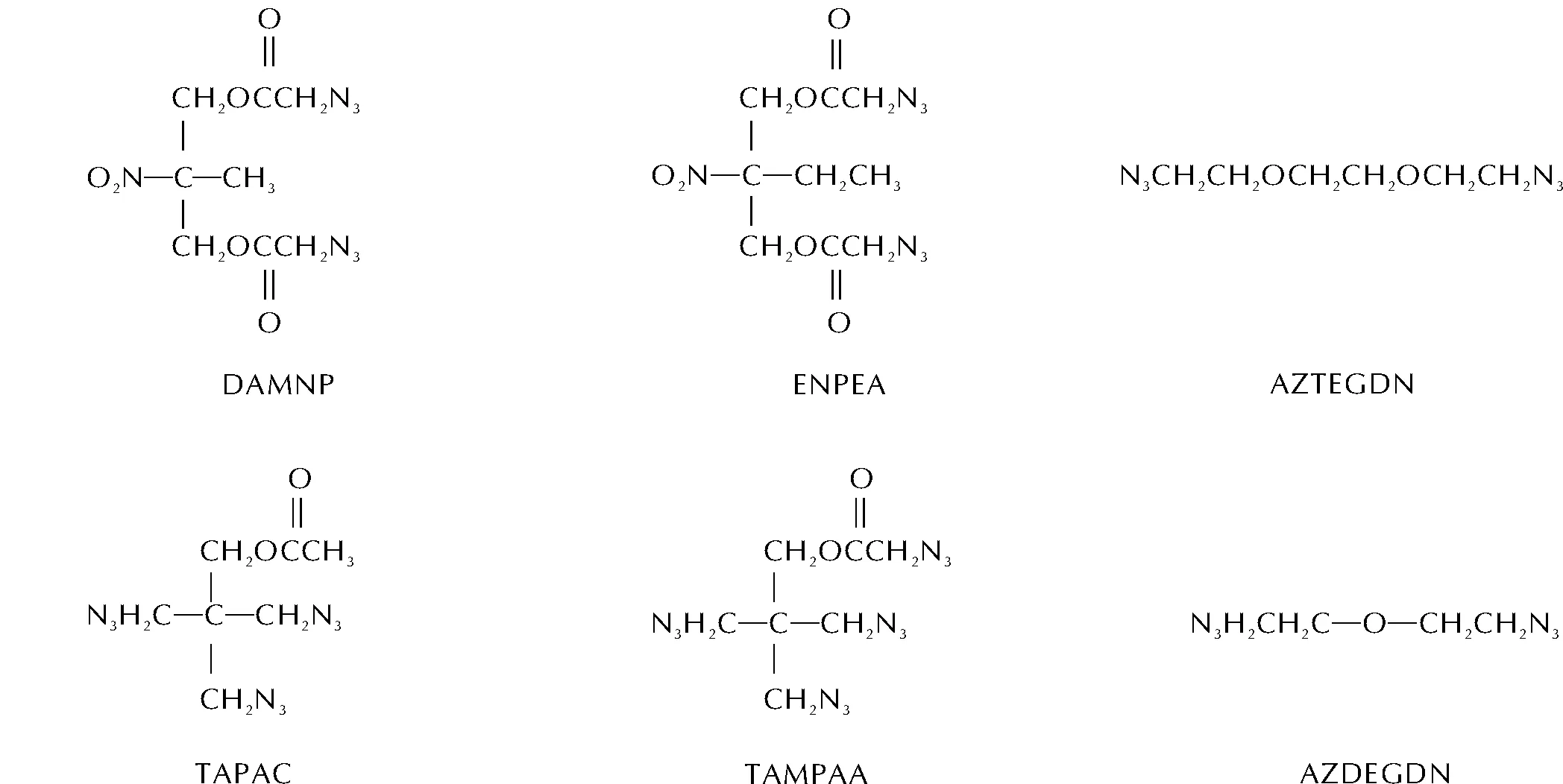
Fig.1 Structural formulas of studied azide plasticizers
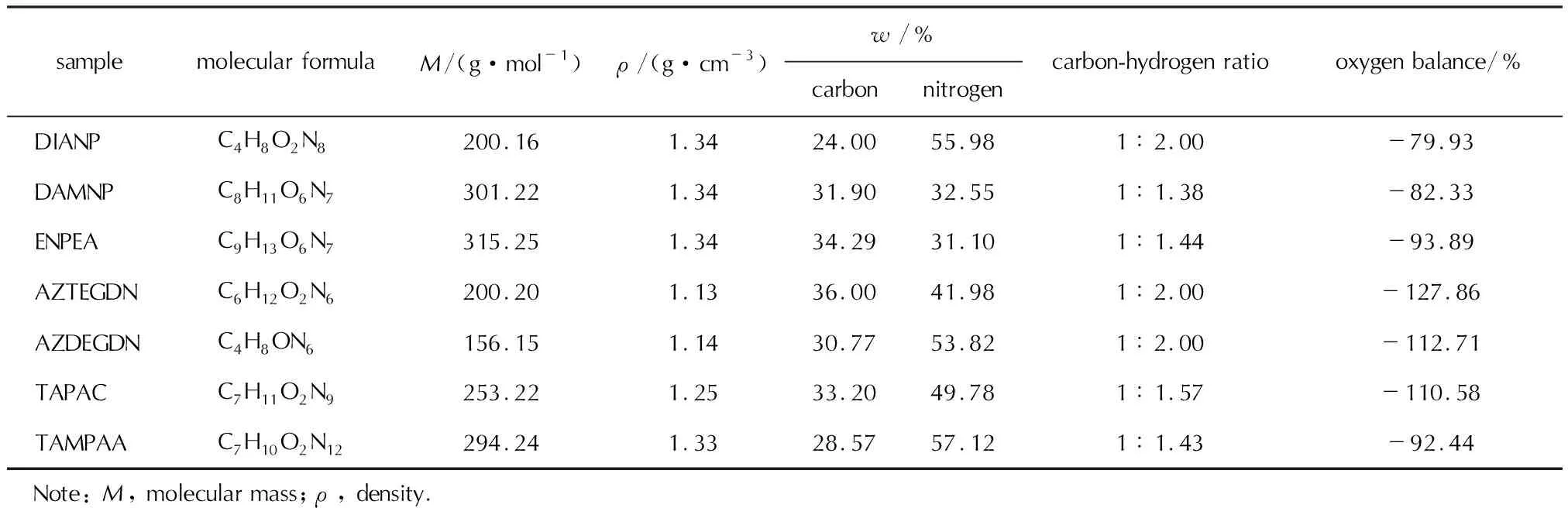
Table 1 Physical properties of several azide plasticizers
1.2 Equipment and conditions
The specific heat capacity was measured using a micro-DSC calorimeter (SETARAM, France), with an operating temperature range of 283 to 353K, a temperature accuracy of 10-4K, a heat flow accuracy of 10-4mW, and heating rate of 0.2K/min. The sample mass used for the calorimetric measurement was approximately 300mg. The micro-calorimeter was calibrated withα-Al2O3, and the result was 79.45J/(K·mol) at 298.15K, which was in an excellent agreement with the reported value of 79.02J/(K·mol)[26].
The combustion heat was determined using an IKA C6000 oxygen-bomb calorimeter (Staufen, Germany) in an adiabatic environment. The sample mass used for the calorimetric measurement was approximately 250mg. The calorimeter was calibrated with a standard substance, benzoic acid, whose mass fraction was 99.99%. The combustion heat of benzoic acid was measured six times and the mean value (-26491J/g) was very close to the standard value as -26469J/g(T=298.15K), indicating that the measuring system was accurate and reliable.
2 Results and discussion
2.1 Specific heat capacity
The continuous specific heat capacities of the six compounds were measured. For DIANP, the determination result is shown in Figure 2. The specific heat capacity of DIANP presents a good quadratic relationship with temperature for determining the temperature range. By binomial fitting, the specific heat capacity equation parameters of six plasticizers were obtained, which are listed in Table 2. Moreover, the standard molar specific heat capacities of the six plasticizers were calculated and listed in Table 2.
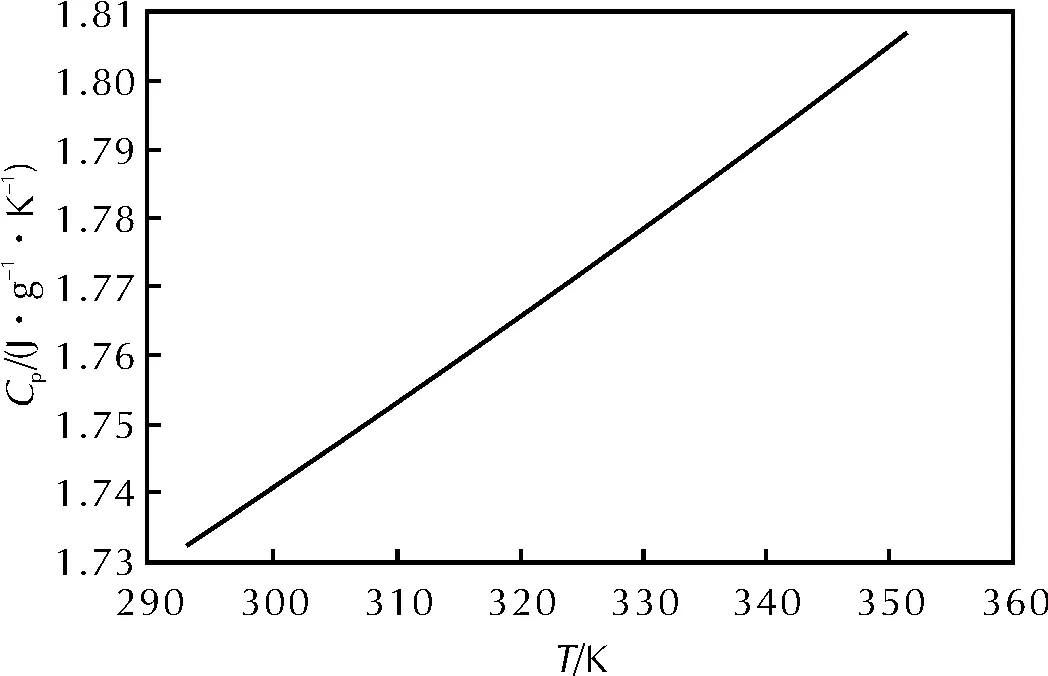
Fig.2 Specific heat capacity of DIANP as a function of temperature
As shown by the results listed in Table 2, the specific heat capacities of six plasticizers are higher than that of conventional solid energetic materials and high nitrogen compounds such as 3,4-diaminofurazan [1.4067J/(g·K)] and 3,4-dinitrofurazan [1.4797J/(g·K)][22, 27].
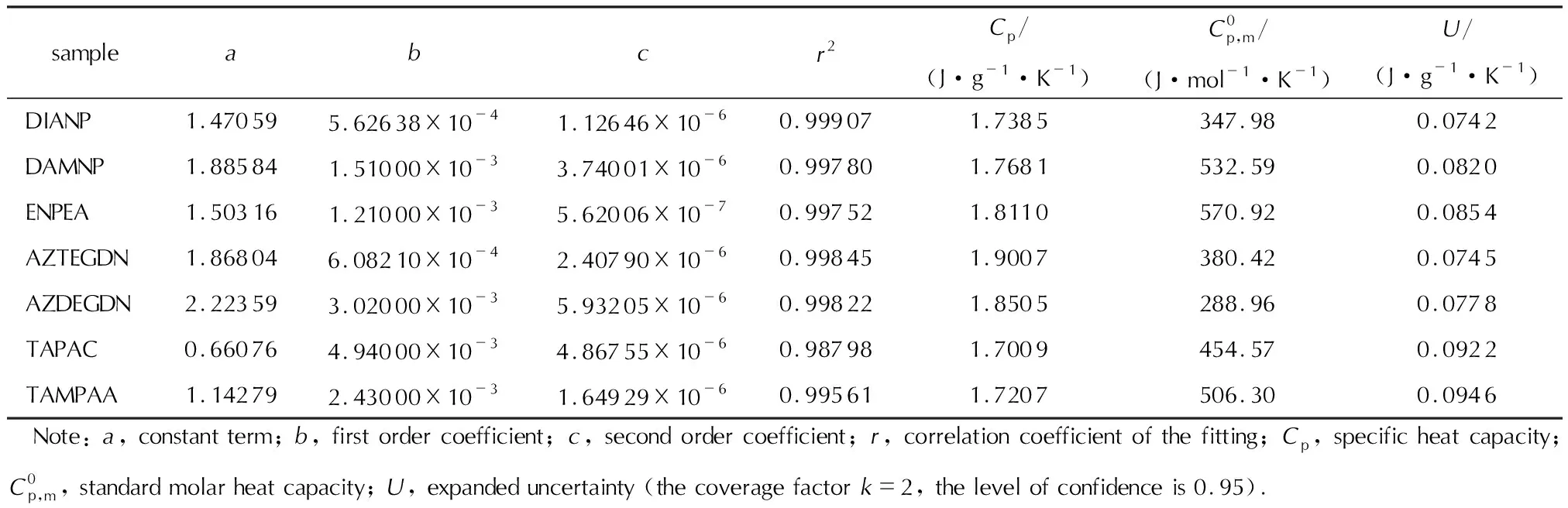
Table 2 The continuous specific heat capacities determination results of several azide plasticizers at 0.1MPa
The order of the specific heat capacities for the six plasticizers is AZTEGDN>AZDEGDN>ENPEA>DAMNP>DIANP>TAMPAA>TAPAC. The specific heat capacity of a compound is related to its molecular structure. A comparison of AZTEGDN with AZDEGDN shows that lengthening of the main chain increases the specific heat capacity. A comparison of DAMNP with ENPEA shows that an increase in C atoms on the branched chain increases the specific heat capacity. A comparison of TAPAC with TAMPAA shows that an increase in the azide group on the branched chain increases the specific heat capacity.
2.2 Combustion heat
The experimental process and conditions for determining the material combustion heat were the same as those for the standard substance, benzoic acid. Each sample was tested six times, and the mean values are listed in Table 3.
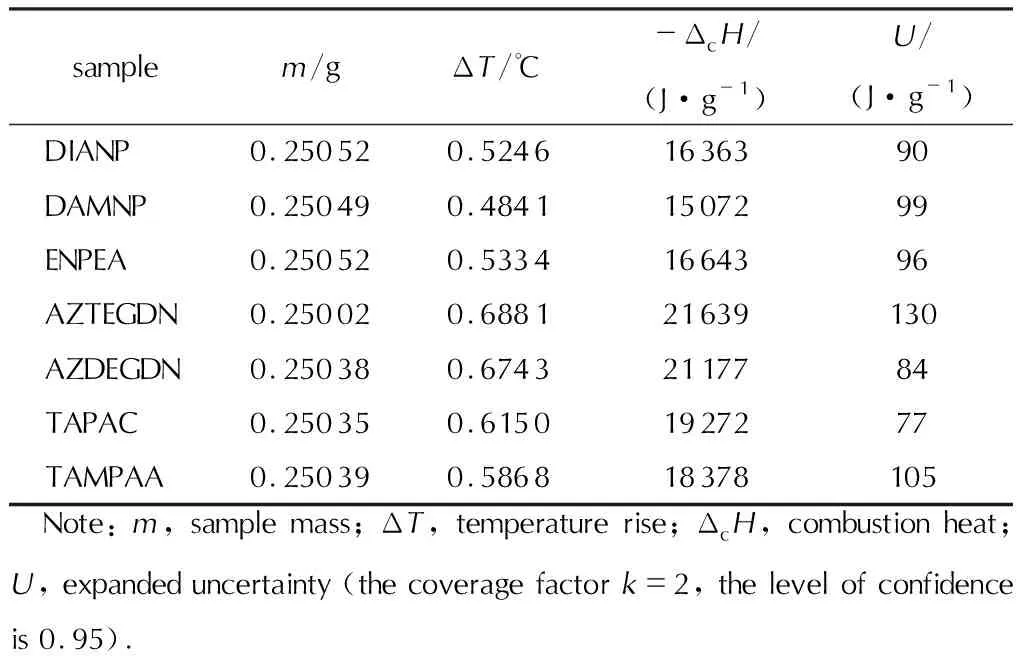
Table 3 The combustion heats determination results of several azide plasticizers
As shown in Table 3, the constant volume combustion heat of DIANP (16363J/g) is similar to the literature value (16321J/g)[28]. The order of the combustion heats for the six plasticizers is AZTEGDN>AZDEGDN>TAPAC>TAMPAA>ENPEA>DIANP>DAMNP.
The combustion heat increases with an increase in carbon content and a decrease in the carbon-hydrogen ratio. When the carbon contents of the plasticizer are similar (e.g., DAMNP, ENPEA, AZTEGDN and TAPAC), the combustion heat increases with a decrease in the carbon-hydrogen ratio. When the carbon-hydrogen ratio of plasticizers are the same (e.g., DIANP, AZTEGDN and AZDEGDN), the combustion heat increases with an increase in the carbon content. Therefore, AZTEGDN has the highest combustion heat, while DIANP has the lowest combustion heat.
2.3 Standard molar enthalpy of formation
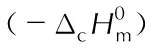
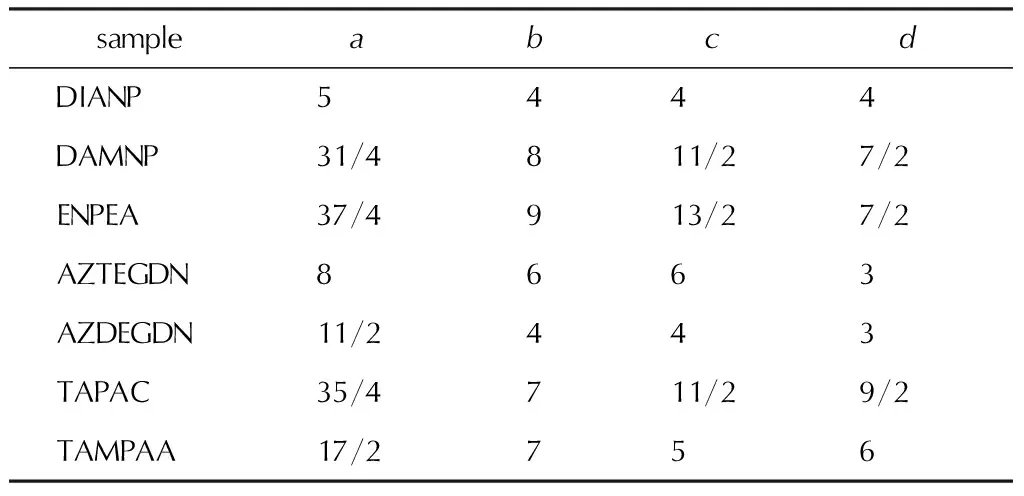
Table 4 Metrological coefficients of chemical equation for different plasticizers
M(l)+aO2(g)=bCO2(g)+cH2O(l)+dN2(g)
(1)
The standard molar combustion heat can be obtained by Eq.2 from the constant-volume state to the constant-pressure state. The calculated results are listed in Table 5.
(2)
Here, Δnis the change in the total molar amount of gases in the reaction process.

(3)

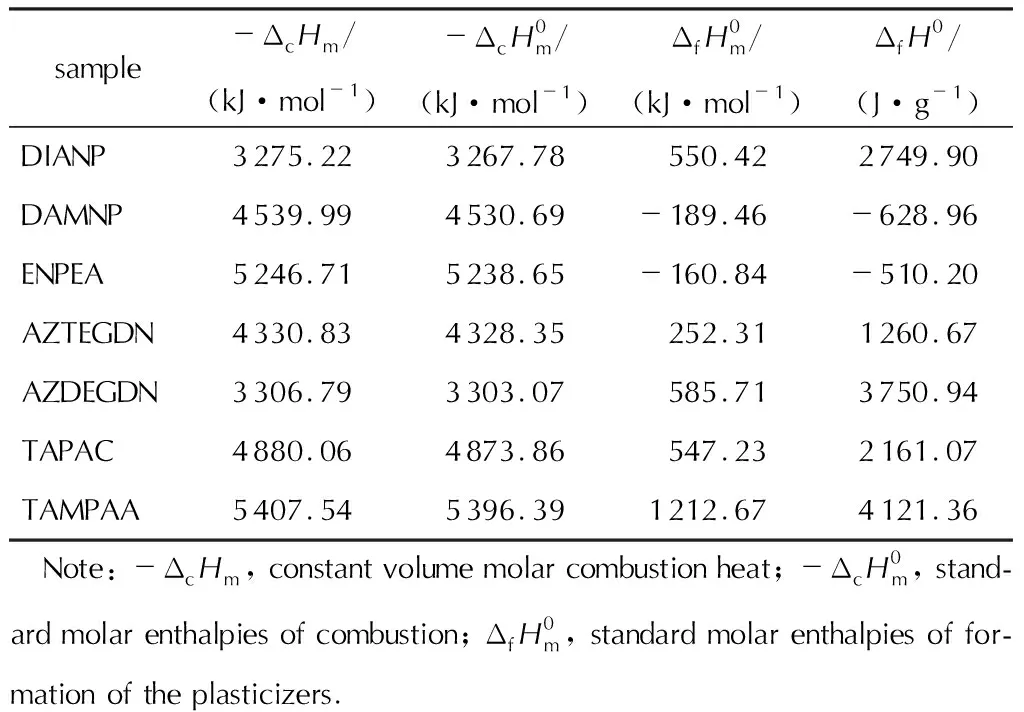
Table 5 Constant-volume molar combustion heats, standard molar enthalpies of combustion and standard molar enthalpies of formation of the plasticizers
As shown from the results presented in Table 5, the standard molar enthalpies of formation for DIANP (550.42kJ/mol) is similar to the literature value (540.0kJ/mol)[28]. The order of standard molar enthalpies of formation for the six plasticizers is TAMPAA>AZDEGDN>DIANP> TAPAC>AZTEGDN>ENPEA>DAMNP. Moreover, as the nitrogen content increases, the standard molar formation enthalpies of each of the plasticizers increase.
2.4 Theoretical prediction of propellant composition
To evaluate the application prospects of azide plasticizers, the gun propellant composition of 30%NC, 47%RDX, 22%DIANP, and 1% centralite is referred to as the control composition, and six different propellant compositions were designed with a replacement for DIANP, separately using different new azide plasticizers. Thermodynamic calculations for typical propellant formulations containing different azide plasticizer were carried out by using a computer program, which the calculation method is similar to THERM programmer[29], and the results are shown in Table 6.
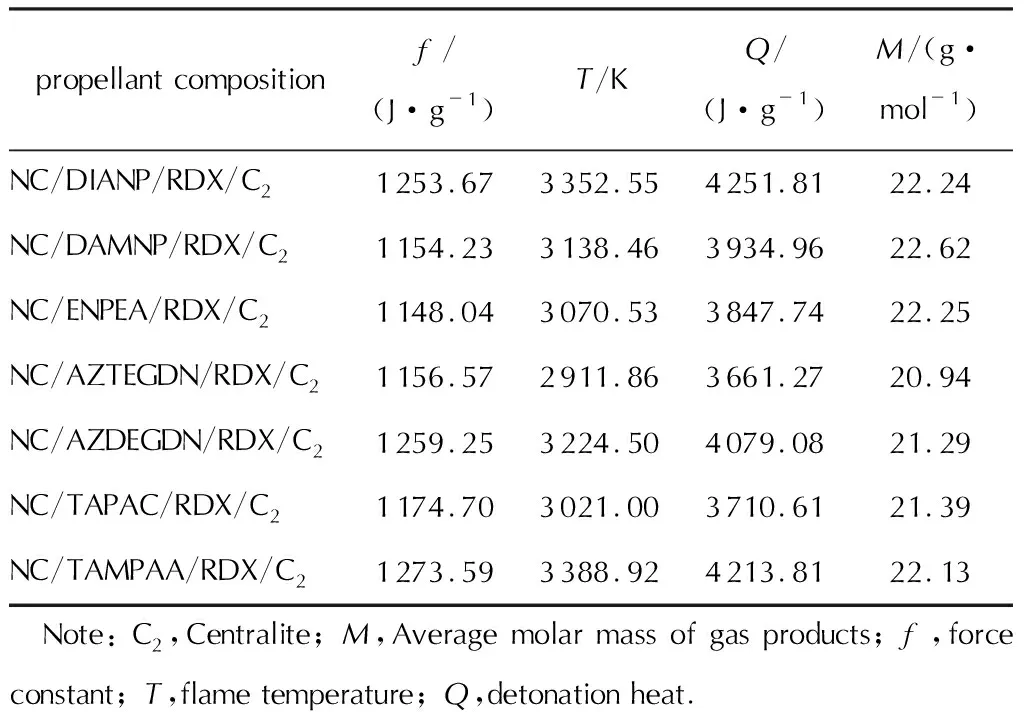
Table 6 Thermochemical parameters calculated theoretical for different propellant compositions
As seen from the data shown in Table 6, the order of force constant of the propellant compositions is different from that of the standard molar enthalpies of formation of the plasticizers. The reason may be that the force constant of the propellant formulation is related not only to the enthalpy of formation of the plasticizer, but also to the oxygen balance. When the oxygen balance values of the plasticizers are similar, the plasticizer with relatively high enthalpy of formation can make the propellant formula have obvious energy advantage.
It can be seen that the force constant of the AZDEGDN-based propellant is higher (5J/g) than that of the DIANP-based propellant, and the flame temperature is significantly lower (128K). The force constant of the TAMPAA-based propellant is much higher (20J/g) than that of the DIANP-based propellant, although the flame temperature is higher (36K). Moreover, the gas products of the AZDEGDN-based propellant and TAMPAA-based propellant have lower average molar masses. Therefore, when AZDEGDN and TAMPAA are used as plasticizers in gun propellants, they can not only increase the function of gunpowder, but also reduce ablation of the barrel. Compared with the molecular structure of DIANP, AZDEGDN and TAMPAA, the N atom of DIANP come from N-NO2and -N3, the N atom of AZDEGDN and TAMPAA all come from -N3. Therefore, the content of N2in the combustion products of AZDEGDN and TAMPAA is more than that of DIANP, which is beneficial to reduce the average molar mass of gas products and flame temperature. At the same time, the high enthalpy of formation of AZDEGDN and TAMPAA is helpful to improve the force constant.
3 Conclusion
(1) With increasing the length of main chain and the number of functional groups in the side chain, the specific heat capacity of plasticizers increases.
(2) The combustion heat of plasticizer increases with increasing the carbon content and decreasing the carbon-hydrogen ratio. The standard molar enthalpy of formation of plasticizer increases with increasing the nitrogen content. AZDEGDN and TAMPAA have higher positive standard molar enthalpy of formation, which are 585.71kJ/mol and 1212.67kJ/mol, respectively.
(3) Through formula design and thermodynamic calculations, AZDEGDN-based propellant and TAMPAA-based propellant have advantages of high energy level and low flame temperature. AZDEGDN and TAMPAA have good prospects for application.