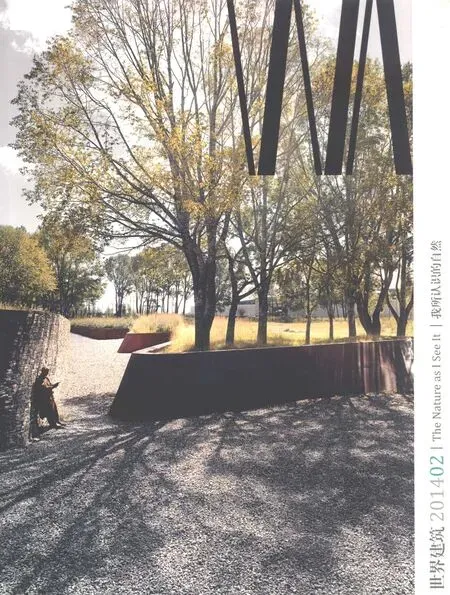
辰山植物園礦坑花園,上海,中國
2014-02-18 09:41:32景觀設計清華大學建筑學院景觀學系北京清華同衡規劃設計研究院有限公司
世界建筑 2014年2期
景觀設計:清華大學建筑學院景觀學系/北京清華同衡規劃設計研究院有限公司
Landscape Design: Department of Landscape Architecture at the School of Architecture, Tsinghua University/Beijing Tsinghua Tongheng Urban Planning and Design Institute Ltd.
辰山植物園礦坑花園,上海,中國
Quarry Garden in Botanical Garden, Shanghai, China, 2010
景觀設計:清華大學建筑學院景觀學系/北京清華同衡規劃設計研究院有限公司
Landscape Design: Department of Landscape Architecture at the School of Architecture, Tsinghua University/Beijing Tsinghua Tongheng Urban Planning and Design Institute Ltd.
辰山采石坑屬人工采礦遺跡,山體被挖出東西兩個“眼睛”,表面風化嚴重,部分區域有明顯皴紋。平臺為采石留下的斷面,北部剔出一層臺地,其邊緣有數層擋墻以防止滑坡。深潭高差約30m,潭水清澈深逾20m,內有島嶼和植被。整個場地蕭瑟硬朗,充滿極大的景觀潛質。
設計首先要修復嚴重退化的生態環境,這必須充分尊重自然的自我修復能力,作適度干預,通過增加水景來改善小氣侯,通過堆積地形來恢復植被。其次,要客觀認識采礦破壞生態的歷史,重新建立廢棄地和人之間的聯系。設計中,中國山水審美范式(游觀而非定點,進入而非在畫外)、補缺心理和適度疏離感都引導著設計結果。
設計將場地原置(已經被破壞的自然)和新置(通過設計增加的部分)看做一個整體,即游人將進入的畫境,用一系列動作在新舊之間轉換。借由精心設計的游線和觀察點,反復地進入畫內和跳脫畫外,在不同的空間位置進行感知,拓展了空間秩序,相互滲透,整合了原置與新置彼此關聯的部分,從而達到透明性,這也意味著人和自然的統一。
設計更新了人對第四自然(被破壞的自然)的認識,通過建立第三自然和第四自然的良好并置關系(借透明性而達到),來表達對自然的充分尊重,警示人們不能過度開發。

1 走在既危險又極安全的棧道上,人可以貼近觸碰原置,獲得對山石的真實體驗,被拉進歷史空間/Walking on the dangerous and safe trestle, people may touch the existing, obtain real mountain/ stone experience and feeling being dragged into the historic space.
項目信息/Credits and Data
客戶/Client:上海辰山植物園
項目主持/Principal in Charge:朱育帆
設計團隊/Design Team:姚玉君,孟凡玉,王丹,張振威,馮紓苨,孟瑤,嚴志國,翟薇薇,郭暢,孫建宇,孫天正,齊羚,楊展展,崔慶偉,張雋岑,龔沁春,常鈺琳,田錦,董順芳,孫姍
設計面積/Area:4.3hm2
設計時間/Design Period:2007-2010
合作單位/Collaboration:北京中元工程設計顧問公司/北京中奧雕塑環境藝術有限公司
攝影/Photos:陳堯

2 在曾經的卷揚機坡道上爆破出一條山隙,模仿中國人對自然山水體驗的一個片段。雖然是用采石同樣的動作,卻是全新的設計,溝通了被隔斷的兩個空間,加強了進入感/ A mountain gap is blasted on the ever winch ramp to imitate a fragment of Chinese natural landscape experience. Though with the same quarrying action, it is a brand-new design and links up the two separated space and strengthens the sense of entry.
At the Chenshan stone pit east-west "eyes" have been dug out of the severely weathered surface of the mountain. The platform-a section left over from quarrying-and a terrace to its north are made up of layers of retaining wall construction to avoid landslides. The site has an overall difference in height of about 30m and a more than 20m deep clear pool complete with islands of vegetation. The whole bleak robust site had great potential as a "garden."
The first step in engaging and repairing this severely degraded ecological environment was to recognize and respect nature's capacity to repair itself if given the proper prompts. Here the microclimate was improved by increasing water on the site. Vegetation was recovered by via constructed landforms. The second step in the process was to understand the ecological damage that had been done to the site from an ecological and historical perspective and to reestablish a connection between the place and people. Patterns of the aesthetic Chinese landscape-traveling and staying; inside and out; absence and surplus, community and alienation, etc.-guided the result.
The design as a whole integrates the existing destroyed nature with a series of strategic new insertions. Visitors shift between the two as they move from picturesque scene to picturesque scene on the site. Like a well-designed tourist route, visitors travel along a line to a viewpoint and then move along another line to the next "view." They repeatedly enter into and escape from scenes and have a way to register their position in space. These spatial orders are extended and become understood as part of the existing while new interventions are integrated through interpretation. A kind of transparency-man-nature unity-is achieved.
The design improves man's understanding of the Fourth Nature (destroyed nature), is respectful of nature in establishing a relationship and communication between the Third and Fourth natures (transparency) and warns people to avoid excessive development.

3 基地位于植物園的點睛之處/Site in botanical garden as a core "eye"

4 基地地形/Site topography

6 山頂有一平臺,從高空俯覽全局,構成了與東坑及辰山整體的關聯,同時實現了西坑小空間到大自然空間的升級/A platform on the mountaintop, by overlooking the whole from the high altitude,constitutes the correlation with the eastern pit and the integral Chenshan Hill and realizes upgrade from small space of western pit to the large natural space.
評論
張路峰:這不是一個令人賞心悅目的花園,更像是一個發人深省的露天博物館。礦坑,是人類活動給大地母親造成的創傷。景觀建筑師并沒有刻意去掩飾、美化這個傷口,而是設計了立體游覽線,使游人能夠下行到坑底,從一個陌生的角度觀察和體驗周圍的斷壁和腳下的深潭,從而在內心產生反思和自省的情緒。路徑的線型設計簡潔有力,采用了金屬、木材等材料,和巖石的粗糲形成有趣的對比。
胡一可:景觀的哲學性。在哲學層面上講,空間消極與否并非一成不變。由于人類對自然的認知存在局限,人為的生態恢復往往難以體現原有環境的真實性和完整性,而時間卻可以彌合傷口。礦坑花園的設計對原有環境進行適度干擾,尊重自然的自我修復能力,重建廢棄地與人之間的聯系,通過精心的設施構建表達“傷口”本身能帶給人們怎樣的體驗和記憶。
Comments
ZHANG LUfeng: This is not an appealing garden. It is more like a thought-provoking open-air museum. The quarry pits represent the trauma human activity foists on mother earth. The landscape architect does not deliberately conceal or beautify these wounds. Instead he creates a tour route that allows visitors to get into them-to access the bottom of the pit. The hope is that, by observing and experiencing the broken walls and deep pool from unusual angles, visitors will reflect on this record of human activities. The route the path follows is very concise. It is of metal and wood, interesting contrasts with the crude rock face.
HU Yike:A philosophical landscape. From the philosophical perspective, whether space is negative or not cannot be fixed with finality. Because of the limits of human cognition, it is difficult for man-made ecological restorations to reflect the authenticity and integrity of the original environment. But time can heal the wounds. The Quarry Garden, respecting nature's capacity for self-repair, moderately interferes with the original environment of the site. It rebuilds the relationship between the wasteland and people, and demonstrates how, in this carefully constructed facility, expressing the "wounds" can bring people, experience and memory together.

7 通過鋼筒,游人仿佛石頭一樣被倒進空洞,通過傾斜感及臨空感獲得極限體驗,強化對近-30m水面的感知,人開始真正進入原置空間/Through steel cylinder, tourists appears to be poured into the cavity as stones, obtains ultimate experience through sense of inclination and airport, strengthen nearly -30m water surface sense and begin to truly enter into the existing space.

8 銹鋼板作為采石工業的印記,是山、水、石、植被之外唯一被引用的人工因素,也因為雨水和歲月而具有了自然屬性/As a mark of the quarrying industry, the rusted steel plate is the only referenced manual factor except mountain, water, stone and vegetation and it also adds natural property with rainwater and time.

9 在深潭內,可仰觀山瀑和鏡湖瀑布,雖是新置入的因素,但是以自然原置的方式介入(用以促生植被再生),憑借其高度和影響力溝通3個高差層級,成為空間紐帶/In the pool, we may look up into mountain waterfall and Mirror Lake Waterfall; though new addition factors, through intervene in the mode of the existing natural layout (for promoting regeneration of vegetation), by virtue of its height and influence power, three height difference levels are linked up and become the space link.

10 山洞是中國人山水自然觀的另一個標準片段,借此通向更深遠的自然/Cave is another standard fragment of Chinese view of landscape and nature and we will lead to more deep nature whereby.

11 水流過的地方,青苔已經慢慢長開/At the place where water flows, moss has already begun to grow slowly.

13 臺地東北角設“甘白山泉”景點(取自古辰山十景),背倚山壁臺地而看深潭,是對第二層級并置關系的觀照/"Ganbai Spring" scenic spot (taken from ten scenes of the ancient Chenshan Hill) is arranged at the northeast corner of the terrace, back by mountain terrace and against pool and shows Level 2 juxtaposition relationship.

14 用與采石同樣的動作(小當量爆破),在平臺中心開挖鏡湖,以平衡深潭強烈的負向空間。憑借將水景置入場地來倒影周邊自然姿態,同時改善小氣候,促進生態恢復/With the same action as the quarrying (small equivalent blasting), the Mirror Lake is excavated in the center of the platform to balance strong negative space of the pool. The waterscape is placed in the site to reflect the surrounding natural appearance, improve microclimate and promote ecological recovery.
猜你喜歡
現代裝飾(2021年6期)2021-12-31 05:27:54
小學科學(學生版)(2020年12期)2021-01-08 09:28:10
小學科學(學生版)(2020年7期)2020-07-28 08:00:52
現代裝飾(2020年7期)2020-07-27 01:27:42
少年漫畫(藝術創想)(2020年12期)2020-06-09 05:50:08
流行色(2020年1期)2020-04-28 11:16:38
藝術啟蒙(2018年7期)2018-08-23 09:14:18
海峽姐妹(2017年7期)2017-07-31 19:08:17
Coco薇(2017年5期)2017-06-05 08:53:16
照明工程學報(2016年3期)2016-06-01 12:17:56