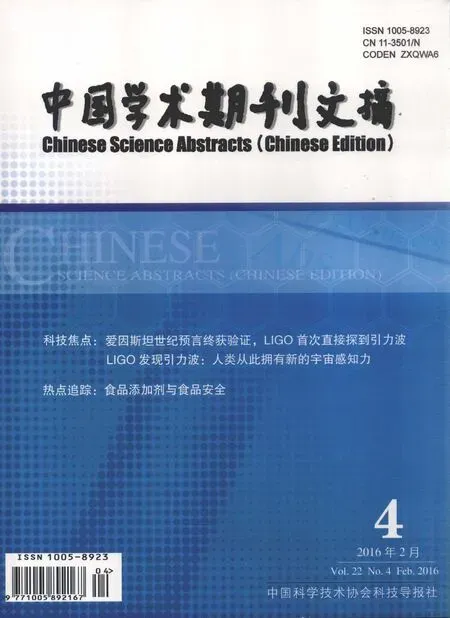
由食品添加劑的發(fā)展引發(fā)的對食品安全的思考
2016-02-13 23:38:27湯力
中國學術(shù)期刊文摘 2016年4期
關(guān)鍵詞:食品安全
湯力
?
由食品添加劑的發(fā)展引發(fā)的對食品安全的思考
湯力
摘要:伴隨食品工業(yè)的發(fā)展,食品添加劑在現(xiàn)代食品生產(chǎn)工業(yè)中的作用日趨明顯,從而推動食品添加劑行業(yè)進入一個全新的加速發(fā)展階段。但與此同時,因食品添加劑引發(fā)的一系列食品安全問題,也逐漸進入公眾視野,成為社會關(guān)注的熱點。主要就我國食品添加劑行業(yè)發(fā)展中存在的主要問題,分析了引發(fā)食品添加劑安全問題的起因,并就新的食品安全法,提出了有利于解決食品安全問題的長效措施。
關(guān)鍵詞:食品安全;食品添加劑;食品安全法;有利措施
Polymer-matrix nanocomposite membranes for water treatment
YIN Jun; DENG Bao-lin
Abstract:One of the grand challenges to sustain the modern society is to secure adequate water resources of desirable quality for various designated uses. To address this challenge, membrane water treatment is expected to play an increasingly important role in areas such as drinking water treatment, brackish and seawater desalination, and wastewater treatment and reuse. Existing membranes for water treatment, typically polymeric in nature, are still restricted by several challenges including the trade-off relationship between permeability and selectivity (also called Robeson upper boundary in membrane gas separation), and low resistance to fouling. Nanocomposite membranes, a new class of membranes fabricated by combining polymeric materials with nanomaterials, are emerging as a promising solution to these challenges. The advanced nanocomposite membranes could be designed to meet specific water treatment applications by tuning theft structure and physicochemical properties (e.g. hydrophilicity, porosity, charge density, and thermal and mechanical stability) and introducing unique functionalities (e.g. antibacterial, photocatalytic or adsorptive capabilities). This review is to summarize the recent scientific and technological advances in the development of nanocomposite membranes for water treatment. The nanocomposite membranes were classified into (1) conventional nanocomposite, (2) thin-film nanocomposite (TFN), (3) thin-film composite (TFC) with nanocomposite substrate, and (4) surface located nanocomposite, based on the membrane structure and location of nanomaterial. Challenges and future research directions in developing high performance nanocomposite membranes were also discussed. Chemical and microbiological deteriorations are principal causes of quality loss of fish and fish products during handling, processing, and storage. Development of rancid odor and unpleasant flavor, changes of color and texture as well as lowering nutritional value in fish can be prevented by appropriate use of additives. Due to the potential health hazards of synthetic additives, natural products, especially antioxidants and antimicrobial agents, have been intensively examined as safe alternatives to synthetic compounds. Polyphenols (PP) are the natural antioxidants prevalent in fruits, vegetables, beverages (tea, wine, juices), plants, seaweeds, and some herbs and show antioxidative and antimicrobial activities in different fish and fish products. The use of phenolic compounds also appears to be a good alternative for sulphiting agent for retarding melanosis in crustaceans. Phenolic compounds have also been successfully employed as the processing aid for texture modification of fish mince and surimi. Thus, plant polyphenolic compounds can serve as potential additives for preventing quality deterioration or to retain the quality of fish and fish products. Sodium and phosphorus-based food additives are among the most commonly consumed nutrients in the world. This is because both have diverse applications in processed food manufacturing, leading to their widespread use by the food industry. Since most foods are naturally low in salt, sodium additives almost completely account for the excessive consumption of sodium throughout the world. Similarly, phosphorus additives represent a major and “hidden” phosphorus load in modern diets. These factors pose a major barrier to successfully lowering sodium or phosphorus intake in patients with CKD. As such, any serious effort to reduce sodium or phosphorus consumption will require reductions in the use of these additives by the food industry. The current regulatory environment governing the use of food additives does not favor this goal, however, in large part because these additives have historically been classified as generally safe for public consumption. Tobook=23,ebook=27overcome these barriers, coordinated efforts will be needed to demonstrate that high intake of these additives is not safe for public consumption and as such should be subject to greater regulatory scrutiny. Consumer perceptions and resulting actions determine the commercial future of any food ingredient. Food safety affects consumer food choice in ways that are different from other dimensions of quality. In the present exploratory work, qualitative consumer techniques (Word Association and Free Listing) were applied to identify the consumers’ first associations and knowledge of additives in general and of thickeners in particular. The consumers’ knowledge and perceptions of the functions and applications of thickeners were also assessed. Little knowledge and a relatively negative perception of additives were identified, but the consumers did not have food hydrocolloids in mind when they thought of additives. Thickeners were principally identified with flour and starches and a minor degree of knowledge about gums was also found. A strong association between “industrially processed” food and additives/thickeners was identified. Good prospects can be predicted for food hydrocolloids due to their natural origin in familiar sources which are “cleaner” in the consumers’ eyes. Nanodispersions based on food grade biocompatible materials were developed and structurally characterized to be used as carriers of bioactive compounds with specific nutritional value. The main idea was to formulate concentrated solutions of specific food components at the nanoscale to be consumed either on their own or as integrating parts of classic foods, upon aqueous dilution. For this purpose microemulsions consisting of (R)-(+)-limonene/ ethanol/Tween 40/water/propylene glycol were formulated in the presence and in the absence of squalene, gallic acid and octyl gallate. The limits of the single-phase region as described by pseudo-ternary phase diagrams were related to the nature of the food additive. The more extended monophasic region was obtained when octyl gallate was added in the system. Interfacial properties of the microemulsions were studied by electron paramagnetic resonance (EPR) spectroscopy employing the nitroxide spin probe 5-doxylstearic acid (5-DSA). In general guest molecules decreased the flexibility of the surfactant monolayer as manifested from the calculation of rotational correlation time (T-R) and order parameter S of 5-DSA. Particle size measurements were performed using dynamic light scattering (DLS) and oil droplet diameters in the range of 11.7 to 17.4 nm were observed. The addition of squalene resulted in the formulation of larger oily droplets whereas octyl gallate formed smaller ones. Finally SAXS experiments provided qualitative information of o/w microemulsions showing squalene solubilization in the dispersed oily phase, octyl gallate localization on the membrane and gallic acid solubilization in the continuous aqueous phase The pressing issue to feed the increasing world population has created a demand to enhance food production, which has to be cheaper, but at the same time must meet high quality standards. Taste, appearance, texture, and microbiological safety are required to be preserved within a foodstuff for the longest period of time. Although considerable improvements have been achieved in terms of food additives, some are still enveloped in controversy. The lack of uniformity in worldwide laws regarding additives, along with conflicting results of many studies help foster this controversy. In this report, the most important preservatives, nutritional additives, coloring, flavoring, texturizing, and miscellaneous agents are analyzed in terms of safety and toxicity. Natural additives and extracts, which are gaining interest due to changes in consumer habits are also evaluated in terms of their benefits to health and combined effects. Technologies, like edible coatings and films, which have helped overcome some drawbacks of additives, but still pose some disadvantages, are briefly addressed. Future trends like nanoencapsulation and the development of smart additives and packages, specific vaccines for intolerance to additives, use of fungi to produce additives, and DNA recombinant technologies are summarized. Objective: Phosphorus-based food additives increase the total phosphorus content of processed foods. However, the extent to which these additives augment total phosphorus intake per day is unclear. Design and Methods: To examine the contribution of phosphorus-based food additives to the total phosphorus content of processed foods, separate 4-day menus for a low-additive and additive-enhanced diet were developed using Nutrition Data System for Research (NDSR) software. The low-additive diet was designed to conform to U.S. Department of Agriculture guidelines for energy and phosphorus intake (similar to 2,000 kcal/day and 900 mg of phosphorus per day), and it contained minimally processed foods. The additive-enhanced diet contained the same food items as the low-additive diet except that highly processed foods were substituted for minimally processed foods. Food items from both diets were collected, blended, and sent for measurement of energy and nutrient intake. Results: The low-additive and additive-enhanced diet provided approximately 2,200 kcal, 700 mg of calcium, and 3,000 mg of potassium per day on average. Measured sodium and phosphorus content standardized per 100 mg of food was higher each day of the additive-enhanced diet as compared with the low-additive diet. When averaged over the 4 menu days, the measured phosphorus and sodium contents of the additive-enhanced diet were 606±125 and 1329±642 mg higher than the low-additive diet, respectively, representing a 60% increase in total phosphorus and sodium content on average. When comparing the measured values of the additive-enhanced diet to NDSR-estimated values, there were no statistically significant differences in measured versus estimated phosphorus contents. Conclusion: Phosphorus and sodium additives in processed foods can substantially augment phosphorus and sodium intake, even in relatively healthy diets. Current dietary software may provide reasonable estimates of the phosphorus content in processed foods. Food additives, such as food colours or sweeteners, play an important part in food supply. For a variety of reasons, some consumers might regard the use of food additives, especially artificial ones, with suspicion; food additives are considered unnatural, unhealthy or even a public health risk. The goal of this study was to investigate consumers' perceptions and the most essential variables related to the acceptance of food additives. Two versions of a paper-and-pencil questionnaire, one investigating artificial food colours and the other investigating artificial sweeteners, were distributed to a large sample of Swiss German households. The final samples for artificial food colours and artificial sweeteners comprised 506 and 487 participants respectively. The questionnaires contained items on consumers’acceptance, risk and benefit perception, trust in regulators, knowledge of regulation and their preference for natural products. The relationships between variables were investigated in a path model, which was constructed based on a review of previous literature. The path coefficients suggested that risk and benefit perceptions significantly influence the acceptance of the two selected food additives. The risk and benefit perceptions were influenced by consumers’ knowledge of regulation, their trust in regulators, and their preference for natural products. In the discussion, the study’s findings are examined in terms of their implications for further research and for the development of concrete communication materials. Triterpenoids were thought to be biologically ineffective for a very long time, but aggregating proof on their widely ranging pharmacological activities paired with a dubious toxicity portrait has motivated regenerated attraction for human health and disease. In the current contribution, our central goal was to integratively dissect the biointeraction of two typical triterpenoids, ursolic acid and oleanolic acid, by the most fundamental macromolecule bovine serum albumin (BSA) by employing molecular modeling, steady state and time- resolved fluorescence, and circular dichroism spectra at the molecular scale. Based on molecular modeling, subdomain IIA, which matches Sudlow’s site 1, was allocated to retain high affinity for triterpenoids, but the affinity of ursolic acid with subdomain IIA is somewhat inferior compared to that of oleanolic acid, probably because the affinity differentiation arises from the different positions of the methyl group oh the E-ring in the two triterpenoids: This sustains the site-specific ligands, and hydrophobic 8-anilino-1-naphthalenesulfonic acid probe results in arranging the triterpenoids at the warfarin-azapropazone site. The data of steady state and time-resolved fluorescence indicated that the recognition of triterpenoids by BSA produced quenching by abook=25,ebook=29static type, in other words, the ground state BSA- triterpenoid complex formation with the affinities of 1.507/1.734, 1.042/1.186, and 0.8395/0.9863×104M-1at 298, 304, and 310 K for ursolic acid/oleanolic acid, respectively. Thermodynamic analyses show that the basic forces acting between BSA and triterpenoids are hydrogen bonds, van der Waals forces, and hydrophobic interactions; this occurrence provoked the alterations of the BSA spatial structure with a noticeable decline of alpha-helix evolcing perturbation of the protein, as stemmed from circular dichroism, synchronous fluorescence, and three-dimensional fluorescence measurements. We anticipate that the complexation of plant triterpenoids with protein delineated here may be exploited as a biologically relevant model for evaluating the physiologically applicable noncovalent complexes in in vivo examination of triterpenoid properties such as accumulation, bioavailability, and distribution. Chrysoidine is an industrial azo dye and the presence of chrysoidine in water and food has become an environmental concern due to its negative effects on human beings. Binding of dyes to serum albumins significantly influence their absorption, distribution, metabolism, and excretion properties. In this work, the interactions of chrysoidine with bovine serum albumin (BSA) were explored. Isothermal titration calorimetry results reveal the binding stoichiometry of chrysoidine to BSA is 1:15.5, and van der Waals and hydrogen bonding interactions are the major driving force in the binding of chrysoidine to BSA. Molecular docking simulations show that chrysoidine binds to BSA at a cavity close to Sudlow site I in domain IIA. However, no detectable conformational change of BSA occurs in the presence of chrysoidine as revealed by UV-vis absorption, circular dichroism and fluorescence spectroscopy studies. Eight tropical fruit pulps from Brazil were simultaneously characterised in terms of their antioxidant and antimicrobial properties. Antioxidant activity was screened by DPPH radical scavenging activity (126-3987 mg TE/100 g DW) and ferric reduction activity power (368-20819 mg AAE/100 g DW), and complemented with total phenolic content (329-12466 mg GAE/100 g DW) and total flavonoid content measurements (46-672 mg EE/100 g DW), whereas antimicrobial activity was tested against the most frequently found food pathogens. Acerola and acai presented the highest values for the antioxidant-related measurements. Direct correlations between these measurements could be observed for some of the fruits. Tamarind exhibited the broadest antimicrobial potential, having revealed growth inhibition of Pseudomonas aeruginosa. Escherichia coli, Listeria monocytogenes, Salmonella sp. and Staphylococcus aureus. Acai and tamarind extracts presented an inverse relationship between antibacterial and antioxidant activities, and therefore, the antibacterial activity cannot be attributed (only) to phenolic compounds Predicting and controlling starch retrogradation is of great interest. Advancements in starch retrogradation are relatively slow and many problems remain to be resolved. At present, starch retrogradation can be controlled qualitatively, but not quantitatively, by some techniques. Constituents or food additives such as proteins, lipids, carbohydrates, and salts play a significant role in inhibiting the retrogradation of starchy foods. Recent studies concerning the effect of additives on starch retrogradation are reviewed, and potential mechanisms are discussed. From 1916 to 2011, an estimated total of 165050000 metric tons of titanium dioxide (TiO2) pigment were produced worldwide. Current safety regulations on the usage of the TiO2pigment as an inactive ingredient additive in human food are based on legislation from 1969 and are arguably outdated. This article compiles new research results to provide fresh data for potential risk reassessment. However, even after 45 years, few scientific research reports have provided truly reliable data. For example, administration of very high doses of TiO2is not relevant to dailybook=26,ebook=30human uptake. Nevertheless, because dose makes the poison, the literature provides a valuable source for understanding potential TiO2toxicity after oral ingestion. Numerous scientific articles have observed that TiO2can pass and be absorbed by the mammalian gastrointestinal tract; can bioconcentrate, bioaccumulate, and biomagnify in the tissues of mammals and other vertebrates; has a very limited elimination rate; and can cause histopathological and physiological changes in various organs of animals. Such action is contrary to the 1969 decision to approve the use of TiO2as an inactive ingredient in human food without an established acceptable daily intake, stating that neither significant absorption nor tissue storage following ingestion of TiO2was possible. Thus, relevant governmental agencies should reassess the safety of TiO2as an additive in human food and consider establishing an acceptable maximum daily intake as a precautionary measure. With increase in processed and packaged food intake, there has been a growing concern regarding excessive use of food additives in food production. To assess whether these food additives pose a health hazard, their intake levels need to be defined. Various methods, such as per capita approach, total diet studies, Danish budget method, and individual- and householdbased diet surveys, have been used for estimating exposure to food additives, namely, preservatives, synthetic food colors, artificial sweeteners, and antioxidants. A regular monitoring mechanism should be in place for assessing risk of exposure to additives, especially in developing countries of the world This paper describes the operation of the European Union Reference Laboratory for Feed Additives (EURL) and its role in the authorisation procedure of feed additives in the European Union. Feed additives are authorised according to Regulation (EC) No. 1831/2003, which introduced a completely revised authorisation procedure and also established the EURL. The regulations authorising feed additives contain conditions of use such as legal limits of the feed additives, which require the availability of a suitable method of analysis for official control purposes under real world conditions. It is the task of the EURL to evaluate the suitability of analytical methods as proposed by the industry for this purpose. Moreover, the paper shows that one of the major challenges is the huge variety of the methodology applied in feed additive analysis, thus requiring expertise in quite different analytical areas. In order to cope with this challenge, the EURL is supported by a network of national reference laboratories (NRLs) and only the merged knowledge of all NRLs allows for a scientifically sound assessment of the analytical methods.
Keywords:nanocomposite; polymeric membrane; mixed-matrix; water treatment; antifouling phenolic compounds; fish and fish products; quality; functional properties; plant extracts nutrition; diet; sodium; phosphorus; chronic kidney disease food hydrocolloids; additives; perception; consumers O/w microemulsions; squalene; gallic acid; EPR; DLS; SAXS natural food additives; antimicrobial; antioxidant; conservatives; 34 colorants food additives; knowledge; acceptance; risk perception; benefit perception; communication food additive; triterpenoids; bovine serum albumin; molecular modeling; fluorescence; circular dichroism proteins; dyes; spectroscopy; isothermal titration calorimetry; thermodynamics; molecular docking antioxidant activity; antibacterial activity; DPPH; flavonoid content; functional foods; functional ingredients; FRAP; phenolic content; tropical fruit pulps additives; carbohydrates; lipids; proteins; starch retrogradation E171 food additive; oral ingestion; risk assessment; titanium dioxide; toxicology diet surveys; exposure assessment; food additive; processed food European Union Reference Laboratory for Feed Additives (EURL); authorisation of feed additives in the European Union; analytical methods for feed additives
來源出版物:Journal of Membrane Science, 2013, 479: 256-275
Emerging role of phenolic compounds as natural food additives in fish and fish products
Maqsood, Sajid; Benjakul, Soottawat; Shahidi, Fereidoon; et al.
來源出版物:Critical Reviews in Food Science and Nutrition, 2013, 53(2): 162-179
Sodium and phosphorus-based food additives: Persistent but surmountable hurdles in the management of nutrition in chronic kidney disease
Gutierrez, Orlando M
來源出版物:Advances in Chronic Kidney Disease, 2013, 20(2): 150-156
Exploring consumers’ knowledge and perceptions of hydrocolloids used as food additives and ingredients
Varela, P; Fiszman, SM
來源出版物:Food Hydrocolloids, 2013, 30(1): 477-484
Biocompatible nanodispersions as delivery systems of food additives: A structural study
Kalaitzaki, Argyro; Emo, Melanie; Stebe, Marie Jose; et al.
來源出版物:Food Research International, 2013, 54(2): 1448-1454
Adding molecules to food, pros and cons: A review on synthetic and natural food additives
Carocho, Marcio; Barreiro, Maria Filomena; Morales, Patricia; et al.
來源出版物:Comprehensive Reviews in Food Science and FoodSafety, 2014, 13(4): 377-399
Contribution of food additives to sodium and phosphorus content of diets rich in processed foods
Carrigan, Anna; Klinger, Andrew; Choquette, Suzanne S
來源出版物:Journal of Renal Nutrition, 2014, 24(1): 13-19
The consumer’s perception of artificial food additives: Influences on acceptance, risk and benefit perceptions
Bearth, Angela; Cousin, Marie-Eve; Siegrist, Michae; et al.
來源出版物:Food Quality and Preference, 2014, 38: 14-23
Bioavailability and activity of natural food additive triterpenoids as influenced by protein
PENG Wei; DING Fei; JIANG Yu-ting
來源出版物:Journal of Agricultural and Food Chemistry, 2014, 62(10): 2271-2283
Characterization of the binding of chrysoidine, an illegal food additive to bovine serum albumin
YANG Bing-jun; HAO Fang; LI Jia-rong
來源出版物:Food and Chemical Toxicology, 2014, 65: 227-232
Brazilian fruit pulps as functional foods and additives: Evaluation of bioactive compounds
Paz, Mario; Gullon, Patricia; Fatima Barroso, M; et al.
來源出版物:Food Chemistry, 2015, 172: 462-468
Effect of food additives on starch retrogradation: A review
FU Zhen; CHEN Jun; LUO Shun-jing; et al.
來源出版物:Starch-Starke, 2015, 67(S1): 69-78
Critical review of public health regulations of titanium dioxide, a human food additive
Jovanovic, Boris
來源出版物:Integrated Environmental Assessment and Management, 2015, 11(1): 10-20
Estimation of food additive intake-overview of the methodology
Jain, Arushi; Mathur, Pulkit
來源出版物:Food Additives and Contaminants Part A-Chemistry Analysis Control Exposure & Risk Assessment, 2016, 33(1): 66-77
編輯:衛(wèi)夏雯
領(lǐng)跑者5000論文
來源出版物:Food Reviews International, 2015, 31(4): 355-384
The work of the European Union Reference Laboratory for Food Additives (EURL) and its support for the authorisation process of feed additives in the European Union: a review
Von Holst, Christoph; Robouch, Piotr; Bellorini, Stefano
來源出版物:中國調(diào)味品, 2015, 40(9): 135-140
猜你喜歡
人民論壇·學術(shù)前沿(2016年20期)2016-12-06 19:42:59
法制與社會(2016年32期)2016-12-01 14:31:24
職工法律天地·下半月(2016年10期)2016-11-30 11:55:21
中小企業(yè)管理與科技·上旬刊(2016年11期)2016-11-28 20:12:30
現(xiàn)代經(jīng)濟信息(2016年25期)2016-11-24 06:57:41
商場現(xiàn)代化(2016年26期)2016-11-21 00:20:32
新媒體研究(2016年19期)2016-11-18 19:56:49
中國科技博覽(2016年18期)2016-10-19 11:03:18
科技視界(2016年21期)2016-10-17 20:50:50
企業(yè)導(dǎo)報(2016年11期)2016-06-16 15:44:24