中藥聯合心理干預治療產后抑郁療效研究
2017-09-12 08:21:18盧立紅于洪波
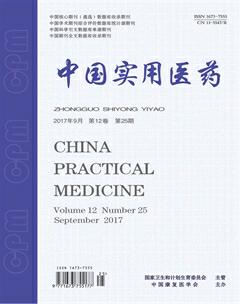
中國實用醫藥
2017年25期
關鍵詞:中藥
盧立紅 于洪波
【摘要】 目的 探討中藥聯合心理干預治療產后抑郁的臨床療效。方法 112例產后抑郁患者, 根據治療方法不同分為研究組(采用中藥聯合心理干預治療, 60例)和對照組(采用心理干預治療, 52例)。比較兩組患者治療前后愛丁堡產后抑郁量表(EPDS)、焦慮自評量表(SAS)及抑郁自評量表(SDS)評分及治療效果。結果 研究組和對照組治療前EPDS評分分別為(18.7±3.8)、(18.6±3.8)分, 治療后EPDS評分分別為(9.4±2.1)、(11.2±2.5)分, 治療后兩組患者EPDS評分均較治療前顯著下降, 且研究組低于對照組, 差異具有統計學意義(P<0.05)。研究組患者治療總有效率為95.0%, 高于對照組的84.6%, 差異具有統計學意義(P<0.05)。兩組患者治療后SDS評分及SAS評分均較治療前顯著下降, 且研究組患者SDS評分及SAS評分均低于對照組, 差異具有統計學意義(P<0.05)。結論 在心理干預的基礎上, 給予中藥治療產后抑郁, 能夠顯著改善焦慮、抑郁癥狀, 提高臨床療效。
【關鍵詞】 中藥;心理干預;產后抑郁
DOI:10.14163/j.cnki.11-5547/r.2017.25.069
【Abstract】 Objective To investigate the clinical efficacy of traditional Chinese medicine combined with psychological intervention in the treatment of postpartum depression. Methods A total of 1112 postpartum depression patients were divided by different treatment methods into research group (receiving traditional Chinese medicine combined with psychological intervention, 60 cases) and control group (receiving psychological intervention, 52 cases). Comparison were made on Edinburgh postnatal depression scale (EPDS), self-rating anxiety scale (SAS) and self-rating depression scale (SDS) score before and after treatment and treatment effect in two groups. Results The research group and control group had EPDS score before treatment respectively as (18.7±3.8) and (18.6±3.8) points, which were (9.4±2.1) and (11.2±2.5) points after treatment. After treatment, both groups had obviously lower EPDS score than before treatment, and the research group was lower than the control group. Their difference had statistical significance (P<0.05). The research group had higher total treatment effective rate as 95.0% than 84.6% in the control group, and the difference had statistical significance (P<0.05). Both groups had obviously lower SDS score and SAS score after treatment than before treatment, and the research group had lower SDS score and SAS score than the control group. Their difference had statistical significance (P<0.05). Conclusion On the basis of psychological intervention, traditional Chinese medicinecan significantly improve anxiety and depression symptoms, and improve clinical efficacy in treating postpartum depression .
【Key words】 Traditional Chinese medicine; Psychological intervention; Postpartum depression
1968年Pitt首次提出產后抑郁。產后抑郁以隱蔽性強、危害大而越來越受到國內外學者的重視[1]。隨著我國中醫藥的不斷發展, 中醫藥治療以其具有針對性的辨證論治和靈活的理法方藥, 同時藥效安全、不影響母乳喂養等, 在治療產后抑郁逐漸顯示出了明顯的優勢[2]。本院采用中藥治療產后抑郁患者, 療效滿意, 報告如下。
1 資料與方法
1. 1 一般資料 回顧性分析本院2010年1月~2017年1月收治的112例產后抑郁患者的臨床資料, 根據治療方法不同分為研究組(60例)和對照組(52例)。納入標準:所有患者均符合《中國精神障礙分類與診斷標準》中的抑郁癥診斷[3], EPDS10項評分≥13分, 臨床資料完整。排除標準:①產前患有精神疾病、腦部疾病、內分泌疾病及情感障礙性疾病史及有相關家族疾病史者;②患有嚴重軀體疾病或殘疾以及高危孕產婦;③藥物依賴者;④產婦依從性差, 不配合完成量表的填寫者。endprint
1. 2 治療方法 對照組給予心理干預治療, 由專職護士進行。……
登錄APP查看全文
猜你喜歡
中老年保健(2021年5期)2021-12-02 15:48:21
中老年保健(2021年4期)2021-12-01 11:19:40
中老年保健(2021年4期)2021-08-22 07:08:32
中國現代中藥(2020年10期)2020-12-16 08:53:18
金橋(2020年7期)2020-08-13 03:07:00
基層中醫藥(2020年12期)2020-07-22 06:34:38
中國現代中藥(2020年4期)2020-06-10 09:56:34
基層中醫藥(2018年6期)2018-08-29 01:20:20
長春中醫藥大學學報(2017年1期)2017-04-16 05:56:49
肝博士(2015年2期)2015-02-27 10:49:49