
患上“睡夢剝奪癥”的我們
2018-04-16 15:32:20BySusieNeilson
英語學習
2018年3期
By Susie Neilson
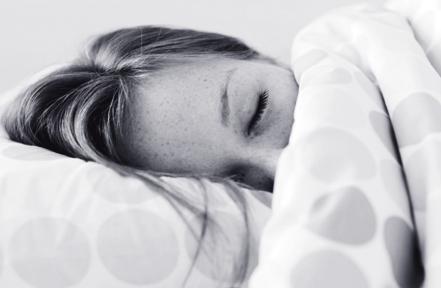

My mom keeps odd hours. Around 9:30 p.m. every night, she goes to bed; after that, she goes exploring. Once, in a dream, she ran through dewy grass, jumped into the moonlit sky, and cleared the roof of a barn. Once her dream self walked to a mall just to people-watch. Another time she dreamt she met a group of people shed never met before at a swimming pool shed never been to; a week later, she found herself at that pool, and—she swears—met those same people.
Suffice to say2 my moms sleeping hours are unusually rich and eventful. She likes to keep it that way. “I consider my dreaming life just as important as my waking life,” she told me when I was younger.
My mom, I have since realized, is perhaps the only person in my life who is not “wakecentric”—who views her sleeping state,particularly her dreams, as essential. Its a term I didnt even know until I read a paper on dream loss titled “Dreamless: The Silent Epidemic of REM3 Sleep Loss”. The author, University of Arizona psychologist Rubin Naiman, makes two primary arguments. One, modern humans are deprived of dreams. Two, this is not only sad from an existential perspective, its also a public health crisis, one brought on by a combination of lifestyle factors, substance use, sleep disorders, and, “indirectly, a dismissive attitude about the value and meaning of dreams.”
To understand where hes coming from, its first important to know that we still arent entirely sure what a dream really is—an ambiguity4 thats allowed different disciplines to focus on the elements that are most relevant to them. To sleep scientists, dreaming is the neurological process that happens when our minds enter rapid eye movement (REM) sleep; to psychologists, it can be a meaningful experience. Naiman believes the divide among professionals leads to a reductive, destructive interpretation of dreams. As for the laymen, he writes: “Today, too many of us view dreams the way we do stars—they emerge nightly and seem magnificent, but are far too distant to be of any relevance to our real lives.” Some people dont remember their dreams, or view them as a casual phenomenon that doesnt warrant5 much thought once daylight comes around. Only a few think of them as something like magic, devoting space in our waking brains to remembering and reliving them.
To Naiman, dreams are equal parts magic, science, and mystery. Mostly, he defines dreams by what happens in their absence: irritability, depression, weight gain, hallucinations.6 Erosion of reason, memory, and immune system functions. A loss of spirituality. In the paper, Naiman notes that weve known of these consequences since the 1960s: When researchers ran experiments depriving subjects of only REM sleep, they found that most of the negative side effects mirrored those of total sleep deprivation.
Alarm clocks are a common enemy of dreams, Naiman notes, because waking up to the trill of an alarm clock “shears off” our dreaming periods (“Imagine being abruptly ushered out of a movie theater whenever a film was nearing its conclusion,” he writes).7 So are alcohol and cannabis8, which can disrupt REM sleep significantly, and even sleeping pills, which increase light sleep at the expense of the deeper, more high-quality stuff. Artificial light from digital screens, lightbulbs and city lights cut into REM, too. Finally, sleep disorders such as insomnia and sleep apnea have increased in recent years9—likely due to the same factors as sleep deprivation, he notes.
What Naiman doesnt say, but feels relevant, is that it is especially hard to safeguard our dream sleep because theres so little social or financial incentive to do so. For most of us, sleeping falls lower on the priority list than both work and play. And getting the recommended amount of sleep—seven to nine hours a night—isnt as trendy as so many other wellness-focused habits. This could be because sleep isnt inherently commodifiable10; it doesnt make businesses money the way that a spin class or a kale smoothie can. Spurred on by the constant reminders of other things we should be doing to better ourselves and increase our productivity, we habitually push sleep aside, delay it, demean11 it.
Naimans argument outlines the situation pretty clearly: Its us and our dreams against the modern world, with its light bulbs, its shrill alarm clocks, its pesky “wake-centric bias.”12 Its a fight to preserve a state that enriches our waking life much more than we give it credit for. And he implores13 us to join him, indicating the true weight of the stakes by opening his paper with a well-placed quote from a Rolling Stones song.
“Lose your dreams,” the song goes, “and you will lose your mind.”
我媽媽的作息時間和常人不同。每天晚上9點半,她就上床睡覺。然后,就是她在夢中探秘的時間。有一次她夢見自己在掛著露珠的草地上奔跑,跳上了月光照耀下的天空,還清理了一間谷倉的屋頂。另外一次,夢里的她走進一家購物中心,靜看人來人往。還有一次,她夢見自己在從未去過的一個游泳池,遇見一群陌生人。而一周后,她竟然真的去了夢中的那個游泳池,而且,她發誓說,真的碰到了那些夢中人。
我只想說,我媽媽的夢中生活是不同尋常地豐富多彩,而她也享受其間。在我小時候,她對我說:“我覺得我的夢中生活和清醒時的同樣重要。”
后來我意識到,我媽媽大概是我生命中唯一一個不“以醒著的時間為中心”的人,她將自己的睡眠狀態,尤其是睡覺時做夢,視為生活的必需。對于“以醒著的時間為中心”這個術語,我之前是聞所未聞,直到我讀了一篇關于睡夢缺失的文章,題為《無夢狀態:悄然流行的快波睡眠缺失》。作者魯賓·奈曼是亞利桑那大學的心理學家,他在文中提出了兩個論點。第一,現代人被剝奪了夢。第二,從存在主義角度來說,這是一件悲哀的事情。同時,它也是一個公共健康危機,是由生活方式、物質使用、睡眠紊亂和“間接地對夢的價值和意義不屑一顧的態度”綜合造成的。
要了解他何以得出這一結論,首先要知道我們對于夢到底是什么并不完全確定。正是這種模糊性讓不同的學科得以利用夢的定義里與自己學科最相關的部分。……
登錄APP查看全文
