
最愚蠢的事莫過于描寫你熟知的一切
2018-04-16 15:32:20ByEmilyTemple
英語學習
2018年3期
關鍵詞:英國
By Emily Temple
Kazuo Ishiguro, author of The Remains of the Day, Never Let Me Go, and most recently The Buried Giant, and oh, also our newest Nobel Laureate in Literature,1 turns 63 last year. I have long admired Ishiguros work, which seems almost effortless, presenting its multi-faceted subjects with cold-water clarity while nimbly experimenting with genre, style, and subject.2 He also has the distinction of being among the small class of authors whose work is critically lauded3 and commercially successful, which is no small feat. So in case you would like to follow in his footsteps, heres Ishiguro on his process, what he likes (and hates) to see in literature, and some advice for young writers.
Dont write what you know.
“Write about what you know” is the most stupid thing Ive heard. It encourages people to write a dull autobiography4. Its the reverse of firing the imagination and potential of writers. —from an interview with ShortList 5.
Let go of genre boundaries.
Is it possible that what we think of as genre boundaries are things that have been invented fairly recently by the publishing industry? I can see theres a case for saying there are certain patterns, and you can divide up stories according to these patterns, perhaps usefully. But I get worried when readers and writers take these boundaries too seriously, and think that something strange happens when you cross them, and that you should think very carefully before doing so… I would like to see things breaking down a lot more. I suppose my essential position is that Im against any kind of imagination police, whether theyre coming from marketing reasons or from class snobbery.6 —from a conversation with Neil Gaiman in the New Statesman.7
Write towards emotions, not morals. Im not looking for any kind of clear moral, and I never do in my novels. I like to highlight some aspect of being human. Im not really trying to say, so dont do this, or do that. Im saying, this is how it feels to me. Emotions are very important to me in a novel. —from an interview at HuffPost 8.
In fact, start with the relationships.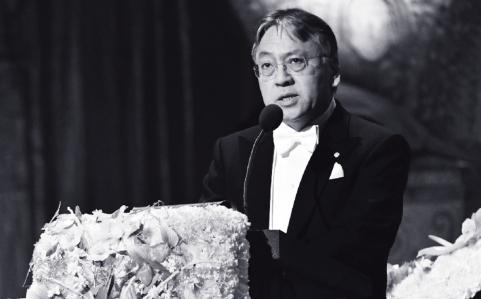
I used to think in terms of characters, how to develop their eccentricities and quirks.9 Then I realized that its better to focus on the relationships instead, and then the characters develop naturally.
Relationships have to be natural, to be authentic human drama. Im a little suspicious of stories that have an intellectual theme bolted10 on, when the characters stop and debate before they carry on.
I ask myself: What is an interesting relationship? Is the relationship a journey? Is it standard, cliché11, or something deeper, more subtle, more surprising? People talk about flat versus three-dimensional12 characters; you can talk about relationships the same way. —from an interview with Richard Beard13.
To eliminate distractions, try a “Crash.”14
Many people have to work long hours. When it comes to the writing of novels, however, the consensus seems to be that after four hours or so of continuous writing, diminishing returns set in.15 Id always more or less gone along with this view, but as the summer of 1987 approached I became convinced a drastic16 approach was needed. Lorna, my wife, agreed… So Lorna and I came up with a plan. I would, for a four-week period, ruthlessly17 clear my diary and go on what we somewhat mysteriously called a “Crash”. During the Crash, I would do nothing but write from 9 am to 10:30 pm, Monday through Saturday. Id get one hour off for lunch and two for dinner.Id not see, let alone answer, any mail, and would not go near the phone. No one would come to the house. Lorna, despite her own busy schedule, would for this period do my share of the cooking and housework. In this way, so we hoped, Id not only complete more work quantitatively18, but reach a mental state in which my fictional world was more real to me than the actual one… This, fundamentally, was how The Remains of the Day was written. Throughout the Crash, I wrote free-hand, not caring about the style or if something I wrote in the afternoon contradicted something Id established in the story that morning. The priority was simply to get the ideas surfacing and growing. Awful sentences, hideous dialogue, scenes that went nowhere—I let them remain and ploughed on.19 —from “How I Wrote The Remains of the Day in Four Weeks,” as published in The Guardian20.
Embrace the “down draft21.”
I have two desks. One has a writing slope and the other has a computer on it. The computer dates from 1996. Its not connected to the Internet. I prefer to work by pen on my writing slope for the initial drafts. I want it to be more or less illegible22 to anyone apart from myself. The rough draft is a big mess. I pay no attention to anything to do with style or coherence. I just need to get everything down on paper. If Im suddenly struck by a new idea that doesnt fit with whats gone before, Ill still put it in. I just make a note to go back and sort it all out later. Then I plan the whole thing out from that. I number sections and move them around. By the time I write my next draft, I have a clearer idea of where Im going. This time round, I write much more carefully… I rarely go beyond the third draft. Having said that, there are individual passages that Ive had to write over and over again. —from an interview with The Paris Review23.
Protect your mind from unwanted influences.
I find that when youre writing, it becomes quite a battle to keep your fictional world intact24. In fact, as I write, I almost deliberately avoid anything in the realm of what Im working on. For instance, [while working on The Buried Giant] I hadnt seen a single episode of Game of Thrones25. That whole thing happened when I was quite deep into the writing, and I thought,“If I watch something like that, it might influence the way I visualize a scene or tamper with26 the world that Ive set up.” —from an interview with Electric Literature27.
Make deliberate choices.
Most writers have certain things that they decide quite consciously, and other things they decide less consciously. In my case, the choice of narrator and setting are deliberate. You do have to choose a setting with great care, because with a setting come all kinds of emotional and historical reverberations28. But I leave quite a large area for improvisation29 after that. —from an interview with The Paris Review.
Be sparing with your allusions.30
I dont really like to work with literary allusions very much. I never want to be in a position where Im saying, “Youve got to read a lot of other stuff” or “Youve got to have had a good education in literature to fully appreciate what Im doing.”… I actually dislike, more than many people, working through literary allusion. I just feel that theres something a bit snobbish or elitist about that.31 I dont like it as a reader, when Im reading something. Its not just the elitism of it; it jolts me out of the mode in which Im reading.32 Ive immersed myself in the world and then when the light goes on Im supposed to be making some kind of literary comparison to another text. I find Im pulled out of my kind of fictional world, Im asked to use my brain in a different kind of way. I dont like that. —from an interview with Guernica33.
Be careful what you start.
Everything is built on the early part of the process. Its important to be careful about what projects you take on, in the same way that you should examine someone you want to get married to. Its different for everyone: should it be based on your experience, or do you write better at greatest distance, do you write best in a genre? Dont take on a creative project lightly. —from an interview with Richard Beard.
1. Kazuo Ishiguro: 石黑一雄(1954— ),日裔英國小說家,2017年諾貝爾文學獎獲得者,知名作品包括《長日將盡》(The Remains of the Day)、《別讓我走》(Never Let Me Go)、《被掩埋的巨人》(The Buried Giant)等;laureate: 得獎者。
2. multi-faceted: 多面的,豐富的;nimbly: 靈活地,敏捷地;genre:體裁。
3. critically lauded: 得到評論界稱贊的。
4. autobiography: 自傳。
5. ShortList: 英國《入圍雜志》,一本男性生活時尚雜志。
6. 我認為我的立場就是拒絕對想象力進行任何形式的鉗制,不管這種鉗制是出于商業層面考量還是來自階級歧視。police:監督,管制;snobbery: 勢利。
7. Neil Gaiman: 尼爾·蓋曼(1960— ),猶太裔英國作家,擅長撰寫科幻小說、視覺文學及劇本,名列文學傳記辭典十大后現代作家之一,代表作包括《睡魔》(The Sandman)、《美國眾神》(American Gods)等;New Statesman: 《新政治家周刊》,英國知名雜志,關注政治及文化領域的話題。
8. HuffPost: 《赫芬頓郵報》,美國網絡媒體,提供國內外時政新聞資訊。
9. eccentricity: 古怪之處;quirk: 奇想,怪癖。
10. bolt: 奔,竄,此處形容文學作品中角色及情節發展過快。
11. cliché: 陳詞濫調。
12. three-dimensional: 三維的,立體的。
13. Richard Beard: 理查德·彼爾德(1967— ),英國小說家,東京大學客座教授。
14. eliminate: 消除;Crash: 原義是碰撞、倒塌,作者用這個詞來描述自己與外界完全隔絕、全身心高度集中在創作之上的極端狀態。
15. consensus: 一致看法,共識;diminishing returns: 邊際收益遞減,是經濟學術語,指在短期生產過程中,當其他條件不變時,連續增加某一種投入到一定程度后,新的效益增加量會呈現遞減趨勢。
16. drastic: 猛烈的。
17. ruthlessly: 無情地,殘忍地。
18. quantitatively: 從數量上來看。
19. 糟糕的句子、討厭的對話、無用的場景——我都保留了下來,并繼續筆耕不輟。hideous: 令人厭惡的;plough: 耕耘,費力運作。
20. The Guardian:《衛報》,英國的全國性綜合內容日報。
21. down draft: 倒灌風,下沖氣流,這里指石黑一雄在寫作中隨時捕捉并為手稿補充新想法。……
登錄APP查看全文
猜你喜歡
瘋狂英語·初中天地(2021年6期)2021-08-06 09:03:24
中國外匯(2019年21期)2019-05-21 03:04:06
少年漫畫(藝術創想)(2018年12期)2018-04-04 05:29:10
中國經濟周刊(2016年25期)2016-07-01 09:54:15
環球時報(2012-03-24)2012-03-24 14:15:07
英語學習·新銳空間(2008年10期)2008-12-31 00:00:00
音像世界(2005年8期)2005-04-29 00:00:00
