為什么要收藏藝術(shù)品
2018-06-12 17:06:38ByErinThompson
英語學(xué)習(xí)
2018年6期
By Erin Thompson
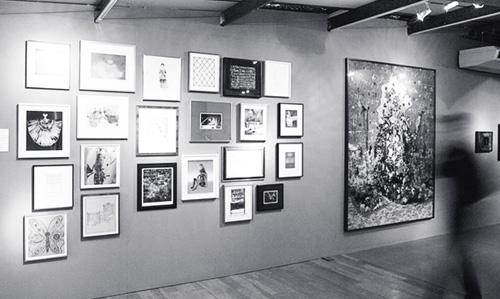
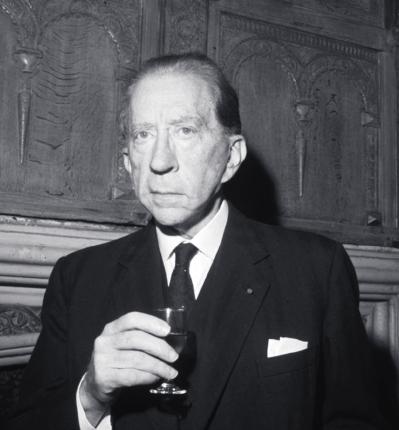
The oil billionaire J. Paul Getty was famously miserly.1 Yet he spent millions of dollars on art, and millions more to build the Getty Museum2 in Los Angeles. He called himself “an apparently incurable artcollecting addict”, and noted that he had vowed to stop collecting several times, only to suffer “massive relapses”.3 Fearful of airplanes and too busy to take the time to sail to California from his adopted hometown of London, he never even visited the museum his money had filled.
Getty is only one of the many people through history who have gone to great lengths to collect art—searching, spending, and even stealing to satisfy their cravings.4 But what motivates these collectors?
Debates about why people collect art date back at least to the first century CE5. The Roman rhetorician Quintilian claimed that those who professed to admire what he considered to be the primitive works of the painter Polygnotus were motivated by “an ostentatious desire to seem persons of superior taste”.6 Quintilians view still finds many supporters.
Another popular explanation for collecting—financial gain—cannot explain why collectors go to such lengths. Of course, many people buy art for financial reasons. You can resell works, sometimes reaping7 enormous profit. You can get large tax deductions8 for donating art to museums. More nefariously, some “collectors” buy art as a form of money laundering, since it is far easier to move art than cash between countries without scrutiny.9
But most collectors have little regard for profit. For them, art is important for other reasons. The best way to understand the underlying drive of art collecting is as a means to create and strengthen social bonds, and as a way for collectors to communicate information about themselves and the world within these new networks.10
People tend to imagine collectors as highly competitive, but that can prove wrong too. Serious art collectors often talk about the importance not of competition but of the social networks and bonds with family, friends, scholars, visitors and fellow collectors created and strengthened by their collecting. The way in which collectors describe their first purchases often reveals the central role of the social element. Only very rarely do collectors attribute their collecting to a solo encounter with an artwork, or curiosity about the past, or the reading of a textual source.11 Instead, they almost uniformly give credit to a friend or family member for sparking their interest,12 usually through encountering and discussing a specific artwork together.
Collectors are not only interested in creating social links; they are also motivated by the messages they can send once these social networks are created. We all know that art is a powerful way for the artist to express thoughts and feelings—but collectors know that art can serve as an expressive vehicle for collectors too. Many thus carefully curate their collections, purchasing only artworks whose display backs up a claim that the collector wishes to make.13
Almost always, this claim is about the identity of the collector. Displaying art can send a message about who the collector really is—at least who she sees herself as. From the beginning of art-making, we have believed that artworks capture and preserve the essence of their makers and even their owners. As identity can derive from lineage14, owning artworks is therefore also a way for an owner to communicate with the past.
Other art collectors see their collections as having a broader power—to convey messages not just about themselves, but about the world as a whole. For example, the kid with the shoebox of bird feathers might show others her collection not just to make friends, but also to convince them about the importance of protecting endangered species.
But there is also a downside15. Sometimes, collectorsfeelings about the purpose of their collections were so strong that they become one of the most important participants of the illicit trade in looted antiquities.16 To address the problem, it involves effectively convincing collectors that their past conduct, something they have almost certainly understood as an expression of their best possible self, their highest aspirations, has actually been harmful.17 It means, in effect, repudiating18 the bonds they have formed with other collectors. And, as Getty was hardly the first or the last to discover, that is a hard addiction indeed to overcome.
1. J. Paul Getty: 保羅·蓋蒂(1892—1976),美國石油大亨,蓋蒂石油公司創(chuàng)始人,1957年被《財(cái)富》雜志譽(yù)為“最富有的美國人”,1966年被《吉尼斯世界紀(jì)錄》評為世界首富;miserly: 吝嗇的。
2. Getty Museum: 蓋蒂博物館,一座位于美國加州洛杉磯的藝術(shù)博物館,擁有兩個館址:蓋蒂中心和蓋蒂別墅。前者收藏中世紀(jì)以來的西方藝術(shù)品,后者展出古希臘、羅馬時期以來的藝術(shù)品。
3. 他把自己稱作“一位顯然已經(jīng)無藥可救的藝術(shù)收藏癮君子”,還說他好幾次都發(fā)誓要戒掉,但結(jié)果總是“舊病復(fù)發(fā)”。relapse:故態(tài)復(fù)萌,回到原狀。
4. go to great length to do: 付出很多努力以達(dá)到目標(biāo);craving: 渴望,渴求。
5. CE: 基督紀(jì)元,公元。
6. 羅馬修辭家昆提利安認(rèn)為,有些人聲稱自己很欣賞畫家波利格諾托斯的那些在他看來很古老的作品,而這些人不過是“故意賣弄、附庸風(fēng)雅”罷了。rhetorician:修辭家;Quintilian: 昆提利安(約公元35—100年),古羅馬帝國時期著名修辭家、教育家、作家等,他的教育理論受到15、16世紀(jì)的人文主義者的重視,并對現(xiàn)代教育觀點(diǎn)影響很大;profess:公開聲稱,宣稱;primitive: 原始的,簡單的;Polygnotus: 波利格諾托斯,公元前5世紀(jì)古希臘雕刻家,著有《典范》(Canon),強(qiáng)調(diào)人體美學(xué);ostentatious:賣弄的,炫耀的。
7. reap: 收獲,得到。
8. deduction: 扣除,減少,tax deduction表示“減稅”。
9. nefariously: // 惡毒地,充滿惡意地;money laundering: 洗錢;scrutiny: 密切關(guān)注,嚴(yán)格審查。
10. 要想解釋藝術(shù)收藏的根本原因,最好的說法就是這是一個構(gòu)建并加強(qiáng)社會關(guān)系的途徑,同時也是新的交流方式,收藏家們可以通過這種方式表達(dá)他們對于自己和世界的種種看法。
11. 很少有收藏家會把收藏藝術(shù)品歸因于偶然看見一件藝術(shù)品、對過去的好奇,或是讀了一些文字資料。……
登錄APP查看全文
猜你喜歡
少年漫畫(藝術(shù)創(chuàng)想)(2019年2期)2019-06-06 07:47:14
藝術(shù)啟蒙(2018年12期)2019-01-04 03:37:02
兒童繪本(2018年22期)2018-12-13 23:14:52
藝術(shù)啟蒙(2018年11期)2018-12-04 05:31:06
讀者·校園版(2018年13期)2018-06-19 06:20:12
小獼猴智力畫刊(2018年5期)2018-05-25 07:40:01
探索科學(xué)(2017年5期)2017-06-21 21:16:16
Coco薇(2016年2期)2016-03-22 16:58:59
讀者(2016年7期)2016-03-11 12:14:36
戲劇藝術(shù)(上海戲劇學(xué)院學(xué)報(bào))(2016年4期)2016-01-23 02:36:01