考慮公平偏好和政府獎懲機制的港口成本分攤決策
2020-04-09 04:34:57王義玲楊斌陳煜婧
上海海事大學學報
2020年1期
王義玲 楊斌 陳煜婧
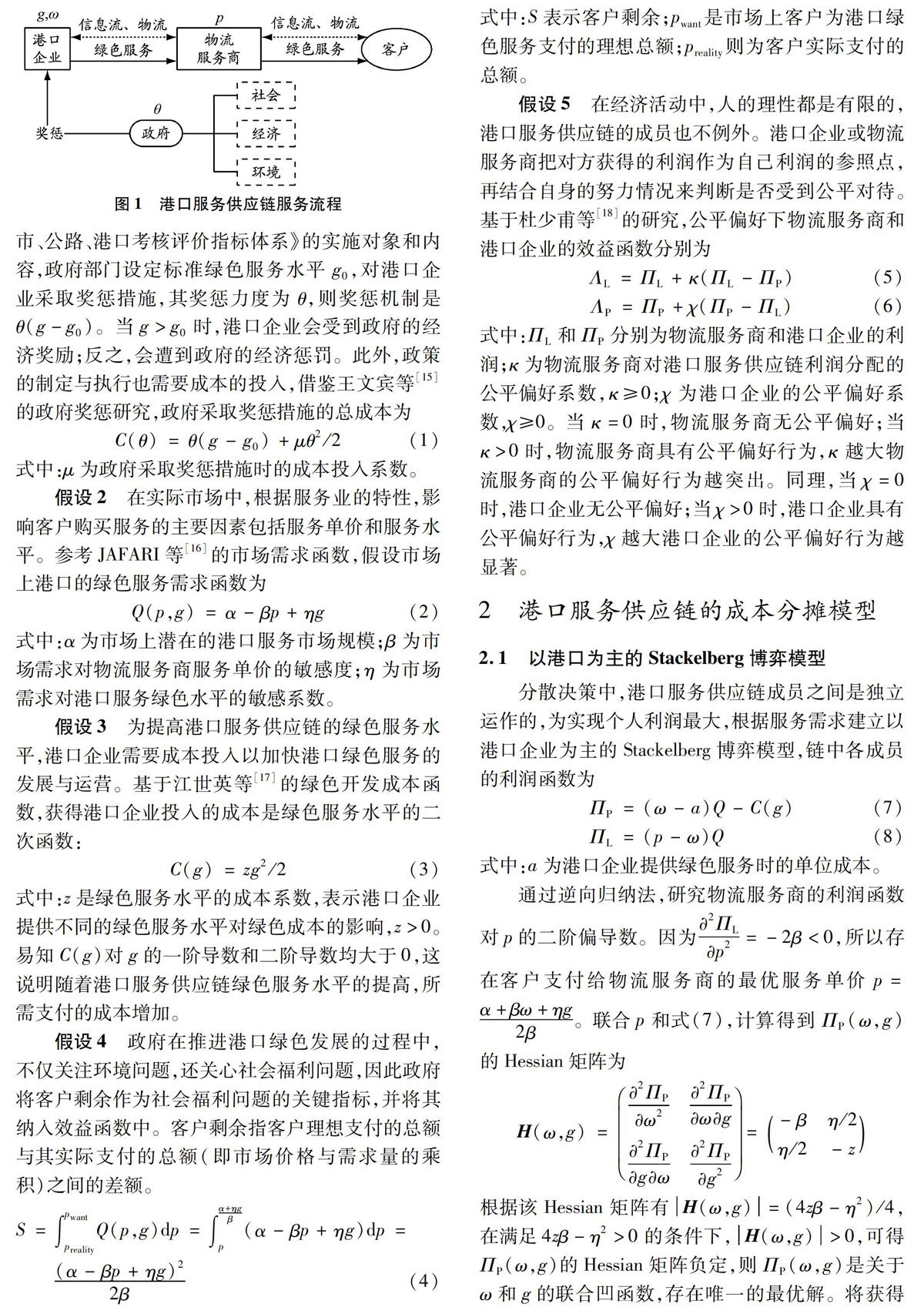
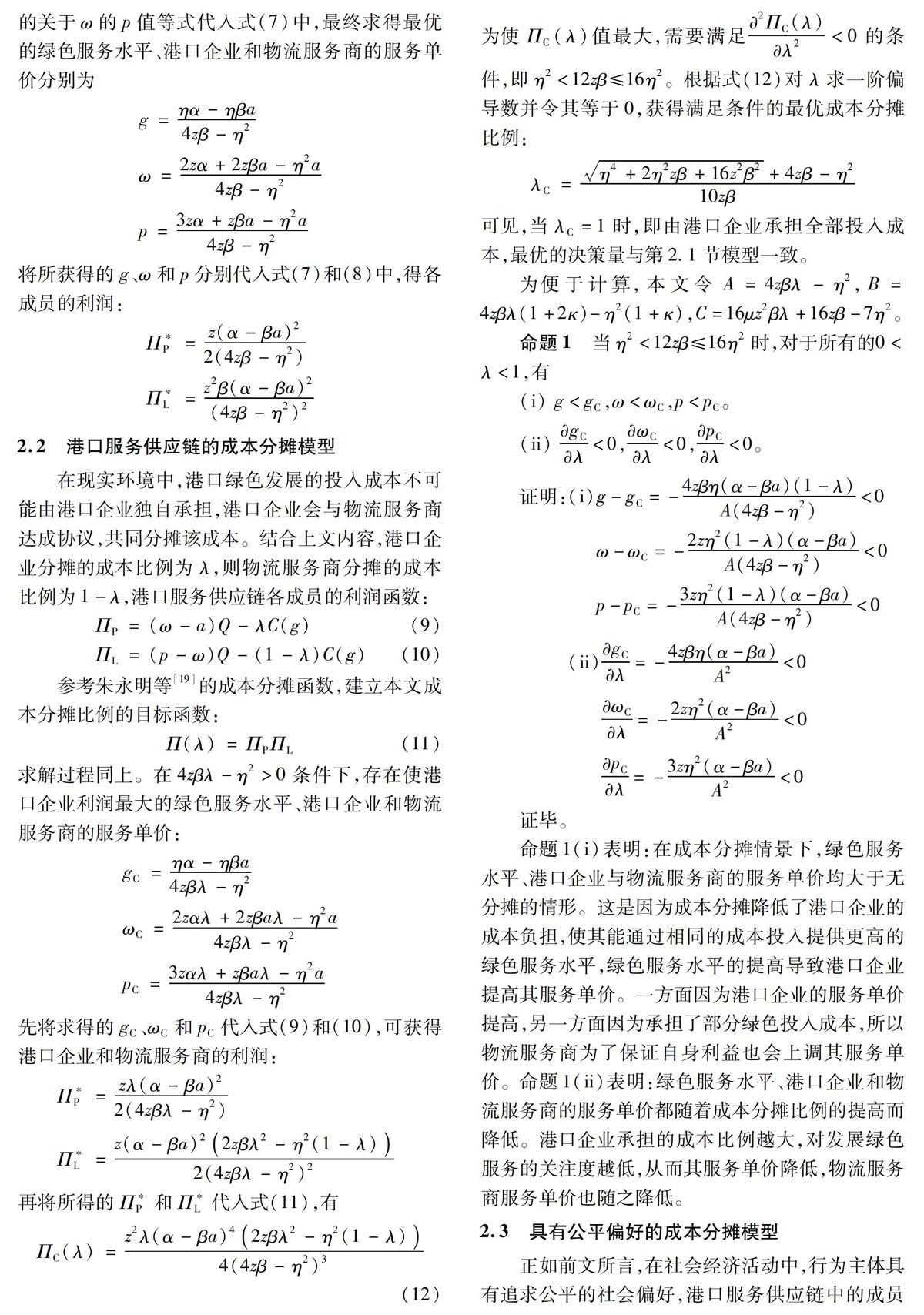
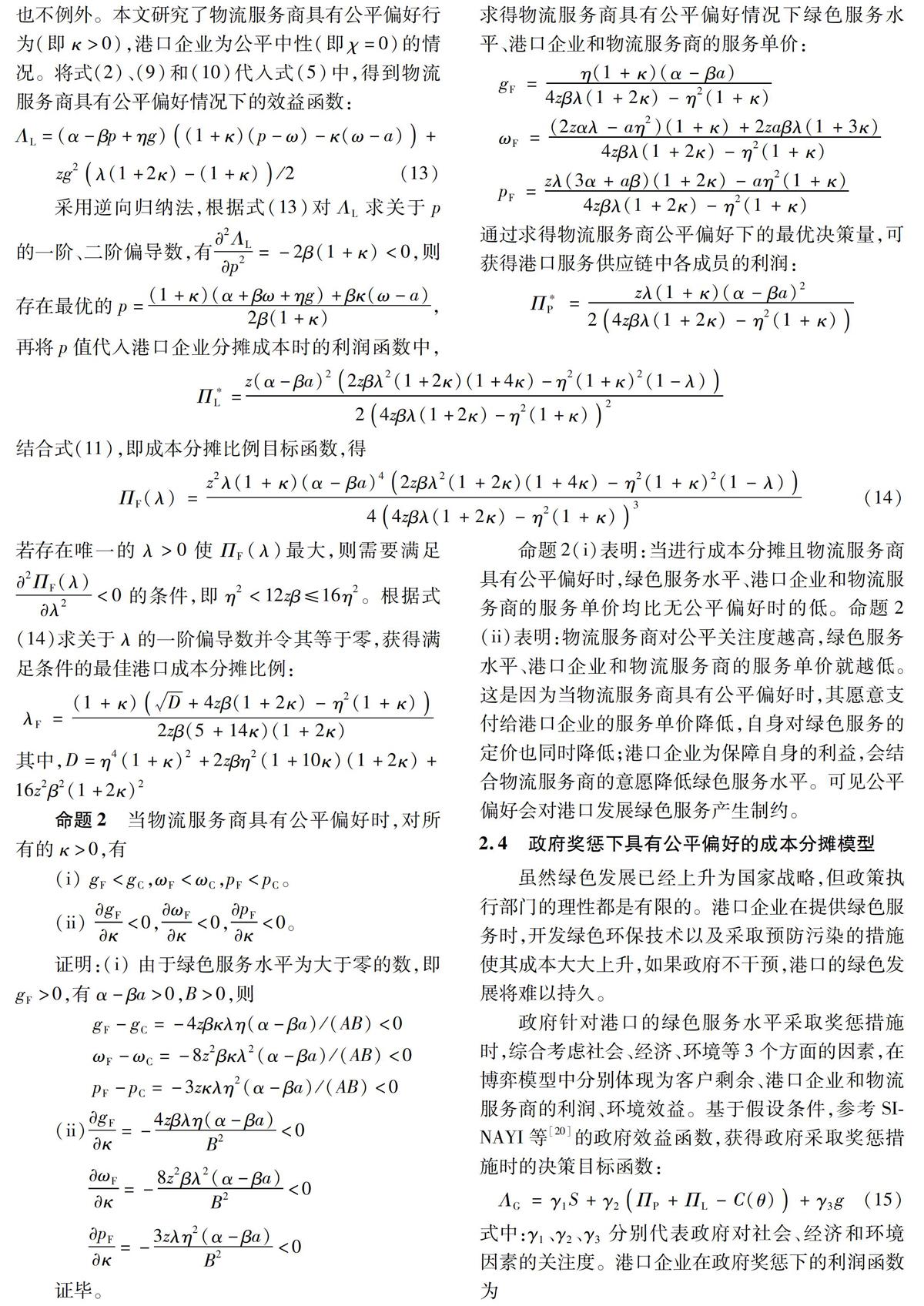
摘要:為探討港口在綠色發展過程中的成本分攤問題,以單個港口企業和單個物流服務商構成的二級港口服務供應鏈為研究對象,基于綠色服務水平建立以港口企業為主導的成本分攤模型,得到最優的綠色服務單價和成本分攤比例。利用模型分析物流服務商具有公平偏好和政府采取獎懲措施對決策和利潤的影響。結果表明:成本分攤比例和公平偏好程度的增加均使綠色服務水平、綠色服務單價、港口企業的利潤由一開始的下降到趨于穩定狀態,而對物流服務商利潤的影響則相反。綠色服務水平、綠色服務單價、港口服務供應鏈的利潤都隨著獎懲力度的加大而增加。在港口綠色發展過程中可通過政府獎懲對成本分攤和公平偏好問題進行有效協調,以保障港口的綠色可持續發展。
關鍵詞: 港口服務供應鏈; 公平偏好; 政府獎懲機制; 綠色服務; 成本分攤
中圖分類號: F552.6 ? ?文獻標志碼: A
Abstract: In order to explore the cost allocation issue during the process of port green development, a two-stage port service supply chain consisting of a port enterprise and a logistics service provider is studied. Based on the green service level, the cost allocation model led by the port enterprise is established, and the optimal unit price of green service and the cost allocation ratio are acquired. The effects of the logistics service providers fairness preference and the governments reward-penalty mechanism on decision-making and profit are analyzed by the model. The result shows that: as the cost allocation ratio and the fairness preference degree increase, the green service level, the green service unit price and the profit of the port enterprise first decrease and then keep stable, while the impact on the logistics service providers profit is opposite. The green service level, the green service unit price and the profit of the port service supply chain all increase with the increase of reward-penalty intensity. During the process of port green development, the cost allocation and the fairness preference can be effectively coordinated through government reward-penalty mechanism to ensure the green and sustainable development of ports.
Key words: port service supply chain; fairness preference; government reward-penalty mechanism; green service; cost allocation
0 引 言
近年來,隨著經濟全球化程度的不斷加深,港口作為連接水運與陸運節點的作用越來越突出。為減輕港口作業對環境的污染,我國港口企業響應交通運輸部發布的《深入推進綠色港口建設行動方案(2018—2022年)》等工作要求,積極開展綠色港口建設。最近,世界經濟論壇與ACCENTURE聯合研究顯示,一個企業同時關注環境和經濟可以使該企業的廢氣排放量減少13% ~22%,收入增加5% ~20%[1]。同時關注環境和經濟因素,重視綠色發展,是港口企業的責任,也是國家的戰略要求。……
登錄APP查看全文