
Effectiveness of psychosocial intervention for internalizing behavior problems among children of parents with alcohol dependence: Randomized controlled trial
2022-06-28 04:15:20DayanandaBittenahalliOmkarappaSreevaniRentalaPrasanthiNattala
World Journal of Clinical Cases 2022年16期
關鍵詞:邊防部隊
INTRODUCTION
Alcohol is a psychoactive substance that is commonly consumed by Indians. About 14.6% of the Indian population between the ages of 10 and 75 years use alcohol[1]. It is a well acknowledged fact that heavy alcohol use afflicts not only the individual but also the whole family. The literature suggests that adults’ drinking is associated with physical and psychological harms to children[2]. Children of alcohol users are likely to suffer from various behavioral problems as well. These can be grouped into internalizing behavioral problems such as anxiety, depression or suicidal ideas, and externalizing outward behaviors[3,4]. Internalizing disorders are common mental health concerns among children and adolescents[5,6]. Studies conducted in India have reported that children of parents with alcohol use are at risk for having higher internalizing behavioral problems such as fear, insecurity, hopelessness, guilt feeling, shame, lack of trustworthy feeling, anxiety disorders, depression, low self-esteem, ambivalent behavior, confusion about life goals, poor adjustment, compulsive behaviors, withdrawal from other children, difficulty concentrating, and poor grades in school[7,8]. Parental alcohol dependence also affects the development of social competence among children[9]. A recent study involving school children reported 45% of the study sample as suffering from various harmful effects that were directly attributable to others’ alcohol misuse, including their fathers[10].
Given the exponential rise in use of alcohol in India and increasing number of children growing up in such homes, there is an urgent need for evidence-based interventions to reduce the harms associated with parental drinking among children in India[2]. Psychoanalysis, family therapy and cognitive behavioral therapy are some interventions that have been used to treat a child’s internalizing disorders. Cognitive behavior therapy (CBT) among these is the most widely used intervention program that is well supported by empirical evidence[11-13]. CBT is based on the assumption that feelings and behaviors are a result of recognition. A number of studies have shown group CBT is effective in reducing symptoms of anxiety, depression and other mental health problems among children. CBT helps children to identify the link between cognition, behavior and emotions, thereby modifying maladaptive behavior and irrational beliefs. It can also be delivered by a trained community health care person[14-17].
Empirical evidence indicates that school-based and community-based prevention programs are effective in preventing depression, anxiety, or both in high-risk children and adolescents[18,19]. In India, most of the adolescent population can be approached through schools and colleges. Recent WHO reports indicate the importance of health services to schools as they play an important role in promoting healthy behavior among the younger generation[20]. Among these services, school nurses play an important role in promoting health, improving academic performance, reducing absenteeism and school dropout, and helping in the identification and management of psychiatric illnesses[21,22].
In western countries, school nurses play an important role in the treatment and prevention of common mental health problems among school children. School nurses implement different forms of psychotherapy and act as therapists to reduce behavioral problems among children. However, in India, school nurses limit themselves to delivery of only basic services. School is an ideal location for delivering group therapy as children with common problems can be gathered and needed interventions can be provided. Studies also indicate that school-based intervention is effective in reducing behavioral problems[18,19].
The burden of internalizing behavioral problems among children of alcoholic parents in India calls for the immediate attention of health professionals. While alcohol use in the family is established to have harmful effects on children, health services in India have by and large focused on the alcohol using individual. Hidden problems among such children should be addressed so as to prevent complications in adulthood. As only a few Indian studies have been conducted in this direction, the present study was conceived to find out the efficacy of a cognitive–behavioral psychosocial intervention on internalizing behavioral problems among children of alcohol using parents at a school setting. It was hypothesized that children who undergo the psychosocial intervention will show significantly improved outcomes in terms of increased self-esteem, and decreased anxiety and depression levels, when compared with a control group.
MATERIALS AND METHODS
Study design
The study was reviewed and approved by the institutional ethical committee (KINEC: 12/15-16) of Kempegowda College of Nursing.
Children of alcohol-dependent parents are likely to suffer from various behavioral problems and are at risk for having higher internalizing behavioral problems. The present study evaluated the effectiveness of psychosocial intervention on reducing internalizing behavioral problems among children of alcoholdependent parents at a school setting. In this study, the psychosocial intervention module was developed based on a CBT model. Prior empirical studies have shown that CBT, specifically brief-CBT delivering 8–10 sessions was effective in reducing anxiety and depression among children and adolescents[16,32,33]. In the present study, the psychosocial intervention module was developed keeping in mind local cultural sensitivities, and involved a comprehensive approach to the management of internalizing behavioral problems among children of alcohol-dependent parents.
Setting
Participants were recruited from 12 government high schools located in Bangalore South-II Taluk, which cover three constituencies namely, Chamrajpet, Vijayanagar and Govindarajnagar. Formal permission was obtained from the concerned area Block Education Officer and head teachers of the schools for conducting the study. The data were collected from September 2017 to April 2018.
The sampling inclusion criteria were: (1) Children of alcohol-dependent parents and having behavioral problems [screened using Paediatric Symptom Checklist: Youth Report (Y-PSC)]; and (2) Aged 12–16 years and able to converse, read and write in Kannada or English. Parental alcohol dependence was confirmed by interviewing the parents based on ICD-10 criteria. The study excluded children with learning disabilities, history of seizures, head injury, unconsciousness, other major health problems in the last 2 years (as reported by the parents). Also, children of single parents were excluded.
Rosenberg self-esteem scale: Self-esteem was measured using the Rosenberg self-esteem scale which contains 10 items in a four-point Likert scale format. A score less than 20 indicates low self-esteem, 20–30 indicates moderate self-esteem, and above 30 indicates high self-esteem. Prior studies show that the scale had high internal consistency (α = 0.72–0.87), and test–retest reliability for the 2-wk interval was 0.85, and for the 7-mo interval, 0.63[23,27]. Prior Indian studies have used this scale to measure global self-worth[4,7]. Reliability for the present study was established by test–retest method(α = 0.91) and split-half method (α = 0.81).
課堂教學中,“放”與“收”是密切聯系,不可分割的。而聯系“放”與“收”的紐帶就是“扶”。“扶”是輔助,是教師在班級管理中發揮引導作用的一種方式;“扶”是友愛,是教師與學生相互支持、攜手合作的一種和諧狀態;“扶”是效率,是教師在保證學生體驗過程的同時,提倡學生自主發現問題,并及時加以引導和幫助,讓學生少走彎路,提高學習效率;“扶”還是尊重學生主體和倡導教師主導的具體形式,是“放”到“收”的自然過渡,是“放”的壓軸戲,也是“收”的開場鑼鼓,實現知行合一。
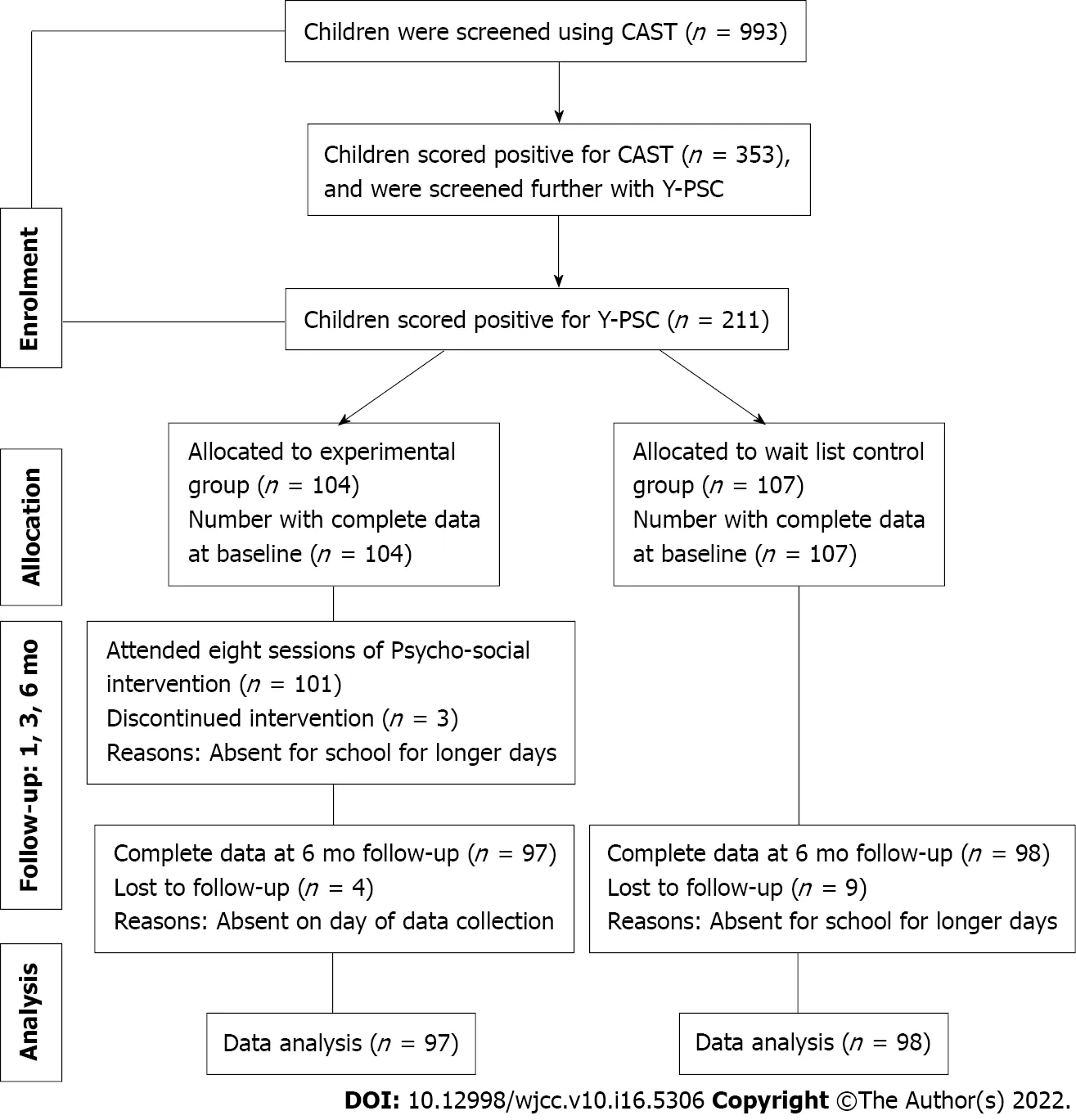
There were 993 children in the schools aged 12–16 years, who were screened using modified Children of Alcoholic Screening Test (CAST) and Y-PSC. Out of the 211 children who met the eligibility criteria, 104 were randomly allocated to the experimental group and 107 to a waiting list control group. At the final assessment, 195 children were present, as 13 children were lost to follow-up in both group and three children in the experimental group discontinued the intervention (Figure 1).
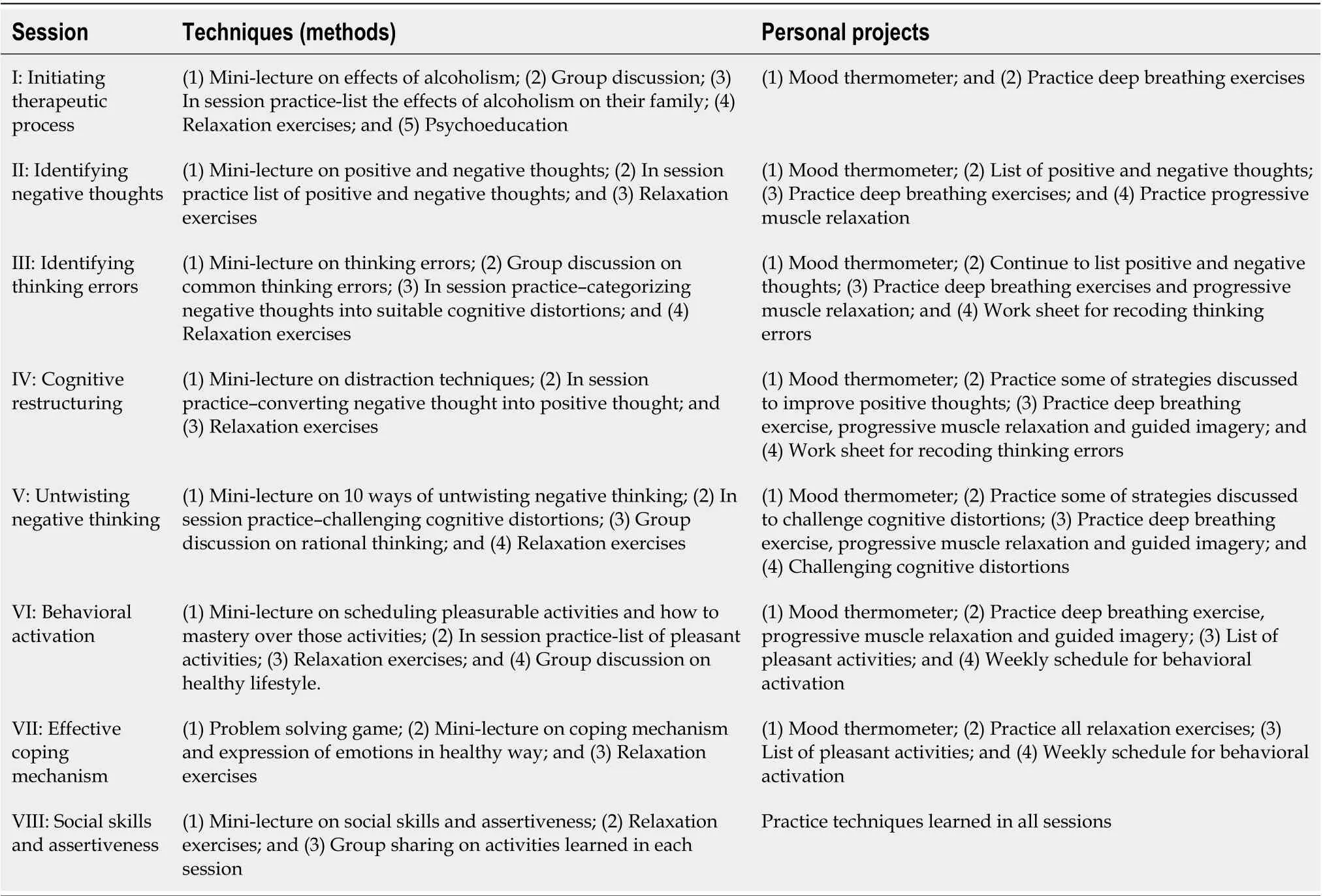
The psychosocial intervention was developed based on the group CBT approach specifically for internalizing behavioral problems among children of alcohol-dependent parents. The eight sessions focused on developing skills in identifying and modifying negative thoughts, replacing thinking errors with realistic alternatives, modification of maladaptive behavior, developing adaptive coping skills, and building self-esteem. Content validity of the CBT intervention was established by obtaining the inputs of experts in the field of substance use disorders and their management.
The intervention protocol was categorized into eight sessions with specific objectives and techniques (Table 1). Participants in the experimental group underwent the group-based CBT spread over 4 wk. The intervention was administered using a group approach by the first author, who is an experienced psychiatric nurse with a Master’s degree in psychiatric nursing and received CBT training at a tertiary mental health care center. Each group consisted of 8–10 children. The intervention consisted of weekly 2-h sessions for 4 wk. Each session began with a structured agenda, and a homework assignment at the end of the session to apply particular skills and concepts from the session.
Following the last session of the intervention, all the participants were followed up at 1, 3 and 6 mo in the respective schools.
CAST-6: The CAST, developed by Jones and Pilat, was used to screen for the presence of parental alcohol use. The internal consistency of CAST-6 ranges from 0.86 to 0.92 (Cronbach’s α)[23]. If the child answered ‘Yes’ to at least three of the items, it indicated parental alcohol use. Prior Indian studies have used this scale to screen for the presence of parental alcohol use[7,9].
Y-PSC (Murphy
[24], 1988): The Y-PSC facilitates the recognition of cognitive, emotional, and behavioral problems. The Y-PSC consists of 35 items rated as “Never,” “Sometimes” or “Often” present, and scored 0, 1 or 2, respectively. The score ranges from 0 to 70, with a cut-off score of 30 or higher indicating impaired psychosocial functioning. Test–retest reliability of the PSC ranges from
= 0.84 to 0.91 and internal consistency of the PSC using Cronbach α is 0.91[24]. Prior Indian studies have utilized this scale to assess behavioral problems among children[25,26].
將以上公式計算出來的關聯度排序后得到了關聯序,記為{x},它反映了各比較數列相對于目標序列發展趨勢的相似性,roi值越大,說明二者關聯度越大。
A pilot study was conducted to determine the appropriate sample size for the main study. G*Power 3.1.9.2 software program was used to calculate the sample size by keeping the power of study at 80% (
< 0.05, two tailed). The calculated sample size was 182 for both groups, which was sufficient to achieve statistical significance for depression, anxiety and self-esteem. Considering the possibility of dropout, 211 children were recruited for the study.
隨著技術不斷創新、市場不斷擴大,正博首先面臨的就是管理問題,特別是如何合理地管理工廠的生產線,把控生產與客戶需求的統一。所謂沒有規矩不成方圓。要想讓公司穩健發展,沒有規范的管理自然不行。因此,正博憑借自身的技術實力,根據自己的需求,靈活設計并自主研發了一套生產管理系統。晏小斌介紹道:“這個系統已經貫穿于我們整個生產使用中,現在我們已經能夠做到透明化管理,也就是數據透明化。”
Spence children’s anxiety scale (SCAS): Participants’ anxiety was assessed using the SCAS, a fourpoint Likert scale containing 38 items related to anxiety, with higher scores representing severe anxiety. Reliability for the SCAS has been tested across a wide range of studies and consistently showed a very high internal reliability (α = 0.87–0.94)[28,29]. Several Indian studies have utilized this scale to assess anxiety among children aged 11–16 years[4,7]. Reliability for the present study was established by test–retest method using Cronbach‘s α = 0.92 and split-half method using Pearson’s r (0.88).
Center for Epidemiological Studies Depression Scale for Children (CES-DC): Depression was assessed with the CES-DC containing 20 items related to symptoms of depression. Higher scores indicate the severity of depression and a cut-off score of 15 suggests significant depression in children. Previous studies show good internal reliability (α = 0.86–0.87) and test–retest reliability (
= 0.85)[30,31]. The scale has been used in prior Indian studies to screen for depression among children[4,7]. Reliability for the present study was established by test–retest method (α = 0.93) and split-half method (α = 0.84).
Ethical considerations
The study was approved by the Institutional Ethics Committee (KINEC: 12/15-16) and was registered with the Clinical Trials Registry-India (CTRI/2018/07/01499). Informed consent was obtained from the child and from at least one parent (who was the mother in all cases), before recruiting the participants. On completion of the 6-mo assessment, children in the waiting list control group were provided brief sessions of the CBT psychosocial intervention.
Data analysis
Data were analyzed using IBM Statistical Package for the Social Sciences software package (version 28). The
test was used to examine the associations between group status (experimental
control) with categorical measures,
, gender, type of family (nuclear/joint), domicile (urban/rural). For continuous measures (age, family income, anxiety, depression, self-esteem), the
test/Mann–Whitney
test was used. As the Shapiro Wilk’s test of normality indicated non-normal distribution of variables (anxiety, depression and self-esteem), the nonparametric Related-Samples Friedman’s Two-Way Analysis of Variance by Ranks was used to evaluate the effectiveness of the psychosocial intervention in terms of changes in the following outcomes (baseline
6 mo): (1) Self-esteem; (2) Anxiety; and (3) Depression. The statistical methods of this study were reviewed by Faculty from the Department of Biostatistics, NIMHANS, Bengaluru.
Omkarappa DB designed and conceived the idea, performed the literature review/comparison, interpreted the data, and performed the majority of the write up in the first draft; Rentala S performed the statistical analysis, assisted in the write up of the first draft and critically reviewed the manuscript; Nattala P critically analyzed the results and reviewed the manuscript; all the authors have accepted responsibility for the entire content of the submitted manuscript and approved submission.
3) 當突發事件導致市場價格隨機波動,供應鏈整體期望訂貨量、供貨量和期望收益皆不會隨著數量彈性契約系數α和β而改變,但零售商最優的訂貨量卻與彈性系數α呈現反比例變化.若市場需求急劇增大,供應商的最優供應量等于零售商期望訂貨量(Q*=N(q)*);說明在突發事件造成需求增大時,供應鏈成員需要保證產能恰好能夠滿足應急需求.而市場需求減小且價格隨機波動的突發事件發生時,供應商最優供應量大于零售商期望訂購量(Q*>N(q)*),這表明在市場需求急劇減小情況下,供應商會存有余貨,以預防缺貨損失產生的不良后果.
RESULTS
Baseline characteristics
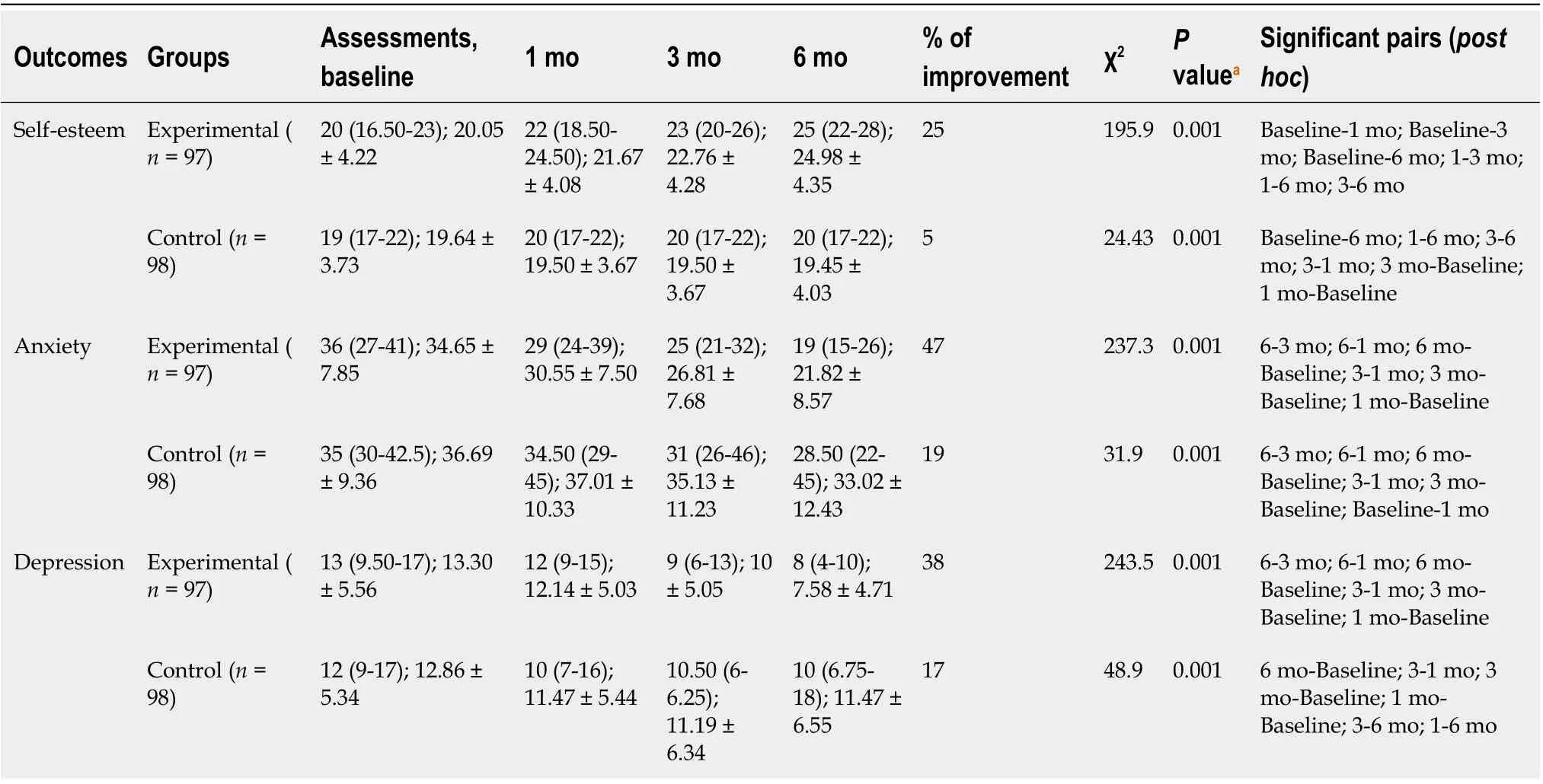
Changes in outcome measures are presented in Table 3. The findings showed that, over the 6-mo followup period, participants in the experimental group (
the control group) reported significantly higher self-esteem, lower anxiety and depression levels (
= 0.001). Further details, including the results of
analyses, are presented in Table 3.
Changes in outcomes over the 6-mo follow-up
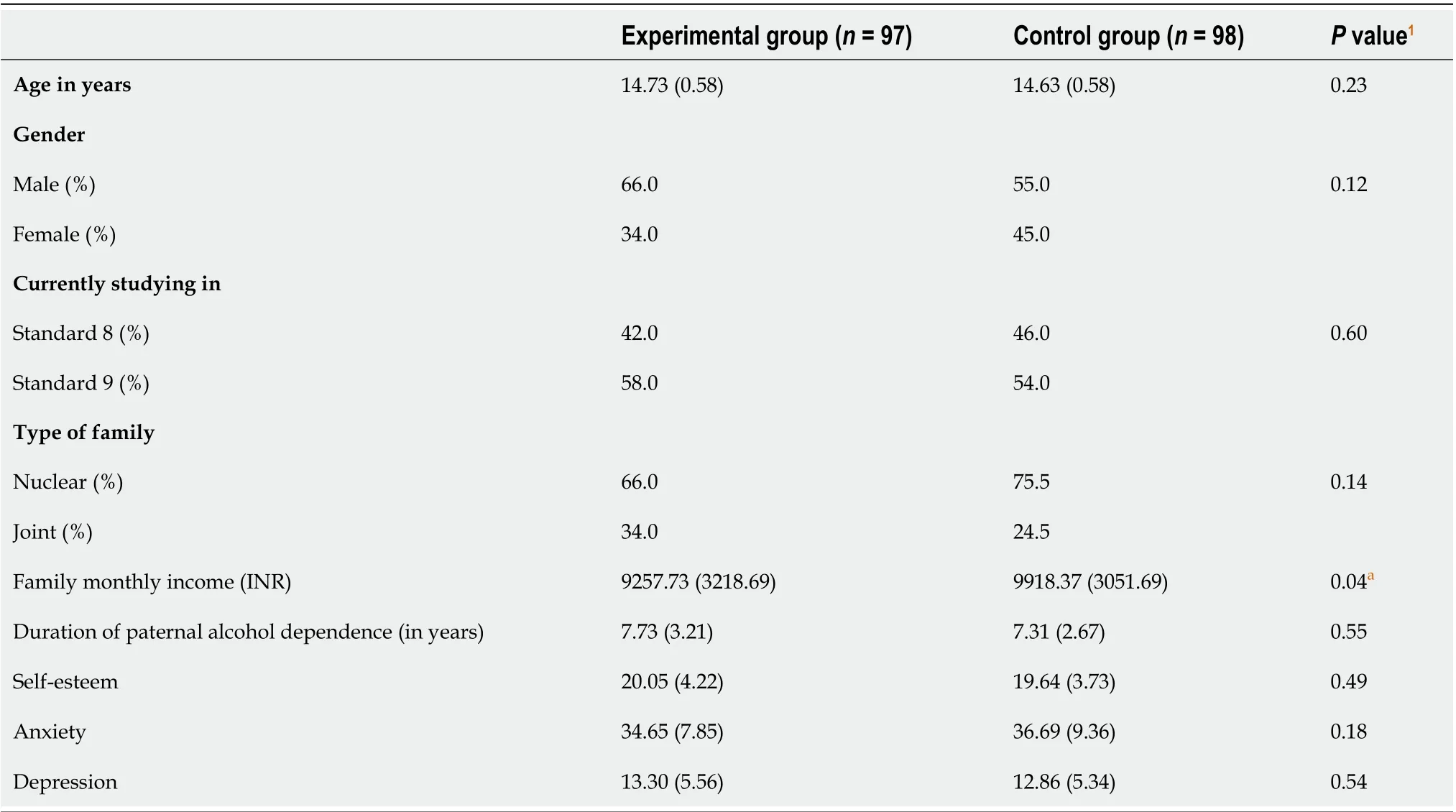
Participants’ baseline characteristics (
= 195) by group are presented in Table 2. Both groups were comparable on baseline parameters, except for monthly income of the family: Family income was significantly higher for participants in the control group, compared with the experimental group (Table 2). In all the participants, the father was the alcohol-consuming parent.
DISCUSSION
貿易結合度指數。又稱貿易強度指數,首先由經濟學家布朗(A.J.Brown)于1947年提出,后經小島清等人1959年完善推廣,用來衡量貿易伙伴之間的貿易相互依存度。計算公式如下:
The findings of the present study suggest that the experimental group showed a statistically significant decrease in anxiety and depression scores, and an increase in self-esteem scores (
< 0.001) over the 6-mo interval, indicating that the psychosocial intervention had a positive impact on the children. These findings are supported by previous studies which showed similar outcomes[32-36]. In this context, a recent study by Haugland
[37] found that school-based CBT delivered by a school nurse was effective in reducing the anxiety among adolescents[37].
In western countries, CBT is delivered by school, pediatric and psychiatric nurses[38-40]. However, in the Indian set-up, CBT is practiced mostly by psychotherapists and psychiatrists. The article written by Halder and Mahato[41] on challenges and gaps in practice of CBT for children in India reports that CBT is one of the cost-effective treatments with fewer side effects and no complications[41]. Despite its proven efficacy, CBT continues to be limited to a select group of the population,
, to those who are able to afford CBT sessions, or live in areas where there are qualified and experienced clinical psychologists/psychiatrists. In reality, most of the Indian population live in rural areas or in those areas where there is poor access or availability of health professionals who can deliver CBT or other specialized psychosocial interventions. Against this scenario, training nurses in CBT can go a long way in recognizing and intervening appropriately with regard to specific mental health concerns in vulnerable populations such as children of parents with alcohol dependence. Furthermore, nursing in India is seeking to expand its role beyond the traditional functions in the hospital set-up. Thus, the present study provides empirical evidence, strengthening the need for the expansion of nursing services to community institutions such as schools.
The need for health professionals to be trained in identifying and assessing children with paternal problem drinking has been highlighted by prior studies[42]. In this connection, the findings of the present study have important implications for nursing services in India. Firstly, the use of alcohol is continuing to rise, and nursing interventions should be made part of formal nursing education programs. This inclusion should enable nursing students to recognize the importance of extending their services to family members of the substance using individuals as well, in particular the children, who are often the worst hit. Secondly, nurse administrators should conduct regular in-service education on extended interventions for substance use disorders for practicing nurses, particularly in the community, so that it is possible to prevent or identify internalizing or other problems early in children. Thirdly, nurse administrators need to negotiate with policy makers to ensure that nurses are employed formally in schools across the country, so that children with vulnerabilities obtain the needed attention and interventions, or referrals, as relevant. Finally, the findings also highlight the need for nurses to provide needed psychoeducation to family members to recognize mental health issues in their children and seek help, when there is a heavy drinking person in the family.
The empirical results reported here in should be considered in the light of some limitations. The trial was limited to a small sample size, which can restrict the generalizability of the findings to the larger population. Also, due to practical constraints, the follow-up assessment was conducted up to only 6 mo after the intervention. As anxiety and depression are chronic conditions, it may be desirable to have longer follow-up periods, thus providing greater insight into the intervention outcomes. Future research can be conducted by developing intervention for both children and parents, as the present study focused only on children.
CONCLUSION
The present study demonstrated that psychosocial intervention was effective in reducing anxiety and depression among children of parents with alcohol dependence. It also showed that self-esteem improved significantly after intervention. The findings clearly show the higher rate of anxiety and depression among children of parents with alcohol dependence. It emphasizes the need for ongoing psychosocial intervention for these children. The results of present study pave the way for future research that could develop policy and nursing standards in order to promote nurse-led psychological interventions for this vulnerable group.
ARTICLE HIGHLIGHTS
FOOTNOTES
棉花糖實驗也說明了這點,研究員們發現那些等更久的孩子并不都是天生自控力強,很多是用了方法,比如轉身不看棉花糖或者把手坐在屁股下,讓手不能去拿。這些方法可以通過后天訓練習得。
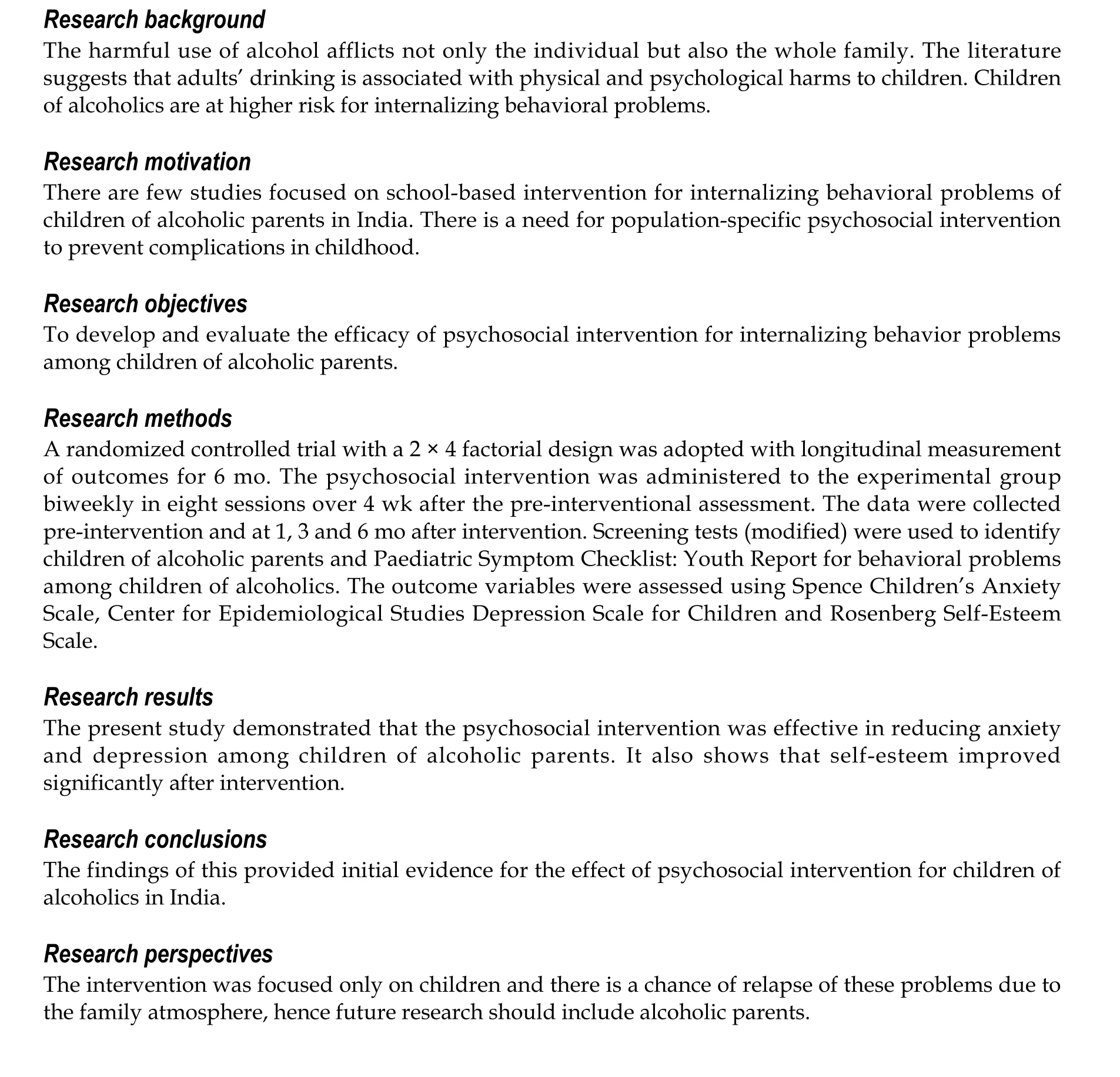
A randomized controlled trial with a 2 × 4 factorial design was adopted with longitudinal measurement of outcomes for 6 mo.
This study is registered at Clinical Trials Registry-India, No. CTRI/2018/07/01499.
(4)信任計算模塊。將策略決策模塊分析的結果,連同用戶使用反饋作為評估CSP信任值的依據,并計算其信任值。
Informed assent was taken from the child and informed consent from their parents.
Nothing to disclosed.
系統在2012—2013年設計建立了定量降水預報產品制作軟件,該軟件建立在ArcGIS10.0地理信息系統平臺上,預報員可以通過這個軟件人工交互制作未來逐日降水預報面圖和過程降水預報面圖,并能夠根據降水預報面圖定量分析計算各省 (地市、縣)或各流域(一級、二級子流域)預報面平均降水量表和降水量籠罩面積表,圖表產品存放在數據庫中,通過Web應用系統可以查詢顯示,實現了定量降水預報制作和應用。
No additional data are available.
中國特色社會主義自信是對科學社會主義的堅持與創新發展,是文化自信的核心本質。“文化自信”作為理論邏輯與歷史邏輯的統一在精神文化與思想觀念領域的深層確證,多層面提示了中國特色社會主義文化實踐的基本策略與限定性。
建立一套行之有效的規章制度,對于提高管理效率,明確責任分工,逐級落實,人人有責,各負其責方面具有重大意義。以創新能力培養為中心的實驗室建設最重要的是制度保障,主要包括安全管理制度、設備管理制度、信息管理制度、團隊管理制度和獎勵激勵制度等5個方面。
The authors have read the CONSORT 2010 Statement, and the manuscript was prepared and revised according to the CONSORT 2010 Statement.
與商業上舊企業的經營模式類似的“以用戶體驗為中心”是“互聯網+”時代的公司必要的戰略。網絡時代的新企業能夠運用網絡特質,做出更人性化、界面友好而功能齊全的產品,吸引更多的用戶進行體驗,從而達到獲得足夠多用戶流量的目的。這樣的戰略是舊企業無法做到的。
This article is an open-access article that was selected by an in-house editor and fully peer-reviewed by external reviewers. It is distributed in accordance with the Creative Commons Attribution NonCommercial (CC BYNC 4.0) license, which permits others to distribute, remix, adapt, build upon this work non-commercially, and license their derivative works on different terms, provided the original work is properly cited and the use is noncommercial. See: https://creativecommons.org/Licenses/by-nc/4.0/
India
Dayananda Bittenahalli Omkarappa 0000-0001-9406-4045; Sreevani Rentala 0000-0001-6700-8398; Prasanthi Nattala 0000-0002-9820-3476.
待伏在公安武警邊防部隊作戰中有著非常重要的地位和作用。因為各種違法犯罪分子都清楚地認識到,憑借他們的力量永遠不可能抗擊公安邊防部隊的打擊行動,唯一的方法是如何逃脫公安邊防部隊的打擊行動。根據對違法犯罪分子客觀的認識和推斷,他們不可能主動對我采取任何攻擊、襲擊等行動。所以,待伏這種在某一地點待到違法犯罪分子到達后,突然將其捕殲的伏擊方法是一種主要的戰法。
Fan JR
Kerr C
Fan JR
1 Ambekar A, Agrawal A, Rao R, Mishra AK, Khandelwal SK, Chadda RK. On behalf of the group of investigators for the national survey on extent and pattern of substance use in India. Magnitude of substance use in India. New Delhi: Ministry of Social Justice and Empowerment, Government of India. 2019 . [cited 10 January 2021 ]. Available from:https://www.ndusindia.in/downloads/Magnitude_India_EXEUCTIVE_SUMMARY.pdf
2 Esser MB, Rao GN, Gururaj G, Murthy P, Jayarajan D, Sethu L, Jernigan DH, Benegal V; Collaborators Group on Epidemiological Study of Patterns and Consequences of Alcohol Misuse in India. Physical abuse, psychological abuse and neglect: Evidence of alcohol-related harm to children in five states of India.
2016 ; 35 : 530 -538 [PMID:26913538 DOI: 10 .1111 /dar.12377 ]
3 Mason WA, Patwardhan I, Smith GL, Chmelka MB, Savolainen J, January SA, Miettunen J, J?rvelin MR. Cumulative contextual risk at birth and adolescent substance initiation: Peer mediation tests.
2017 ; 177 : 291 -298[PMID: 28672216 DOI: 10 .1016 /j.drugalcdep.2017 .03 .045 ]
4 Omkarappa DB, Rentala S, Nattala P. Psychiatric nurse delivered group-cognitive-behavioral therapy for internalizing behavior problems among children of parents with alcohol use disorders.
2021 ; 34 : 259 -267[PMID: 34036689 DOI: 10 .1111 /jcap.12329 ]
5 Costello EJ, Egger H, Angold A. 10 -year research update review: the epidemiology of child and adolescent psychiatric disorders: I. Methods and public health burden.
2005 ; 44 : 972 -986 [PMID: 16175102 DOI: 10 .1097 /01 .chi.0000172552 .41596 .6 f]
6 Merikangas KR, He JP, Burstein M, Swanson SA, Avenevoli S, Cui L, Benjet C, Georgiades K, Swendsen J. Lifetime prevalence of mental disorders in U.S. adolescents: results from the National Comorbidity Survey Replication--Adolescent Supplement (NCS-A).
2010 ; 49 : 980 -989 [PMID: 20855043 DOI:10 .1016 /j.jaac.2010 .05 .017 ]
7 Omkarappa DB, Rentala S. Anxiety, depression, self-esteem among children of alcoholic and nonalcoholic parents.
2019 ; 8 : 604 -609 [PMID: 30984681 DOI: 10 .4103 /jfmpc.jfmpc_282 _18 ]
8 Sugaparaneetharan A, Kattimani S, Rajkumar RP, Sarkar S, Mahadevan S. Externalizing behavior and impulsivity in the children of alcoholics: A case-control study.
2016 ; 21 : 112 -116 [DOI:10 .4103 /0971 -8990 .193430 ]
9 Omkarappa DB, Rentala S, Nattala P. Social competence among children of alcoholic and nonalcoholic parents.
2019 ; 8 : 69 [PMID: 31143786 DOI: 10 .4103 /jehp.jehp_320 _18 ]
10 Jaisoorya TS, Beena KV, Ravi GS, Thennarasu K, Benegal V. Alcohol harm to adolescents from others' drinking: A study from Kerala, India.
2018 ; 60 : 90 -96 [PMID: 29736069 DOI:10 .4103 /psychiatry.IndianJPsychiatry_186 _17 ]
11 Dorsey S, McLaughlin KA, Kerns SEU, Harrison JP, Lambert HK, Briggs EC, Revillion Cox J, Amaya-Jackson L.Evidence Base Update for Psychosocial Treatments for Children and Adolescents Exposed to Traumatic Events.
2017 ; 46 : 303 -330 [PMID: 27759442 DOI: 10 .1080 /15374416 .2016 .1220309 ]
12 Weersing VR, Jeffreys M, Do MT, Schwartz KT, Bolano C. Evidence Base Update of Psychosocial Treatments for Child and Adolescent Depression.
2017 ; 46 : 11 -43 [PMID: 27870579 DOI:10 .1080 /15374416 .2016 .1220310 ]
13 Freeman J, Benito K, Herren J, Kemp J, Sung J, Georgiadis C, Arora A, Walther M, Garcia A. Evidence Base Update of Psychosocial Treatments for Pediatric Obsessive-Compulsive Disorder: Evaluating, Improving, and Transporting What Works.
2018 ; 47 : 669 -698 [PMID: 30130414 DOI: 10 .1080 /15374416 .2018 .1496443 ]
14 Villab? MA, Narayanan M, Compton SN, Kendall PC, Neumer SP. Cognitive-behavioral therapy for youth anxiety: An effectiveness evaluation in community practice.
2018 ; 86 : 751 -764 [PMID: 30138014 DOI:10 .1037 /ccp0000326 ]
15 Nardi B, Massei M, Arimatea E, Moltedo-Perfetti A. Effectiveness of group CBT in treating adolescents with depression symptoms: a critical review.
2016 ; 29 [PMID: 26812765 DOI: 10 .1515 /ijamh-2015 -0080 ]
16 Oud M, de Winter L, Vermeulen-Smit E, Bodden D, Nauta M, Stone L, van den Heuvel M, Taher RA, de Graaf I, Kendall T, Engels R, Stikkelbroek Y. Effectiveness of CBT for children and adolescents with depression: A systematic review and meta-regression analysis.
2019 ; 57 : 33 -45 [PMID: 30658278 DOI: 10 .1016 /j.eurpsy.2018 .12 .008 ]
17 Stjerneklar S, Hougaard E, McLellan LF, Thastum M. A randomized controlled trial examining the efficacy of an internetbased cognitive behavioral therapy program for adolescents with anxiety disorders.
2019 ; 14 : e0222485 [PMID:31532802 DOI: 10 .1371 /journal.pone.0222485 ]
18 Caldwell DM, Davies SR, Hetrick SE, Palmer JC, Caro P, López-López JA, Gunnell D, Kidger J, Thomas J, French C,Stockings E, Campbell R, Welton NJ. School-based interventions to prevent anxiety and depression in children and young people: a systematic review and network meta-analysis.
2019 ; 6 : 1011 -1020 [PMID: 31734106 DOI:10 .1016 /S2215 -0366 (19 )30403 -1 ]
19 Bodicherla KP, Shah K, Singh R, Arinze NC, Chaudhari G. School-Based Approaches to Prevent Depression in Adolescents.
2021 ; 13 : e13443 [PMID: 33758723 DOI: 10 .7759 /cureus.13443 ]
20 Baltaq V, Pachyna A, Hall J. Global overview of school health services: Data from 102 countries.
2015 ; 2 : 268 -228 [DOI: 10 .14485 /hbpr.2 .4 .4 ]
21 Kocoglu D, Emiroglu ON. The Impact of Comprehensive School Nursing Services on Students' Academic Performance.
2017 ; 6 : 5 -17 [PMID: 28299293 DOI: 10 .15171 /jcs.2017 .002 ]
22 Bohnenkemp JH, Stephan SH, Bobo N. Supporting student mental health: The role of the school nurse in coordinated school mental health care.
2015 ; 52 : 714 -27 [DOI: 10 .1002 /pits.21851 ]
23 Hodgins DC, Maticka-Tyndale E, el-Guebaly N, West M. The cast-6 : development of a short-form of the Children of Alcoholics Screening Test.
1993 ; 18 : 337 -345 [PMID: 8342446 DOI: 10 .1016 /0306 -4603 (93 )90035 -8 ]
24 Murphy JM, Ichinose C, Hicks RC, Kingdon D, Crist-Whitzel J, Jordan P, Feldman G, Jellinek MS. Utility of the Pediatric Symptom Checklist as a psychosocial screen to meet the federal Early and Periodic Screening, Diagnosis, and Treatment (EPSDT) standards: a pilot study.
1996 ; 129 : 864 -869 [PMID: 8969728 DOI:10 .1016 /s0022 -3476 (96 )70030 -6 ]
25 Chaurasiya AR, Hari JA. Hindi adaptation of pediatric symptom checklist-youth version (PSC-Y).
2019 ; 15 : 69 -84
26 Muppidathi S, Boj J, Kunjithapatham M. Use of the pediatric symptom checklist to screen for behaviour problems in children.
2017 ; 4 : 886 [DOI: 10 .18203 /2349 -3291 .ijcp20171692 ]
27 Sherrilene C, Craig AV, Mann, William C. The Rosenberg Self-Esteem Scale as a Measure of Self-Esteem Noninstitutionalized Elderly.
2007 ; 31 : 77 -93 [DOI: 10 .1300 /j018 v31 n01 _06 ]
28 Olofsdotter S, Sonnby K, Vadlin S, Furmark T, Nilsson KW. Assessing Adolescent Anxiety in General Psychiatric Care:Diagnostic Accuracy of the Swedish Self-Report and Parent Versions of the Spence Children's Anxiety Scale.
2016 ; 23 : 744 -757 [PMID: 25934162 DOI: 10 .1177 /1073191115583858 ]
29 Essau CA, Anastassiou-Hadjicharalambous X, Mu?oz LC. Psychometric properties of the Spence Children's Anxiety Scale(SCAS) in Cypriot children and adolescents.
2011 ; 42 : 557 -568 [PMID: 21630020 DOI:10 .1007 /s10578 -011 -0232 -7 ]
30 Betancourt T, Scorza P, Meyers-Ohki S, Mushashi C, Kayiteshonga Y, Binagwaho A, Stulac S, Beardslee WR. Validating the Center for Epidemiological Studies Depression Scale for Children in Rwanda.
2012 ; 51 : 1284 -1292 [PMID: 23200285 DOI: 10 .1016 /j.jaac.2012 .09 .003 ]
31 Jiang L, Wang Y, Zhang Y, Li R, Wu H, Li C, Wu Y, Tao Q. The Reliability and Validity of the Center for Epidemiologic Studies Depression Scale (CES-D) for Chinese University Students.
2019 ; 10 : 315 [PMID: 31178764 DOI: 10 .3389 /fpsyt.2019 .00315 ]
32 Rith-Najarian LR, Mesri B, Park AL, Sun M, Chavira DA, Chorpita BF. Durability of Cognitive Behavioral Therapy Effects for Youth and Adolescents With Anxiety, Depression, or Traumatic Stress:A Meta-Analysis on Long-Term Follow-Ups.
2019 ; 50 : 225 -240 [PMID: 30661562 DOI: 10 .1016 /j.beth.2018 .05 .006 ]
33 Hyun MS, Nam KA, Kim MA. Randomized controlled trial of a cognitive-behavioral therapy for at-risk Korean male adolescents.
2010 ; 24 : 202 -211 [PMID: 20488346 DOI: 10 .1016 /j.apnu.2009 .07 .005 ]
34 March S, Spence SH, Donovan CL, Kenardy JA. Large-Scale Dissemination of Internet-Based Cognitive Behavioral Therapy for Youth Anxiety: Feasibility and Acceptability Study.
2018 ; 20 : e234 [PMID: 29973338 DOI: 10 .2196 /jmir.9211 ]
35 Urao Y, Yoshida M, Koshiba T, Sato Y, Ishikawa SI, Shimizu E. Effectiveness of a cognitive behavioural therapy-based anxiety prevention programme at an elementary school in Japan: a quasi-experimental study.
2018 ; 12 : 33 [PMID: 29946354 DOI: 10 .1186 /s13034 -018 -0240 -5 ]
36 Park KM, Park H. Effects of self-esteem improvement program on self-esteem and peer attachment in elementary school children with observed problematic behaviors.
2015 ; 9 : 53 -59 [PMID: 25829211 DOI: 10 .1016 /j.anr.2014 .11 .003 ]
37 Haugland BSM, Haaland ?T, Baste V, Bjaastad JF, Hoffart A, Rapee RM, Raknes S, Himle JA, Husab? E, Wergeland GJ.Effectiveness of Brief and Standard School-Based Cognitive-Behavioral Interventions for Adolescents With Anxiety: A Randomized Noninferiority Study.
2020 ; 59 : 552 -564 .e2 [PMID: 31926224 DOI:10 .1016 /j.jaac.2019 .12 .003 ]
38 Kozlowski JL, Lusk P, Melnyk BM. Pediatric Nurse Practitioner Management of Child Anxiety in a Rural Primary Care Clinic With the Evidence-Based COPE Program.
2015 ; 29 : 274 -282 [PMID: 25801377 DOI:10 .1016 /j.pedhc.2015 .01 .009 ]
39 Mohamed S. Effect of Cognitive Behavioral Treatment Program on Anxiety and Self-Esteem among Secondary School Students.
2017 ; 6 : 193 -201 [DOI: 10 .11648 /j.ajns.20170603 .17 ]
40 Muggeo MA, Stewart CE, Drake LK, Ginsburg GS. A School Nurse-Delivered Intervention for Anxious Children.
2017 ; 9 : 157 -171 [DOI: 10 .1007 /s12310 -017 -9211 -x]
41 Halder S, Mahato AK. Cognitive Behavior Therapy for Children and Adolescents: Challenges and Gaps in Practice.
2019 ; 41 : 279 -283 [PMID: 31142932 DOI: 10 .4103 /IJPSYM.IJPSYM_470 _18 ]
42 Nattala P, Murthy P, Weiss MG, Leung KS, Christopher R, V JS, S S. Experiences and reactions of adolescent offspring to their fathers' heavy drinking: A qualitative study from an urban metropolis in India.
2022 ; 21 : 284 -303[PMID: 32324108 DOI: 10 .1080 /15332640 .2020 .1747041 ]
猜你喜歡
法制與社會(2017年12期)2017-05-05 12:06:18
中國市場(2017年10期)2017-05-04 13:29:57
現代商貿工業(2017年8期)2017-05-02 09:11:44
財會學習(2016年18期)2016-12-31 18:39:13
中國總會計師(2016年6期)2016-11-02 02:00:56
中國市場(2016年35期)2016-10-19 02:51:23
中國市場(2016年35期)2016-10-19 01:30:59
環球時報(2015-07-04)2015-07-04 00:19:16
西南軍醫(2014年1期)2014-02-03 03:06:43
中國鄉鎮企業會計(2013年1期)2013-03-27 02:33:55
 World Journal of Clinical Cases2022年16期
- World Journal of Clinical Cases的其它文章
- Practical points that gastrointestinal fellows should know in management of COVID-19
- Electroconvulsive therapy plays an irreplaceable role in treatment of major depressive disorder
- Pleural involvement in cryptococcal infection
- Advances in the clinical application of oxycodone in the perioperative period
- Endoscopic surgery for intraventricular hemorrhage: A comparative study and single center surgical experience
- Pediatric acute myeloid leukemia patients with i(17)(q10) mimicking acute promyelocytic leukemia: Two case reports