基于云平臺的高中英語聽說可視化教學策略研究
2023-08-02 00:13:15呂少曼
廣東教育·高中 2023年7期
呂少曼
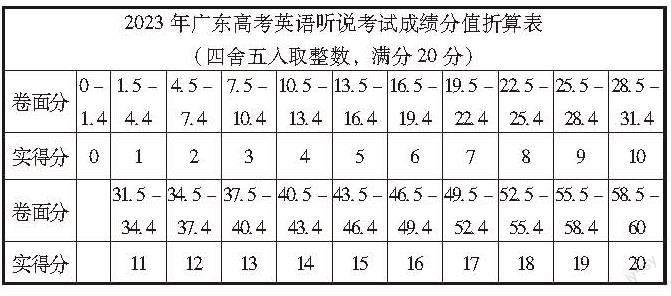
廣東英語高考聽說考試采用機考形式并由機改評分,高三考生每年3月參加口語考試。自2021年起,廣東高考英語聽說由15分增加至20分,考試題卷面為60分,最后以20分計入高考英語單科成績;高考英語科目筆試部分采用新高考全國I卷,分值則減為130分,考生最終的英語科成績=高考筆試成績+英語聽說成績。即高考英語科總成績(滿分150分)=筆試折算成績(卷面成績×13÷12,滿分130分)+聽說考試折算成績(卷面成績÷3)。
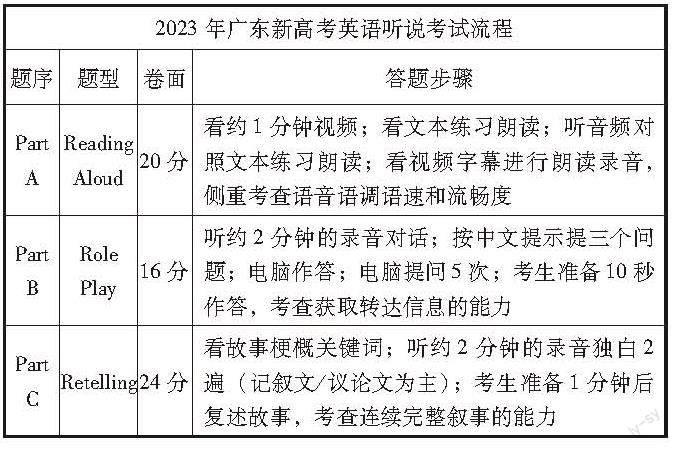
2023年1月16日,《關于廣東省普通高考英語聽說考試第二節角色扮演試題呈現形式優化的通知》公布:自2023年起,廣東省普通高考英語聽說考試第二節角色扮演(Part B Role Play)的試題呈現形式將做出部分優化:由“看視頻聽錄音”調整為“直接聽錄音”,3秒倒計時后直接播放錄音,其余不變。
筆者以2023年廣東高考英語聽說考試真題為例,基于南海區學案教學云平臺,在平板創新班以學案導學,以學定教,進行基于云平臺的高中英語聽說可視化教學策略研究。
一、基于云平臺的高中英語聽說可視化教學策略
(一)Part A Reading Aloud模仿朗讀
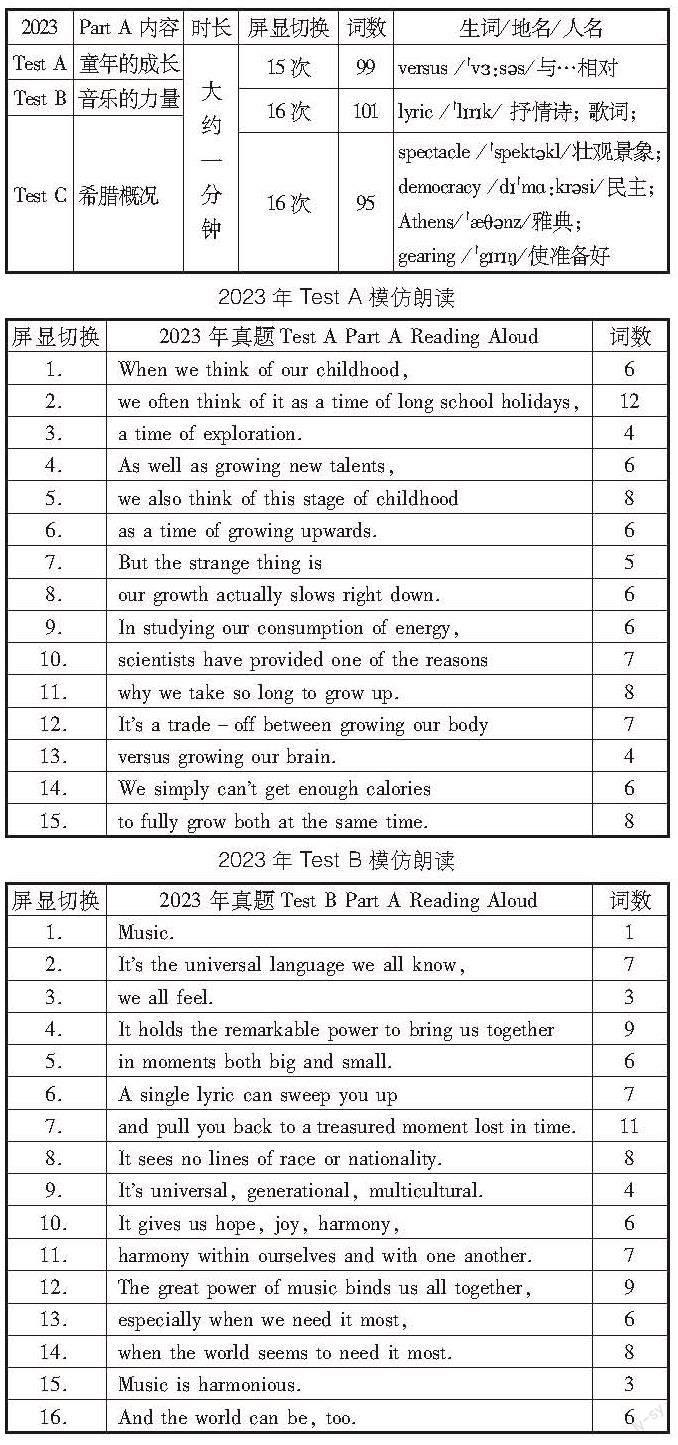
Part A視頻一般來源于BBC/Discovery/NG等紀錄片,屏顯一般不會出現三行字幕,朗讀時注意字幕斷行不等于意群停頓,常出現地名/人名,超綱詞匯一般少于三個。
看視頻時注意升降調、意群停頓、連讀、輕重讀及感情色彩,速記生詞音標并跟讀;看文本時要熟悉標記的生難詞發音;聽錄音模仿跟讀時要驗證生難詞發音,語速跟音頻一致。錄音時要自信聲音響亮,若有單詞讀錯可立刻糾正,屏顯切換時未讀完部分可憑記憶朗讀完整。
2023年Test A Part A
When we thinkofour childhood, we often thinkofit / as a timeof ?long school ?holidays , a timeof ?exploration. As well as growing new ?talents , we also thinkof this stage of childhood / as a timeof growing upwards. But the ?strange thing is / our growth actually slows right down. In studying our consumption of energy, scientists have provided one of the reasons / why we take so long to grow up. Its a trade-off / between growing our ?body / versus [ v :s s] growing our ?brain. We simply cant get enough calories / to fully grow both / at the same time.
(注: ?為重音,/ 為停頓, 為連讀,為升調,為降調,[ ]為音標)
朗讀易錯點: ?(1) We often think of it. 有讀成We often thin(k) of i(t). think中的[ k ]和it中的[ t ]未發音均屬準確度和完整度中的吞音錯誤。(2) But the strange thing is 有讀成But the stran(ge) thing(s) is, 其中thing加音s在準確度上屬加音錯誤; strange中的[d ]未發音屬吞音錯誤。(3) the strange中the讀[ ?]。
(二)PartB Role Play角色扮演
2023年聽說真題題材內容側重跨文化交際。Part B Role Play部分注意事項:1. 對話音頻只播放一次,聽前應根據情景介紹中的角色和任務,預測對話內容。5W(即who, what, when, where, why)及時間、地點、數字、邏輯關系詞所在句是高頻考點,可用箭頭符號等標記筆記信息間的邏輯關系。2. 三問考查即時翻譯造句的能力,先找出中文提示中的疑問詞,思考用何種句型、時態語態及助動詞和疑問詞。翻譯須寫在紙上,若時間趕也要寫下疑問詞、助動詞等并標好聲調,以防錄音口誤,如一般疑問句用升調,特殊疑問句用降調,選擇疑問句前升后降。不懂時也要逐詞翻譯清晰作答。3. 三問對應的機答錄音播放兩次。五答時要聽清問題和疑問詞。五答前兩問的答案一般來自錄音對話;后三問答案來自“三問”的機答內容(五答提問3源于三問1,五答提問4源于三問2,五答提問5源于三問3)。草稿紙可對折成四個部分來做筆記,第一部分是錄音對話筆記,其他三部分對應三問機答筆記。為快速定位答案,可在每段錄音筆記后畫橫線分隔。若回答when, where, how many, how long問題時一般簡答完整短語或關鍵詞即可,切勿漏掉介詞; 若回答why/ what /how問題時,應用完整句子作答,注意時態、人稱、語序、語音等。注意不答無關內容,如thank you, thats all, sorry, I dont know.等等
(三)Part C Retelling故事復述
先看故事梗概預測大意,注意復述時無提示詞,應把關鍵詞抄在紙上,聽清標題及首尾句以理解主題。平時多練習用符號數字及縮寫單詞等速記信息,如Tom用T表示,Mary用M,students用Ss,China用CH, week用w, because用∵,more than用>,less than用<,increase用+,否定用×,長時間用——,and用+,mountain用山,people用人。聽第一遍錄音速記主謂賓及5w信息;聽第二遍時補充名詞形容詞副詞等信息,注意人稱、時態、單復數及間接引語表述,以串聯法復述。漏聽內容不驚慌,聽不懂時也要翻譯出故事梗概,盡量多說。
2023 Test A Part C 視頻原文:
A Parcel for Mary
Tom worked in the local post office, responsible for checking lost parcels. One day, he received a call from a little girl Mary who was looking for her parcel. As usual, Tom asked for the checking number. But Mary said she didnt have one. Tom was confused and asked if she knew who sent the parcel. Mary said, “I dont know.” Hearing this, Tom thought Mary must be playing a trick. When he was about to hang up the phone, he heard Mary crying, “All my neighbors are receiving parcels. Where is mine?” To calm down Mary, Tom had a chat with her. Tom learned that Marys family had just moved here and she felt lonely. She was expecting holiday gifts from friends, just like her neighbors. Tom then came up with an idea. He told Mary that he needed her name and address for a double check and asked her to wait. A moment later, Tom told her that he had found her parcel. Later that day, Tom bought some chocolates and a card. On the card, he wrote: “From your friend on the line.” He then put them in a parcel and sent it to Mary.
某生用符號數字及縮寫單詞等做筆記如下,
A Parcel for Mary
T worked ?… ?post office, responsible ?… ?checking lost parcels.
1 day, he received a call ?… girl M who ?… ?looking ?… ?parcel.
As usual, T asked ?… ?checking number.But M said× have 1.
T was confused + asked ?… ?who sent the parcel.M said, “I× know.”
Hearing this, T thought M ?… ?play- trick.When T→ hang up phone, heard M crying,
“ … ?neighbors receiving parcels. Where ?… ?mine?”To calm down M, T ?… ?chat ?… ?M.
T learned ?… ?Ms family ?… ?moved here … ?felt lonely. She ?… ?expecting holiday gifts ?… friends
T.. came up with 1 idea.He told M ?… ?needed name + address ?… ?double check + asked … ?wait.
A moment later, T told M had found ?… ?parcel.Later that day, T bought chocol- s + 1card.
On card, he wrote: “From y friend on the line.” He put ?… ?in parcel +sent ?… ?M.
二、常見錯誤小結
(一)發音錯誤 (以2021-2023廣東高考英語聽說考試真題為例)
1.動詞詞尾加ed:
(1)在清輔音如[p], [t], [k], [f], [s], [h]等后讀[t],如:booked, liked, asked, picked, knocked, rushed, finished, watched, placed, noticed, worked, helped, jumped, stopped, hoped, looked, locked, joked, asked, promised, passed, watched, finished, touched;
(2)在元音或濁輔音如[d], [g], [v], [z], [r], [m], [n], [l]等后讀/d/,如:designed, turned, learned, cleaned, returned, happened, frightened, ruined, seemed, moved, received, improved, caused, refused, hurried, admired, bored, tried, offered, treasured, agreed, valued, cried, lied, showed, explored, injured, worried, mentioned, survived, believed, loved, lived, settled, arrived, removed, formed, ashamed, dreamed, learned, planned, opened, turned, complained, filled;
(3)在音標/t//d/后讀/id/,如:provided, needed, handed, located, hesitated, painted, wanted, waited, expected, interrupted, voted, hated, started, regretted, donated, disappointed, posted, interested, invited, melted, collected, restricted, pointed, instructed, ended, provided.
2.名詞變復數形式或動詞變第三人稱單數形式時詞尾加s:
(1)在清輔音后讀/s/,如:giraffes, works, rocks, guests, talents, gifts, chocolates, paints, attracts, tourists, moments, scientists, habits, votes, elephants, adults, sweets, streets, parents, aunts, planets, robots, tasks, books, takes, jokes, months, clothes, crops;
(2)在元音或濁輔音后讀/z/, 如: times, rooms, seems, games, begins, paintings, parcels, skills, tools, jobs, friends, holds, binds, crossroads, diamonds, gives, ourselves, holidays, sees, lines, years, neighbors, visitors, slows, operas, makers, users, followers, visitors, years, news, generations, holes, conditions, calendars, workers, rays, days, fields, needs, decades, sounds, kinds, labels, bottles, novels, skills, uncles, cousins, items, tombs, wings, songs;
3.以輔音字母加y結尾的名詞變復數形式, 改y為i, 讀/ /, 再加上es, 讀[z], 如: calorie→calories, story→stories, city→cities, worry→worries,
family→families, activity→activities, gallery→galleries;
4.以o結尾的名詞復數形式加es或僅加s, 其讀音皆為[z], ?如: videos, photos, heroes;
5.讀音為/iz/: ?(1)以s, z, x, ch, sh結尾的詞加es, 如:boxes; (2)以ce, se結尾的詞加s, 如: performances, experiences,voices, distances, pieces, preferences, spaces, houses, horses;
6.以f/fe結尾的名詞復數形式改f/fe為ves,其讀音為[vz],如:calf→calves, leaf→leaves;
7. the在輔音音素前讀[ ?], 如:the robots, the poor, the
wardrobe, the sun;在元音音素前讀[ i], 如:the elephants, the earth, the adults, the idea, the elderly, the injured, the ancient Maya.
(二)年份、數字的讀法 (以2018-2023廣東高考英語聽說考試真題為例)
1. 年份: (1)一般將表示年份的四個數字按前后分為兩組, 每組按基數詞讀, 如,1823年讀eighteen twenty-three, 1970年讀nineteen seventy;
(2)整百的年份則后面兩個零讀為hundred, 如1900年讀nineteen hundred;
(3)十位數位置為“零”時讀為字母O, 如1905年讀nineteen O five;
(4)千年讀法: 2000年讀two thousand;45,000讀forty-five thousand; 70,000讀seventy thousand; 2011年讀two thousand (and) eleven;
(5)三位以內數字的年份按基數詞讀。
2. 其他真題數字單位考查例舉:如, 75%讀seventy-five percent;120讀one hundred (and) twenty; $5讀five dollars; 100 pounds讀one hundred pounds; the19th century;12-year-old; five-year-old; Marys twelfth birthday; on the 3rd floor; till 10:30 pm.
三、結語
黨的二十大首次將“推進教育數字化”寫入報告,加快建設以數字化為支撐的高質量教育體系,是新時代建設教育強國的必由之路。智慧教育平臺的建設賦能灣區教育數字化轉型,筆者將繼續以新高考聽說考試真題為例,基于云平臺開展高中英語聽說可視化教學策略研究。
[本文系佛山市南海區教育發展研究中心及教師發展中心“南海區基于云平臺的學案學習與分析實驗項目”專項課題“基于云平臺的學案學習資源開發與應用探究”(課題立項編號:NHYPT2021004)部分成果]
責任編輯 ?吳昊雷
猜你喜歡
作文成功之路·小學版(2020年9期)2020-10-28 08:06:26
甘肅教育(2020年14期)2020-09-11 07:58:08
甘肅教育(2020年4期)2020-09-11 07:42:16
甘肅教育(2020年8期)2020-06-11 06:10:00
甘肅教育(2020年22期)2020-04-13 08:11:14
甘肅教育(2020年12期)2020-04-13 06:25:02
福建基礎教育研究(2019年2期)2019-09-10 07:22:44
福建基礎教育研究(2019年2期)2019-05-28 08:39:49
小學生導刊(低年級)(2016年2期)2016-02-24 23:02:11
小天使·五年級語數英綜合(2014年5期)2014-06-25 05:22:42