
宮腔鏡下輸卵管插管通液治療不孕不育的臨床療效
2016-11-26 06:22:50李文香安新濤焦守鳳安小巧
中國性科學
2016年9期
關鍵詞:臨床治療
李文香+安新濤+焦守鳳+安小巧
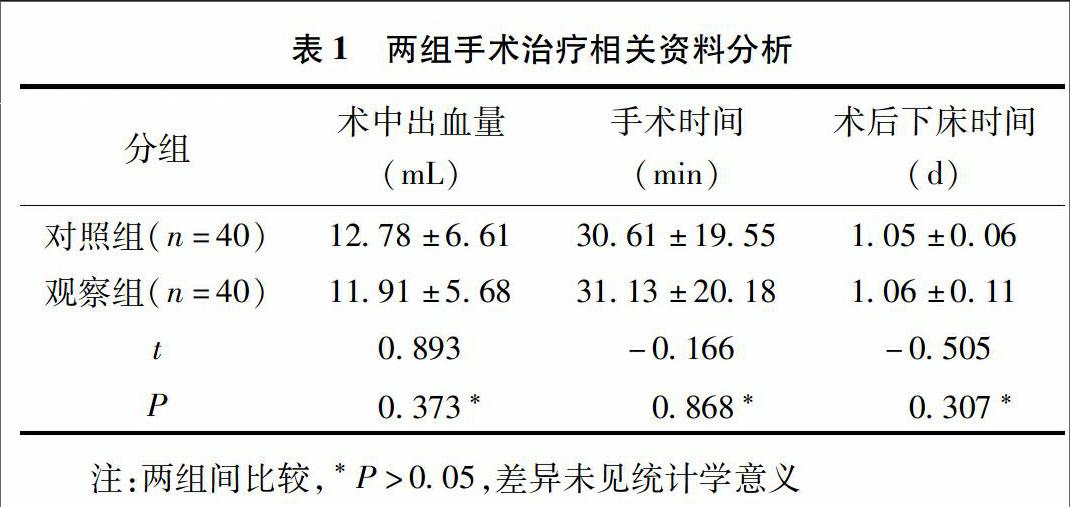
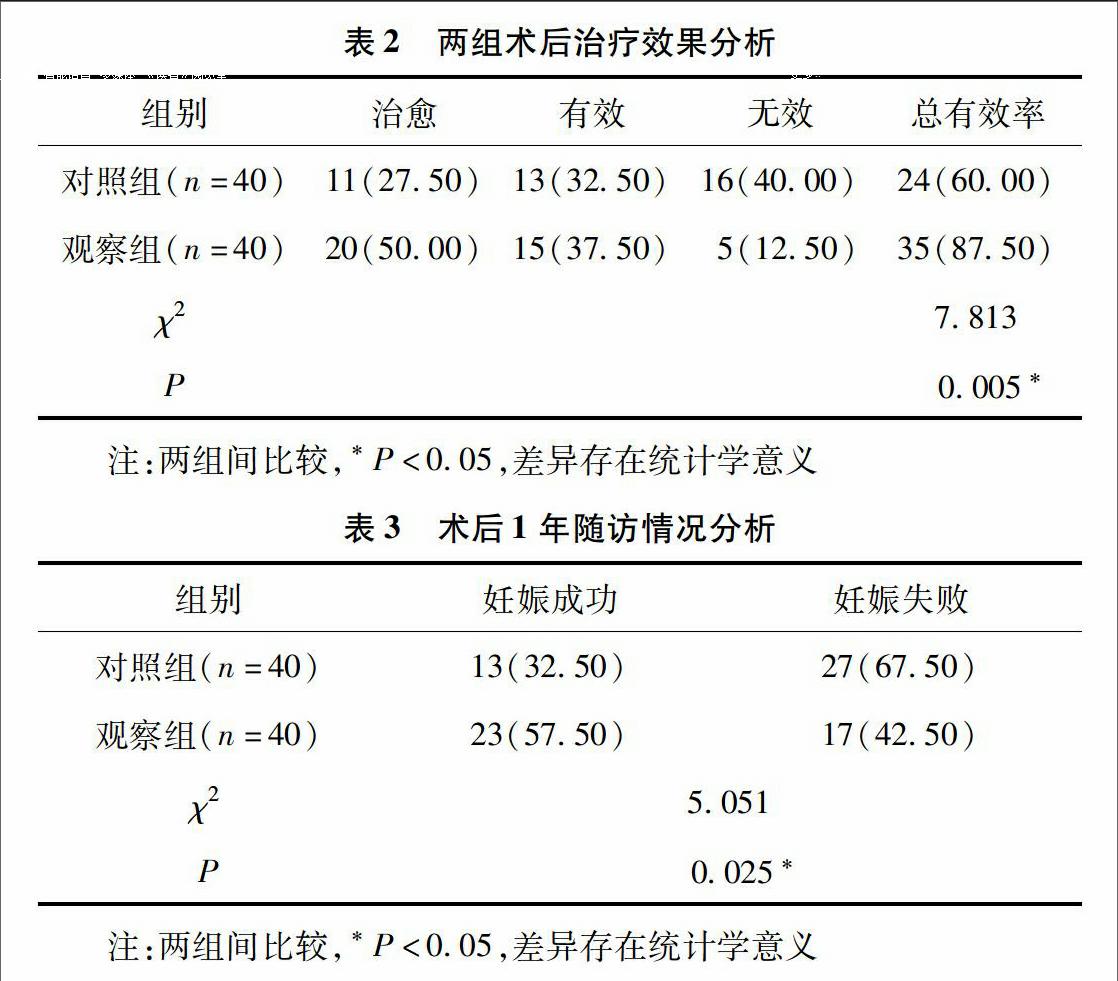
【摘要】目的:對宮腔鏡下輸卵管通液法在不孕癥治療中的應用效果進行分析總結。方法:以80例不孕癥患者作為觀察對象,并以隨機數字表法將患者隨機分為兩組,每組40例。以接受常規輸卵管通液治療者為對照組,以接受宮腔鏡下輸卵管通液法治療者為觀察組。對兩組手術相關情況及臨床治療效果進行對比分析。結果:兩組間術中出血量、手術時間及術后下床活動時間比較,無統計學差異(P>0.05)。在接受治療后,對照組的治療總有效率為60.00%,而觀察組的治療總有效率為87.50%,觀察組的治療總有效率明顯高于對照組(P<0.05)。此外,觀察組術后1年妊娠成功率也顯著高于對照組(P<0.05)。而對照組術后妊娠平均時間為(5.13±1.06)月,觀察組術后妊娠平均時間為(4.11±1.03)月,觀察組明顯短于對照組(P<0.05)。結論:不孕癥治療中宮腔鏡下輸卵管通液法可顯著的提高患者的臨床治療效果。
【關鍵詞】宮腔鏡;輸卵管插管通液;不孕癥;臨床治療
【Abstract】Objectives: To summarize and analyze the application of microscopic tubal cauterization in treating infertility. Methods: 80 infertile patients were selected and randomly divided into two groups, each of 40 cases. Those received the conventional tubal treatment were selected as control group, while those received microscopic tubal cauterization as observation group. The relevant circumstances and clinical outcomes of the two groups were compared and analyzed. Results: Difference in the blood loss, operative time and postoperative ambulation time between the two groups was of no significance (P> 0.05). After receiving treatment, the total effective rate in the control group was 60.00%, while that in the observation group was 87.50%, with significant difference (P<0.05). In addition, in the observation group the success pregnancy rate 1 year after treatment was significantly higher (P<0.05). While the average time of pregnancy in control group was (5.13 ± 1.06) months and that in the observation group was (4.11 ± 1.03) months, with significant difference (P<0.05). Conclusion: Microscopic tubal cauterization can significantly improve the clinical treatment efficiency of infertile patients.
【Key words】Spectroscopy; Microscopic tubal cauterization; Infertility; Clinical treatment
【中圖分類號】R711.6【文獻標志碼】A
不孕癥為目前臨床較為常見的女性疾病之一,且近年來本病的發生率呈顯著升高趨勢,對患者的生活質量及家庭幸福均可造成嚴重的影響[1-3]。目前臨床觀察顯示,可導致女性不孕癥發生的原因較多,而輸卵管阻塞屬常見病因之一[4-6]。雖然輸卵管通液治療可在一定程度上改善女性不孕癥的臨床治療效果,但因傳統的輸卵管通液治療無法確定治療后的輸卵管通暢情況,故其治療在總有效率也相對較低[7-11]。為可進一步提高女性不孕癥的臨床治療效果,我院近年來在臨床工作過程中,將宮腔鏡技術應用于其中,現將治療結果總結如下。
1資料與方法
1.1一般資料
以2013年10月至2014年9月間就診于我院的不孕癥患者中,以隨機數字表法隨機選取80例不孕癥患者作為觀察對象,所有入選者均需符合本研究的入選及排除標準。以隨……
登錄APP查看全文
猜你喜歡
糖尿病新世界(2016年16期)2016-12-09 02:50:54
中國實用醫藥(2016年28期)2016-12-07 08:29:36
中國實用醫藥(2016年27期)2016-11-30 11:36:02
中外醫學研究(2016年26期)2016-11-30 04:37:07
中外醫學研究(2016年28期)2016-11-28 07:02:01
今日健康(2016年12期)2016-11-17 13:19:17
今日健康(2016年12期)2016-11-17 13:06:44
今日健康(2016年12期)2016-11-17 12:51:27
中國實用醫藥(2016年24期)2016-10-17 06:17:23
飲食與健康·下旬刊(2016年7期)2016-05-10 13:07:02
